118782366574


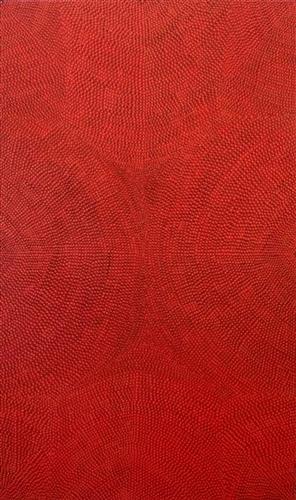
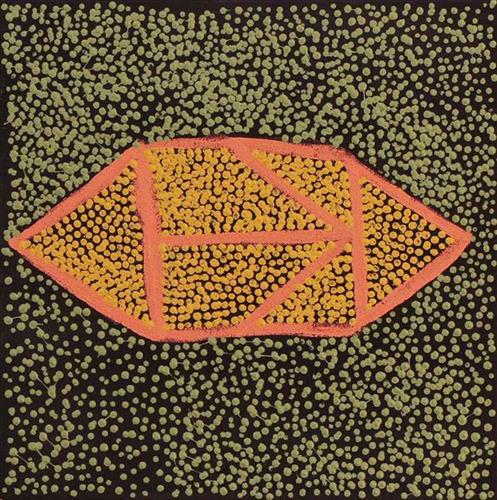
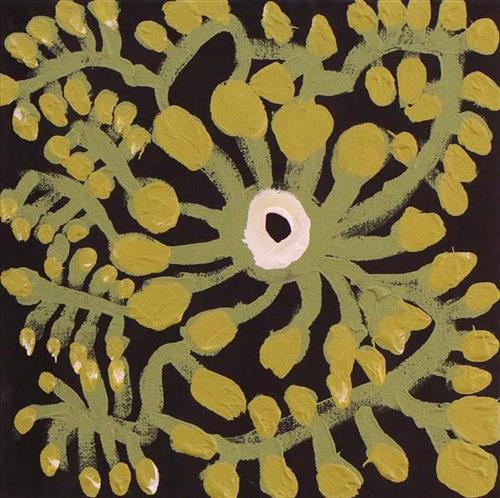
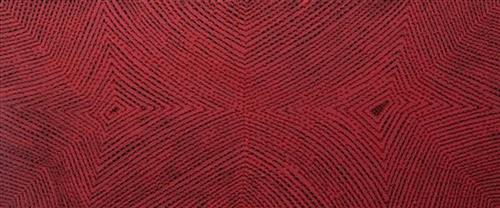
Doris Bush – Papa Tjukurrpa – Nyumannu Memory

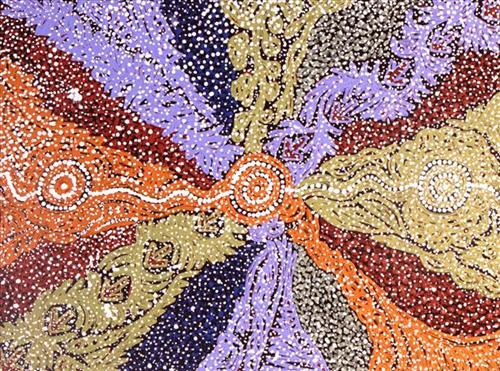
Nyunmanu is a Dingo Dreaming site just to the south east of the remote Aboriginal community of Kintore in the Northern Territory. Most of the dingoes and their pups from this place rose up into the sky and became stars. However, the ancestral mother Dingo and her pup had gone out hunting and were too tired to rise up, so they turned into a large rock that marks the place of this sacred Dreaming. 

 The custodians of this Tjukurrpa are Nungarrayi, Tjungarrayi, Napaltjarri and Tjapaltjarri women and men.

The circles in this story often represent important waterholes. The roundels extending from the circles are the designs the women paint on their breasts during ceremony.
 
In this painting Doris is remembering a day in her childhood where, as a little girl, she walked alone past the hill, the creek and the rock holes at Nyunmanu, which always had water. She saw dingos living in the caves and a Spiritual Woman dancing near one of the waterholes. This Spiritual Woman told Doris that this site was her home dreaming place. 
118782366507


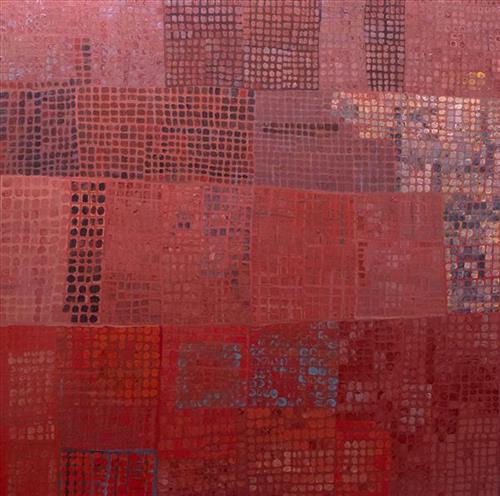
Maureen Poulson Kapi Tjukurrpa – Kalipinypa

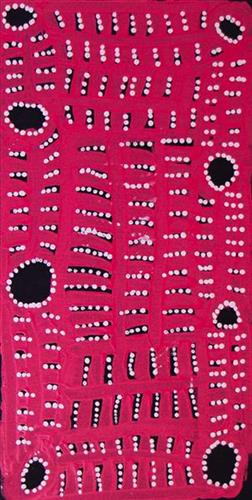
The painting depicts designs associated with Kapi Tjukurrpa (Water Dreaming) at Kalipinypa, a site northwest of Kintore. The tjukurrpa tells of an important rain making ceremony to invoke the elements. It is a powerful storm bringing on the lightning, thunderclouds and rain sending its deluge to rejuvenate the earth, filling rock holes, clay pans and creeks. It has the power to create new life and growth upon the land.

118782367744


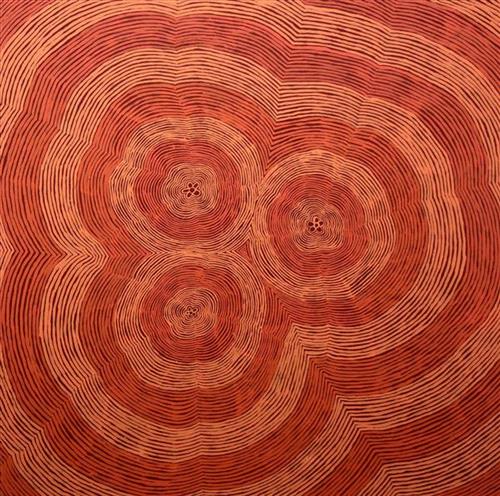
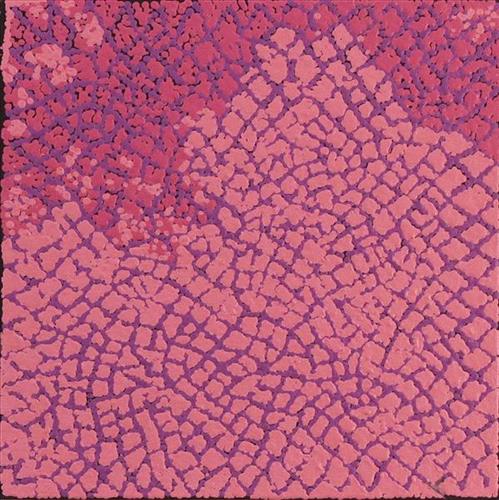
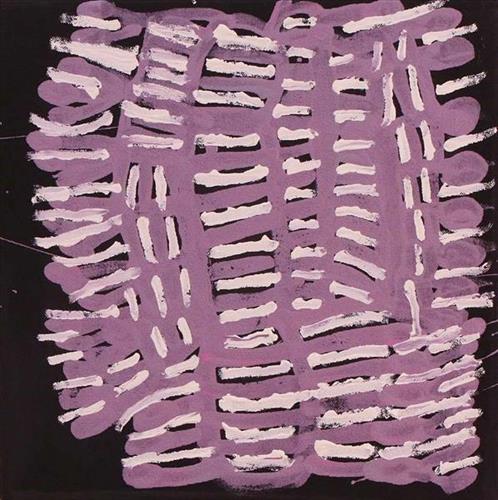
puuni Kapi Tjukurrpa

This painting tells a Kapi Tjukurrpa (water dreaming) story of Wantupunyu. Wantupunyu is Punni’s grandfather’s Country and the site is to the north of Papunya and west of the sacred mountain Karinyarra. Punni leant to paint this story from her Mother’s paintings, Isobel Gorey Nambajimba, who is a prolific painter and a director at Papunya Tjupi.

Water dreaming sites are important for the regeneration of nature. The water makes the country green and brings a lot of ‘bush tucker’ foods for the people and the animals. The heavy rain usually comes in the summer time. When the lightening can be seen at a distance, the elders will start singing to the lightening, encouraging it to bring more rain to replenish the land. In her paintings, Puuni depicts lightening, rainbows, puddles and bush flowers.

In this painting the central shapes are important water or rock hole site. The lines represent the elements of a storm – wind, rain, thunderclouds and lightning. The patterns represent rain and water flowing from the waterholes and flooding the usually dry creek beds.

118782369508


Glenda Kapi Tjukurrpa

The painting depicts designs associated with Kapi Tjukurrpa (Water Dreaming) at Kalipinypa, a site northwest of Kintore. The Tjukurrpa tells of an important rain making ceremony to invoke the elements. It is a powerful storm bringing on the lightning, thunderclouds and rain sending its deluge to rejuvenate the earth, filling rock holes, clay pans and creeks. It has the power to create new life and growth upon the land.

In this painting Glenda has used the larger shapes to depict tali (sand hills) at the site of Kalipinypa. She has also used dots to represent Akatjurra (bush tomato) that have come to life after the rain. 

118782369507


Alice Poulson Kalipinypa Tjukurrpa

The painting depicts designs connected to Kapi Tjukurrpa (Water Dreaming) at Kalipinypa, a sacred site northwest of the Aboriginal Community of Kintore in the Central Western Desert of Australia. The Tjukurrpa tells of an important rain making ceremony to invoke the elements. It is a powerful storm bringing on the lightning, thunderclouds and rain sending its deluge to rejuvenate the earth, filling rock holes, clay pans and creeks. It has the power to create new life and growth upon the land. There is a lightning strike at this place.

In this Tjukurrpa the angular shapes represent the dryness of the Kapi Tjukitji (waterhole). Alice talks of having no spring water in this site. The arrow shapes represent the footprints of the white heron that frequent the site. The custodians for this tjukurrpa are Nakamarra, Tjakamarra, Naparula and Tjaparulla skin subsections.

118782369501


Doris Bush- Pilkati, wilinyi & Tjurrpinyi at ikuntji. (Snake, hunting & swimming at Haasts Bluff.)


This is a memory from Doris’s past. Doris talks of the times when she was a young girl in the bush, swimming and hunting with her friends at Ikuntji (Haasts Bluff). She talks of sand hills where the young people would wander naked looking for water, “chasing” the water until they found a water hole. The young men and women would swim together and make love by the water hole. Eventually, Doris explains, the young people fall in love and are married.

Doris is remembering the traditional tools and weapons that were used by her and her friends in the bush. Doris depicts Kali (boomerang), wana (digging stick), puli (grinding stone), kutitji (shield), kulata (spear) and kantikanti (hitting stick).

“Snake this one, eating, here, at the water. This mob over there are stabbing it with a spear. He’s trying to bite and eat that one over there. And that over there is coming to look at him, that one. This one, he’s watching, he is, ‘ooohhh!’, sneaking up intending to bite it. That one over there …
he bit him, that goanna yep, this one.
Coming to here, coming through the bush to the water, ‘ooohhh!’, they see it! ‘What happened here?’
Over there, a goanna is coming along. Going, going into the bush, across the water, sneaking up to try and bite it.
Yeah, this one, two men standing, over there is another, there watching all this the snake,
see? And see this line … he’s slowly sneaking along it.

After that, that one over there stabs him with a spear, with a spear he stabbed. Went and got that goanna and ate it, over there came and see all this mob.


Yeah, finished like that, that’s how I made this one by the water.”


118782369485


Doris Bush Papa Tjukurrpa – Nyumannu

Nyunmanu is a Dingo Dreaming site just to the south east of the remote Aboriginal community of Kintore in the Northern Territory. Most of the dingoes and their pups from this place rose up into the sky and became stars. However, the ancestral mother Dingo and her pup had gone out hunting and were too tired to rise up, so they turned into a large rock that marks the place of this sacred Dreaming. 

It is said that if you sleep in this place you will dream of the ancestral dingo puppies. The story goes that if you remove one of the gleaming stones found at Nyunmanu, the puppies will haunt your dreams until you return it to the place where it belongs. The custodians of this Tjukurrpa are Nungarrayi, Tjungarrayi, Napaltjarri and Tjapaltjarri women and men.

The circles in this story often represent important waterholes. The roundels extending from the circles are the designs the women paint on their breasts during ceremony.

118782371324


Maureen Poulson Kapi Tjukurrpa – Kalipinypa

The painting depicts designs associated with Kapi Tjukurrpa (Water Dreaming) at Kalipinypa, a site northwest of Kintore. The tjukurrpa tells of an important rain making ceremony to invoke the elements. It is a powerful storm bringing on the lightning, thunderclouds and rain sending its deluge to rejuvenate the earth, filling rock holes, clay pans and creeks. It has the power to create new life and growth upon the land.

118782371784


Four Dreamings – Carbiene McDonald

In this work Carbiene depicts four dreaming stories which he inherited from his father. These tjukurrpa are associated with a series of waterholes running between Docker River and Kata Tjuta. Specifically, it includes four important sites: Petermann Ranges, Docker River, Kalaya Murrpu (Blood’s Range) and Mulyayti near Kata Tjuta. 

As a young man, Carbiene returned to these places and retraced the footsteps of his father. These memories stay with him vividly today. 

118782371777


Candy Nakamarra Kalipinypa

The painting depicts designs associated with Kapi Tjukurrpa (Water Dreaming) at Kalipinypa a site northwest of Sandy Blight Junction, Western Australia.The Tjukurrpa tells of an important rain making ceremony to invoke the elements. It is a powerful storm bringing on the lightning, thunderclouds and rain sending its deluge to rejuvenate the earth, filling rock holes, clay pans and creeks. It has the power to create new life and growth upon the land. The different elements of the image represent puuli (hills), tali (sandhills) and kapi (water). Plants and leaves spring up after the heavy rain, nourishing the land and the people. The concentric circles represent waterholes, while the arrow shapes represent the footprints of the white heron that frequents the site.