37781064008593


Status: Stock


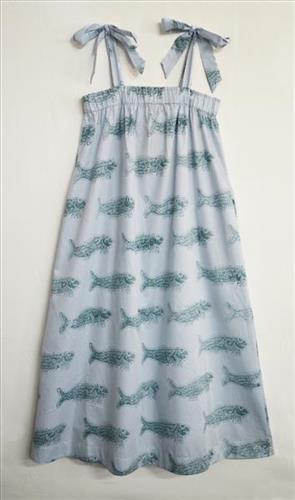
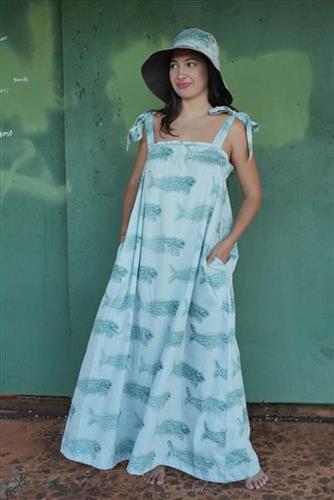
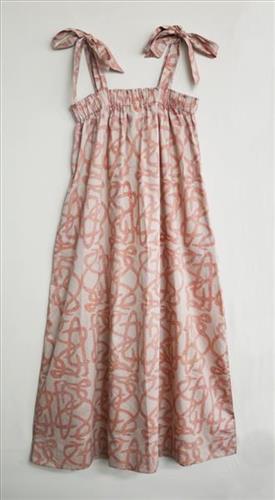
Birrala – Mrs C Djiagween

This garment is a collaboration between the artists at Nagula Jarndu Designs and the Saheli Women in Rajasthan, India. A social enterprise centered on traditional craft and textiles practices in Jodhpur founded to create opportunities and financial independence for women. Collaborating with Saheli meant that we have more transparency in the production our garments, in ways that are both environmentally sustainable and ethically sound. It also supports jarndunil (women) like us! Designs by seven Nagula Jarndu artists were developed into either wood blocks or interpreted into an embroidery pattern by the makers in Jodhpur.

The soft pastel colours of this collection are the result of choosing natural dyes to create the repeat prints.

This design was created by artist Mrs C Djiagween – Called Birrala (Whisker/Threadfin Salmon) printed on 100% Egyptian cotton

 Description:

  • Generous flowing fit
  • Ruched elasticated waist band with lots of give
  • Hem finishes at ankle
  • shoulder ties
  • Ample side seam pockets

*Please note that the pattern placement will vary slightly on each garment. these are also hand printed with natural dyes. You might notice slight flecks of colour on the garment which are not a flaw but part of the hand woodblock printing process

Size and fit guide:

These garments run true to size and are designed to be both generous and comfortable. 

Measurements: relaxed bust / bust stretched to max/ length waistband to ankle hem

S: 82cm / 120cm / 116cm 
M: 90cm / 13cm / 120cm 
L: 98cm / 140cm / 142cm 

Care and washing guide:

Handwashing your garment in cold water and ironing from the inside-out, will ensure that it is a part of your wardrobe for years to come.

37781064008592


Status: Stock


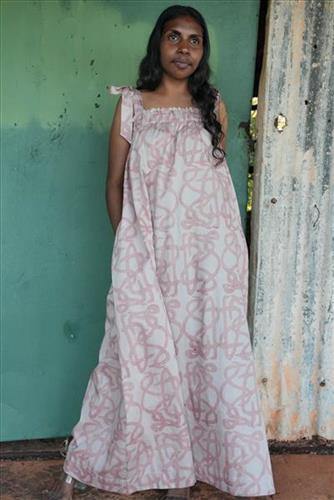
Rivers – Ms S Chiguna

This garment is a collaboration between the artists at Nagula Jarndu Designs and the Saheli Women in Rajasthan, India. A social enterprise centered on traditional craft and textiles practices in Jodhpur founded to create opportunities and financial independence for women. Collaborating with Saheli meant that we have more transparency in the production our garments, in ways that are both environmentally sustainable and ethically sound. It also supports jarndunil (women) like us! Designs by seven Nagula Jarndu artists were developed into either wood blocks or interpreted into an embroidery pattern by the makers in Jodhpur.

The soft pastel colours of this collection are the result of choosing natural dyes to create the repeat prints.

This design was created by artist Miss S. Chiguna, called Rivers, printed on 100% Egyptian cotton

 Description:

  • Generous flowing fit
  • Ruched elasticated waist band with lots of give
  • Hem finishes at ankle
  • shoulder ties
  • Ample side seam pockets

*Please note that the pattern placement will vary slightly on each garment. these are also hand printed with natural dyes. You might notice slight flecks of colour on the garment which are not a flaw but part of the hand woodblock printing process

Size and fit guide:

These garments run true to size and are designed to be both generous and comfortable. 

Measurements: relaxed bust / bust stretched to max/ length waistband to ankle hem

S: 82cm / 120cm / 116cm 
M: 90cm / 13cm / 120cm 
L: 98cm / 140cm / 142cm 

Care and washing guide:

Handwashing your garment in cold water and ironing from the inside-out, will ensure that it is a part of your wardrobe for years to come.
114182108757


Digging for Honey Ants

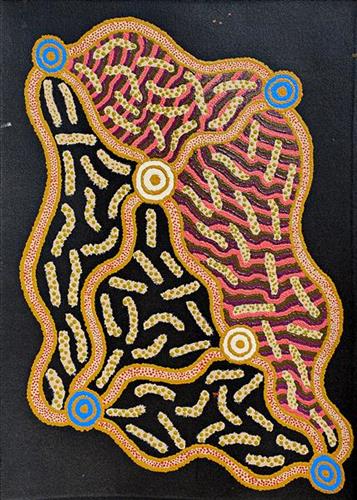
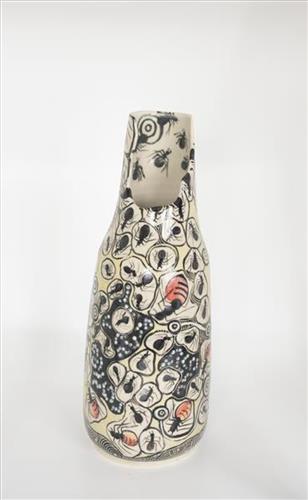
This painting is depicting two women (minyma) digging for one of their favourite bush foods, Tjala or honey ants. Found in central Australia the ants construct nests in the red flat sandy soil under trees or bushes. The women look for the camouflaged entrance to the nest amongst dead litter, then start digging about half a metre from the entrance working around to locate the side chambers where the storer ants hide. The honey is sucked or squeezed from the storers’ extended abdomens which look like tiny pots of honey.

The ‘U’ shapes are the women. Next to them are their wana or digging sticks. The coloured circles in the middle represent the honey ants under ground.

114182149037


Kungkarrangkalpa (Seven Sisters)

‘Kungkarrangkalpa’ (The Seven Sisters or Pleaides) is significant Tjukurrpa (dreamtime). Its origins you may be familiar with in astronomy and its connection to ‘Wati Nyiru’ (Magic Man or Orion).  The roots of this dreaming stems across indigenous groups around the world. The Australian Aboriginal songline is one part to the whole dreaming which can be traced all around the world. The ladies of the Ngaanyatjarra Lands depict their significant chapter and understanding of the journey of the sisters. The different versions of this story depend on where you live and the significance’s of local Tjukurrpa places.

Nyiru fell in love with the sisters but he was of the wrong skin group to marry, but he still pursued them on their journey. The sisters travel across the land to escape Nyiru’s unwanted attentions, but he is persistent and always finds them. There are significant land forms which can be sited today that evidence this dreaming. As Nyiru is chasing the sisters he tries to catch them by using magic to turn into the most tempting kampurarrpa (bush tomato) and the most beautiful Yirli (wild fig tree), for them to eat and camp under. However, the sisters are knowledgeable of his magic and too clever for Nyiru who they outwit again and again. They go hungry and run through the night rather than be caught by him. As the journey continues, Nyiru gets so frustrated at the wit of the sisters that he uses his magic to make the oldest sister sick to try and get closer to her. The other sisters rescue the big sister and nurse her back to health. It is said he also captures the youngest sister, but with the help of the oldest sister, she escapes back to her sisters who are waiting for her. Eventually, the sisters fly into the sky to escape Nyiru, forming the constellation. Nyiru felt lonely, longing for the sisters who were so far away. Nyiru used his magic to go to the sky, forever in pursuit.

221282352762


Tjala / Honey Ants

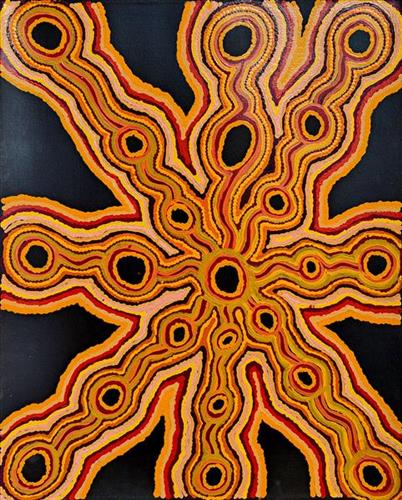
Tjala or honey ants live in nests about a metre underground beneath mulga trees, and they are a highly favoured food source. The tjala tunnels that lead down to the ants’ nests are called nyinantu, and the larvae are called ipilyka-ipilyka. After the rain when the ground is soft the women go digging for tjala by looking for the drill holes under the trees. They then use shovels and crowbars to dig down following the tunnels to find the tjala inside. Anangu suck the delicious rich honey-like liquid from the distended abdomen of the tjala. The story of the tjala is told across the Northern Territory into South Australia and is an important link between Anangu mythology and inter-dependence on the environment.

114182359085


Wiilu – night bird

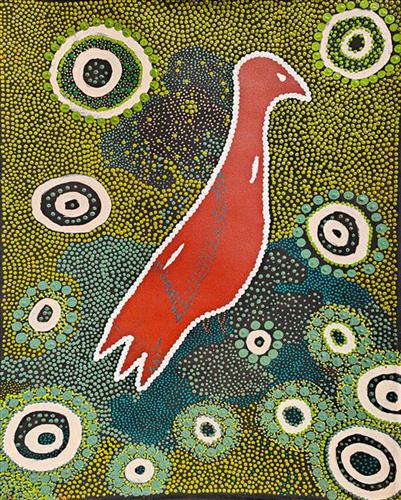
This painting tells a powerful Dreamtime story from a place called Kiwilin. At Kiwilin lives Wiilu, an old woman bird. Wiilu is closely related to the turkey and holds deep wisdom.

This story is set just north of Ngaturn, a place of great significance. Wiilu and the night owl speak together in the dark, their voices carrying across the land. Under the night sky, their words hold the knowledge of the old ways, connecting the past to the present.


377816082381251


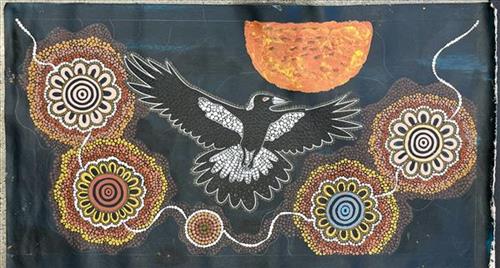
Proud Magpie

This is our native magpie, surrounded by his meeting places. His showing it’s strength and just how majestic he can be.

377816082381238


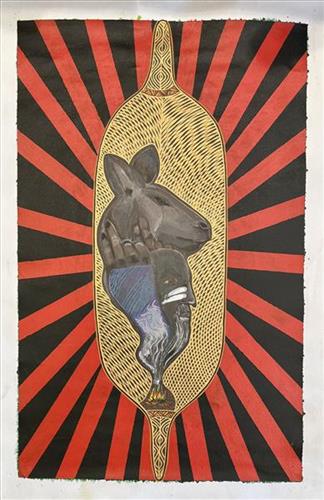
The Connection

The power of connection that Blackfellas have with our totems. This represents an old fella, his dreaming and being in sync with hi totem.

377816082381232


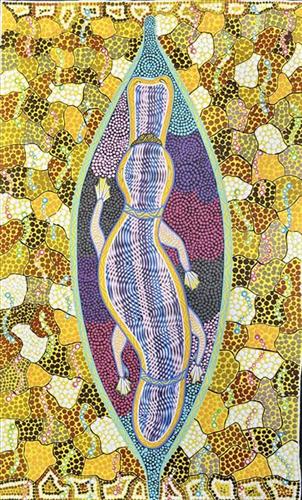
Platypus Sheild

this painting represents the strength and resilience of our platypus. How they survive and overcome all obstacles placed in its way. The dots are its family and its journey through history.

115682382099


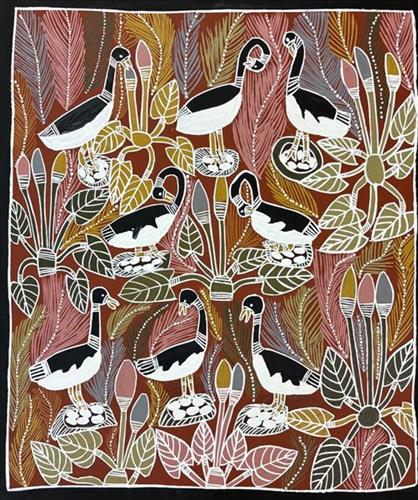
Gumang (Magpie Geese)

The Yolngu people of Arnhem Land originate from a spiritual source, fixed in a particular place in their land or the sea. These ‘Spiritual Reservoirs’ are often in the form of special waterholes made by Wangarr (Creative Beings) long ago close to the beginning of time.

The creator beings moved across the country side, shaping the land and implanting in each tract of country, the spiritual life force for the people who were to own it. These Creative Spirits took many forms. When they gave the land to each group they also gave songs, dances, ceremony, the associated laws and language. The Creation story for Ganalbingu people took place near the middle section of the Glyde River where it becomes the Goyder River. Their land, Ngaliyindi, sits astride the Arafura Swamp in Central Arnhem Land.

In this painting, the artist has depicted Gumang (magpie geese), which are sacred to the Ganalbingu people. To the east of the Arafura Swamp is a freshwater billabong which is said to have been made by the Goose Spirit and is in the shape of a goose nest. As a result, geese, their eggs and their nests are sacred.