22544008410


Status: Stock


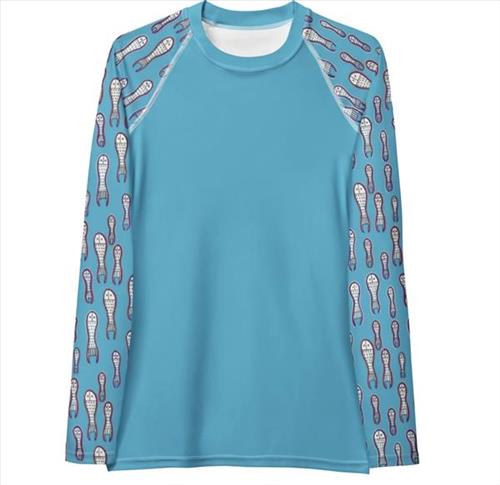
Ungud & Jiaa Rash Guard blue by Ian Healy

Product Details

Long-Sleeve Rash Guard – Sun Protection & Comfort

Stay protected and comfortable with this sleek, eco-conscious rash guard, perfect for sports and outdoor fun.

  • Sun Safe: UPF 50+ shields against harmful UV rays.
  • Ultra-Soft & Stretchy: 82% polyester, 18% spandex with a 4-way stretch for unrestricted movement.
  • Slim & Ergonomic Fit: Longer body and sleeves for extra coverage and comfort.
  • Sustainably Made: Produced on demand to reduce waste and overproduction.

Stay Covered. Stay Comfortable. Stay Sustainable.

This product is made especially for you as soon as you place an order, which is why it takes us a bit longer to deliver it to you. Making products on demand instead of in bulk helps reduce overproduction, so thank you for making thoughtful purchasing decisions!

The Original Artwork: Ungud and Jiaa Dreaming

The Unguds represent the dreaming of the people which the Wandjina has given. The Wandjina is highly respected by the people because it gave the law, culture and language. The Ungud is given before birth to the parents, grandparents aunts or uncles of a child, through dreams, or it may come as a living animal. This is considered as a gift from the Wandjina to the parent, the animal becomes a gift to the unborn child which the child belongs to. When the child dies it goes back to being that animal. Today every individual has their own animal that belongs to them.


22544008409


Status: Stock


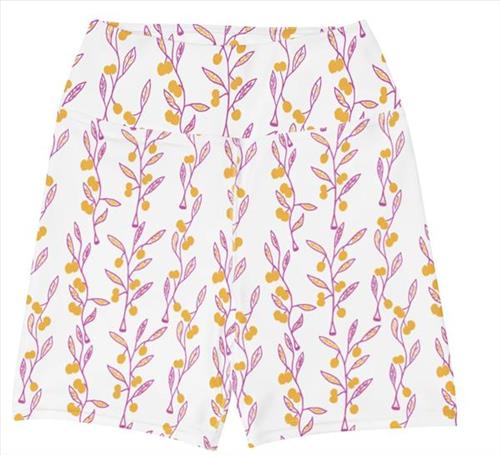
Wattle Yoga/swim shorts white by Barbara Bear

Product Details

Trendy Crop Top Rashie with eco-friendly design:

  • Sustainable: 81% REPREVE recycled polyester.
  • Soft Touch: OEKO-TEX certified fabric.
  • Sun Safe: UPF 50+ protection.
  • Stylish: Cropped, modern fit.

This product is made especially for you as soon as you place an order, which is why it takes us a bit longer to deliver it to you. Making products on demand instead of in bulk helps reduce overproduction, so thank you for making thoughtful purchasing decisions!


The Original Artwork: WARTNGARLI (Wattle Tree Flower)

My design features a picture of a Wattle Tree flower (Wartngarli).

The Wattle flower represents my clan group name, Wartngarli-Ngorngor, which comes from my father’s side.

22544008405


Status: Stock


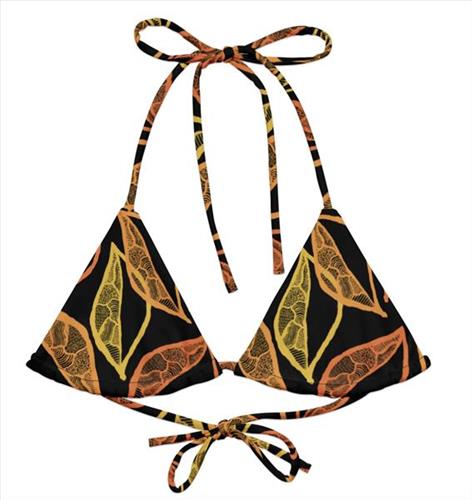
Gold Leaf Triangle Bikini Top by Jenzahni Waina

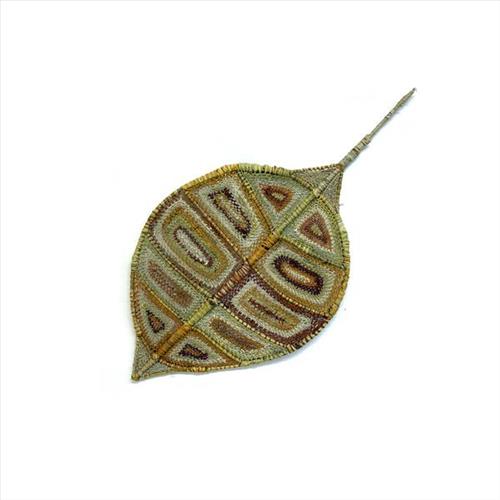
The Original Artwork: Leaf

Created during her very first fashion workshop, Leaf is a gentle yet powerful celebration of growth, creativity, and cultural expression. This captivating print by emerging artist Jenzahni Waina draws on the organic beauty of leaves, each one carefully sketched and arranged into a mesmerising, detailed repeat design.

Inspired by the natural world and the process of learning through art, Jenzahni’s work invites you to look closer. Every line reflects her dedication to creating something both intricate and beautiful, turning nature’s quiet elegance into wearable storytelling.


Versatile Triangle Bikini Top for endless styling:

– Multi-Way Wear: Adaptable to your style.
– Comfort: Removable pads.
– Eco-Friendly: 81% recycled materials.
– Sun Protection: UPF 50+ & OEKO-TEX certified.


22544008403


Status: Stock


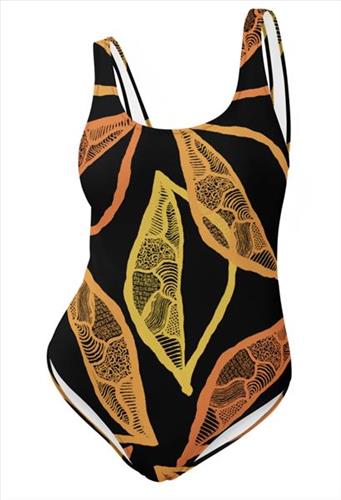
Golden Leaf one-piece By Jenzahni Waina

The Original Artwork: Leaf

Created during her very first fashion workshop, Leaf is a gentle yet powerful celebration of growth, creativity, and cultural expression. This captivating print by emerging artist Jenzahni Waina draws on the organic beauty of leaves, each one carefully sketched and arranged into a mesmerizing, detailed repeat design.

Inspired by the natural world and the process of learning through art, Jenzahni’s work invites you to look closer. Every line reflects her dedication to creating something both intricate and beautiful, turning nature’s quiet elegance into wearable storytelling.

 Product Details:

Timeless elegance with Milpali’s One-Piece Swimsuit:
– Flattering Design: Scoop neckline & low back.
– Durable: Chlorine-resistant fabric.
– Comfort: Double-layer front.
– Stylish: Modern, chic look.

This product is made especially for you as soon as you place an order, which is why it takes us a bit longer to deliver it to you. Making products on demand instead of in bulk helps reduce overproduction, so thank you for making thoughtful purchasing decisions!  

22544008233


Status: Stock


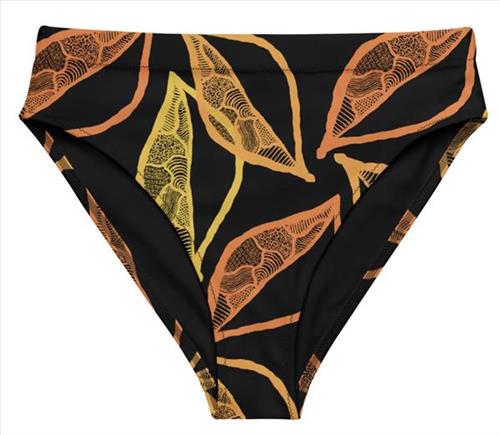
Jenzahni High Waisted Bottom – Black/Leaf

Milpali High-Waisted Bikini Bottoms – Flattering & Sustainable
A sleek, supportive, and eco-friendly swimwear essential designed for comfort and confidence.

✔ Sustainable Choice: Made from recycled materials, reducing environmental impact.
✔ All-Day Comfort: Butter-soft, 4-way stretch fabric moves with you.
✔ Flattering Fit: High-waisted design provides tummy control and a smooth silhouette.
✔ Supportive & Secure: Double-layer construction ensures durability and confidence.

Sustainable Swimwear That Loves You Back.

This product is made especially for you as soon as you place an order, which is why it takes us a bit longer to deliver it to you. Making products on demand instead of in bulk helps reduce overproduction, so thank you for making thoughtful purchasing decisions!


The Original Artwork: Leaf

Created during her very first fashion workshop, Leaf is a gentle yet powerful celebration of growth, creativity, and cultural expression. This captivating print by emerging artist Jenzahni Waina draws on the organic beauty of leaves, each one carefully sketched and arranged into a mesmerising, detailed repeat design.

Inspired by the natural world and the process of learning through art, Jenzahni’s work invites you to look closer. Every line reflects her dedication to creating something both intricate and beautiful, turning nature’s quiet elegance into wearable storytelling.


111982392566


Mimih Spirit

The mimih spirit exists in a realm that runs parallel to and mirrors many facets of human life, demonstrating the deep sense of time and place understood by Aboriginal and Torres Strait Islander people. Such spirits feature importantly in relation to Aboriginal spirituality, cosmology, social and moral tales as well as ritual. As is true with the multiple mediums employed by artists of West Arnhem Land, the development of artistic style and form is in line with an awareness by the artist that the work produced is predominantly made for a broader audience. Whether shown in a national or international context these works communicate and exist in a particular space that is cross-cultural and simultaneously particular to the Arnhem region.

The mimih sits within a complex pedagogical and religious body of knowledge which links Kuninjku people to their distinctive escarpment homelands. Young Kuninjku artists, or apprentices, employ the mimih as an important exercise for the practice of the rarrk technique, as it could be achieved on a smaller surface area before being attempted in larger scale on pieces of bark. The mimih serves a purpose for those young artists first learning to carve in a social space of sharing and innovating. The initial mimih manifestation was a large form that almost mirrored the anatomy of a human and at this stage the sculptures have been likened to mokuy carvings visible in eastern Arnhem Land. Contemporaneously, mimih are depicted in a refined, slender, even emaciated form with a broad range of facial expressions giving both individual character to, and denoting the potential volatility and humour that mimih spirits are notable for in their interaction with bininj (humans). The sculptures are frequently carved from the thin trunks of softwoods such as kapok (bombax ceiba or cottonwood) kurrajong, beach hibiscus or leichardt and are painted with earth pigments for their colouring and design.

A leading figure engaging the spirit in visual storytelling was Crusoe Kuningbal, a Kuninjku man, who while traveling was familiarised with carving styles from the east of Arnhem at the mission in Milingimbi pre-dating World War II. The connection and development of art forms informed by cross cultural dialogues within northern Aboriginal language groups is notable. The mimih became a valued inclusion in performance and public ceremony by Kuninjku people like Kuningbal. At times these ceremonies were performed for extended language groups in the local region. 

Now a familiar and broadly depicted figure of iconography, it is important to acknowledge the development of this quite recent sculptural tradition. The depiction of this particular spirit being, once used as an addition to the sharing of song cycles and ceremony, has since been elevated to a prominent form and subject of contemporary sculpture. Variation in the creation of mimih acts as an indication of the individualism of each artist and their stylistic markers. Additionally significant to note is that in the space of the past thirty years the mimih has begun being produced by multiple language groups residing in the Maningrida area including the traditional owners of Maningrida, the Ndjébbana, speaking Kunibidji as well as Gurrgoni people who have strong ties to Kuninjku. 

________
*Maningrida Arts & Culture acknowledge the work of many academic and non-academic voices when writing on this topic, it is important to note Luke Taylor, who’s broad research has informed this text.
111982392565


Mimih Spirit

The mimih spirit exists in a realm that runs parallel to and mirrors many facets of human life, demonstrating the deep sense of time and place understood by Aboriginal and Torres Strait Islander people. Such spirits feature importantly in relation to Aboriginal spirituality, cosmology, social and moral tales as well as ritual. As is true with the multiple mediums employed by artists of West Arnhem Land, the development of artistic style and form is in line with an awareness by the artist that the work produced is predominantly made for a broader audience. Whether shown in a national or international context these works communicate and exist in a particular space that is cross-cultural and simultaneously particular to the Arnhem region.

The mimih sits within a complex pedagogical and religious body of knowledge which links Kuninjku people to their distinctive escarpment homelands. Young Kuninjku artists, or apprentices, employ the mimih as an important exercise for the practice of the rarrk technique, as it could be achieved on a smaller surface area before being attempted in larger scale on pieces of bark. The mimih serves a purpose for those young artists first learning to carve in a social space of sharing and innovating. The initial mimih manifestation was a large form that almost mirrored the anatomy of a human and at this stage the sculptures have been likened to mokuy carvings visible in eastern Arnhem Land. Contemporaneously, mimih are depicted in a refined, slender, even emaciated form with a broad range of facial expressions giving both individual character to, and denoting the potential volatility and humour that mimih spirits are notable for in their interaction with bininj (humans). The sculptures are frequently carved from the thin trunks of softwoods such as kapok (bombax ceiba or cottonwood) kurrajong, beach hibiscus or leichardt and are painted with earth pigments for their colouring and design.

A leading figure engaging the spirit in visual storytelling was Crusoe Kuningbal, a Kuninjku man, who while traveling was familiarised with carving styles from the east of Arnhem at the mission in Milingimbi pre-dating World War II. The connection and development of art forms informed by cross cultural dialogues within northern Aboriginal language groups is notable. The mimih became a valued inclusion in performance and public ceremony by Kuninjku people like Kuningbal. At times these ceremonies were performed for extended language groups in the local region. 

Now a familiar and broadly depicted figure of iconography, it is important to acknowledge the development of this quite recent sculptural tradition. The depiction of this particular spirit being, once used as an addition to the sharing of song cycles and ceremony, has since been elevated to a prominent form and subject of contemporary sculpture. Variation in the creation of mimih acts as an indication of the individualism of each artist and their stylistic markers. Additionally significant to note is that in the space of the past thirty years the mimih has begun being produced by multiple language groups residing in the Maningrida area including the traditional owners of Maningrida, the Ndjébbana, speaking Kunibidji as well as Gurrgoni people who have strong ties to Kuninjku. 

________
*Maningrida Arts & Culture acknowledge the work of many academic and non-academic voices when writing on this topic, it is important to note Luke Taylor, who’s broad research has informed this text.
115682392500


Woven Stingray

Yolŋu weavers of Arnhem Land craft both utilitarian and ceremonial objects using naturally sourced materials, with more recent works also including decorative pieces, such as this woven stingray.

The primary material used in this piece is the young, green leaves of the Pandanus spiralis tree, that were harvested using a long wooden hook. The leaves are stripped of their prickles, with the smaller fibres being dried to produce a strong, resilient material. These fibres are then twisted, coiled, or combined using various techniques to create this motif of a stingray, an important totem for Yolŋu people of Central Arnhem Land.

Bula’bula weavers exclusively use natural dyes, derived from locally sourced roots, leaves and grasses. These pigments are extracted and infused into pandanus fibres by boiling over an open fire, producing the rich, vibrant colours characteristic of contemporary Yolŋu weavings.

115682392499


Woven Stingray

Yolŋu weavers of Arnhem Land craft both utilitarian and ceremonial objects using naturally sourced materials, with more recent works also including decorative pieces, such as this woven stingray.

The primary material used in this piece is the young, green leaves of the Pandanus spiralis tree, that were harvested using a long wooden hook. The leaves are stripped of their prickles, with the smaller fibres being dried to produce a strong, resilient material. These fibres are then twisted, coiled, or combined using various techniques to create this motif of a stingray, an important totem for Yolŋu people of Central Arnhem Land.

Bula’bula weavers exclusively use natural dyes, derived from locally sourced roots, leaves and grasses. These pigments are extracted and infused into pandanus fibres by boiling over an open fire, producing the rich, vibrant colours characteristic of contemporary Yolŋu weavings.

115682392404


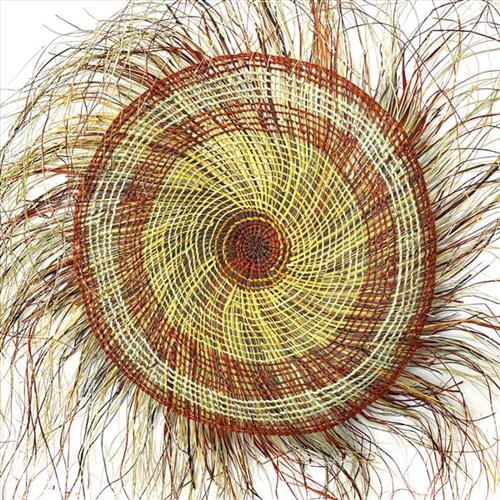
Woven Mat

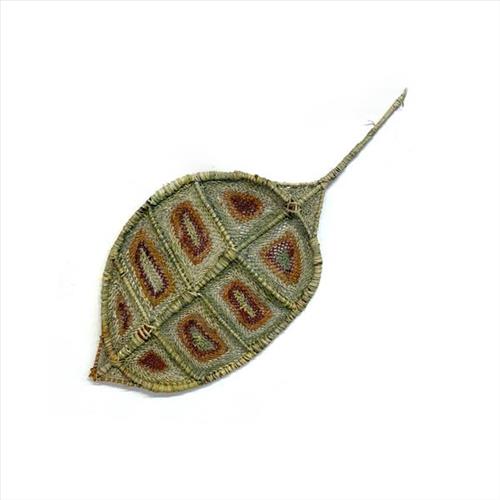
Yolŋu weavers of Arnhem Land create utilitarian, ceremonial, and decorative pieces using naturally sourced materials. This mat is made from young Pandanus spiralis leaves, harvested with a wooden hook, stripped of prickles, and dried to create strong, resilient fibres. These fibres are then twisted, coiled, or woven using traditional techniques to produce both functional and decorative mats.

Bula’bula weavers exclusively use natural dyes, derived from locally sourced roots, leaves and grasses. These pigments are extracted and infused into pandanus fibres by boiling over an open fire, producing the rich, vibrant colours characteristic of contemporary Yolŋu weavings.

Traditionally, Nganiyal (conical mats) functioned as insect screens when erected and as seating mats when folded, playing an important role in both daily life and ceremonial practices. Today, Yolŋu artists create a variety of shapes, including flat, round, and oblong mats. These non-traditional styles and the use of bright colours became more common after Missionaries began commissioning pieces in this style.