Fly Dreaming
Fly chased the insect everyway and the insect went straight into the limestone hill and the Fly followed and they both got stuck. Till today you can see the white coloured rock that turns into the egg from the fly.

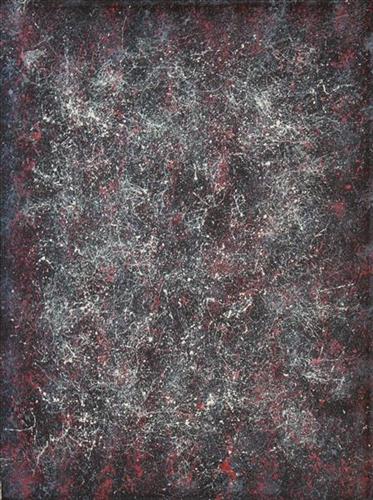
Fly chased the insect everyway and the insect went straight into the limestone hill and the Fly followed and they both got stuck. Till today you can see the white coloured rock that turns into the egg from the fly.

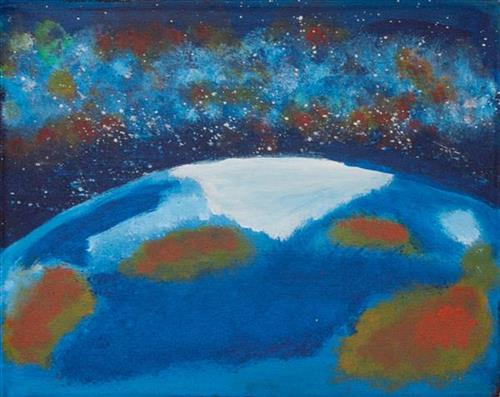
Overlooking the universe millions and trillions of miles away captured by James Webb’s telescope my expressionism.

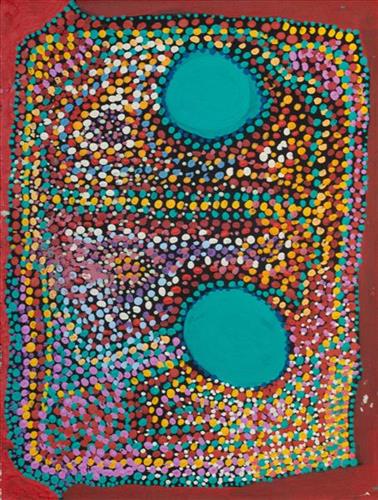
Martumili Artists work with over three hundred artists from remote Martu Aboriginal communities, including Punmu, Parnngurr, Kunawarritji, Jigalong, Irrungadji (Nullagine), and Warralong, as well as from the Parnpajinya (Newman) gallery and studio spaces. Known for their diverse, energetic, and unmediated painting styles, their works reflect the dramatic geography and scale of their homelands. Each artist, however, brings a unique approach to their craft.
Younger Martu artists often start painting alongside their parents, grandparents, and extended family, which fosters an organic learning process. This not only involves mastering painting techniques but also understanding specific locations, family histories, traditional ways of life, bush tucker, and Jukurrpa (Dreaming). Over time, with encouragement from their peers, they develop their own distinct styles and explore unique painting techniques and subject matter. In this work the artist brings a contemporary, evolving perspective to their work.

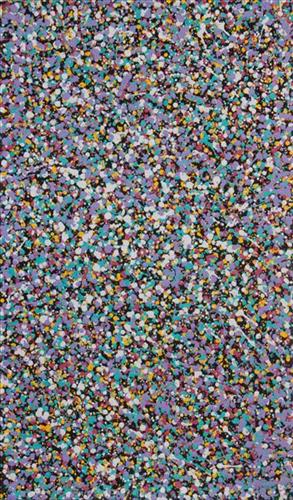
After fire you can see all the wild flowers come out. You can see it from above in a bird’s eye view. They grow everywhere around the country, especially the flat country, not as much on the hills. They grow anywhere there has been fire, when you travel through the Kimberley Country you can see it everywhere, as far as the eye can see.

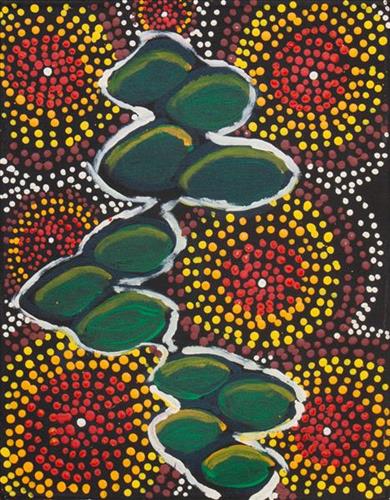
Karlkula (bush banana, silky pear or native pear) is a vine found throughout the dry regions of Western Australia and Central Australia. From November to April, and following rains, the plant produces fruit. When young, the green fruit is eaten raw. Older fruits are cooked and the seeds eaten.
During the pujiman (traditional, desert dwelling) period, Martu would traverse very large distances annually in small family groups, moving seasonally from water source to water source, and hunting and gathering bush tucker as they went. Whilst desert life has moved away from mobile hunter-gatherer subsistence throughout the course of the twentieth century, bush tucker continues to be a significant component of the modern Martu diet. Hunting and gathering bush tucker remain equally valuable as an important cultural practice that is passed on intergenerationally. Though hunting and gathering implements have been modernised, methods of harvesting, tracking and the use of fire burning to drive animals from their retreats are still commonly practiced today.

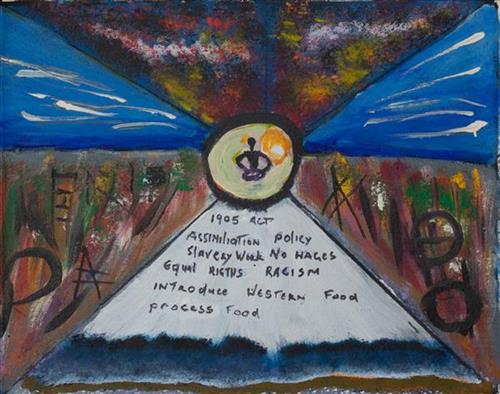
I grew up at Manora Station with my mother and father. My mother worked in the homestead as a domestic and my father used to hunt foxes and dingos away from killing the sheep. My parents never received wages, only clothes and food. Everyone had to work at the station including the kids which wasn’t fair because we needed to go to school but it was too far. They sent teachers to come and pick up children (Indigenous teachers) to go La Grange Mission from Nita Downs, Anna Plains and Menora Wallal Downs for schooling. One day I didn’t want to go to work so the station hand reported that to the station manager, he then spoke to me and my mother and told us to leave so we walked to the turnoff where we got a lift to Sandfire. The next day we walked to Anna Plains but at one of the windmills on the way there got a lift the rest of the way, then continued on to La Grange Mission.

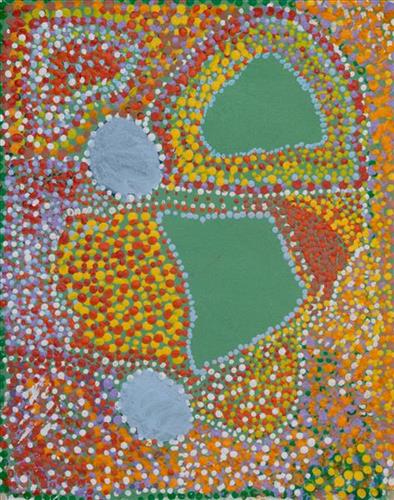
Martumili Artists work with over three hundred artists from remote Martu Aboriginal communities, including Punmu, Parnngurr, Kunawarritji, Jigalong, Irrungadji (Nullagine), and Warralong, as well as from the Parnpajinya (Newman) gallery and studio spaces. Known for their diverse, energetic, and unmediated painting styles, their works reflect the dramatic geography and scale of their homelands. Each artist, however, brings a unique approach to their craft.
Younger Martu artists often start painting alongside their parents, grandparents, and extended family, which fosters an organic learning process. This not only involves mastering painting techniques but also understanding specific locations, family histories, traditional ways of life, bush tucker, and Jukurrpa (Dreaming). Over time, with encouragement from their peers, they develop their own distinct styles and explore unique painting techniques and subject matter. In this work the artist brings a contemporary, evolving perspective to their work.

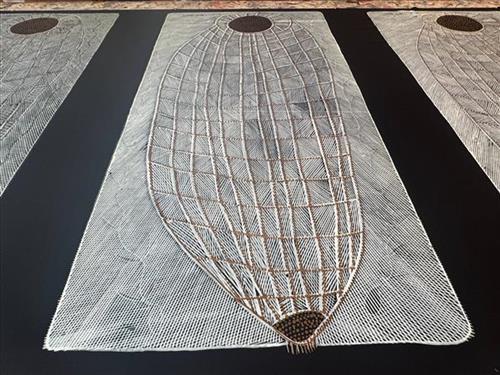
Kuninjku people traditionally make two sorts of conical fish traps. One is called mandjabu and is made from a strong, durable vine called milil, and a smaller one is called manylik mandjabu, and made from the grass manylik. The mandjabuconical fish trap is bigger and stronger and used in tidal reaches of creeks to catch large fish. The smaller, lighter manyliktrap is used in freshwater flowing creeks to catch smaller fish and freshwater prawns. In earlier times, only men were involved in the construction of the large fish traps, but children would often crawl inside and assist.
To make mandjabu, weavers firstly harvest milil (burney vine, Malaisia scandens) and put it in water overnight to make it soft. Then they start weaving it; they make rings for the inside to keep the fish trap’s shape. People also make string from the bark of burdaga (kurrajong) to attach the bardainy (hibiscus) rings and to tie the conical end of the fish trap. It’s hard work and it can take three or four weeks to make a fish trap. People also use fish-net fences called kunkarlewabe. They would put the kunkarlewabe across rivers and creeks. In the middle they would place the mandjabu. They also used small things like sticks, rocks, mud and grass to block the fish from going through. This way we would catch fish such as saltwater barramundi rajarra, ngaldadmurrng (freshwater barramundi), small black freshwater catfish (buliya), bonefish (an-guwirrpiya), and sand bass (dalakan) in the mandjabu.

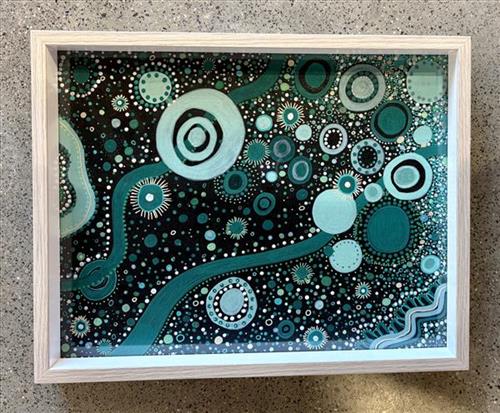
Life giving water that flows through country. the pathways and circles represent rivers, waterholes and the gathering places.
Status: Stock
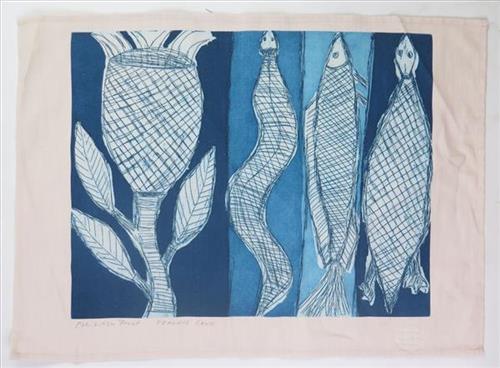
Sourced from archival prints in Djilpin’s Gapu Series, outstanding artworks have been printed on to a high quality, cotton linen blend tea towel. This is senior artist Frankie Lane’s Blue Billabong from his 2008 etching, originally hand printed by Basil Hall Editions.
Australian made and printed. Cotton Linen. 65 x 45mm.