111982390807


Coil Basket

Coil basketry is a well-established fibre art form in the Maningrida region, especially for women from the Kuninjku, Rembarrnga, Ndjebbana and Nakkara language groups. 

Artists make coiled baskets of many shapes and sizes, ranging from small round baskets to large oval baby baskets, and made mostly from pandanus fibre that is dyed with natural pigments. Bundles of fibre are formed into coils which are covered and stitched together with strands of fibre threaded onto a needle. Artists combine colours and patterns to obtain intricate new graphic patterns.

These techniques are believed to have been introduced to Arnhem Land by Greta Matthews, a missionary on Goulburn Island in the 1920s. She had probably learnt coil basketry from Aboriginal people in the south-east of Australia, possibly the Murray River people such as the Yorta Yorta or the coastal Ngarrindjeri. 

The coiling technique spread quickly from Goulburn Island to people on mainland Arnhem Land. 


111982390804


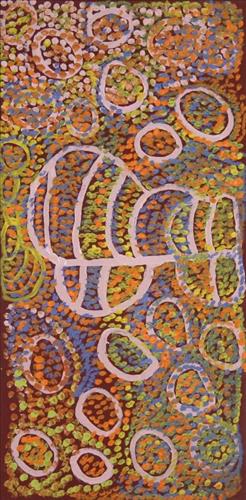
Nawarlah – Brown River Stingray

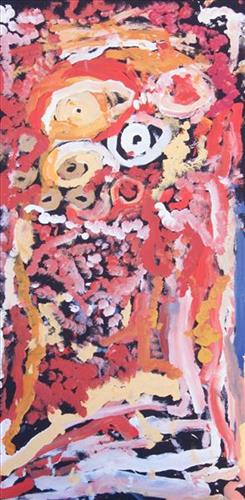
We hunt the Nawarlah (Brown River Stingray) during the wet season.  There is a plant with a yellow flower that tells us that it is the right time.  We know it will be fat. 

It is well known that Aboriginal art often depicts images of sacred totems or dreamings of Aboriginal culture. However, the world of the non-sacred also provides a rich source of subject matter for Aboriginal art. Much of the rock art of western Arnhem Land for example features secular topics such as common food animals and plants, depicted because of their economic importance but also merely because of their existence in the environment.

111982390803


Birlmu or Namarnkorl (Barramundi)

It is well known that Aboriginal art often depicts images of sacred totems or dreamings of Aboriginal culture. However, the world of the non-sacred also provides a rich source of subject matter for Aboriginal art. Much of the rock art of western Arnhem Land for example features secular topics such as common food animals and plants, depicted because of their economic importance but also merely because of their existence in the environment. The artist has painted ‘birlmu’ or ‘namarnkorl’ (Barramundi [Lates calcarifer]). During the dry season the barramundi is an important food source for inland Aboriginal people. These fish are caught throughout the artist’s clan estate, either in fishtraps woven from pandanus or sedge grass, or else hunted with spears and fishing lines in billabongs and streams where they shelter from the sun under fallen logs or amongst the leaves of water plants.

224976637141


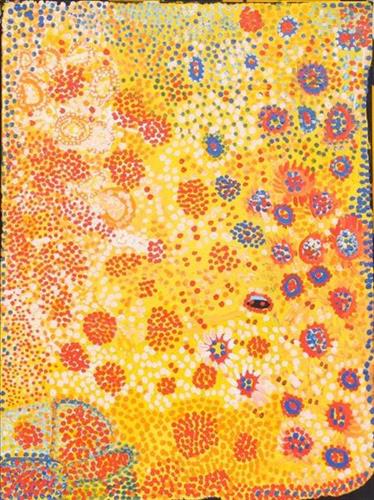
Walu

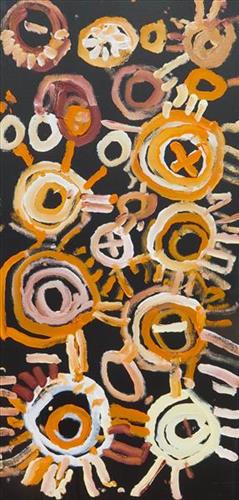
Rachel Jennings is a Warburton woman. Her sister Eunice Porter lives in Warakurna and she sometimes comes to visit her and paints for Warakurna Artists. Rachel also paints for the Warburton Arts project. This painting depicts a story from Walu. There were two men and one little boy camping at the Walu rockhole. The men went hunting and left the little boy behind. The men returned with an emu and pulled out its heart. The boy was holding the heart and blood spilt onto the rocks. He ran away with the heart and turned into wind. The emu’s blood trail stained the rocks and can still be seen there today.

224976642008


Tjukurla Pirni

Carol Maanyatja Golding was born at Walu rockhole not far from Warakurna. Carol’s father was born at Tjukurla Pirni, a number of important rockholes located between Warakurna and Wanarn. “My father was born here, I love this place as you can always get water. Many Tjurlpu (birds) used to live there. They’d fly around country collecting kampurarrpa (bush raisins). One day something happened and they finished. Perhaps the water ran out? You might still see them somewhere, but I can’t tell you anymore”. Ngaanyatjarra Land Management have built metal spiders that sit over the rockholes so the camels don’t break them and spoil the water”.

224980579898


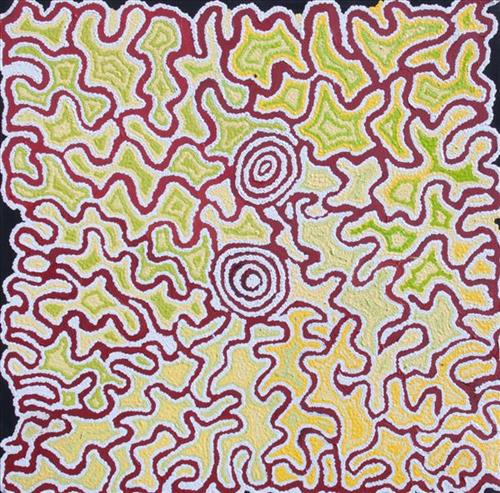
Kuluntjarra

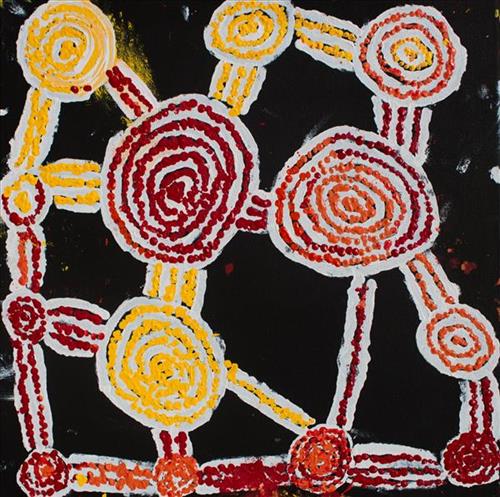
Kuluntjarra is a salt lake about twenty kilometres west of Patjarr. It was created by two men (Wati Kutjarra Tjukurrpa) who were hunting and camping at Wanaritjarra, a small but deep rockhole near the lake. The two men found mingkurrpa (native tobacco) growing around the lake, which they picked and chewed. It was too strong and made them very sick. They started to sweat and then throw up. They vomited copiously and created the salt lake which is always soft on top.

224980599678


Lake Baker

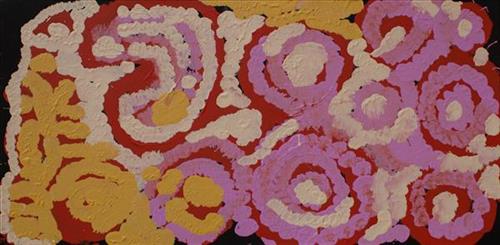
Neville McArthur is from Warburton and now resides at Wanarn Aged Care. This painting is about a Kunyia that travelled all the way from Kuru Alala to Lake Baker.

224980700914


Tingarri Tjukurrpa

George Ward Tjungurrayi was born in the desert west of Kiwirrkura in 1947. George’s painting depicts a story about Tingari men travelling through his ancestral country from rockhole to rockhole meeting other Tingari men for business Lake MacDonald way. The men turned into Warnambi.

224980701478


Wanarn Tjilpi and Pampa Painting Program

Warakurna Artists works closely with Wanarn Aged Care Facility to conduct painting sessions with elderly patients. This program nurtures artists who have arguably contributed largely to one of the most significant art movements in Australia. The joyous communal activity has a myriad of positive benefits such as reliving boredom and frustration. Health staff report that this diversional therapy helps to reduce patient’s drug intake and the old people rejoice in sharing and passing on their important Tjukurrpa with their families who visit them when the workshops are conducted. Warakurna Artists is a positive and powerful example of Aboriginal businesses managed and governed by artists and community elders ensuring the wealth of talent and economic returns are retained in the community.