
116182236663

Fire Crackers, Territory Day
“Territory day when it was raining, this year. Fun night, we got the car and drove out Larapinta side, let the kids out to see them crackers, family night. The kids are happy when they see them fire crackers. Fun night. Rainy night.”
116182256744
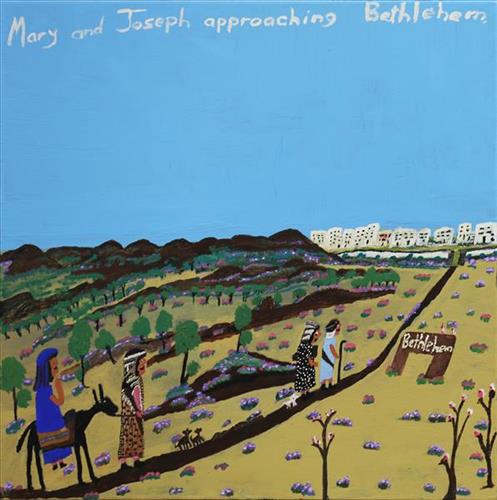
Mary and Joseph approaching Bethlehem.
Mary and Joseph traveling to Bethlehem for the census. Bethlehem was also known as the City of David and Joseph was a descendant of David.

224982278804
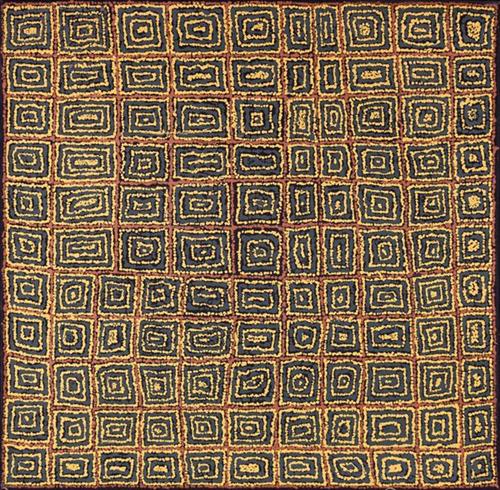
Tingari
A large group of Tingari men travelled from Tjukula north to Pirmal, then east to the sacred cave site of Mitukatjirri (southeast of Kintore), continuing through Kintore and further northwest to Pinari
Morris Bennett is the son of renowned Pintupi artist John John Bennett Tjapangati, who passed this Tingari story on to him.

116182279713
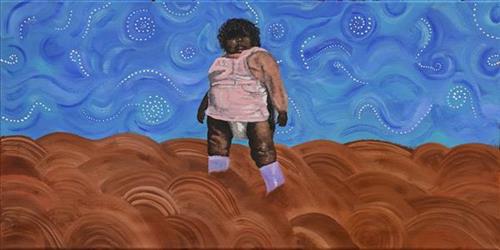
Daughter Sam Sam
This is my daughter Sam Sam standing tall on the sandhill.

116182280042

Blak, Loud and Proud
‘Keep the fire burning!, Blak, Loud and Proud.” – Inspired by the 2024 Naidoc week theme

224982291535
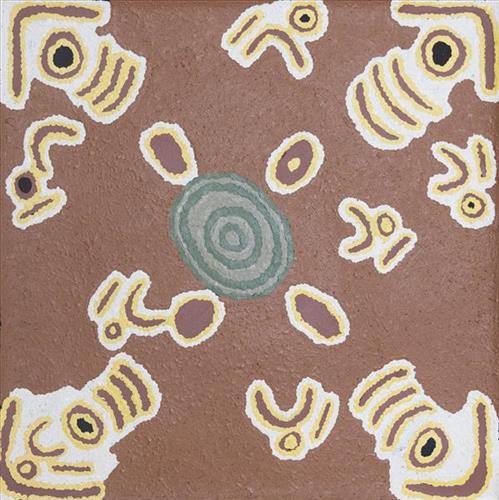
Minyma Kutjarra at Docker River
This painting depicts the Minyma Kutjarra Dreamtime story as the women travelled through Docker River up north to Kintore. This is a sacred dreamtime story and not much more can be said.

116182292992

Titjikala Eagle Story
This is Tapatjatjaka, Titjikala means ‘eagle from the clay pan’, and that’s the clay pan on the way into town. It’s sacred. This is the story of the Irretye – Wedge tailed Eagle, who flew overhead and saw a little boy sitting there crying. The boy’s mother just walked away from him to go hunting. Left him there crying. All that boy’s crying brought the Eagle. He heard him, saw him down there on his own. Eagle fly down. The boy climbed on the back of the Eagle, who took him away. They been fly away. That little boy never been seen again. The Eagle stole the little boy and took him away to another place. This happened just near these cattle yards, and the water tank that are part of the old Maryvale Station. Tapatjatjaka is another name for Titjikala community. The Eagle Dreaming is significant to the region and people. The community is also known as Maryvale and Tapatjatjaka.

116182303817

Walu way, this side
They were sitting down talking yarns, separate. That’s Walu way, this side of Walu (Petermann Ranges). That middle wati said ‘I was here when I was little boy with grandfather and we look round for hunting. We spear one kangaroo. Go back home. We bin had a good feed. When I grow up young fella then I saw them young fella and I joined in with them. Look around for woman. And we used to stay separate. No trouble then.’

224982316913
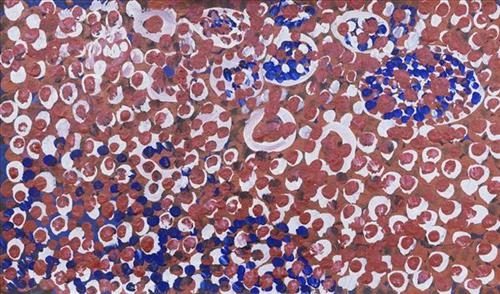
Elaine Papulankutja Dreaming
Elaine is a painter from Papulankutja (Blackstone) who now resides at Wanarn Aged Care. Elaine paints tjukurrpa from her country of Papulankutja, which includes songlines for associated tjukurrpa of Wati Kutjarra and Lirru – carpet python dreaming.
Warakurna Artists works closely with Wanarn Aged Care Facility to conduct painting sessions with elderly patients. This program nurtures artists who have contributed largely to one of the most significant art movements in Australia. The joyous communal activity has a myriad of positive benefits such as reliving boredom and frustration. Health staff report that this diversional therapy helps to reduce patient’s drug intake and the old people rejoice in sharing and passing on their important Tjukurrpa with their families who visit them when the workshops are conducted. Warakurna Artists is a positive and powerful example of Aboriginal businesses managed and governed by artists and community elders ensuring the wealth of talent and economic returns are retained in the community.