377810582388051


Barnkabarra (Mud Crabs)

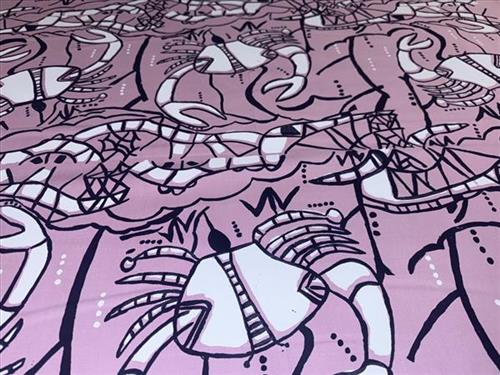
This design tells the story of Elizabeth’s homeland – a dreaming place, a good dreaming place with plenty of Barnkabarra (Mud Crabs). Elizabeth’s homeland lies east of Maningrida, at the mouth of Blyth river. This country is known for a large spiritual mud crab, which lives in the area.

Many families go and collect crabs to eat there with long sticks, or collect directly from the shores. Mud crabs hide in the muddy bottoms of estuaries and mangrove forests in areas surrounding Maningrida. After a king tide, a large cyclical tide which bring the crabs out from the mangroves, it is a good time to find crabs.

Barnkabarra (mud crabs) in Kuninjku language, or Rrugurrgurda (mud crabs) in the Burarra language, are good baladji (bush food in Burarra) and can be caught all year round. They are put on the fire to cook and they are ready when they turn a bright orange colour.
377810582388049


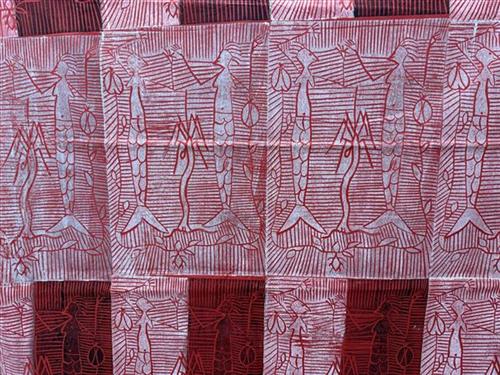
Djomi (Fresh Water Spirit)

This design depicts the story of the artist’s ancestral dreaming, the Djómi (Fresh Water Spirit).

The Djómi figure is a mermaid-like spirit with fish tail that lives in the freshwater stream that flows out to the sea cliff near Maningrida. Djómi is known to be a very powerful fertility symbol.

“If you go there, you can get pregnant easily. Djómi has babies, and they can give other babies too. The Djómi spirit is so powerful, that women can end up with multiple babies at once, twins or sometimes even more. The Djómi spirits lay eggs near the sacred freshwater stream in Maningrida. Inside the eggs are human babies as well as young Djómi. Men do not go near that swamp, because Djomi is so powerful that men might get pregnant there too. So men are too scared of that Djómi. When we visit the Djómi freshwater spring, we can hear young Djómi  crying. They sound like normal babies crying, those Djómi spirits. They are looking for a mother. This Djómi is my dreaming, I got permission from my djungkay (ritual manager) to paint this Djómi design. For me I always ask my djunguy permission to paint, because that is our cultural way. This design also depicts the freshwater lily leaves and seaweed from the base of the sea floor.” Joy Galrbin

377810582388028


Kayawa (baby floor mat)

A round design depicting a small pandanus floor mat used to nurse a baby. 

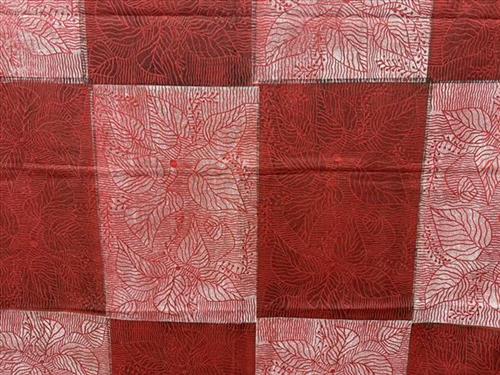
This fabric was created using the linocut printing technique. The lino tile has been carved by the artist in Maningrida, and has been printed by hand using a variety of colours and layers. The linocut technique ensures each textile piece is a one-off, limited edition piece. Bábbarra Women’s Centre supports the economic independence of Indigenous women in the Arnhem Land community of Maningrida, Northern Territory, Australia. Designs created by the women at Bábbarra reflect strong cultural knowledge, which is passed down to younger generations through their textile design practice.

111982388555


Kunkurra (The Spiralling Wind)

‘Kunkurra’, the spiralling wind is associated with several sites in the Kardbam clan estate. On one level, this painting can be interpreted as a depiction of the kinds of mini-cyclones common during the wet season in Arnhem Land, where the artist lives. In this painting, Kunkurra also relates specifically to a site called Bilwoyinj, near Mankorlod.

At this site, two of the most important Kuninjku creation beings, a father and son known as na-korrkko, are believed to have hunted and eaten a goanna. They left some of the goanna fat behind at the site, which turned into the rock that still stands there today. The word Bilwoyinj, which is the name of this site, also refers to the fat of the goanna. Bilwoyinj site is also a ceremonial ground for a ceremony called Yabbaduruwa, a major ceremony owned by the Yirridja patrimoiety. The Yabbaduruwa ceremony is primarily concerned with initiation, land ownership and promoting the cyclical regeneration of the human and natural worlds.

220982388457


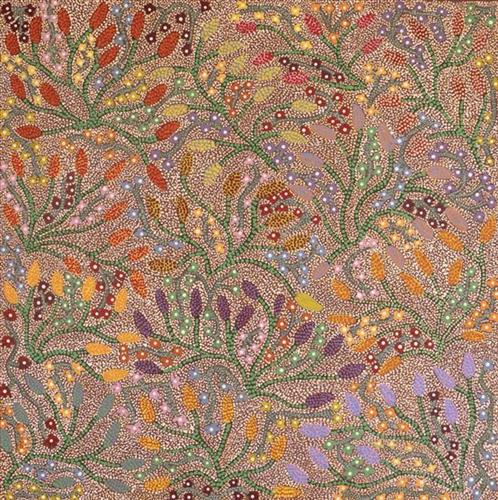
Edie Kemarre Holmes – Arratherrk (Bush Flower)

They would use the vine of this plant as rope to help carry coolamon with kids. Make like a bag and carry the kids in this.

My grandmother was called Arratherrk and her sister was calle Pwelk, the leaf of the bush banana.  At Elkedra there is two vine trees and each sister is named after each one. 

220982388456


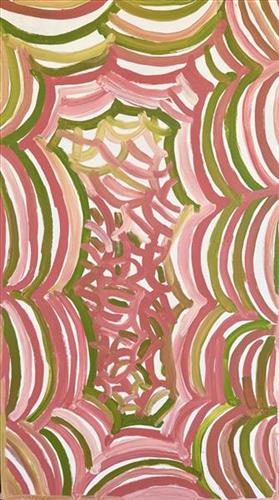
Maisie Petyarre Bundey – Anhelengkw (Emu) Dreaming

Anhelengkw (emu) dreaming is the breast body painting depicting the story of the mother emu who runs away and leaves the father emu to look after the eggs until they hatch, he then raises the chicks.

This story is passed down through Maisie’s family and celebrated in dance.

220982388454


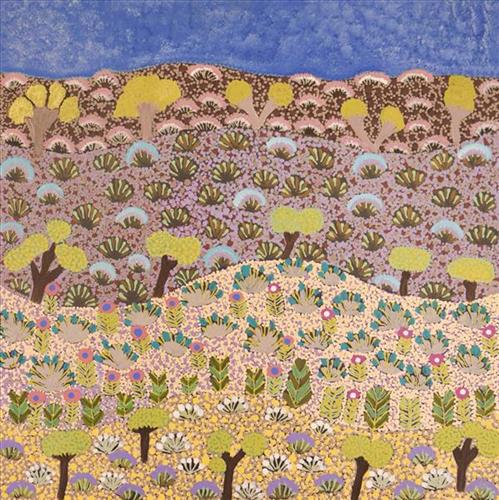
View Of Country

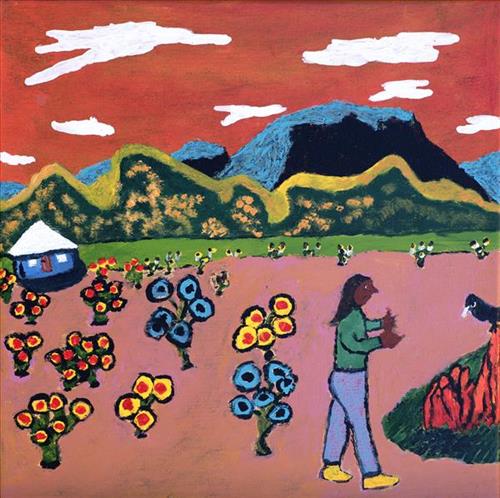
This shows the layered landscape of Alyawarr, Central Australia. Knowing your country is an important part of living in a remote community like Ampilatwatja.

Knowing when and where to go hunting and gathering, knowing where there is ‘soakage’ (where you can dig for water), travelling with family for ceremonies, and maintaining a connection with the land.

“This is my country, my view of country.”

The community of Ampilatwatja made a conscious decision not to paint altyerr (dreaming stories). The artists paint their country where those stories sit.


220982388440


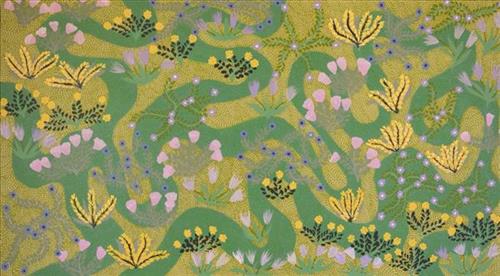
Kathleen Nanima Rambler – Creek Bed Running

When you fly over my country looking down after the rain you can see the river beds running like snakes slithering through the land, everything looks like patches of green with the spinifex and sacred trees, and the beautiful blue of the water refreshing the land and the dry river beds