111582388644


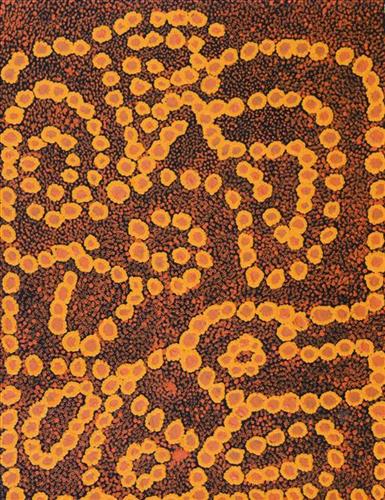
Ngurra (home Country, camp)

“Ngurra (home Country, camp) is a very special Country- where we grew up. We go mostly out on Country and camp out. We go swimming and looking for honey on the trees. We would hunt turkey, emu, kangaroo, look for bardi (witchetty grub), honey ants, yellow berries. It’s an outstation. We call it home. We grew up there. Good memories of that place.” 

– Roxanne Newberry 

The Western Desert term ‘ngurra’ is hugely versatile in application. Broadly denoting birthplace and belonging, ngurra can refer to a body of water, a camp site, a large area of Country, or even a modern house. People identify with their ngurra in terms of specific rights and responsibilities, and the possession of intimate knowledge of the physical and cultural properties of one’s Country. This knowledge is traditionally passed intergenerationally through family connections. Country for Martu is full of memory; not just the memory of their own movement through it, but also of their family. As summarised by Ngalangka Nola Taylor, “painting the ngurra, they do it to remember their connections.” 

Painting ngurra, and in so doing sharing the Jukurrpa (Dreaming) stories and physical characteristics of that place, has today become an important means of cultural maintenance. Physical maintenance of one’s ngurra, like cultural maintenance, ensures a site’s wellbeing, and is a responsibility of the people belonging to that area.

225182389045


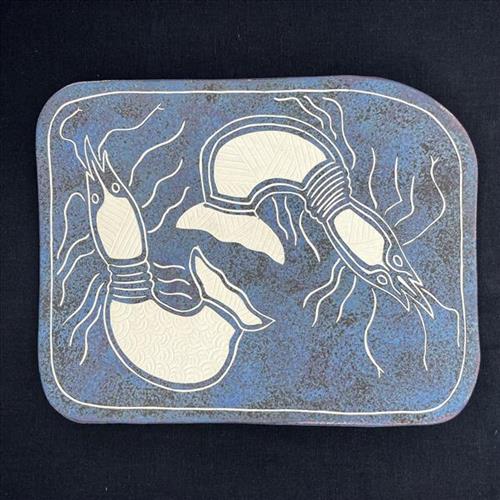
Wakal (Freshwater Prawn)

Wakal are small freshwater prawns. They can be found in streams and creeks where they hide under rocks. We use them as bait when fishing up-stream and in deep waterholes. 

221282388989


Tali / Sand dune

This design is inspired by the red sand dunes that are found throughout the central desert. There is a large red sand dune near Ernabella named Wamikata which is a popular place for looking for maku (witchetty grubs) and for teaching Milpatjunanyi (telling stories in the sand) to children.

221282388966


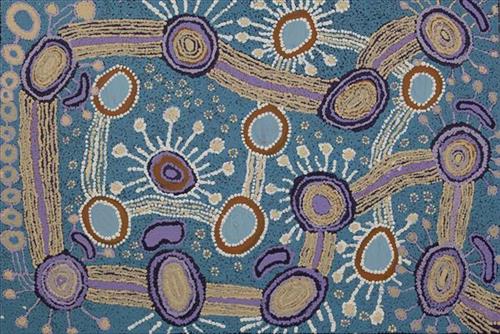
Minyma Kutjara (Two Women Near Ernabella)

There are many stories about the two sisters (Minyma Kutjara). This part of the story is siginificant to the women of Ernabella. There was a gathering of minyma mingkiri (mouse women) at a hill called Yunanpa, which is near Ngarutjara (to the north of Ernabella). They are all collecting bushfoods together when the two sisters decide to go travelling. They travel to several water places to the north and east of Ernabella including Alalka. They keep going until they get to Wamitjara, a waterhole near Kenmore park. Here they come across a man sleeping. They hit him over the head with their wana (digging stick) and knock him unconscious. Then they tie up his arms and legs and head towards Alice Springs, carrying him between them. They sing and dance sacred women’s stories all the way. They leave him at Stuart’s Well, and continue on to Alice Springs to meet up with a large group of women.

114182389123


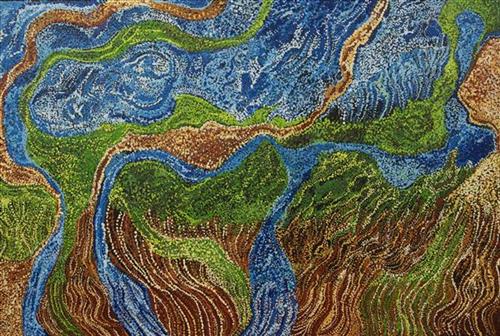
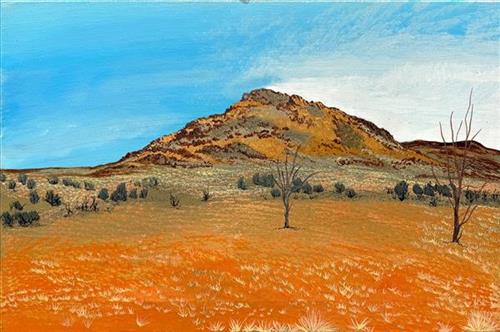
The Ngaanyatjarra Lands

‘The Ngaanyatjarra Lands’, Craig Morrison is predominantly a landscape artist depicting vibrant scenes from across the Ngaanyatjarra Lands. Craig is a self taught landscape painter taking inspiration from the Hermannsburg movement. Craig’s paintings are a celebration of the seasonal changes which bring vast site of sandhills and hills in the summer and lush foliage coming into spring. Craig enjoys exploring the lands, studying the elements of his environment with close detail. He is a great role model for younger male artists in the community.