115682401464


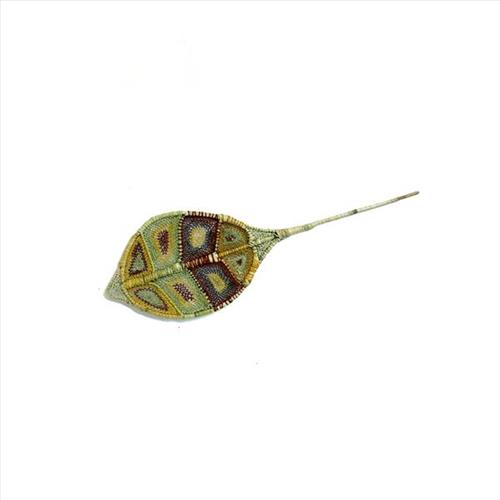
Woven Stingray

Yolŋu weavers of Arnhem Land craft both utilitarian and ceremonial objects using naturally sourced materials, with more recent works also including decorative pieces, such as this woven stingray.

The primary material used in this piece is the young, green leaves of the Pandanus spiralis tree, that were harvested using a long wooden hook. The leaves are stripped of their prickles, with the smaller fibres being dried to produce a strong, resilient material. These fibres are then twisted, coiled, or combined using various techniques to create this motif of a stingray, an important totem for Yolŋu people of Central Arnhem Land.

Bula’bula weavers exclusively use natural dyes, derived from locally sourced roots, leaves and grasses. These pigments are extracted and infused into pandanus fibres by boiling over an open fire, producing the rich, vibrant colours characteristic of contemporary Yolŋu weavings.
115682401461


Woven Barramundi

Yolŋu weavers of Arnhem Land craft both utilitarian and ceremonial objects using naturally sourced materials, with more recent works also including decorative pieces, such as this woven barramundi.

The primary material used in this piece is the young, green leaves of the Pandanus spiralis tree, that are harvested using a long wooden hook. The leaves are stripped of their prickles, with the smaller fibres being dried to produce a strong, resilient material. These fibres are then twisted, coiled, or combined using various techniques to create this motif of a barramundi, a vital and abundant food source for Yolŋu people.

Bula’bula weavers exclusively use natural dyes, derived from locally sourced roots, leaves and grasses. These pigments are extracted and infused into pandanus fibres by boiling over an open fire, producing the rich, vibrant colours characteristic of contemporary Yolŋu weavings.
111582401541


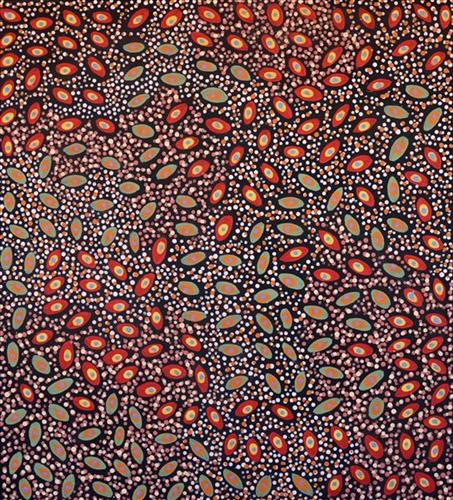
Savoury Creek

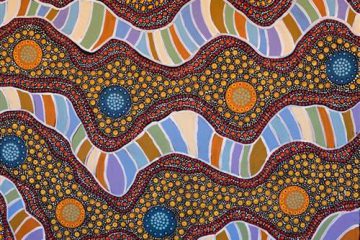
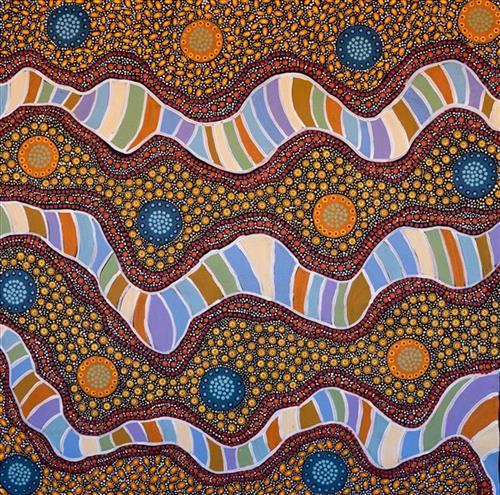
Martumili Artists work with over three hundred artists from remote Martu Aboriginal communities, including Punmu, Parnngurr, Kunawarritji, Jigalong, Irrungadji (Nullagine), and Warralong, as well as from the Parnpajinya (Newman) gallery and studio spaces. Known for their diverse, energetic, and unmediated painting styles, their works reflect the dramatic geography and scale of their homelands. Each artist, however, brings a unique approach to their craft.

Younger Martu artists often start painting alongside their parents, grandparents, and extended family, which fosters an organic learning process. This not only involves mastering painting techniques but also understanding specific locations, family histories, traditional ways of life, bush tucker, and Jukurrpa (Dreaming). Over time, with encouragement from their peers, they develop their own distinct styles and explore unique painting techniques and subject matter. In this work the artist brings a contemporary, evolving perspective to their work.

111982401648


Mat

Works in fibre from the Maningrida region are widely recognised as some of the finest in Australia. Artists confidently push the boundaries of fibre craft and cultural expression, adapting traditional techniques and forms to produce strikingly inventive and aesthetically exquisite artworks.

Commonly used fibres include the leaves of pandanus (Pandanus spiralis), and palms (Livistonus), mírlírl (burney or jungle vine, Malaisia scandens), and the inner bark of kurrajong and stringybark eucalyptus trees. Weaving is physically hard work, now done only by women. Artists commonly use a mix of naturally dyed and undyed fibre to create a striking variation of coloured bands. They colour the pandanus using natural dyes made from the roots, leaves or flowers of plants within the weaver’s clan estate. Some artists also incorporate different types of looping to produce different patterns and textured finishes. Each type of mat, fibre bag, basket and dilly bag has its own name in the various languages spoken in the Maningrida region.

Artists weave many different kinds of mats. Conical mats were traditionally used to shield babies from mosquitoes. Long flat mats were used for blocking creeks so that fish would be diverted into fish traps. A small triangular mat made of pandanus fibre used to be worn by women during ceremonial gatherings, tied around their back and covering them at the front. Mats are also used for wrapping and rinsing food in water.

Artists usually use ngarakáya, pandanus spiralis, to weave fragrant, decorative round or oblong mats, as well as the less common triangular and conical shapes. The radial woven patterns of the finest round mats appear to vibrate with colour, sometimes regarded as an aesthetic manifestation of deep cultural meaning, as there is a significant spiritual dimension to pandanus mats.


111982401625


Coil Basket

Coil basketry is a well-established fibre art form in the Maningrida region, especially for women from the Kuninjku, Rembarrnga, Ndjebbana and Nakkara language groups. 

Artists make coiled baskets of many shapes and sizes, ranging from small round baskets to large oval baby baskets, and made mostly from pandanus fibre that is dyed with natural pigments. Bundles of fibre are formed into coils which are covered and stitched together with strands of fibre threaded onto a needle. Artists combine colours and patterns to obtain intricate new graphic patterns.

These techniques are believed to have been introduced to Arnhem Land by Greta Matthews, a missionary on Goulburn Island in the 1920s. She had probably learnt coil basketry from Aboriginal people in the south-east of Australia, possibly the Murray River people such as the Yorta Yorta or the coastal Ngarrindjeri. 

The coiling technique spread quickly from Goulburn Island to people on mainland Arnhem Land. 


116482401617


Rock Art

This place is where the poeple went hunting for food. They knew that there they could find Stingray, Dugong and Turtle. This place is Murujuga on the Burrup Peninsula in the Pilbara.

116482401615


Heritage Icon

This old house in Roebourne used to be known as Dalgety House. Now days it’s our famous Yinjaa-Barni Art Centre where everybody is welcome, we all come together here.