377810582397575


Babbarra Mimih

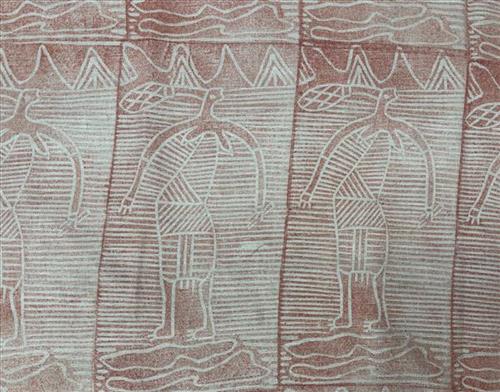
Bábbarra Women’s Centre is named after a billabong.

This design references the Bábbarra logo that shows a female mimih (spirit being).

This fabric was created using the linocut printing technique. The lino tile has been carved by the artist in Maningrida, and has been printed by hand using a variety of colours and layers. The linocut technique ensures each textile piece is a one-off, limited edition piece. Bábbarra Women’s Centre supports the economic independence of Indigenous women in the Arnhem Land community of Maningrida, Northern Territory, Australia. Designs created by the women at Bábbarra reflect strong cultural knowledge, which is passed down to younger generations through their textile design practice.
220982398894


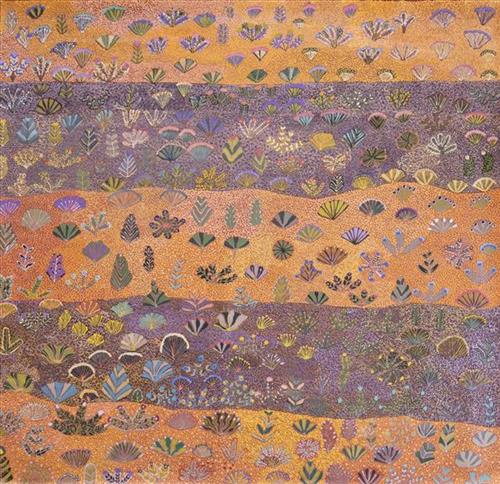
Daisy Kemarre Moss – My Mother’s Country

Daisy has painted her Mother’s country, Kngwarraye country. Kngwarraye is one of the four main skin names of Ampilatwatja.

Bush medicine, goanna and many other traditional bush foods are found here. This is where Daisy’s traditional laws lie.

Daisy paints her country to keep her country strong.

The artists of Ampilatwatja made a conscious decision not to paint altyerr (dreaming stories). The artists paint their country where those stories sit.

220982402466


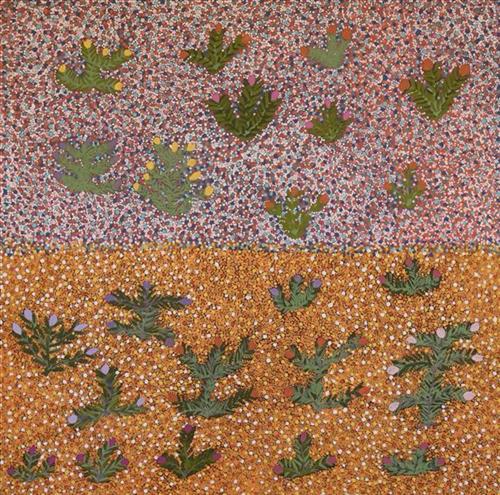
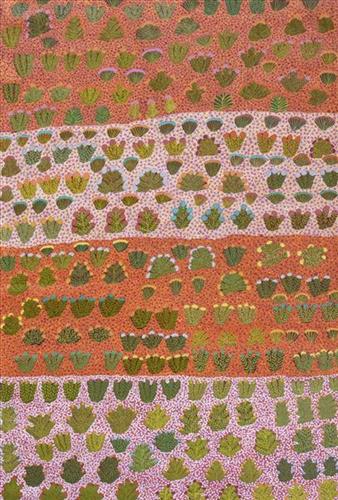
Jessie Pula Luck – My Bush Medicine Plants

I was born in Irrultja, my father’s country. I paint therrpeyt, a plant with red and pink flowers, it is my family symbol. You can suck the flowers to get a sweet honey from. You can wash your body with the leaves to heal sores and clean your body. I paint arreth which grows in the rocky ground and helps fix my sore throat when I make a hot tea from the leaves. I love to paint, I feel happy when I paint, I feel busy and good.

220982405219


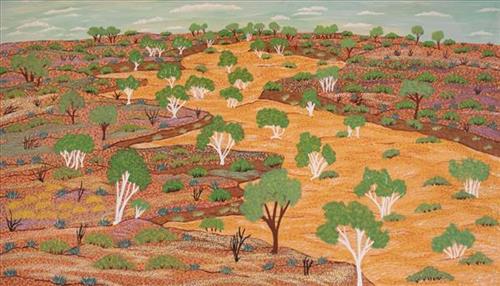
Levina Pitjara Morton – My Country

When I paint, I think of the stories my Grandmother Lilly tells me of how she and her family used to live. Where they lived on her country as she was growing up and how they followed their mothers and their grandmothers.

When I go hunting with family for bush tucker and bush medicine it makes me think of Lilly’s stories, the way they used to live off the land, traditionally.
I paint those places my Grandmother tells me about, I paint how I imagine they were and the life they used to lead.

Levina’s fine dot technique requires a lot of time and patience, communicates the pride and passion she has for her paintings and her country.

The community of Ampilatwatja made a conscious decision not to paint altyerr (dreaming stories). The artists paint their country where those stories sit.

220982406229


Julieanne Ngwarraye Morton – My Country, My Bush Medicine

My Mother, Lilly Kemarre, taught me to paint. She likes to paint her Mother’s and Father’s country from the old days, when they used to live off of the land.

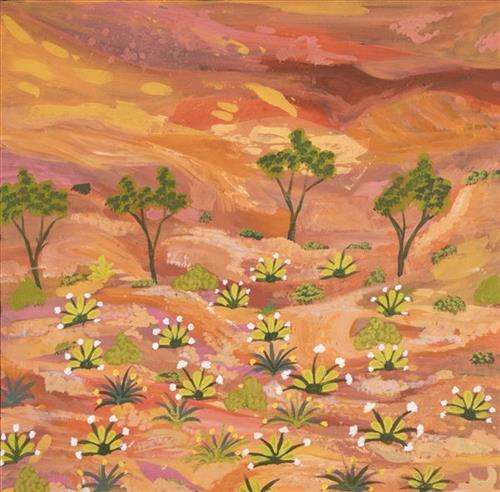
The landscape changes during the different seasons in the year. I paint the dried flowers and bushes from last season as well as the new plants that come after the rain. These plants have special meanings and uses for us. I have been taught how to read the country, and now I teach my children these skills.

Julieanne’s painting’s are inspired by her Mother’s stories of the old days, walking and living on their land, and also of her own experience of life out here in Alyawarr country.

111582406249


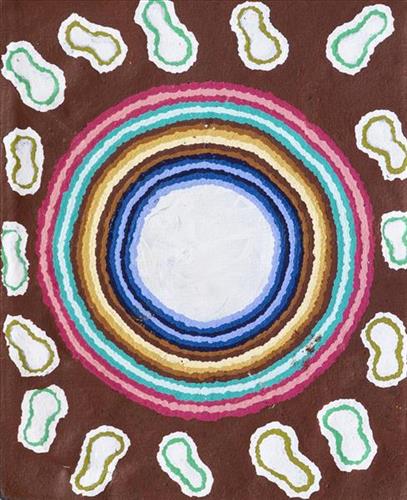
Soak

Martumili Artists work with over three hundred artists from remote Martu Aboriginal communities, including Punmu, Parnngurr, Kunawarritji, Jigalong, Irrungadji (Nullagine), and Warralong, as well as from the Parnpajinya (Newman) gallery and studio spaces. Known for their diverse, energetic, and unmediated painting styles, their works reflect the dramatic geography and scale of their homelands. Each artist, however, brings a unique approach to their craft.

Younger Martu artists often start painting alongside their parents, grandparents, and extended family, which fosters an organic learning process. This not only involves mastering painting techniques but also understanding specific locations, family histories, traditional ways of life, bush tucker, and Jukurrpa (Dreaming). Over time, with encouragement from their peers, they develop their own distinct styles and explore unique painting techniques and subject matter. In this work the artist brings a contemporary, evolving perspective to their work.

115682406862


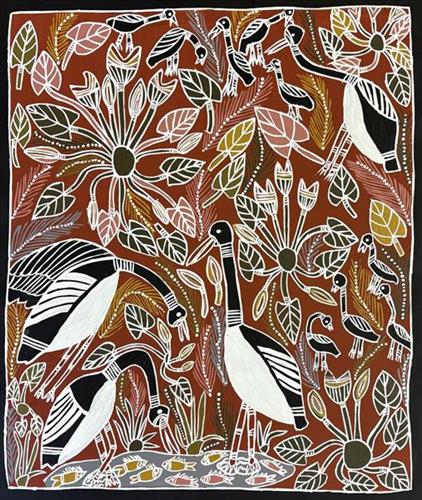
Gumang (Magpie Geese)

The Yolngu people of Arnhem Land originate from a spiritual source, fixed in a particular place in their land or the sea. These ‘Spiritual Reservoirs’ are often in the form of special waterholes made by Wangarr (Creative Beings) long ago close to the beginning of time.

The creator beings moved across the country side, shaping the land and implanting in each tract of country, the spiritual life force for the people who were to own it. These Creative Spirits took many forms. When they gave the land to each group they also gave songs, dances, ceremony, the associated laws and language. The Creation story for Ganalbingu people took place near the middle section of the Glyde River where it becomes the Goyder River. Their land, Ngaliyindi, sits astride the Arafura Swamp in Central Arnhem Land.

In this painting, the artist has depicted Gumang (magpie geese), which are sacred to the Ganalbingu people. To the east of the Arafura Swamp is a freshwater billabong which is said to have been made by the Goose Spirit and is in the shape of a goose nest. As a result, geese, their eggs and their nests are sacred.

220982408278


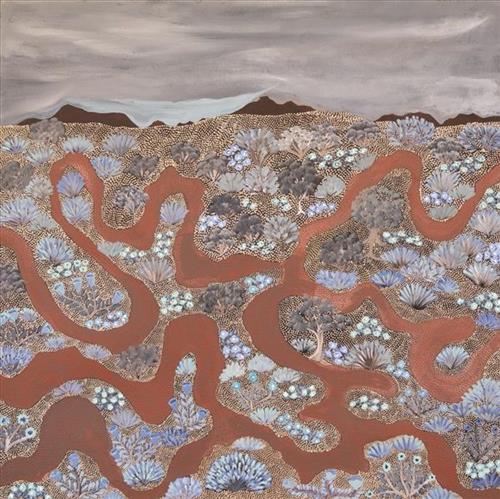
Kathleen Nanima Rambler – Storm at Barrow Creek

The storm clouds are coming over the bushland at Barrow Creek which is my Father’s country. It is very hot and dry over summer, then the rains come, it make the bush fresh, and the bush turkeys are fat. It is my Uncle’s country –  he can make it rain, my mother’s side have the power to make rain come with their totems.

115682408138


Wurrutjara (Sand Palm)

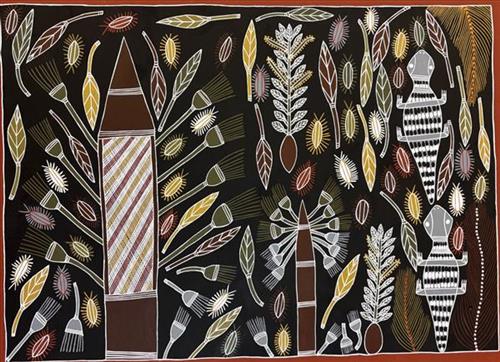
Seen in and around Ramingining, the sand palm is a small, slender palm, growing to about 7 m tall. It is fire tolerant and usually grows in environments where it is exposed to frequent fires. Aboriginal people use this palm as the fruits are edible and the heart  can be eaten, either raw or roasted. The core of the stem is pounded and made into a drink which was used to treat coughs, colds, chest infections, diarrhoea, and tuberculosis.

She has also painted itchy caterpillar and geckos. 

220982408520


Elizabeth Ngwarraye Bonney – Bush Tobacco

Bush tobacco flowers in winter and we harvest the whole plant, let it dry then burn it with white ash from the eucalyptus tree, it’s an old recipe.