Lukarrara Tjukurrpa
In this artwork Margie has painted Lukarrara Tjukurrpa (Desert Fringe Rush Seed Dreaming). This Tjukurrpa comes from a place north of Yuendumu in the Northern Territory where Margie is from.
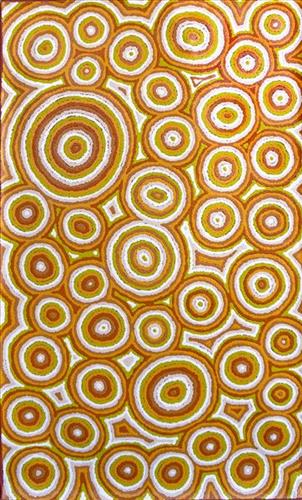
In this artwork Margie has painted Lukarrara Tjukurrpa (Desert Fringe Rush Seed Dreaming). This Tjukurrpa comes from a place north of Yuendumu in the Northern Territory where Margie is from.

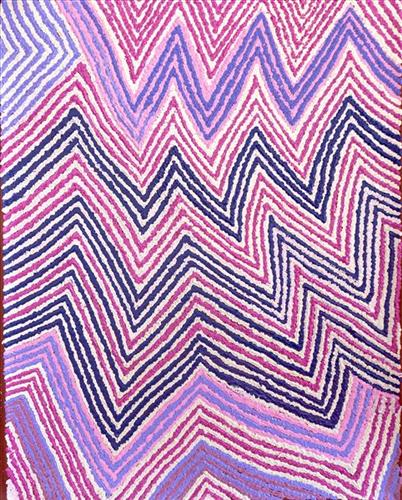
This painting shows the design of her father Reggie Jackson’s male Tjara (shields). The shapes move across the canvas and then down again — the way Reggie always marked them. “This is my mark,” he would say. Katherine paints this design to carry his legacy forward. Reggie was born north of Blackstone and grew up around Mantamaru, living between both places. As one of the founding artists at Irrunytju, he was known for his vivid colours, broad brushstrokes, and the way he’d sing Tjukurrpa as he worked. A true bush man, strong in Law, full of humour, and devoted to his family. By painting his Tjara design, Katherine keeps his story alive.
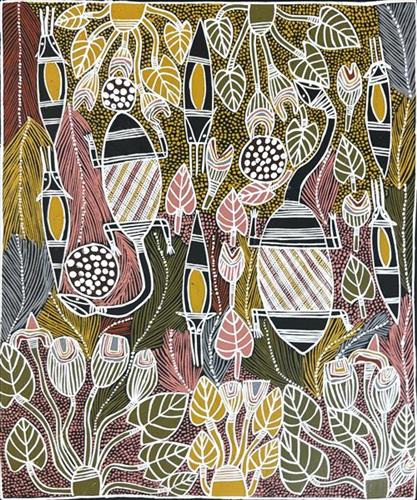
The long necked turtle is a dreaming totem for the freshwater people, the Ganalbingu, whose country includes the World Heritage listed, Arafura Wetlands in Central Arnhem Land, Northern Territory
The Yolngu (people) of Arnhem Land originate from a spiritual source, fixed in a particular place in their land or the sea. These ‘Spiritual Reservoirs’ are often in the form of special waterholes made by Wangga (Creator Beings), long ago close to the beginning of time. These creator beings moved across the country side, shaping the land and implanting in each tract of country, the spiritual life force for the people who were to own it.
These creator spirits took many forms. When they gave the land to each group they also gave songs, dances, ceremony, the associated laws and language. The Creation story for Ganalbingu people took place near the middle section of the Glyde River where it becomes the Goyder River. Their land, Ngaliyindi, sits astride the Arafura Swamp in Central Arnhem Land. Some of their major Creative Beings include Banda (freshwater long neck turtle) and Yalman (water lilies).
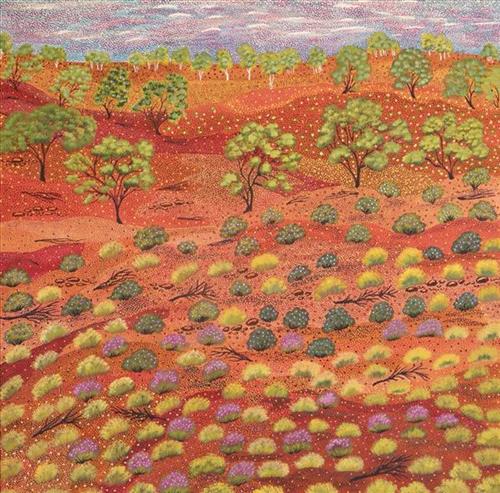
Anterrengeny is my Fathers country.
I paint the country that come from, the beautiful landscapes and the many colours as they change during the season.
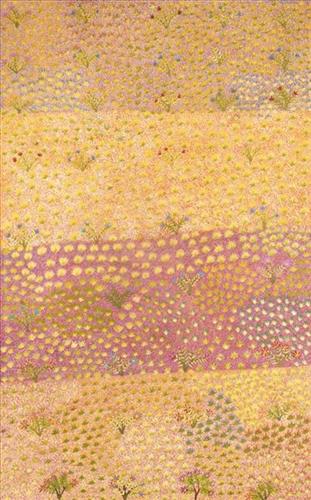
I was born in the bush at Ammaroo Station, along the Sandover. I have never seen the ocean or a big city. My mother and father were strong healthy people who taught me and my younger sister Rita the traditional way to hunt for Kangaroo, Goanna and Porcupine.
We know how to gather bush tucker (secrets of the earth) and bush medicine plants. My mother used grinding stones to make seed damper.
When I paint I think about good memories, being a young girl and walking through the land. My mother made paint from two stones and showed us ceremony painting and how to sing and dance for ceremonies. I still sing and dance and collect the bush medicines, I like to make tea from the small purple flowers of Arreth (hill fuchsia).
Painting bush medicine stories is important because it helps to maintain a strong knowledge and culture for the community.
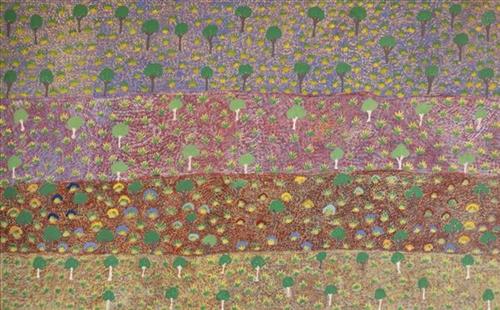
“This is my Father’s country.
This place is our hunting place. I always go with my daughters and their children, I show them this place and teach them about the swampy country. We hunt for goannas, bush potato, bush tomato and after the big rain the bush medicine is picked and the roots are dug up to be used.
It is important as my mother taught me this and now I teach my family.”
The community of Ampilatwatja made a conscious decision not to paint altyerr (dreaming stories). The artists paint their country where those stories sit.
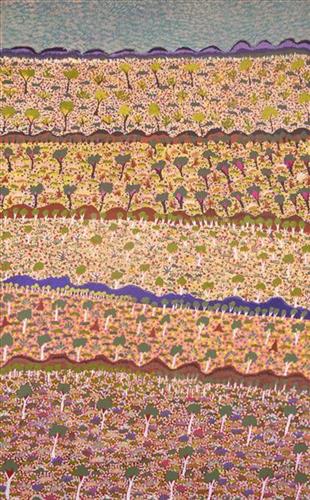
This is my Mothers Mothers country, out near Canteen Creek, we go hunting for wild onions, goannas, echidnas and sugar bag honey in the trees. I like to hunt in my country, there is water all year round even if it looks dry, we follow the bird tracks to know where to dig and then we find water.
This painting is after rain, many grasses are out, but the riverbed is still sandy.
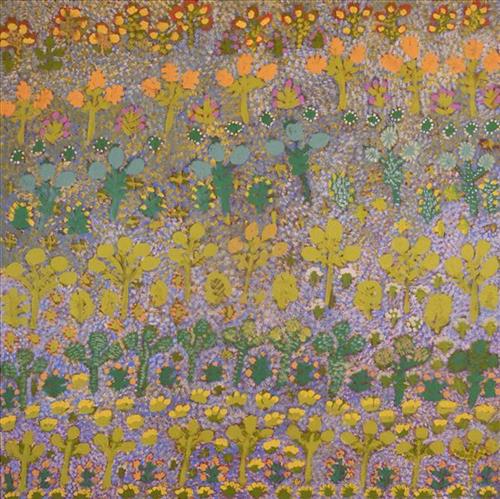
Rosie has painted her Father’s country, where she can always find bush tucker and bush medicine. She is very happy when out bush hunting and gathering, as it brings back memories of her childhood when she used to live traditionally off of the land with her family.
Rosie uses these hunting trips as her inspiration for her artworks, each one reflecting the layered landscape and various colours as she has seen them. They are always changing, with the light of day and the seasons of the year.
Rosie enjoys and understands the importance of painting bush medicine plants. They help in the healing of her people and it keeps the tradition and knowledge strong. These particular plants are very plentiful after rain and can be used for numerous conditions, such as skin irritations, flu, coughs and infections.
Rosie’s dreaming is the Araluta or kangaroo plant. This bush is a rich source of food for the kangaroos and keeps them fat and healthy and good for hunting.
The community of Ampilatwatja made a conscious decision not to paint altyerr (dreaming stories). The artists paint their country where those stories sit.

This is my country, it’s the country around Irrultja. This is where we like to go after big rain. After big rain there, we can go swimming. There is always good hunting on my country. It is good for me to paint my country and it makes me feel good.
The artists of Ampilatwatja made a conscious decision not to paint altyerr (dreaming stories). The artists paint their country where those stories sit.
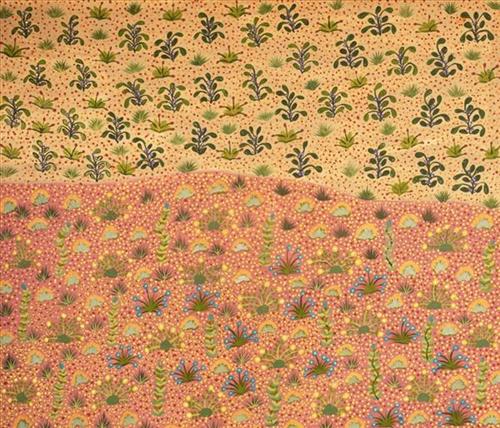
These bush flowers grow seasonally in Alyawarr country, some of which are also used in bush medicine remedies.
I have just started painting, my grandmother Elizabeth Ngwarraye Bonney has been teaching me, she tells me all about the bush flowers.
The community of Ampilatwatja made a conscious decision not to paint altyerr (dreaming stories). The artists paint their country where those stories sit.