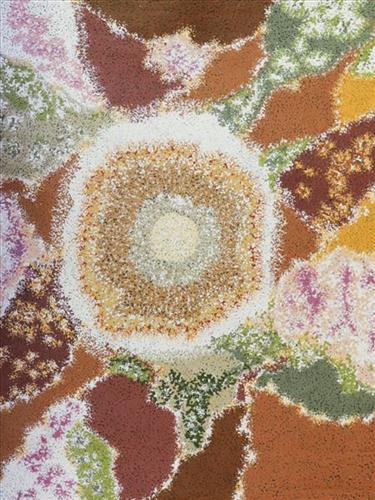
377815582417542


Nyangumarta Warrarn (Country)

“Nyangumarta Country is home to the Nyangumarta people — from the desert to the seaside. Old people lived and walked on this land, and we as Nyangumarta still look after it today. We go out on Country, hunting and living from the traditional foods of the land.

Nyangumarta people travelled and lived between the desert and the sea. This painting tells a story from the Nyangumarta Dreaming — of a woman who walked with her child along this Country collecting seafood, mayi. They were both on the reef when the tide came in and drowned them. Today, two rocks remain out by the sea, marking their story.

We carry our culture, and most people tell stories through their painting — that’s how it’s always been. Passing knowledge down. Younger people might not see it now, but in the future, they might want to follow in their Elders’ footsteps — carrying on the skills, knowledge, and way of life. It can be anything: painting, hunting, becoming leaders.”
 – Venetta Yanawana

This artwork honours Nyangumarta Country — from the long sweep of Eighty Mile Beach and coastal flats to the rolling sand dunes and salt lakes of the Great Sandy Desert. It holds the movement between saltwater and desert: tides, reefs and mangroves to the west; dunes, claypans and waterholes to the east.

Lines flow like wind across spinifex and waves in the ocean; dots gather where waters sit after rain; colours shift from deep blues to desert reds and whites of saltpan. The painting also reflects the ongoing work of Nyangumarta families and rangers to look after Country — sea and land — guided by community plans and Indigenous Protected Area management.
220982417835


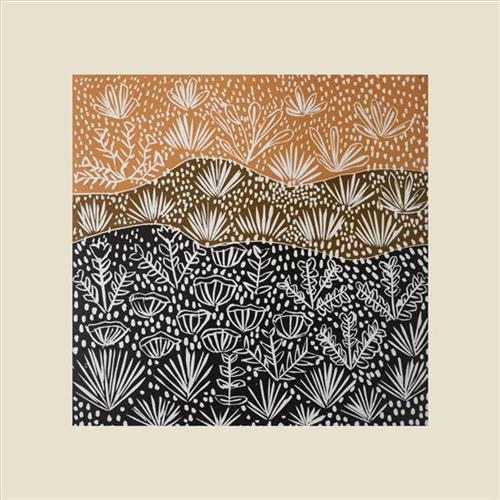
Julieanne Ngwarraye Morton – Alpeyt Alpeyt (Flowers Blooming)

Walking across my land to look for bush flowers and goanna. I bring home to make medicine for my family and cook the goanna for dinner.  Goanna is my favourite to eat.

220982417830


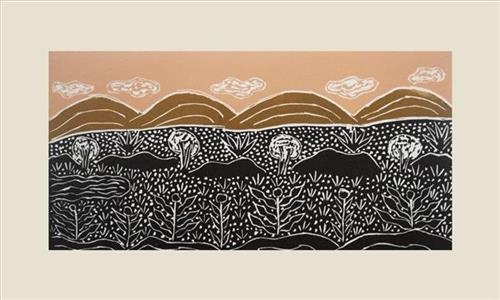
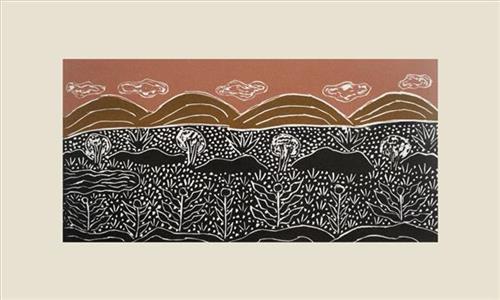
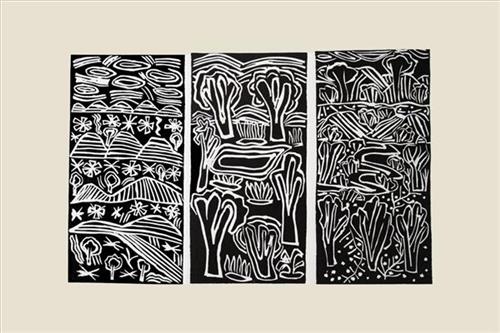
Valerie Kemarre Lewis – My Mothers Country

My mothers country is flowers, trees and mountains. I love to paint them. We see springs, the water from the springs is like rainwater, fresh and clean. We hunt goanna and turkeys, we roast them in the fire and the flesh is strong and sweet.

When we hunt we sleep at night next to the fire, the skies are big and the stars are beautiful, it makes me feel good.

220982417818


Valerie Kemarre Lewis – My Mothers Country

My mothers country is flowers, trees and mountains. I love to paint them. We see springs, the water from the springs is like rainwater, fresh and clean. We hunt goanna and turkeys, we roast them in the fire and the flesh is strong and sweet.

When we hunt we sleep at night next to the fire, the skies are big and the stars are beautiful, it makes me feel good.

220982417799


Kathleen Nanima Rambler – Arlweye Ampere (My Fathers Country)

I paint the country of my Father and Mother and where they grew up, near Barrow Creek.

This is the painting of my Father’s country, where I grew up. When we would go hunting, we always climbed those hills. We would take the kids hunting too and take photos of the hills.

I use bright colours and beautiful attention to detail expresses the love and joy that I have for the country closest to my heart.

The community of Ampilatwatja made a conscious decision not to paint altyerr (dreaming stories). The artists paint their country where those stories sit.

220982417792


Leanne Teece – Anterrengeny – My Father’s Country

Anterrengeny is my Father’s country. I paint the country that I come from, the beautiful landscapes and the many colours as they change during the session.

220982417788


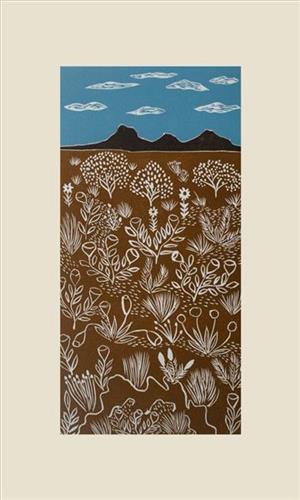
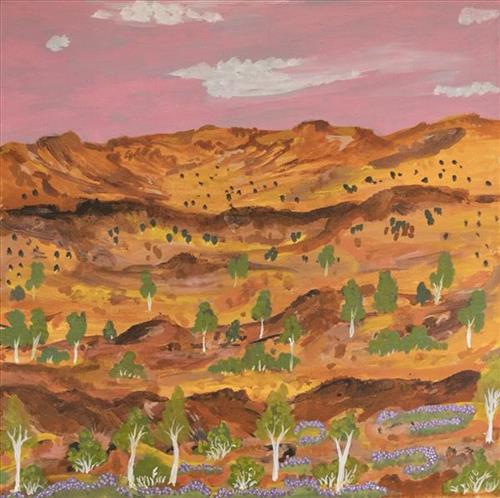
Elizabeth Ngwarraye Bonney – Penh Kwaty (After Rain)

After we have big rain the land is full of flowers and the river is full of water. This makes me happy.

111582417816


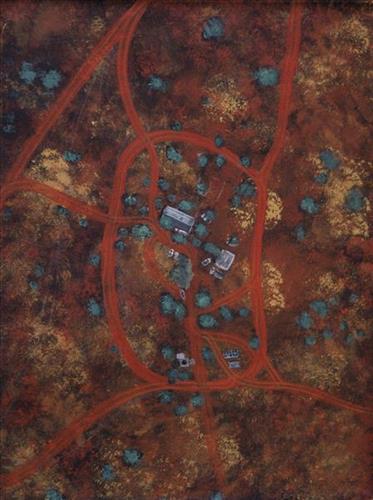
Rollah Block

“This one’s a little block where I grew up, near Bidyadanga. It reminds me of when I was little, we used to play in the old chicken house. Reminds me of home. That tank I always paint, that’s the water tank. The water we get from the tank, it’s all underground.

My grandmother stays out there, in that big house. My mother built that other house; we’d stay there. I still go out there now and then.

It’s like a 20-minute drive out of Bidyadanga. Sometimes when you stand on the water tank you can see the beach. There’s lots of fish, crabs, sharks. There’s a croc there now. Some people pass through to get water and keep going, but just my family stay there.”

– Ciarn Dean-Bullen

Bidyadanga is a community located on the Kimberley coast in Western Australia, where the Great Sandy Desert meets the sea. The word Bidyadanga is derived from pijarta/ bidyada (emu watering hole).

Bidyadanga is Ciarn’s Country – her ‘ngurra’ (home Country, camp). People identify with their ngurra in terms of specific rights and responsibilities, and the possession of intimate knowledge of the physical and cultural properties of one’s Country. Painting ngurra, and in so doing sharing the Jukurrpa (Dreaming) stories and physical characteristics of that place, has today become an important means of cultural maintenance. Common motifs depicted in her work relate specifically to her heritage of both saltwater country and desert, including marine animals, depictions of water, as well as desert landscapes.

Ciarn is family to fellow Martumili Artists Muuki Taylor OAM and Zia Dean-Bullen. Younger Martu artists often start painting alongside their parents, grandparents, and extended family, which fosters an organic learning process. This not only involves mastering painting techniques but also understanding specific locations, family histories, traditional ways of life, bush tucker, and Jukurrpa (Dreaming). Over time, with encouragement from their peers, they develop their own distinct styles and explore unique painting techniques and subject matter. In this work the artist brings a contemporary, evolving perspective to their work.