111582435418


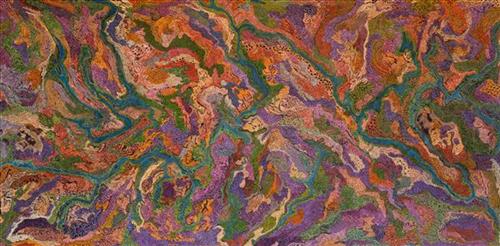
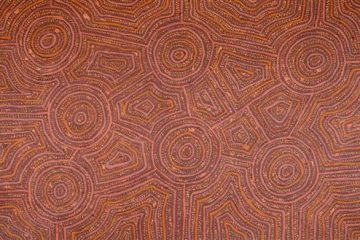
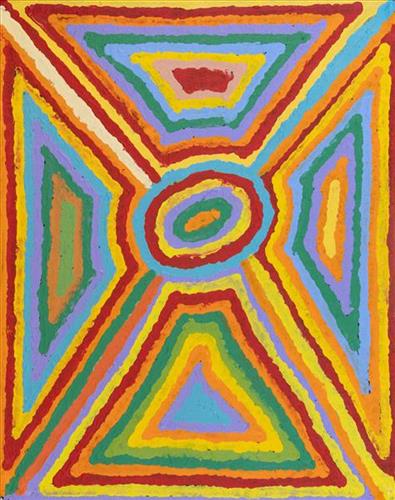
Kanapiti

“This my grandmother’s country on my mum’s (Reena Rogers) side. One day I want to visit this place – the Parnngurr rangers will take me there soon”

– Beverley Rogers


Kanapiti hills are located south east of Parnngurr Aboriginal Community, where Reena lives today. This area is Reena’s birthplace, and forms part of her ngurra (home Country, camp). The Western Desert term ‘ngurra’ is hugely versatile in application. Broadly denoting birthplace and belonging, ngurra can refer to a body of water, a camp site, a large area of Country, or even a modern house. People identify with their ngurra in terms of specific rights and responsibilities, and the possession of intimate knowledge of the physical and cultural properties of one’s Country. This knowledge is traditionally passed intergenerationally through family connections. 

Painting ngurra, and in so doing sharing the Jukurrpa (Dreaming) stories and physical characteristics of that place, has today become an important means of cultural maintenance. Physical maintenance of one’s ngurra, like cultural maintenance, ensures a site’s wellbeing, and is a responsibility of the people belonging to that area.
111582435417


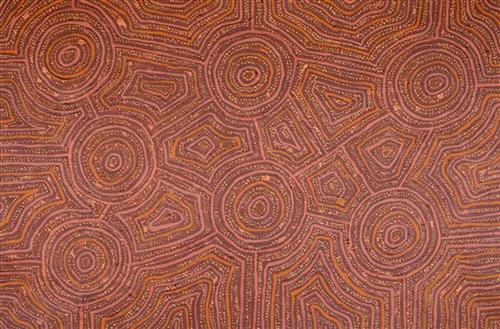
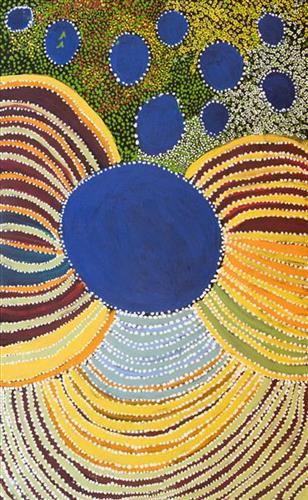
Tarl

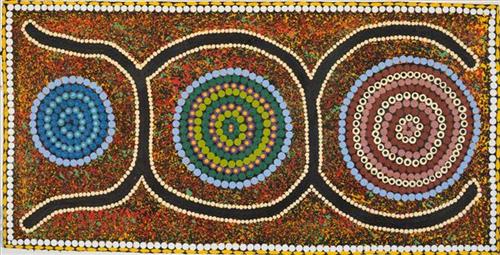
Tarl is a spring located at the southern end of the large salt lake, Nyayartakujarra (Lake Dora), and at the south of Punmu Aboriginal community. Surrounding Tarl are numerous fresh water soaks and the permanent red tali (sandhills) typical of the area.

Tarl features in the Jila Kujarra (Two Snakes) Jukurrpa narrative, one of the key Martu foundation narratives. Though the story belongs to Warnman people, it is shared across the Western Desert with several other language groups. The narrative centres on the travels of two snakes as they are pursued by the Niminjarra, spiritual ancestors of the Warnman people.

During the pujiman (traditional, desert dwelling) period, Martu would traverse very large distances annually in small family groups, moving seasonally from water source to water source, and hunting and gathering bush tucker as they went. At this time knowledge of water sources was critical for survival, and today Martu Country is still defined in terms of the location and type of water. Each of the hundreds of claypans, rockholes, waterholes, soaks and springs found in the Martu desert homelands is known by name, location, quality and seasonal availability through real life experience.

116482435398


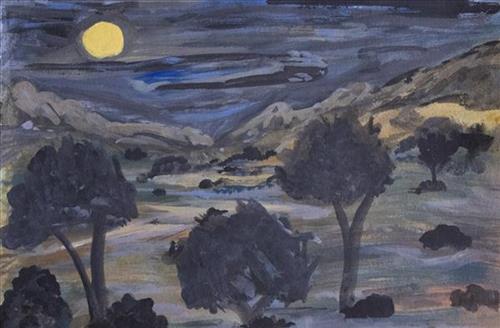
Forgotten Grounds

These are the forgotten cultural lore grounds that haven’t been used for decades.

116482435394


After the Rain (Allery)

After the rain the rivers and creeks in our country come alive with a new growth of plants . The country is filled with beautiful colours. We rejoice looking at our rivers and creeks full of water, so that we can go fishing, kids can go swimming and we can picnic with our families and friends

116482435324


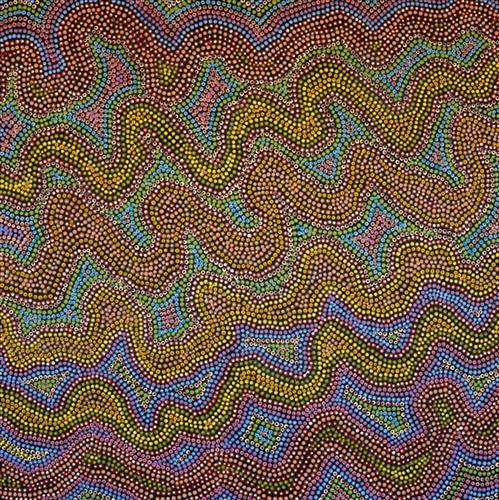
Seeds and Waterways (Dawn)

I am inspired by the colours in the rocks, the seeds on the ground, and the way water moves through the land. When I paint, I think about the flow of a waterway. Water is always moving, and I follow that movement in my lines and shapes. The forms in my work come from that flow, and my colours come from what I see in Country. I use strong, vivid colours because that is how I see Country in my mind and how i feel when i paint. There is a lot of new life when you find water on Country. It is where you find the beautiful colours and the flowers.  When i paint I feel connected to culture, the old people and memories. 

116482435323


Fallen Leaves (Dawn Sandy)

When the cold season comes, the leaves fall to the ground making patterns and colours.

116482435322


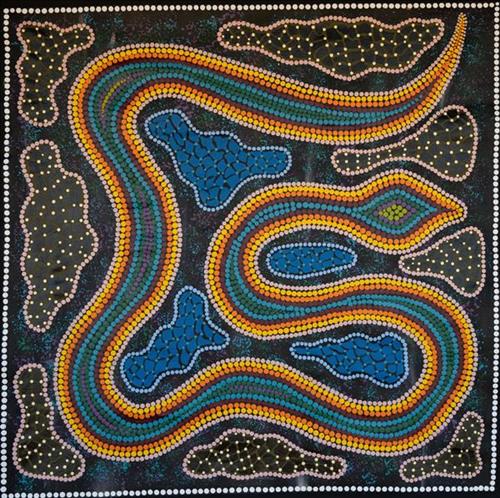
Rainbow Serpent

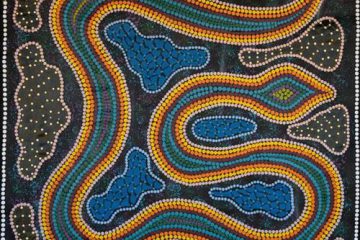
The Rainbow Serpent has shaped the country leaving behind deep permanent pools now it has found its resting place.

220982435498


Elizabeth Ngwarraye Bonney – Atyenh Anyany Amper (My Grandmothers Country)

I still hunt my Grand Mothers country for goanna, bush medicine and yams.

I hunt all year round, hunting and walking through the country makes me happy.  When I look at the distant hills I can feel my grandmother.  Bush flowers are everywhere.

Painting and printing my grandmother’s country reminds about those times.

220982435497


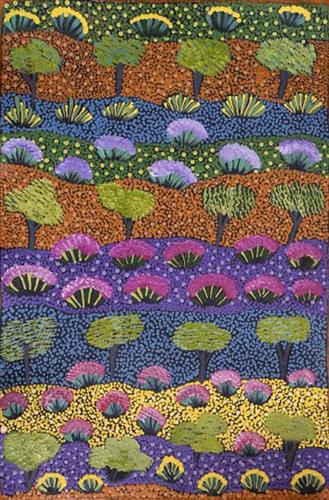
Lilly Kemarre Morton – Antarrengeny, My Country

Lilly has painted her country, Antarrengeny. The brightly coloured flowers and small bushes are bush medicine and are still used within the community.

Lilly’s landscapes beautifully communicate the rich knowledge she possesses of both medicinal plants and country, the heart of her culture.

As a young girl, Lilly lived traditionally off of the land with her family and Alyawarr people. In Lilly’s lifetime, she has experienced and borne witness to the irreversible changes of country and way of life, that were previously unchanged for thousands of years.

She is a kind and gentle elder of the community and often tells stories of how life used to be, in Alywarre, her language, to her family and friends. These stories are also a great inspiration for many of the artists within the community.

Lilly is passionate about nature, especially her country and the plants that grow on it, she speaks in launguage and is keen to explain the various bush medicines which she depicts in her paintings.

The community of Ampilatwatja made a conscious decision not to paint altyerr (dreaming stories). The artists paint their country where those stories sit.