221776318021


Ngoonborliny and Madjalandy

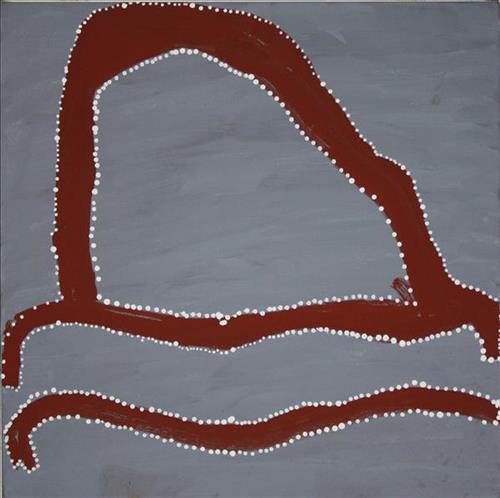
This is my Country at Muthanoongamaya – Madjalindy near Port Keats in the Northern Territory. At the centre of the image is Madjalindy Creek. “I was born here.” The circles on either side represent dreaming places. On the left are the dreaming places for Ngoonborliny – the Whip Snake and on the right is Madjalanj – Lightning Dreaming places. In th bottom right corner is Brolga Dreaming; above it is Goorgbiyi – Black Snake Dreaming. Around the edge of the painting are the hills. 


Dimensions: 76 x 76 cm / Natural ochre and pigment on canvas

221776324364


Thegoowiyeng

“Thegoowiyeng – Kelly’s Knob is where the art centre is and the Mirima Community for Miriwoong people. In the Narrangarni between the big hill and the small one there used to be a freshwater spring. People used to get water from there but the sands have covered it up now.”

Dimensions: 60 x 60 cm / Natural ochre and pigments on canvas

111580610029


Jilukurru (Killagurra Springs, Canning Stock Route, Well 17)

“We were there long time as kid, playing around. I been walking around here, young fella. There’s big water there, running water. Water there belongs to that jila (snake), he belongs to there. That jila makes you scared if you’re a stranger messing around in the water. The water will go right up, and you better get out from there!

Wati Kujarra (Two Goanna Men). Youngfella, poor bugger. [Here at] Jilukurru, sitting down this side you can see their ngarnkurrpa (beards) right in the hill there. That’s their main place. He been youngfella them two, chasing all the kangaroo. They gone away from Jilukurru Country, long way away, right to Roebourne, to that lake there. They not coming back, they gone one way.

This is my Country, good Country. Long way away on the Canning Stock Route. We used to stop there [and] go hunting. No road then, we walking around. No car, only camels.”

– Yunkurra Billy Atkins

Yunkurra’s Country encompasses some of the most important and dangerous sites in the Western Desert, including Jilukurru (Killagurra Springs, Canning Stock Route Well 17) and Kumpupirntily (Kumpupintily, Lake Disappointment). Jilukurru is a yinta (permanent spring) located in a complex of gorges and valleys yapurra (west) of Kumpupirntily. Jilukurru lies in the heart of Yunkurra’s ngurra (home Country, camp); he grew up in this area. This spring was an important site for meetings during the pujiman (traditional, desert dwelling) era. 

As Yunkurra describes, Jilukurru is also sacred for its relation to the Jukurrpa (Dreaming) narrative of the Wati Kujarra. For this reason, access to the site is respectfully restricted. Wati Kujarra is one of the key foundational narratives for Western Desert people. Half men, half goanna, the Wati Kujarra were responsible for the creation of many land features in Martu Country and beyond as they travelled, hunted and burned Country together. Wati Kujarra is a ngurlu (sacred, taboo) men’s story, and much of the content is only shared with initiated men.

At Jilukurru, the Wati Kujarra lived for a time. Here they also trimmed their ngarnkurrpa. On one of the rocky headlands of the range system, the form of the two men can be seen, with their long beards rolling down the escarpment. After the Wati Kujarra left Jilukurru the site became home to an ancestral jila.
221782102803


History Beneath the Beauty

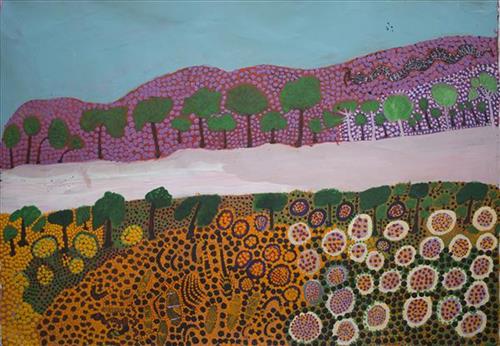
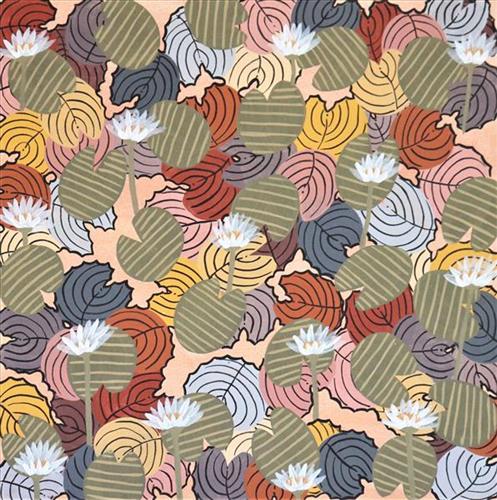
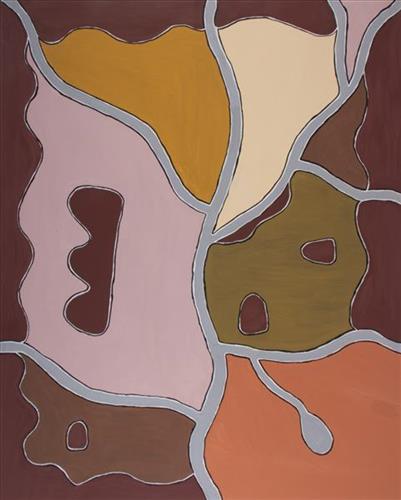
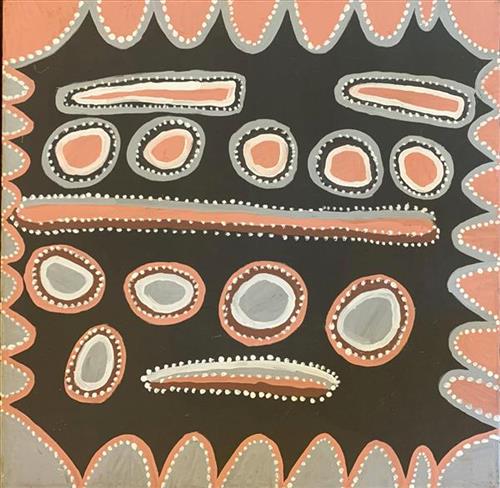
Woorrilbem holds a history. A blast from my grandmother’s past as a child she went to this billabong to collect the lily flowers, its bulb, mussels and other edible bush food to take back to her family. One particular day on a usual walk she saw two strange men way off in the distance. A manager on horse back and a black tracker leading a donkey with a sack on its back.  They were tracking Aboriginal, Miriwoong people to work for the manager at the station.  As the men came closer, my grandmother slipped into the billabong to hide until the men were out of sight.  My grandmother then got out and started running as fast as she could back to her family, but it was too late as the strange men were already approaching the camp. With mixed emotions my grandmother spoke and pointed at the same time to the strange men, but the black tracker spoke in Miriwoong language and said they were friendly people looking for workers to work at the station for sugar, tea and tobacco as rations and brought flour to make bread as a peace offering,  Some Miriwoong people did go to work for the strange manager man. My grandmother and her family stayed on country.  If we don’t carry this story and tell our children the history of Woorrilbem and its beauty will take over and my grandmother’s Country will be lost and forgotten forever.

The different coloured lily pads are my grandmothers emotions flowering through the billabong. The green lily pads are the original colours covering the history of my grandmother’s story.  The straight lines represents the calm relaxing billabong before my grandmother entered the water.


Dimensions: 60 x 60 cm / Natural ochre and pigments on canvas

221782127279


Road train

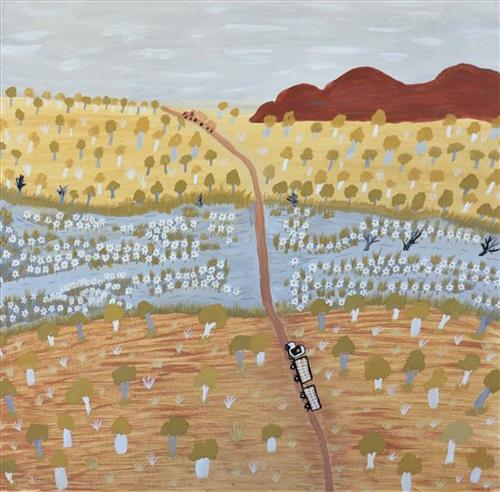
“I was born on Old Ivanhoe Station. However in the 1960s, when I was 9 or 10 years old, they moved us to New Ivanhoe Station, the bank side of the river. It was our loving home that I’ll never forget.This was before Kununurra was built, there were only Mainroad camps in those days. They used to dance corroborees and sit on the banks on Button Crossing  and watch the roadtrains go past with bullocks on the truck going to Wyndham meatworks. Sometimes, they came past with empty trailers to get bullock from Ivanhoe Station. I always cried for them, it made me sad. “


Dimensions: 76 x 76 cm / Natural ochre and pigment on canvas

221782206522


Goordim

Emerging artist Cathy Ward learns from her culture and country from her grandmother Peggy Griffiths. In this painting she paints Goordim. Jinamoom, the Keep River flows through the painting and is joined by small tributaries. The hill on the left is Goordim, Butterfly Dreaming. The hill to the right is Eaglehawk Dreaming. The other hills are ant pits that scatter the country.


Dimensions: 80 x 100 cm / Natural ochre and pigments on canvas

221782259500


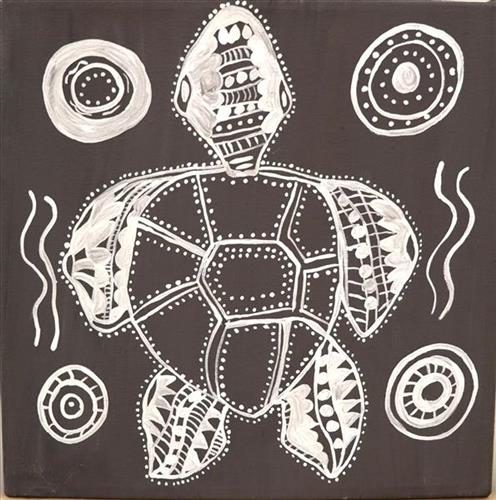
Green Turtle, Juluwarru

Juluwarru is the most common saltwater turtle and is very good for food, it is the main species the people still eat.The large adults contain a lot of meat, and everything is eaten including the, the flippers, the intestines and the tasty fat.


Dimensions: 30 x 30 cm / Natural ochre and pigment on canvas

221782294546


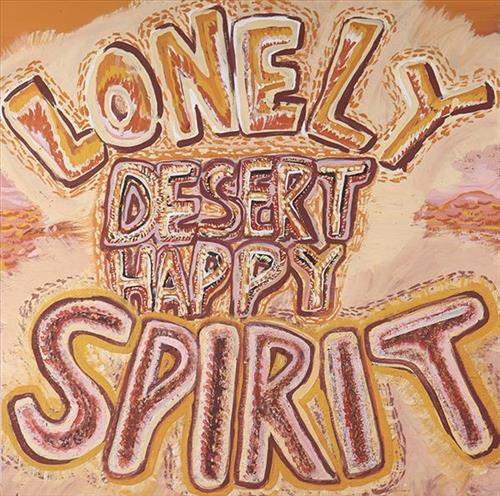
Lonely Desert Happy Spirit

My Grandparents when they left their homeland in the desert they never seen their country home again for a long time and when they came back to see their homeland they were happy and proud to have returned.

Dimensions: 76 x 76 cm / Natural ochre and pigment on canvas

221782296117


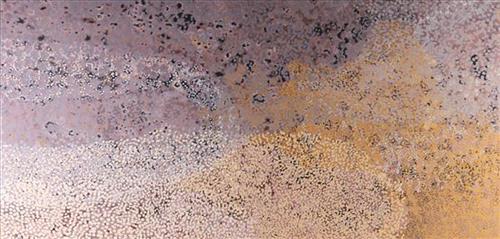
The Wild-Flower

After the wet season the wild desert flowers come into bloom all over country. The Wild-Flower keep the desert alive.


Dimensions: 61 x 122 cm / Natural Ochres and Pigments on Canvas

221782350948


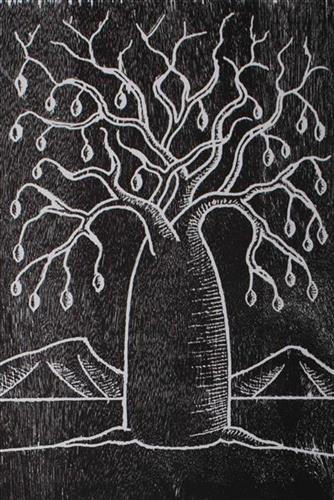
Boab Tree (Joomooloony) of the Kimberley 1

The boab tree is a tree that we have lots of in the Kimberley region in Australia. It’s a symbol of our country and the nuts that grow on it has food in it when you break it open. It is also used for medicine when soaked in water for colds and coughs. 

We do engrave carvings on them and painting of them, because it’s part of our history and culture. 


Dimensions: Image: 41 x 28cm, Paper: 56 x 36cm / Wood Cut Print