222082300822


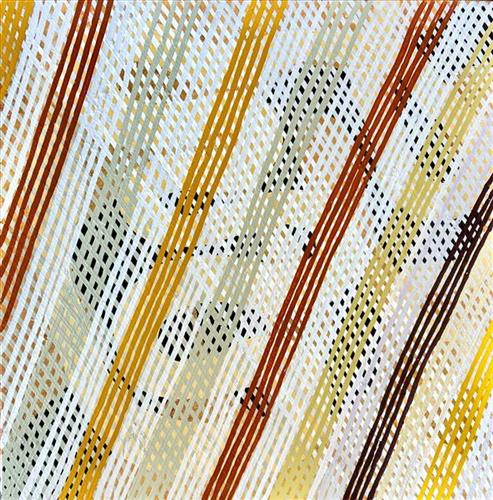
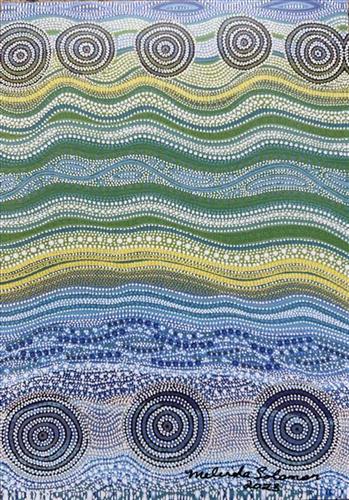
Gwarda Gona brown snake

The brown snake and the course of the old river before the cadell fault 28,000 years ago the earth rose 200 ft and pushed the water and out on country so the old people dug out the new course of the river to let the flood water through creating the kaiella and broken today.

222082300810


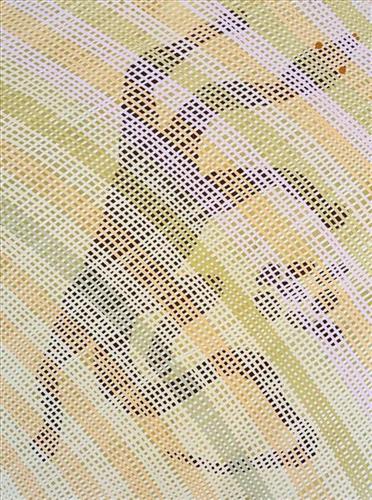
Bitjimidja Tree Goanna

Tree Goanna Hunting eggs in the grass lands and climbing gumtrees looking for nests also symbolic for doing the goanna dance cooroboree. Young man doing a cooroboree. the eight eggs represent the nest and the eight clans of the Yorta Yorta. Ulupna, Kwat Kwat, yallaba, Pangerang, also its own nation, Ngari illum wurrung, moira, wollithiga and Kalitheban

115682300835


Bathi (Pandanus Basket)

Bathi are woven from the split leaves of the Screw Palm (Pandanus Spiralis). Coil weaving was introduced to Arnhem Land in the 1930s. It was adapted from techniques used by Indigenous women throughout South East Australia.

115682300834


Bathi (Pandanus Basket)

Bathi are woven from the split leaves of the Screw Palm (Pandanus Spiralis). Coil weaving was introduced to Arnhem Land in the 1930s. It was adapted from techniques used by Indigenous women throughout South East Australia.

115682300825


Mindirr (Pandanus Bag)

Miṉḏirr (dilly bags) are made from gunga (Pandanus spiralis), baḻgurr (kurrajong) and natural bush dyes. The body of the miṉḏirr is made from gunga, and the handles from baḻgurr. Once the gunga fronds and baḻgurr bark have been collected, they are stripped and prepared then boiled with the dyes.

Miṉḏirr were used traditionally for every day utilitarian purposes, particularly collecting bush foods such as bäḻtji (yam). Traditionally, the baḻgurr handles were worn across the forehead while the body of the miṉḏirr sat at the back, between the shoulder blades making it easily accessible when collecting ŋatha (food).

115682300824


Mindirr (Pandanus Bag)

Miṉḏirr (dilly bags) are made from gunga (Pandanus spiralis), baḻgurr (kurrajong) and natural bush dyes. The body of the miṉḏirr is made from gunga, and the handles from baḻgurr. Once the gunga fronds and baḻgurr bark have been collected, they are stripped and prepared then boiled with the dyes.

Miṉḏirr were used traditionally for every day utilitarian purposes, particularly collecting bush foods such as bäḻtji (yam). Traditionally, the baḻgurr handles were worn across the forehead while the body of the miṉḏirr sat at the back, between the shoulder blades making it easily accessible when collecting ŋatha (food).

115682300794


Gay’wu

Traditionally, Gay’wu (string bag)  are made from the bark of Baḻgurr (Red-flowered Kurrajong – Brachychiton megaphyllus) but sometimes Banyan tree (Ficus virens) and Cocky Apple tree (Planchonia careya). Sections of the tree are cut, and depending on the size, whole portions or part portions from the trunk. The inner bark is beaten or chewed to soften then dyed with natural bush dyes. Once softened and dyed, parts of the fibre are separated into fine strips then rolled on the thigh to create a rope otherwise known as bush string. This iteration of the Gay’wu was made by gunga (pandanus spiralis). The bush string is then woven and knotted to create a djerrk (string bag). Gay’wu (string bag) were used for every day utilitarian purposes, particularly collecting bush foods such as bäḻtji (yam). 

Mary made this on her Country, Gulpilil, a homeland in the Arafura Swamp.


11564004658


Status: Stock


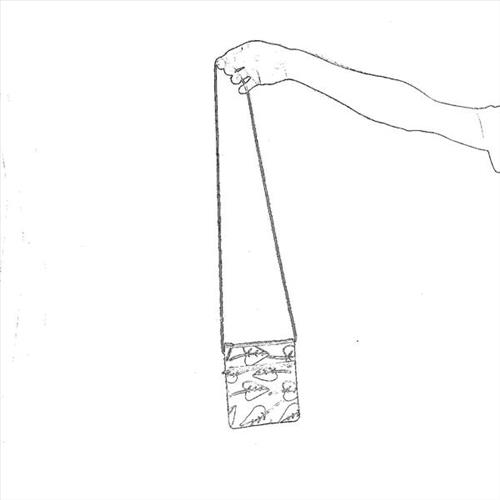
Melanie small bag

This bag was made with fabric that was screenprinted by Yolŋu art workers at Bula’Bula Arts. We print small batches of tea towels, tshirts and fabric lengths by hand because we love putting Yolŋu designs on everyday items – especially ones that balanda (non-Yolŋu) use! 

  • Zippered clutch with detachable wrist strap 
  • Fully lined with internal zippered pocket

FABRIC STORY

The Melanie small bag is available in four fabric designs and multiple vibrant colour combinations:

  • Dawurrmonuk (itchy caterpillar) by Evonne Gayuwrri
  • Lidjilidji (Crimson Finch) by Andrew Wanamilil
  • Lorrpu (Sulphur-crested Cockatoo) by Peter Gambung
  • Ngambi (limestone) spear by Shannon Ashley

Due to the lovely handmade nature of this product, print quality may vary.

WORKING WITH FLYING FOX FABRICS 

We work with Flying Fox Fabrics, a small social enterprise based in Darwin. Flying Fox Fabrics, make and sell accessories, clothing and homewares from fabrics designed by Aboriginal artists which have been hand printed in Australia. They work in partnership with Aboriginal artists and fair trade organisations in Cambodia that train and employ disabled artisans.

11564004656


Status: Stock


Warrnyu (flying fox) tote

Back in the Creation time, Warrnyu (Flying Foxes) once lived, like men, in the cave at the place called Kurrki Warrnyu Yirri Djaringal (they also lived in caves called Wadatilmurr & Gurngurmirrngu). Warrnyu lived in these caves for many years and then one day Djanyarr (The Dog), an ancestral being in the form of a man, came along. He was looking around for a place to live. Djanyarr heard the sound of a Flying Fox screaming. He went down to the cliff and pushed the rock and the water came out at the Ganalbingu place called Gurrkawakarrmurr. He then went into the cave and into the sacred hole, frightening all the Flying Fox away. When he went into the hole he left his dilly bag in the tree and went out on the other side of the sacred cave and leaving his spear and woomera. He sat there for a long time. The Dog made three streams and the water went inside the cave. Two of these streams are good drinking water. In the middle it is a sacred water. No-one drinks from the middle of the stream. Children, men, women, young boys or girls are not allowed to drink from the middle of the stream. If they drink the water from the middle of the stream they will go grey too early.

At Kurrki Warrnyu Yirri Ngilaya Djaringal, the Flying Fox made himself into a young man… that’s what Aboriginal people do today. They have ceremonies and dances to make the young boys into men. The songs are called Yirrarwu, Gulumu, Rruburra and Burryun. Dhapi (initiation ceremony) happen today because the Warrnyu (Flying Fox) people performed them a long time ago before the Yolgnu people. It was the Warrnyu people who first performed circumcision of the young boys to make them into men. It all happened at Kurrki Warrnyu Yirri Ngilaya Djaringal, this is how this place got its name.

Leaving behind the cave at Kurrki Warrnyu Yirri Djaringal, the Dog travelled west across the Arafura Swamp and came to Djalkulmurr (Mount Delight). From there he travelled north and came to Dunganda (a hill situated a few kilometres east of Ramingining). There he met a female Dog, then they both headed north and came to a place called Garanydjirrmurr where they spoke the Mildjingi language. From Garanydjirrmurr they changed their direction and went west through Guliny’barra, Burgumara and onto the plains. When they reached the plains they smelled something cooking, way up in the north – at Wessel Islands. The aroma they smelt was so enticing that they decided to go there. Lungurrma (the north-east wind) was carrying the smell. One Dog headed north again, but the other Dog decided not to go with him and went back the opposite way. The first Dog that went to Malwanatharra (Sandy Point) went into the sea following its nose to wherever the smell was coming from. It is believed that this Dog still lives in the sea…

Product Details:

AS Colour tote bag

Reinforced shoulder straps, one large main compartment
Mid weight, 320 GSM
100% cotton canvas
42cm x 42cm