115682189213


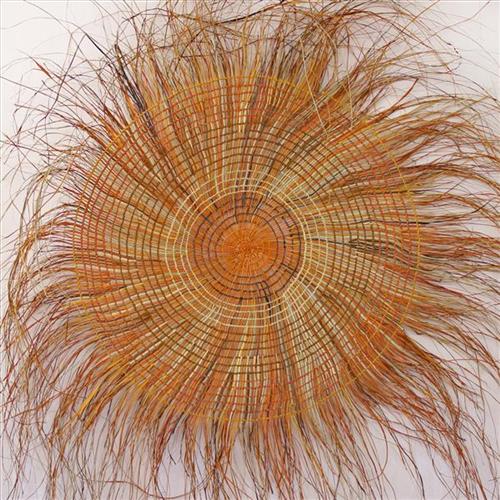
Woven Mat

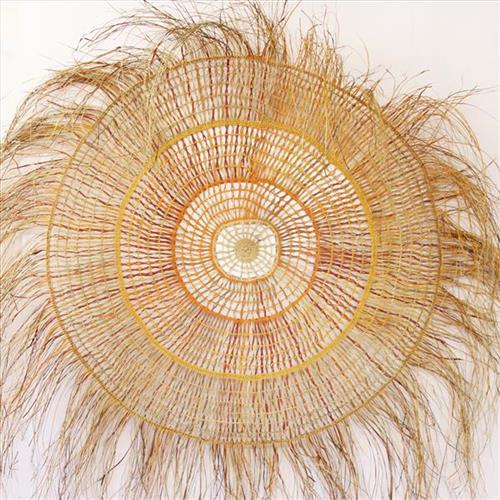
Traditionally, Nganiyal (conical mats) were used as an insect screen when erected, and as a sitting mat when folded. They are used in Ceremony as well as a functional item. 

Nowadays, artists weave many different shapes including flat, round and oblong. 

115682189203


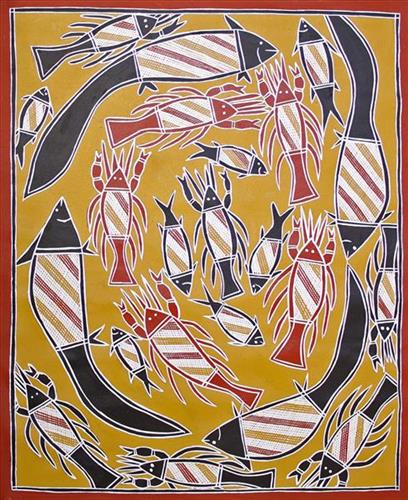
Giny’kiny (Catfish)

Giny’kiny (cat fish) are a totemic species significant to the Gupapuyngu clan. They are represented through storylines and songlines through art and bunggul (dance). The lines in the painting depict the ripples in which the Giny’kiny created when swimming through the shallow waters. During bunggul (dance) the ripples are depicted through the use of string and the barbs of the Giny’kiny are represented by holding out spears. Peter says “when we dance we imagine we are catfish, our mind leaves our human body and goes to our spirit”. The songline is performed at different bungguls such as dhapi (boys initiation ceremony) and bapurru (funeral) in which is performed to assist the deceased persons spirit to go home.

115682189201


Malka (Ceremonial Head Wear)

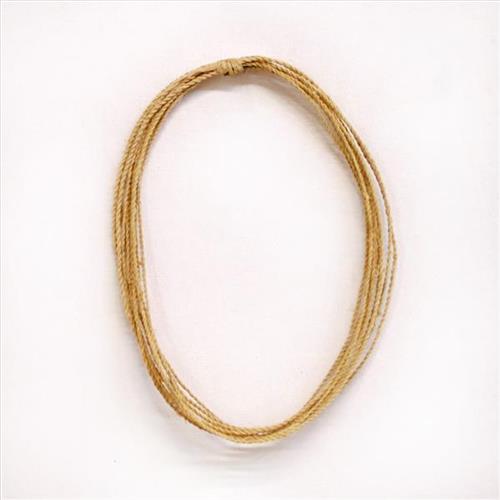
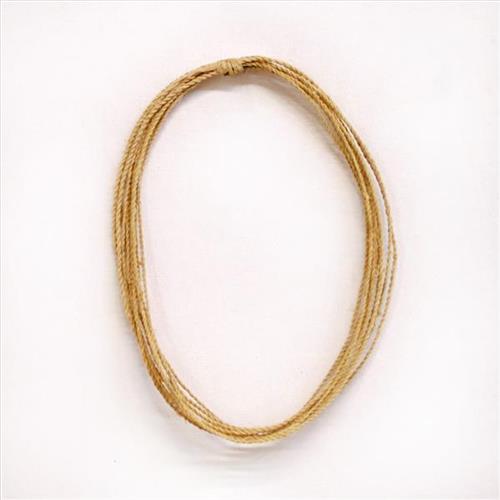
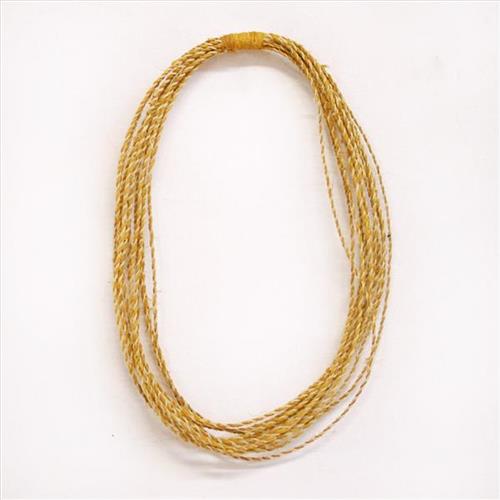
Malka are ceremonial head adornments made from balgurr (Kurrajong). The bark is stripped from the tree, smashed with a rock to soften then boiled, sometimes with natural bush dyes. The balgurr is then rolled in the a rope then used to create ceremonial wear. 

115682189200


Matjka (Ceremonial Body Wear)

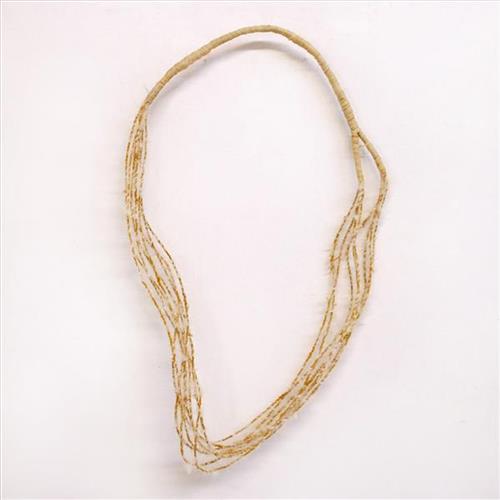
Matjka are ceremonial body adornments made from balgurr (Kurrajong). The bark is stripped from the tree, smashed with a rock to soften then boiled, sometimes with natural bush dyes. The balgurr is then rolled in the a rope then used to create ceremonial wear. 

115682189199


Malka (Ceremonial Head Wear)

Malka are ceremonial head adornments made from balgurr (Kurrajong). The bark is stripped from the tree, smashed with a rock to soften then boiled, sometimes with natural bush dyes. The balgurr is then rolled in the a rope then used to create ceremonial wear. 

115682189198


Malka (Ceremonial Head Wear)

Malka are ceremonial head adornments made from balgurr (Kurrajong). The bark is stripped from the tree, smashed with a rock to soften then boiled, sometimes with natural bush dyes. The balgurr is then rolled in the a rope then used to create ceremonial wear. 

115682189196


Woven Mat

Traditionally, Nganiyal (conical mats) were used as an insect screen when erected, and as a sitting mat when folded. They are used in Ceremony as well as a functional item. 

Nowadays, artists weave many different shapes including flat, round and oblong. 

115682189183


Bathi (Pandanus Basket)

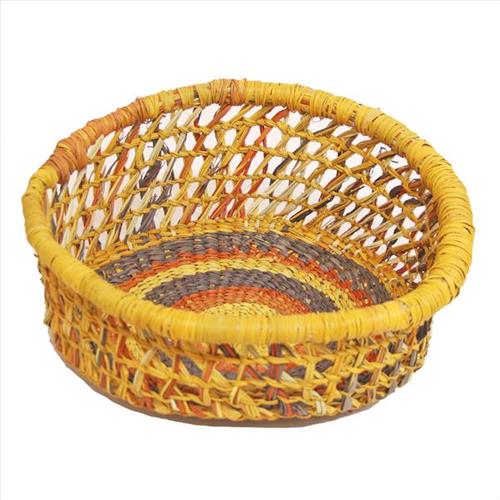
Bathi are woven from the split leaves of the Screw Palm (Pandanus Spiralis). Coil weaving was introduced to Arnhem Land in the 1930s. It was adapted from techniques used by Indigenous women throughout South East Australia.

115682189182


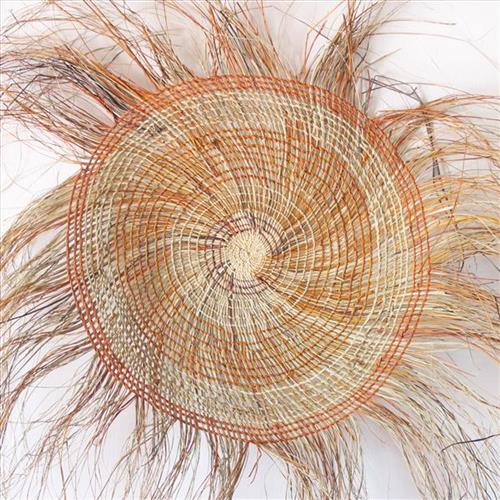
Woven Mat

Traditionally, Nganiyal (conical mats) were used as an insect screen when erected, and as a sitting mat when folded. They are used in Ceremony as well as a functional item. 

Nowadays, artists weave many different shapes including flat, round and oblong. 

115682189180


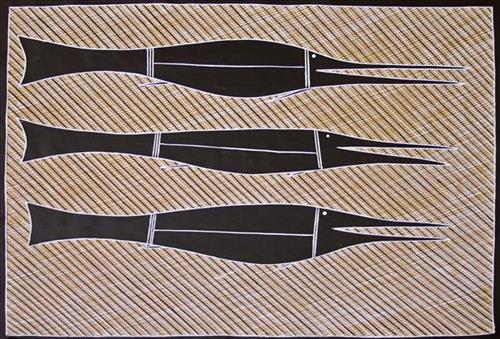
Sword fish

Billy paints stories from his Dhuwa homeland in north east Arnhem Land. Stories are passed on either paternally or maternally, and Billy would have learnt these stories from his ancestors. The cross-hatching style (Rrark) is a traditional painting style of this area and can represent elements such as water, air and wind. His paintings often feature totemic animals of the fresh waters of north east Arnhem Land.

When Billy was a little boy his dad used to go out on the waters around Millingimbi in a canoe to catch swordfish with a spear. Billy says “They are the biggest out that way!”  His dad would catch them and bring them back to camp for the whole family.