Flow Fabric Design – Double Wrap Skirt
Flow Design – screenprinted on 100% linen. Two piece wrap skirt

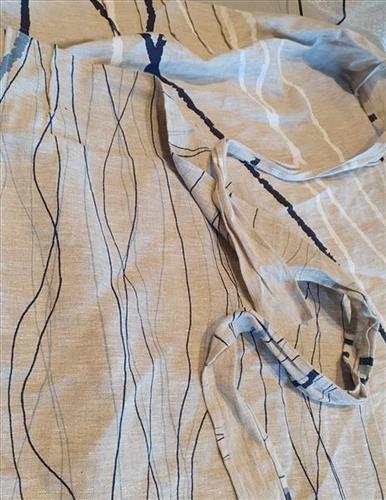
Flow Design – screenprinted on 100% linen. Two piece wrap skirt

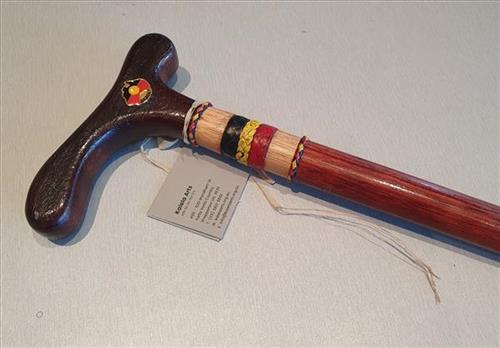
Handmade wooden walking stick, with leatherbands and Aboriginal Flag badge
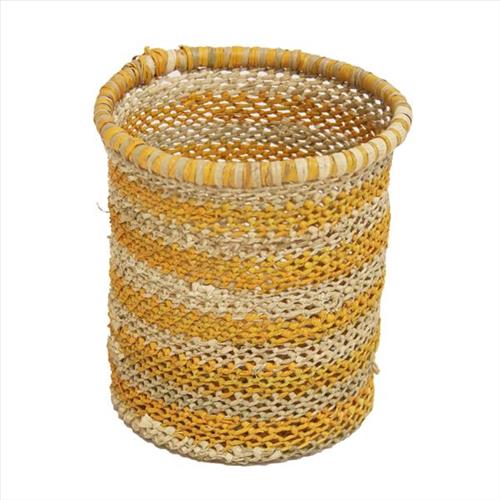
Bathi are woven from the split leaves of the Screw Palm (Pandanus Spiralis). Coil weaving was introduced to Arnhem Land in the 1930s. It was adapted from techniques used by Indigenous women throughout South East Australia.
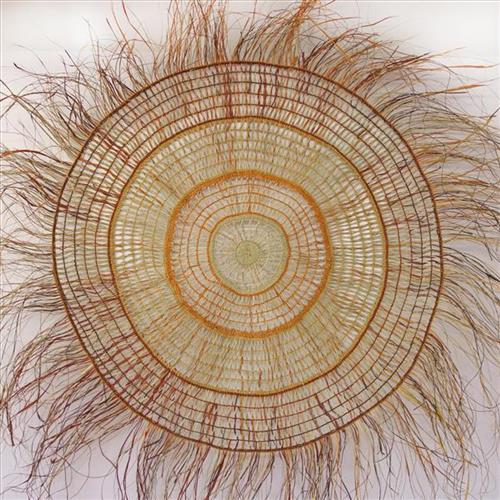
Traditionally, Nganiyal (conical mats) were used as an insect screen when erected, and as a sitting mat when folded. They are used in Ceremony as well as a functional item.
Nowadays, artists weave many different shapes including flat, round and oblong.
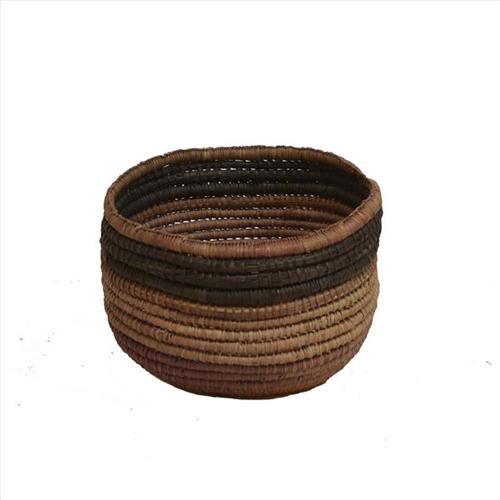
Bathi are woven from the split leaves of the Screw Palm (Pandanus Spiralis). Coil weaving was introduced to Arnhem Land in the 1930s. It was adapted from techniques used by Indigenous women throughout South East Australia.
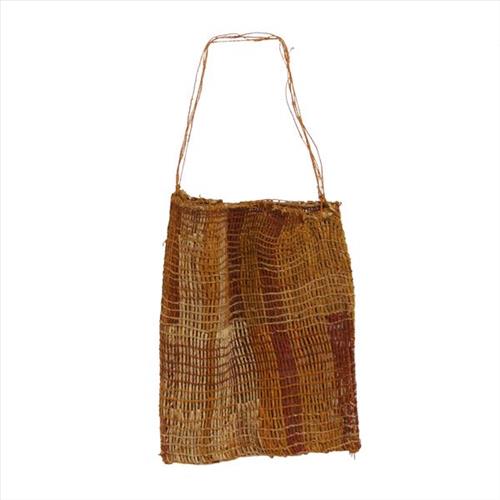
Bathi are primarily woven from the split leaves of the Screw Palm (Pandanus Spiralis). Coil weaving was introduced to Arnhem Land in the 1930s. It was adapted from techniques used by Indigenous women throughout South East Australia.
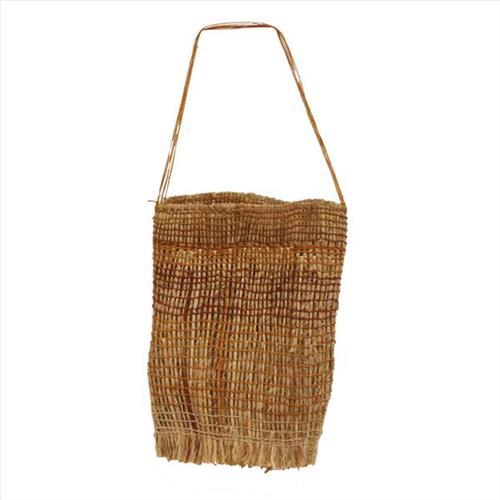
Bathi are usually woven from the split leaves of the Screw Palm (Pandanus Spiralis). This bathi has been made using Balgurr (Kurrajong). Coil weaving was introduced to Arnhem Land in the 1930s. It was adapted from techniques used by Indigenous women throughout South East Australia.
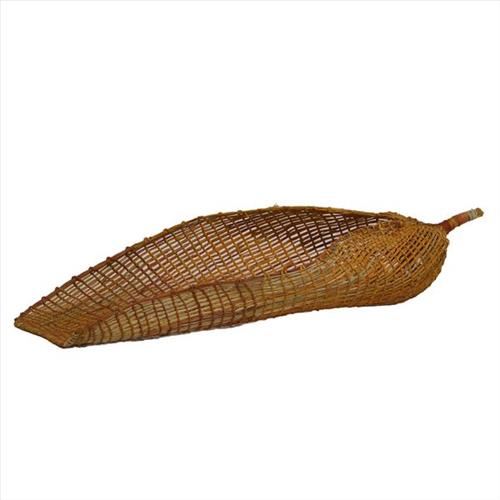
Mewana is a bush basket/scoop primarily made from mewana grass but sometimes from other fibres such as gunga (pandanus spiralis). Traditionally Yolngu made mewana baskets to carry bush foods such as baltji (yam) and warraga ngatha (cycad nuts). Sometimes mewana were used to scoop dhulumburrk (water lily) and other water reeds from the billabongs.
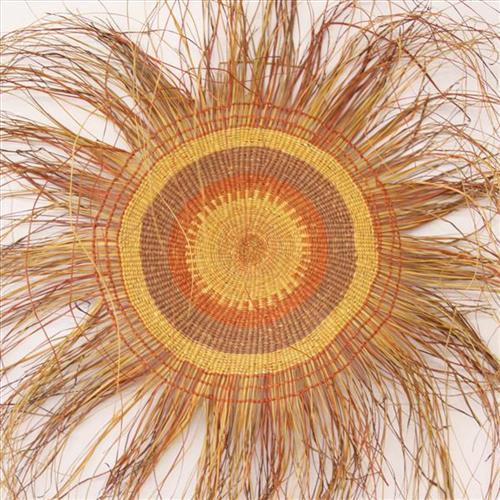
Traditionally, Nganiyal (conical mats) were used as an insect screen when erected, and as a sitting mat when folded. They are used in Ceremony as well as a functional item.
Nowadays, artists weave many different shapes including flat, round and oblong.
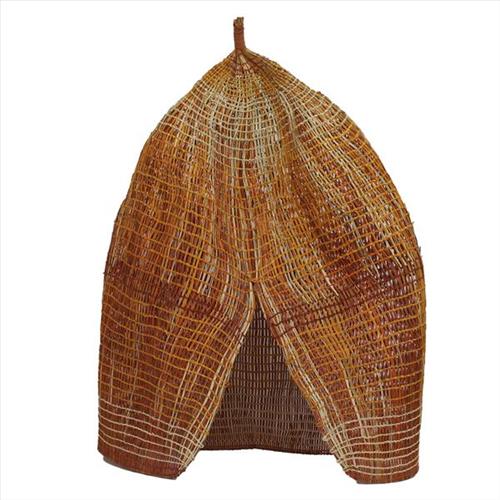
Fish traps are placed into the river to face the oncoming fish. The woven tunnel traps the fish and prevents their escape. The traps are tapered so when they are submerged in the water, the water pressure wedges them into place. Traditionally, the fish traps are operated at night time.