115682188109


Woven Mat

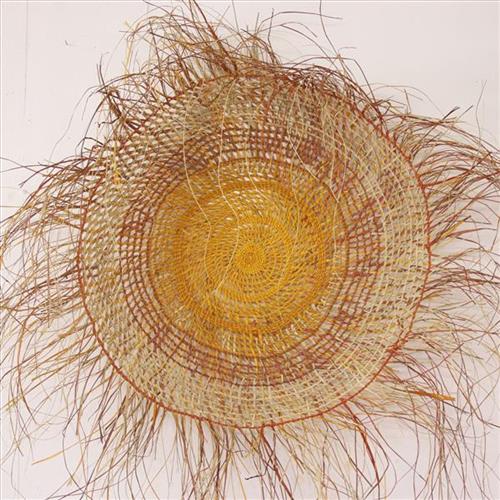
Traditionally, Nganiyal (conical mats) were used as an insect screen when erected, and as a sitting mat when folded. They are used in Ceremony as well as a functional item. 

Nowadays, artists weave many different shapes including flat, round and oblong. 

115682188105


Mindirr (Pandanus Bag)

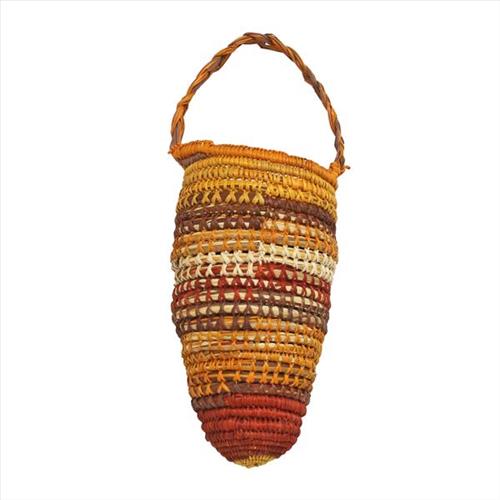
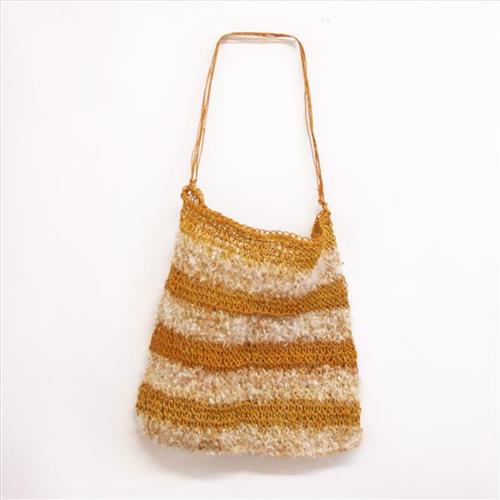
Miṉḏirr (dilly bags) are made from gunga (Pandanus spiralis), baḻgurr (kurrajong) and natural bush dyes. The body of the miṉḏirr is made from gunga, and the handles from baḻgurr. Once the gunga fronds and baḻgurr bark have been collected, they are stripped and prepared then boiled with the dyes.

Miṉḏirr were used traditionally for every day utilitarian purposes, particularly collecting bush foods such as bäḻtji (yam). Traditionally, the baḻgurr handles were worn across the forehead while the body of the miṉḏirr sat at the back, between the shoulder blades making it easily accessible when collecting ŋatha (food).

115682188104


Bathi (Pandanus Basket)

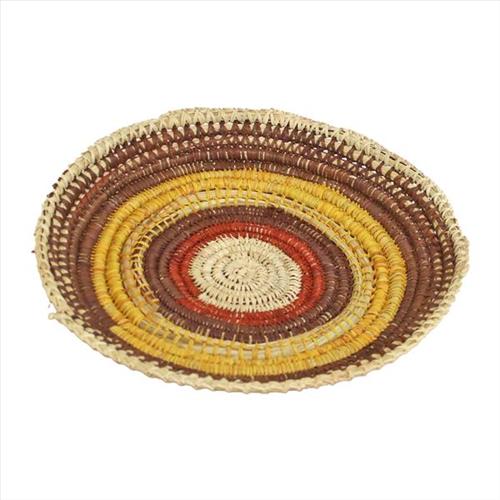
Bathi are woven from the split leaves of the Screw Palm (Pandanus Spiralis). Coil weaving was introduced to Arnhem Land in the 1930s. It was adapted from techniques used by Indigenous women throughout South East Australia.

115682188103


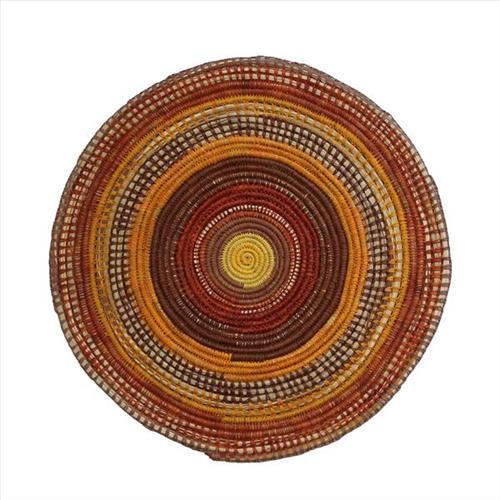
Woven Mat

Traditionally, Nganiyal (conical mats) were used as an insect screen when erected, and as a sitting mat when folded. They are used in Ceremony as well as a functional item. 

Nowadays, artists weave many different shapes including flat, round and oblong. 

115682188089


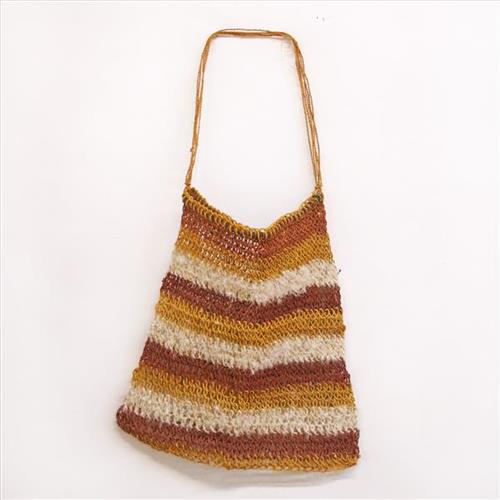
Djerrk (Bush String Bag)

Djerrk are primarily made from the bark of Baḻgurr (Red-flowered Kurrajong – Brachychiton megaphyllus) but sometimes Banyan tree (Ficus virens) and Cocky Apple tree (Planchonia careya). Sections of the tree are cut, and depending on the size, whole portions or part portions from the trunk. The inner bark is beaten or chewed to soften then dyed with natural bush dyes. Once softened and dyed, parts of the fibre are separated into fine strips then rolled on the thigh to create a rope otherwise known as bush string. The bush string is then woven and knotted to create a djerrk (string bag). Djerrk were used for every day utilitarian purposes, particularly collecting bush foods such as bäḻtji (yam).


115682188087


Djerrk (Bush String Bag)

Djerrk are primarily made from the bark of Baḻgurr (Red-flowered Kurrajong – Brachychiton megaphyllus) but sometimes Banyan tree (Ficus virens) and Cocky Apple tree (Planchonia careya). Sections of the tree are cut, and depending on the size, whole portions or part portions from the trunk. The inner bark is beaten or chewed to soften then dyed with natural bush dyes. Once softened and dyed, parts of the fibre are separated into fine strips then rolled on the thigh to create a rope otherwise known as bush string. The bush string is then woven and knotted to create a djerrk (string bag). Djerrk were used for every day utilitarian purposes, particularly collecting bush foods such as bäḻtji (yam).


377810582188826


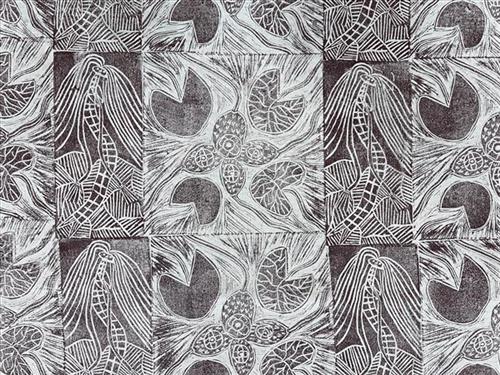
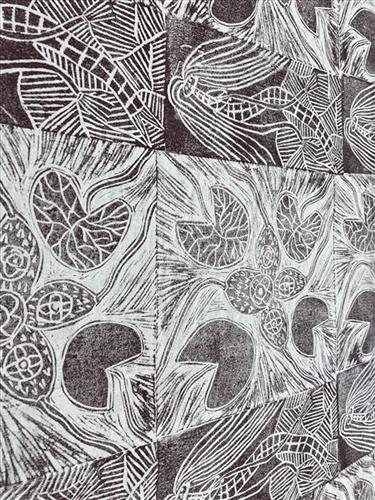
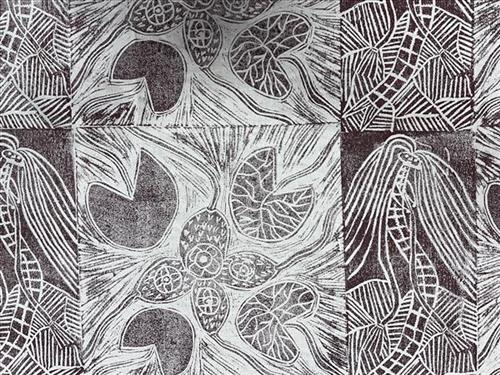
Yawkyawk dja Wayuk

Deborah Wurrkidj is a Kuninjku artist from the Kurulk clan whose country lies around the outstation of Mumeka in central Arnhem Land. This image depicts a female water spirit, (yawkyawk) with wayuk (waterlily)  from a creek in the rock country near Yikkarakal. The Yawkyawk is a story of the Duwa moiety that Deborah learnt to paint from her father.

‘Yawkyawk are water spirits (mermaids) and also young women. This design is yawkyawk in the billabong near Yikkarakal. Yawkyawk move like women, the one on the left is the old woman and on the right is the young woman. They are mother and daughter.

Sometimes you can hear yawkyawk talking at night. My grandmother told me a story that they heard those yawkyawk and when they looked out with their torch at night, all the women saw the yawkyawk tails flapping and disappearing in the water. The water is very cold in that billabong and the sand is soft, you might fall down there in the mud. There are also wayuk (water lilies) in this design, and other grasses. Sometimes when they are cold, the yawkyawk get out of the water to lie in the sun, but when they hear our footsteps they quickly jump back in.’ Deborah Wurrkidj
377810582188818


Kunwardde dja Karrbarda (Rocks and Yam Vine)

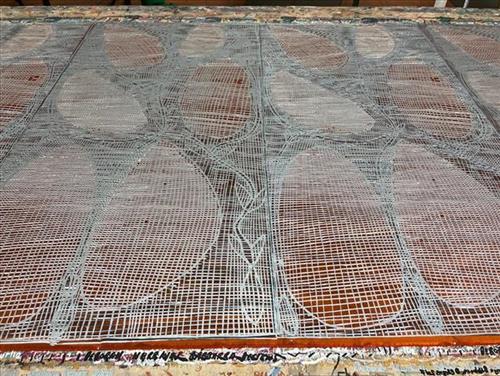
Susan Marawarr is a Kuninjku artist from the Kurulk clan whose country lies around the outstation of Mumeka in central Arnhem Land. In this design, she has depicted karrbarda (long yam) on her traditional country, the kunwardde (stone country).

The large stones represent the kunwardde rocky outcrops, which are elevated above the flat floodplains. The vines creeping around the large rocks are from the karrbarda. Women dig up karrbarda with kungarrndutj (digging sticks) and they are then cooked in the ashes of the fire to be eaten.

These yams are purple on the saltwater side of country and on inland freshwater country they are white. Karrbarda are an important manme (bush food) that are collected during the wet and dry seasons.