Ngayuku Walka / My Design
Walka means design or pattern. Artists use this title to describe artworks that are pattern based rather than descriptive or telling a story.
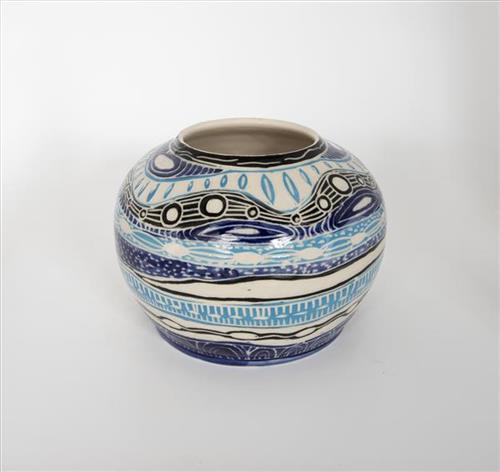
Walka means design or pattern. Artists use this title to describe artworks that are pattern based rather than descriptive or telling a story.
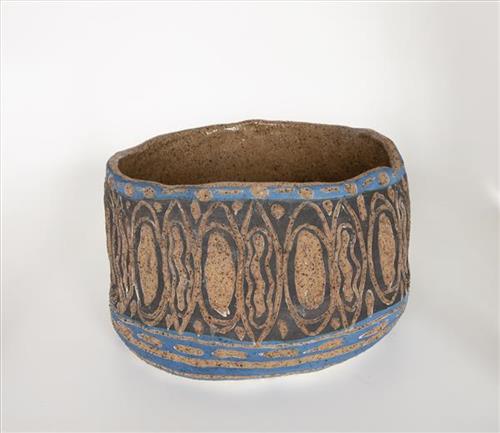
Walka means design or pattern. Artists use this title to describe artworks that are pattern based rather than descriptive or telling a story.
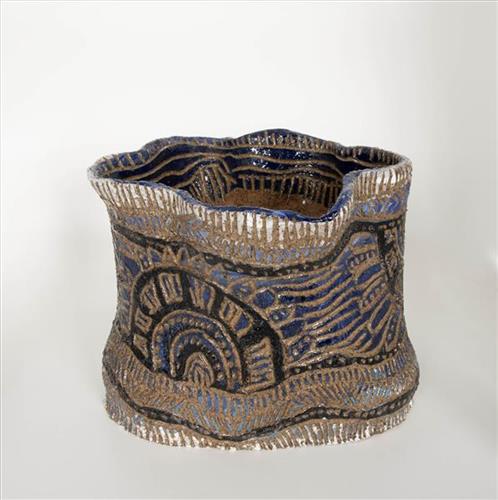
Piltati is Elizabeth’s great-grandfather’s country and her dreaming story. Two brothers were married to two sisters and they all lived together. One day the two men go out hunting, looking for malu (kangaroo). They travel everywhere and find nothing. They start to worry – what are we going to do, there is no meat on this land. One brother says, maybe we should turn into something. They start to think about what they should turn into. Maybe firewood? No, the firewood burns. Maybe emu or a bird? No, people eat them.
They do a lot of talking and decide they should turn into wanampi (rainbow serpents). A lot of smoke starts to come out of the ground, it is very scary and then the men become wanampi. They travel into the land, towards a rockhole.
Meanwhile, the two women are waiting for their husbands to return from their hunting trip. They wait a very long time. They keep going on with their lives, collecting bush tucker, waiting…but the men never come back. So they decide to set out to find their husbands. One day they come across a hole in the ground. They start digging. Digging, digging, digging they follow the tunnel inside the ground. They are so frantically digging they accidently hit one of the wanampi in the back. The wanampi chase the ladies and eat one of them and one woman gets away.
Now the wanampi still live in the waterhole called Piltati. The wanampi live there today and provide rain for the bush tucker to grow and provide meat on the land.
The rainbow serpent is a powerful ancestral being for Aboriginal people throughout Australia. Characteristics of the rainbow serpent vary greatly from group to group and also depending on the site. Often viewed as a female generative figure, the rainbow serpent can sometimes also be male. She has both powers of creation and destruction and is most strongly associated with rain, monsoon seasons and of course the colour seen in rainbows which arc across the sky like a giant serpent. In Northern Australia, the rainbow serpent is said to be active during the wet season.
Known as Ngalyod in the Kuninjku language of western central Arnhem Land, the rainbow serpent is mostly associated with bodies of water such as billabongs, creeks, rivers and waterfalls where she resides. Therefore she is responsible for the production of most water plants such as water lilies, water vines, algae and palms, which grow near water. The roar of waterfalls in the escarpment country is said to be her voice. Large holes in stony banks of rivers and cliff faces are said to be her tracks. She is held in awe because of her apparent ability to renew her life by shedding her skin and emerging anew. Aboriginal creation stories about the rainbow serpent often describe her as a fearful creature that swallows humans only to regurgitate them, transformed by her blood. The white ochre used by artists to create the brilliant white paint for bark paintings, body decoration and in the past, rock art, is said to be the faeces of the rainbow serpent.
Aboriginal people today respect and care take sacred sites where the rainbow serpent is said to reside. Often certain activities are forbidden at these places for fear that the wrath of the great snake will cause sickness, accidents and even tempests. This is not always the case however and there are many rainbow serpent sites today where people may enter to hunt, fish or swim. Ngalyod has been the subject of art and ceremony for possibly thousands of years.
The rainbow serpent is a powerful ancestral being for Aboriginal people throughout Australia. Characteristics of the rainbow serpent vary greatly from group to group and also depending on the site. Often viewed as a female generative figure, the rainbow serpent can sometimes also be male. She has both powers of creation and destruction and is most strongly associated with rain, monsoon seasons and of course the colour seen in rainbows which arc across the sky like a giant serpent. In Northern Australia, the rainbow serpent is said to be active during the wet season.
Known as Ngalyod in the Kuninjku language of western central Arnhem Land, the rainbow serpent is mostly associated with bodies of water such as billabongs, creeks, rivers and waterfalls where she resides. Therefore she is responsible for the production of most water plants such as water lilies, water vines, algae and palms, which grow near water. The roar of waterfalls in the escarpment country is said to be her voice. Large holes in stony banks of rivers and cliff faces are said to be her tracks. She is held in awe because of her apparent ability to renew her life by shedding her skin and emerging anew. Aboriginal creation stories about the rainbow serpent often describe her as a fearful creature that swallows humans only to regurgitate them, transformed by her blood. The white ochre used by artists to create the brilliant white paint for bark paintings, body decoration and in the past, rock art, is said to be the faeces of the rainbow serpent.
Aboriginal people today respect and care take sacred sites where the rainbow serpent is said to reside. Often certain activities are forbidden at these places for fear that the wrath of the great snake will cause sickness, accidents and even tempests. This is not always the case however and there are many rainbow serpent sites today where people may enter to hunt, fish or swim. Ngalyod has been the subject of art and ceremony for possibly thousands of years.
Bark paintings have a long cultural tradition, believed to extend back many thousands of years. In northern Australia, the walls of bark shelters in the Kimberley and Arnhem Land may well have been painted to convey and illustrate stories in the same way that rock shelters were. Bark painters in the Maningrida region invoke customary practices and experiment with visual forms. Their paintings merge the natural and spiritual worlds, the secular and sacred, and embody and evoke ancestral presence.The subject matter of some works on bark express or focus on djang, the power of country itself; others the ancestral activities that created it or inhabit it: the powerful Rainbow Serpent Ngalyod, female water spirits including Yawkyawk and jin-Merdewa, and spirit beings such as Namorrorddo and Wangarra. Some paintings feature geometric designs inspired by body painting. Spirit figures such as the long thin Mimih spirits said to live in the rock country are also frequently depicted, as are animals hunted as game, including kangaroo and barramundi.
The process of making a bark painting begins with the artist choosing a suitable tree (stringybark gum tree, Eucalyptus tetrodonta), in the wet season when the sap is rising and the bark is fairly supple and easy to grip. After finding a section of bark that is free of knots and termite damage, cuts are made top and bottom and, after some encouragement by tugging and prying, a hollow open cylinder of bark is removed. The rough outer bark is stripped off and the bark sheet is trimmed and placed over a fire, inner side downwards, to drive out moisture, including the sap. The bark sheet, pliable from its steaming session, is next placed on the ground and trodden on to flatten it out. Heavy weights are placed on it as it cools to ensure that it doesn’t curl or warp.
Artists use a rich palette of colours derived from natural pigments that can be sourced from their clan estates. The reds, purples, pinks and yellows come from ochres (forms of iron oxide or limonite). Black generally comes from charcoal, and white is from pipeclay. All of these earth pigments are strongly associated with djang. The pipeclay used to create the brilliant white paint, for example, is said to be the faeces of the powerful Rainbow Serpent (Ngalyod in the Kuninjku language) and the spirit essence of the Mardayin ceremony.
Sometimes natural fixatives are mixed in to bind the pigments: wax, yolk of eggs, resins and the sap of orchid plants. Today PVA glue is more commonly used as a binding agent for the pigments. The tool that an artist uses to apply colour to the bark depends on the style of painting and available resources. It may be a feather, or a brush made from a few strands of straight human hair. Cyperus javanicus, a tough sedge grass, may be used to make the slim reed brush required to execute the fine rarrk designs.
Bark paintings have a long cultural tradition, believed to extend back many thousands of years. In northern Australia, the walls of bark shelters in the Kimberley and Arnhem Land may well have been painted to convey and illustrate stories in the same way that rock shelters were. Bark painters in the Maningrida region invoke customary practices and experiment with visual forms. Their paintings merge the natural and spiritual worlds, the secular and sacred, and embody and evoke ancestral presence.The subject matter of some works on bark express or focus on djang, the power of country itself; others the ancestral activities that created it or inhabit it: the powerful Rainbow Serpent Ngalyod, female water spirits including Yawkyawk and jin-Merdewa, and spirit beings such as Namorrorddo and Wangarra. Some paintings feature geometric designs inspired by body painting. Spirit figures such as the long thin Mimih spirits said to live in the rock country are also frequently depicted, as are animals hunted as game, including kangaroo and barramundi.
The process of making a bark painting begins with the artist choosing a suitable tree (stringybark gum tree, Eucalyptus tetrodonta), in the wet season when the sap is rising and the bark is fairly supple and easy to grip. After finding a section of bark that is free of knots and termite damage, cuts are made top and bottom and, after some encouragement by tugging and prying, a hollow open cylinder of bark is removed. The rough outer bark is stripped off and the bark sheet is trimmed and placed over a fire, inner side downwards, to drive out moisture, including the sap. The bark sheet, pliable from its steaming session, is next placed on the ground and trodden on to flatten it out. Heavy weights are placed on it as it cools to ensure that it doesn’t curl or warp.
Artists use a rich palette of colours derived from natural pigments that can be sourced from their clan estates. The reds, purples, pinks and yellows come from ochres (forms of iron oxide or limonite). Black generally comes from charcoal, and white is from pipeclay. All of these earth pigments are strongly associated with djang. The pipeclay used to create the brilliant white paint, for example, is said to be the faeces of the powerful Rainbow Serpent (Ngalyod in the Kuninjku language) and the spirit essence of the Mardayin ceremony.
Sometimes natural fixatives are mixed in to bind the pigments: wax, yolk of eggs, resins and the sap of orchid plants. Today PVA glue is more commonly used as a binding agent for the pigments. The tool that an artist uses to apply colour to the bark depends on the style of painting and available resources. It may be a feather, or a brush made from a few strands of straight human hair. Cyperus javanicus, a tough sedge grass, may be used to make the slim reed brush required to execute the fine rarrk designs.
Ephippiorhynchus asiaticus
Bachaja gu-jong waykin a-jarlaparda makukuya.
The Jabiru makes its nest high in the tree
The Jabriu is associated with the Yirrichinga
Coil basketry is a well-established fibre art form in the Maningrida region, especially for women from the Kuninjku, Rembarrnga, Ndjebbana and Nakkara language groups.
Artists make coiled baskets of many shapes and sizes, ranging from small round baskets to large oval baby baskets, and made mostly from pandanus fibre that is dyed with natural pigments. Bundles of fibre are formed into coils which are covered and stitched together with strands of fibre threaded onto a needle. Artists combine colours and patterns to obtain intricate new graphic patterns.
These techniques are believed to have been introduced to Arnhem Land by Greta Matthews, a missionary on Goulburn Island in the 1920s. She had probably learnt coil basketry from Aboriginal people in the south-east of Australia, possibly the Murray River people such as the Yorta Yorta or the coastal Ngarrindjeri.
The coiling technique spread quickly from Goulburn Island to people on mainland Arnhem Land.
Coil basketry is a well-established fibre art form in the Maningrida region, especially for women from the Kuninjku, Rembarrnga, Ndjebbana and Nakkara language groups.
Artists make coiled baskets of many shapes and sizes, ranging from small round baskets to large oval baby baskets, and made mostly from pandanus fibre that is dyed with natural pigments. Bundles of fibre are formed into coils which are covered and stitched together with strands of fibre threaded onto a needle. Artists combine colours and patterns to obtain intricate new graphic patterns.
These techniques are believed to have been introduced to Arnhem Land by Greta Matthews, a missionary on Goulburn Island in the 1920s. She had probably learnt coil basketry from Aboriginal people in the south-east of Australia, possibly the Murray River people such as the Yorta Yorta or the coastal Ngarrindjeri.
The coiling technique spread quickly from Goulburn Island to people on mainland Arnhem Land.