Boomerang Learning- Knowledge
Many years ago, knowledge was passed down to me by teaching me Boomerang throwing in a big open area not far from Baroona. Representing gaining knowledge.
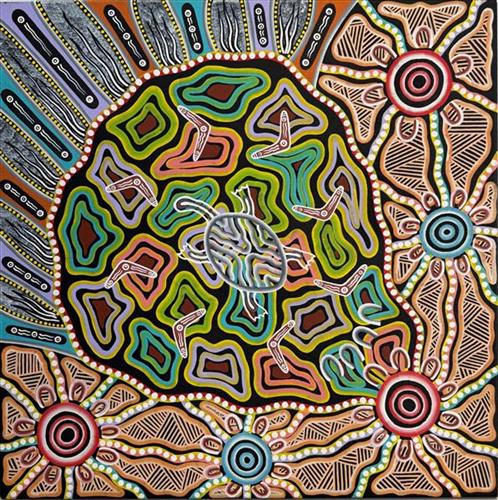
Many years ago, knowledge was passed down to me by teaching me Boomerang throwing in a big open area not far from Baroona. Representing gaining knowledge.
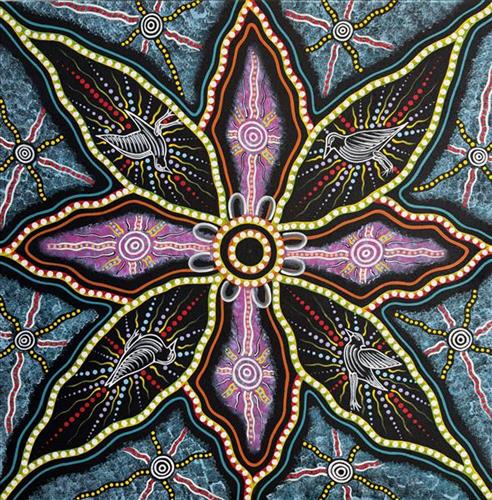
The meaning of the word Barmah means Home of the Plover in Yorta Yorta Language and this is what I wanted to represent in this artwork.
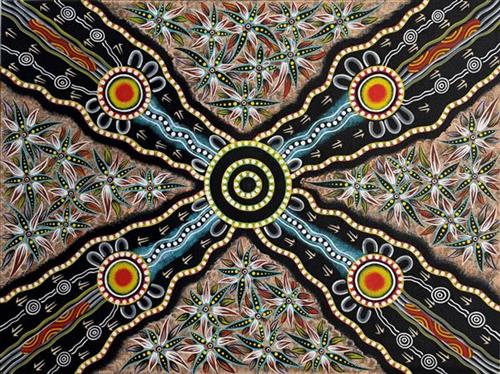
Years ago, on the other side of Moama Bridge we had a huge communal fire for there were four huge dead trees many years old and laid for many years. Everyone gathered from all around to celebrate the trees and the fires were huge and, being wintertime, kept everyone warm.
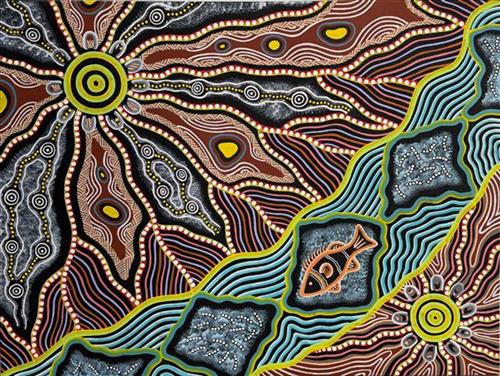
I have a fishing spot where many years ago I caught a huge perch in the Murray River (Dungula). Food was hard to come by at the time and it was welcomed and fed me well.
“Rain, dry, hot, cold.
In the wet season everything goes green. When we were young we would go hunting for goanna and turkey. You go fishing in the river — you can catch barramundi when the river is running from the rain. They call it Warrampa, in Luma side.
Dry season, Lulga season. Hot season. After the water has settled you can go swimming. Catch the same thing. And Jarrumpa (cherabin, freshwater prawn).
The flowers come out after the rain, between the hot and cold.”
– Rose (Glenys) Butt
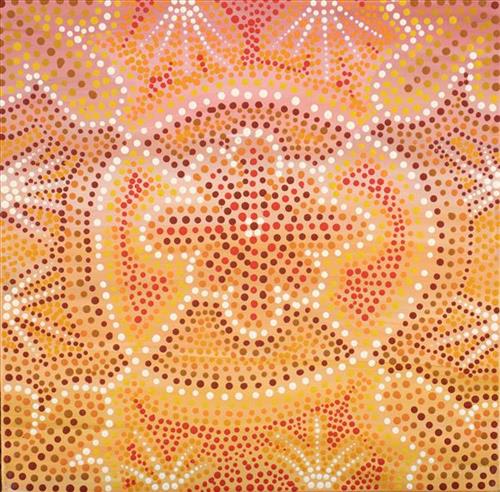
This artwork reflects the changing seasons across Country, showing how life shifts with the dry and wet. In Bidyadanga and the surrounding desert and coastal lands, the rhythm of the year guides movement, gathering, hunting, and time spent with family on Country.
As the dry season arrives, the land opens up again — red dunes, salt flats, and long beaches shining in the heat. Winds change, tides get bigger, and rangers burn Country to look after it, clearing grass, making space for new growth, and keeping the land healthy. Bush turkeys, goannas, fish, stingray, turtle, and shellfish are hunted, and families camp, share stories, and travel between desert and coast.
When the wet season return, big clouds roll in, storms build over the sea, and lightning cracks across the land. Country comes alive — water fills the waterholes and claypans, flowers and grasses grow, and birds, bush foods, and animals become abundant.
Through colour, pattern, and rhythm, the artist captures the cycle of seasons and the knowledge passed down — knowing when to gather certain foods, when animals are fat, when storms are coming, and how to care for Country through fire and everyday living. The work celebrates the constant relationship between people, weather, land, and sea, honouring the strength and continuity of cultural life.
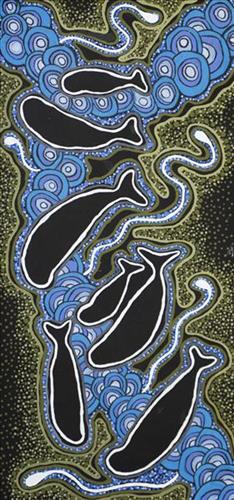
“This painting represents family networks — mothers and fathers with their young.
The blue represents the ocean and warm waters.
The white represents the lifeline and purity.
The green represents the food.”
— Anthia Matsumoto
This artwork invites the viewer into the world of salt-water Country — the sea animals, the tides, the reefs, the mangroves, the hunting, the gathering, and the guardianship of coast and sea. The artist portrays fish, turtles, rays, dolphins, dugongs, sharks, crustaceans and shellfish, weaving together the patterns of sea-grass, coral, tidal flats, beach and reef.
It tells of families fishing off the beach, children diving in shallow waves, spear hunting, crabbing and catching prawns. It also speaks of wildlife protection — respectful harvesting, ensuring sea animals remain healthy, sea-ranger work and cultural practice.
With flowing patterns, deep blues and turquoise, shell shapes, wave forms and animal tracks, the work echoes the movement of water, tides and life beneath the waves. The artist invites us to listen to the tide, recognise the connection between land, sea, animal and people, and remember that to harvest is also to care — leaving Country strong for those who come next.

Nora begins her stories with simple lines, drawn on paper, canvas, or etched into the red earth, gradually transforming into rich visual narratives of her homeland, Multju. This area, marked by significant rock-holes. where she was born is Mulga country and a great place to find Honey Ants. There is a story of a mother and her two children successfully finding these ants, savouring the sweet rewards of their efforts. Through vibrant colours and intricate details, Nora’s art celebrates this story.

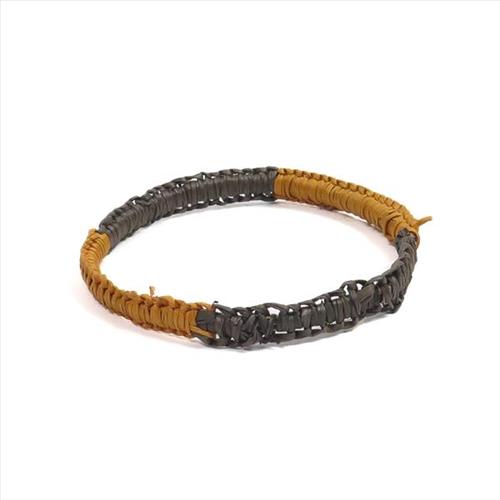
Pandanus fibre art is labour intensive requiring a high level of care and fine needlework. Finished works are both functional and beautiful. Women collect pandanus by pulling from the top of a pandanus tree, stripping then dying the leaves using natural bush colour.
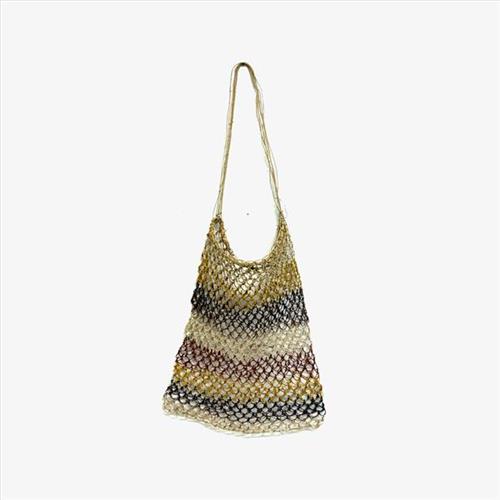
Djerrk (Bush String Bag) is a flexible, open weave bag made from the bark of Balgurr (red-flowered Kurrajong) but can also be made using Banyan Tree or the Cocky Apple Tree.
The bark is harvested by cutting sections of the tree from the trunk. Depending on the size of the tree, this can involve removing small sections or the whole trunk. The inner bark is then softened by being beaten or chewed, then dyed.
Bula’bula weavers exclusively use natural dyes, derived from locally sourced roots, leaves and grasses. These pigments are extracted and infused into dried balgurr fibres by boiling over an open fire, producing the rich, vibrant colours characteristic of contemporary Yolŋu weavings.
Once dyed, the fibre is separated into fine strips the rolled on the thigh to create a rope, otherwise known as bush string. The bush string is woven and knotted to create the Djerrk (String Bag). This bag was used for every day utilitarian purposes, particularly collecting bush foods.