115682367200
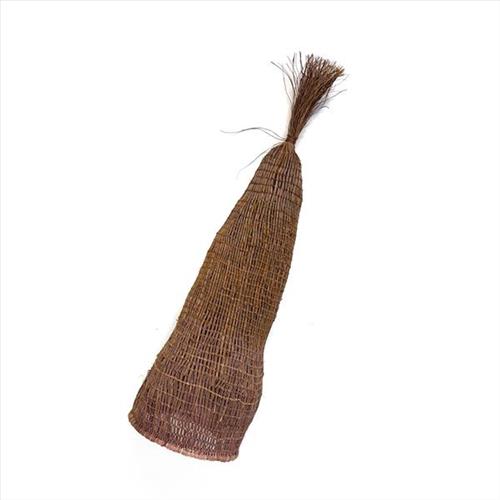
Dhawurr or Batjbarra (Fish Trap)
Dhawurr, or Batjbarra, is a traditional fishing method used by Indigenous people in the Arafura Swamp and surrounding wetlands of Arnhem Land. Yolŋu now prefer the modern fishing methods of reels and bait, however, weavers continue to make Batjbarra for cultural conservation and to be sold as decorative pieces.
When used for practical purposes, the Batjbarra was placed into the river with the opening facing oncoming fish. The woven tunnel trapped the fish with the weave tight enough to prevent escape but loose enough to allow water to freely flow through. The traps tapered so that when they were submerged, the water pressure wedged them into place.
The primary material used in this piece is the young, green leaves of the Pandanus spiralis tree, that were harvested using a long wooden hook. The leaves are stripped of their prickles, with the smaller fibres being dried to produce a strong, resilient material. These fibres are then twisted, coiled, or combined using various techniques to create the fish trap.
Bula’bula weavers exclusively use natural dyes, derived from locally sourced roots, leaves and grasses. These pigments are extracted and infused into pandanus fibres by boiling over an open fire, producing the rich, vibrant colours characteristic of contemporary Yolŋu weavings.
377815582367302
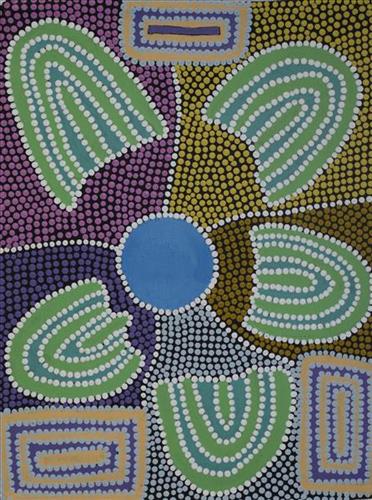
My Grandfathers Country
‘My Grandfather lived in the Great Sandy Desert, with his wives, and his children, gathering food, hunting, gathering wood to make fire, at night they sang and danced camp side as well as going to get water at the water hole.’
– Agnes Frank
377815582367296
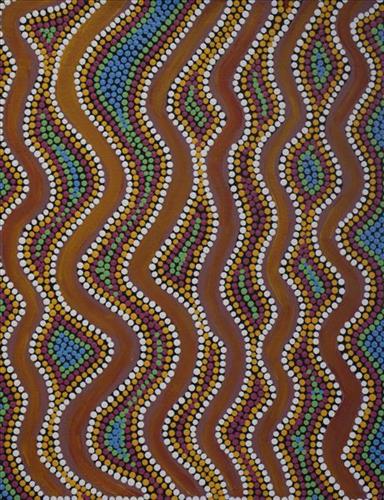
Great Sandy Desert
‘This is a story of the sand dunes in the Great Sandy Desert. When it rains the grasses grows, the sun rose up, and it’s blue sky again and plenty waterholes.’
– Agnes Frank
377815582367282
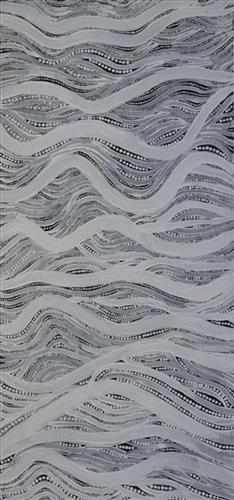
Untitled
This artwork showcases the artist’s skillful use of colour, texture, and technique, reflecting a deep connection to their environment and culture. Each detail embodies the unique identity of Bidyadanga Artists, where the original five language groups—Nyangumarta, Mangala, Yulparija, Juwaliny, and Karrajarri—come together to create art that speaks to the heart of Country. Over time, the community and Art Centre has grown to include people from other Kimberley tribes, fostering a space where diverse cultural knowledge and practices come together. Situated where the desert meets the sea, artists draw inspiration from their ancestral Country and personal journeys. The artist captures the vibrant beauty of both desert and coastal landscapes, blending earthy reds, deep blues, and intricate patterns distinctive to their cultural heritage. The themes and composition invite viewers into the artist’s world, offering a glimpse of the rich, intertwined histories and the enduring connection to land and spirit that define the Bidyadanga community.