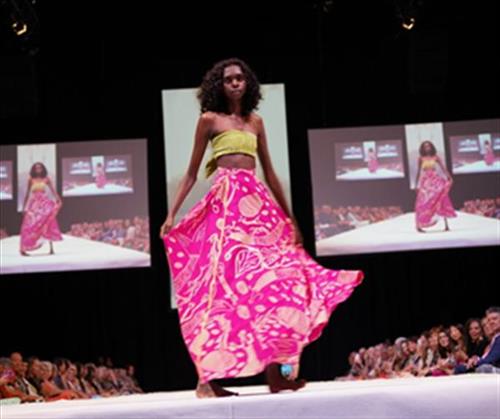
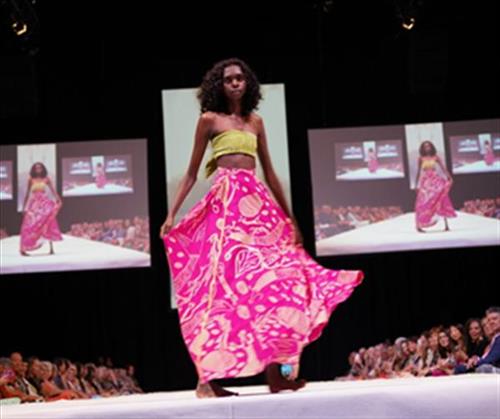
111982372381


Kalawan (Goanna)

This painting depicts two goannas embedded in an intricate depiction of kunkurra, the mini cyclones common during the wet season in Arnhem Land. Kunkurra also relates specifically to the Bilwoyinj site. At this site, two of the most important Kuninjku creation beings, a father and son, hunted and ate goanna. They left some goanna fat behind, which turned into the rock that still stands at the site today.

221282372357


Kulata and Kali (Spear & Boomerang)

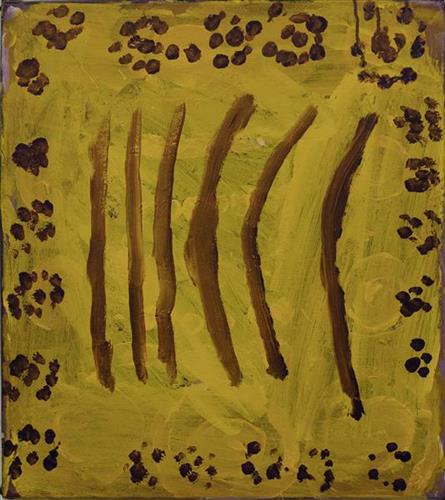
My father told me this story, it’s a dream he had. There was a man who was travelling for a long time. He was travelling with kulata (spear) and kali (boomerang) because someone was waiting there for fighting.

In the middle of the way someone came making problems and trouble. All the kulata gone, all the kali gone. That place is still there and the kangaroo and emu are still drinking there at that waterhole.

This is tjukurpa wiru – a good story. There are some stories I can’t tell you.

221282372356


Wati Wanampi Tjuta / Snake Men – Imuna Kenta’s Story

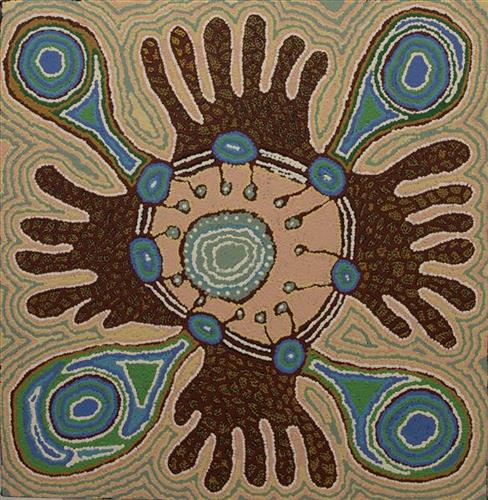
Imuna paints the Country that stretches from Mutitjulu to Kunytjanu, close to Pipalyatjara in the far west of the Aṉangu Pitjantjatjara Yankunytjatjara (APY) Lands. The ancestral figure known as Wati Wanampi (male water snake) lived at a waterhole site called Malara. The Wanampi gathered a group of men together to go out hunting for kuka (meat).

While they were out looking for meat, another group of male water snakes known as the Wal Mala (an army of soldier snakes who came from Mutitjulu) recruited them into their army. The group joined forces and travelled to a site known as Kuntyjanu, where they engaged in a battle with Wati Tjakura (an edible skink lizard). They speared Wati Tjakura and killed him. The group then returned to Malara, where they rest today at the waterhole.

377810582372259


Mardarda and Njarlarla (Bones and Fire Sticks)

Designed 2019

In Esther’s first screen design, she depicts the story of Mardarda (bones) and Njarlarla (fire sticks) carried in a dilly bag, reminiscent of traditional ways of the Ndjebenna people.

‘Back in the old days, our people would use a ‘bush lighter’ for lighting fires, which was two pieces of special wood which would make fire easily. The old people carried a dilly bag containing the fire stick all times, when they moved camps.

Old people would always carry dilly bags, sometimes with water, honey, food or bones of our deceased people.

When someone passed away their body would be put on a high platform built from eucalyptus and paperbark. They would use a firestick to light a fire under the platform, and people would sing and dance around that platform to send the deceased’s spirit back to his or her country.

The body would then be left here for many months. When ready, the clan would return to collect the bones to take them back to the deceased’s homeland for burial.

To travel to the homeland, people would paint the bones with brown ochre and place them in a dillybag. When they reached the deceased’s homeland, people would sing together, place the bones in the lorrkkon and to leave them rest forever.”
377810582372256


Djomi (Fresh Water Spirit)

This design depicts the story of the artist’s ancestral dreaming, the Djómi (Fresh Water Spirit).

The Djómi figure is a mermaid-like spirit with fish tail that lives in the freshwater stream that flows out to the sea cliff near Maningrida. Djómi is known to be a very powerful fertility symbol.

“If you go there, you can get pregnant easily. Djómi has babies, and they can give other babies too. The Djómi spirit is so powerful, that women can end up with multiple babies at once, twins or sometimes even more. The Djómi spirits lay eggs near the sacred freshwater stream in Maningrida. Inside the eggs are human babies as well as young Djómi. Men do not go near that swamp, because Djomi is so powerful that men might get pregnant there too. So men are too scared of that Djómi. When we visit the Djómi freshwater spring, we can hear young Djómi  crying. They sound like normal babies crying, those Djómi spirits. They are looking for a mother. This Djómi is my dreaming, I got permission from my djungkay (ritual manager) to paint this Djómi design. For me I always ask my djunguy permission to paint, because that is our cultural way. This design also depicts the freshwater lily leaves and seaweed from the base of the sea floor.” Joy Galrbin