221282368102


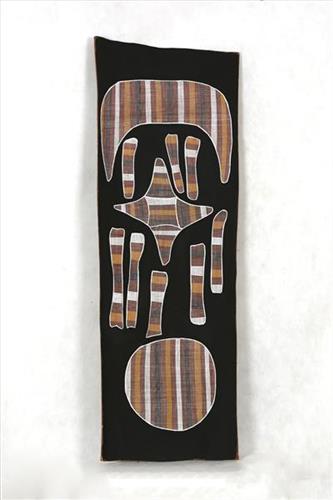
Kulata and Kali (Spear & Boomerang)

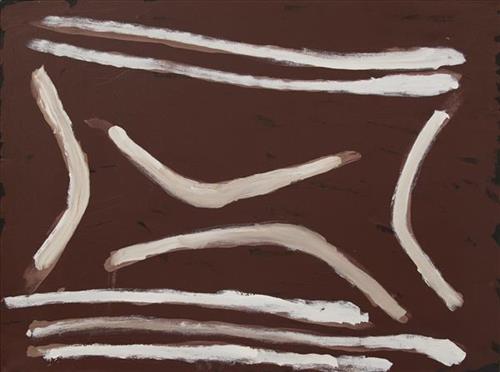
My father told me this story, it’s a dream he had. There was a man who was travelling for a long time. He was travelling with kulata (spear) and kali (boomerang) because someone was waiting there for fighting.

In the middle of the way someone came making problems and trouble. All the kulata gone, all the kali gone. That place is still there and the kangaroo and emu are still drinking there at that waterhole.

This is tjukurpa wiru – a good story. There are some stories I can’t tell you.

221282368100


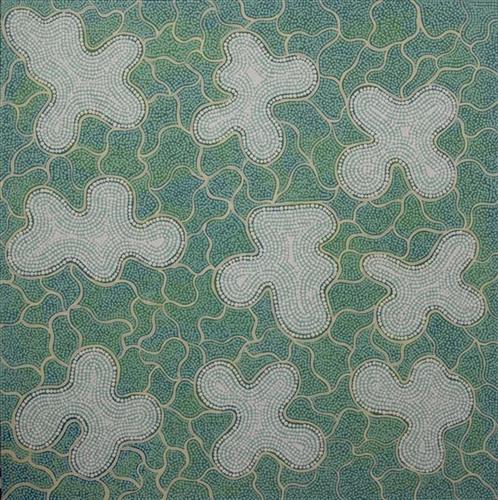
Tjukula/Waterholes

For the Pitjantjatjara people living in the desert, knowledge of their water sources was critical to their survival. This resulted in an intimate understanding of the landscape which continues today. Water is an essential element in the desert. These rock holes were particularly important during the dry season when most of the water holes and creeks dried up.  Deep familiarity with the topography of their country and the way rain would interact with the land ensured constant sources of water could be found. Knowledge of rock hole sites is passed on from generation to generation and revered by all Anangu (people).

Tjukula means rock-holes, which are found with surprising frequency in the Musgrave Ranges and country around Ernabella.  Between visits, Anangu would use a construction of rocks and spinifex to guard these important water sources from spoilage by feral and stock animals such as cattle, camels, horses and donkeys.

377810582368098


Marebu (Floor Mat) and Yawkyawk (Young woman mermaid)

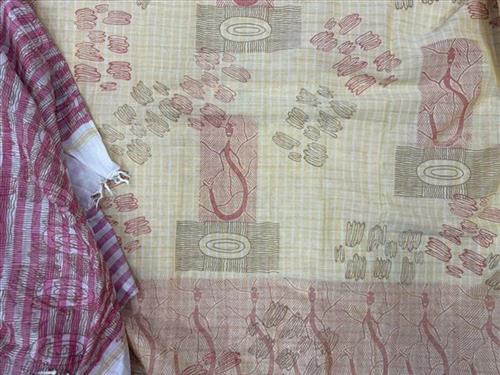
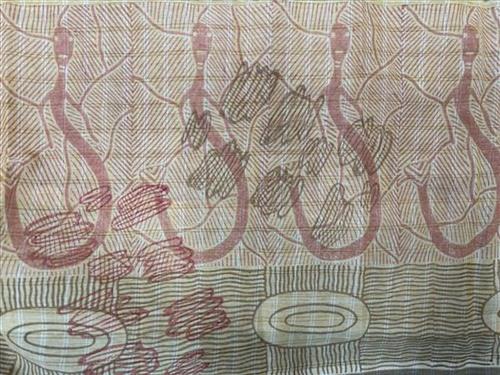
A beautiful indigo discharge dyed cotton silk sari featuring woodblock designs created in 2023 during a special workshop with Tharangini Studio in Bangalore. This fabric features the following block designs:

Kunred (Country) by Janet Marawarr)

Marebu (Raylene Bonson)

Kunngol ( clouds)

Yawyyawk (young woman spirit) by Deborah Wurrkidj

Printed in India by Tharangini Studio – Bangalore. This is a limited edition cotton yardage created due to workshops in India in January 2023. As part of their visit to India to open their exhibition, Jarracharra (dry season wind), Janet Marawarr and Deborah Wurrkidj visited Tharangini Studio, Bangalore’s oldest heritage textile studio. Established in 1977, Tharangini is woman-owned and specialises in organic, sustainable woodblock printed textiles. Tharangini’s skilled artisans worked closely with Babbarra in 2022 to hand-carve some of Babbarra’s old linocut designs into woodblocks. This initiative was supported by Kinaway Chamber of Commerce, Victoria and Bawinanga Aboriginal Corporation.

I’m excited to see my Lino design made into a woodblock. We are going to spend Saturday printing with Tharangini Studio. We are going to learn woodblock printing. I’ve been working Bábbarra Women’s Centre for 37 years since it started. I’ve been printing Lino on fabric.’ Janet Marawarr 2023

‘Tomorrow we do printing Yawkyawk (mermaid spirit) and Ngalyod (rainbow serpent). My design is together with my sister. Together, we started working at the Women’s Centre and Maningrida Arts and Culture, taught by our mother and grandmother. My sister is a sick one and she pass on her story to me – Ngalyod (rainbow serpent). I help my sister, I help carry the knowledge for her. That’s why we both have designs being made into woodblock.’ Deborah Wurrkidj 2022
221282368057


Tjintungku irnyani ngangkaalingka ungu-wanungku

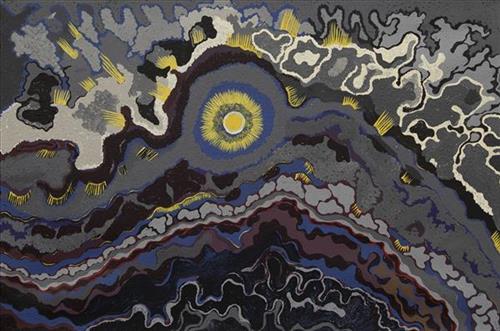
This painting is the sun shining through the clouds.

‘Cloudy, raining, but the sun is shining through the clouds. The sun is going through the clouds. The clouds are trying to cover the sun, thunder coming, but the sun still coming through’.

111982368050


Dirdbim (Moon Dreaming)

The images in this painting refer to a site in the clan estate of the artist, at a place called Dirdbim which literally means ‘image of the moon’. The site is a large, unusually round hole in sandstone, residual on the plain not far from the Mann River. 

The large hole is said to be the full moon created by the rainbow serpent Ngalyod, who pierced the rock in times of the ‘dreaming’ and left the shape of the full moon. Dirdbim is not far from the artists’ residence today at Yikarrakkal and the area is rich in rock art and old camping sites. As well there are numerous human remains, bones wrapped up in paper bark and older remains lying in clefts of sandstone shelters. The Eastern Kunwinjku people of the district have always used Dirdbim as a mortuary site because of the mythological history of the area which is connected to the moon story. This is because the mythology of the moon ancestor relates how his adversary, the spotted quoll, argued with the moon over the fate of humanity. The quoll decided he would die once and once only but the moon took his place in the sky to be reborn each lunar month. Because of this Kubarkku often painted this subject with bones or murrngno surrounding the image, just as human bones surround the actual site at Dirdbim.

The techniques of bark painting are usually handed down from one generation to the next, as are the rights of each artist to a particular site or ‘dreaming’. The similarity between this painting by Laradjbi, and some of her husband’s paintings is a reflection of this process of transmission.

111982368049


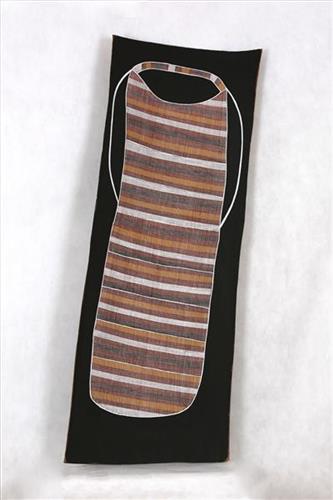
Dilly Bag

Kun-madj, or dilly bag, is a large woven collecting basket. These large bags are often made from the vine Malasia scandens, a strong pliable plant which grows along the floor and into the canopy of monsoon vine thickets. The bags are used to collect any kind of large numbers of heavy foods such as fish caught in conical fish traps or large collections of yams.

They can also be made from Pandanus spiralis, a plant which grows in many areas of Arnhem Land. These dilly bags are a tightly woven collecting basket, very finely made. These dilly bags are often used to collect sugarbag, the native honey

As well as being of practical use, dilly bags are also of religious significance to Arnhem Land people. Dilly bags are said to be totemic objects and associated with particular sites in the landscape

111982368045


Barnda – long neck turtle

In the mythology or dreaming history of the Ganalbingu and Gurrgurrdjunggu peoples, two sisters who were the human forms of barnda ‘the Long-neck Turtle’ (Chelodina rugosa) came travelling a long distance from the east towards Ganalbingu country in Central Arnhem Land. They travelled through Martay country arriving at a place called Ji-malawa, the site today of a homeland/outstation community in the Blyth River district. At this place they turned their speech to the Burarra language and named sites as they travelled. The two Barnda sisters continued their journey to Gamardi, a site in Djinang country and they again changed their language to a dialect of Djinang called Wulagi.

Barnda is also Bulunbulun’s personal ‘Dreaming’ given to him by his father who was walking in the swamp at the time of the artist’s birth. 

While discussing the painting’s imagery, Bulunbulun explained that some components were the domain of ‘inside’ or secret ceremonial meaning and therefore he could only describe the ‘outside’ or public aspects of them.

In the painting Bulunbulun depicts the passage of the barnda through the country and the locations where the long neck turtle stopped to create features in the landscape in the Dreamtime. The two black circular forms are ngambul ‘a waterhole’ formed by barnda. The two horizontal bands of rarrk ‘crosshatching’ in the midlle and upper section of the painting are marwurru ‘a paperbark log’ over which barnda walked along the journey. The large areas of rarrk represent gurrwiling ‘the swamp’ created by barnda. The vertical swaying lines are gunbuluru and wuye different types of reeds that are so sharp that they can cut one legs when walking through the swamp. At the top of the painting above the head of the image of the turtle is a band of rarrk, which represents the view of the plain country and swamp from a hill.


111982368044


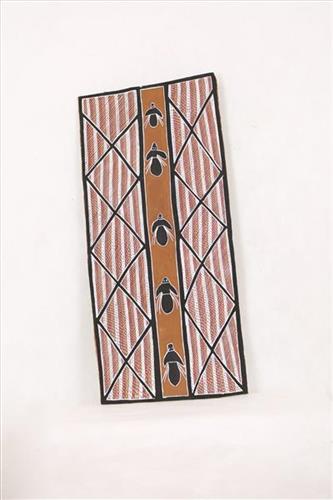
Yarrpanj (Honeybees)

The artist has depicted the native honeybees and the honey they produce.

Wild honey, called ‘woma’ in Burarra language, is produced by a number of species of native sting less honeybees of the [Genus Trigona]. Some make their hives in trees, some in the ground, especially in the side of creek banks, while others make their hives inside rock crevices.

111982368043


Morning Star Pole

The ceremony known throughout Arnhem Land generically as Marradjiri is a ceremony of diplomacy given by one group to another to establish good relations and to strengthen kinship (for example by marriage) and economic ties (for example the sharing of clan estate resources).

The central object in the Marradjiri ceremony is a decorated polepainted with clan designs. The work on the pole is undertaken as part of the ceremony and is accompanied by the associated song series.

Often the ceremony commences when one group invites another and the people invited perform the Marradjiri. When a child finds their first bush food or object of value it is taken as a sign that the Marradjiri ceremony should be performed and an invitation is sent out sometimes in the form of a lock of hair from this child or in the form of some other token, sometimes encased in beeswax and wrapped in cloth. The token is delivered to the invited performers who then prepare to give the ceremony to their hosts at the residence of the host group.

Each evening before sunset the performance begins and continues for two or three hours. In the early stages of the ceremony the dancers perform with body clan designs which become progressively more elaborate as the time approaches the end of the ceremony. Usually this may take two or three weeks.

In the Marradjiri

, the pole is said to represent a mast of a Makassan prau. There exists many loan words (over three hundred in total) in North Australian Aboriginal languages and one of these is the Makassan word for mast of a ship ‘palayarrang’ which has changed in some Maningrida languages to ‘bulayarrang’ and a few other variations.

It is possible that the name of this ceremony has its origins in the Makassan word for mast. The Marradjiri ceremony is influenced heavily by Makassan themes.

On the final night of the ceremony the pole appears out of the darkness on the edge of the camp decorated with feathered tassles and long ropes which represent the rigging of the prau. Dancers hold these ropes and move the pole back and forth in the fashion of a prau rolling in rough sea as depicted. The dancers bring the pole down and dance with it until it is finally presented to the host group with great ritual and the pole is set into the ground to the accompaniment of the head song man chanting through a long list of clan names associated with the travels of creation ancestors.

When the dancers part with the pole they break into mourning as they may have done at the end of each Makassan trepanging season when their Makassan visitors returned to Sulawesi on the new early dry season winds. The pole is then kept by the host group, often being hung from the roof of a dwelling.