377815582369176


Women’s Centre Story

The Bidyadanga Women’s Centre is a space for all women of Bidyadanga.

The centre offers a space for women to have respite, engage in activities, access visiting services, form friendships and a place where women can support other women in the community.

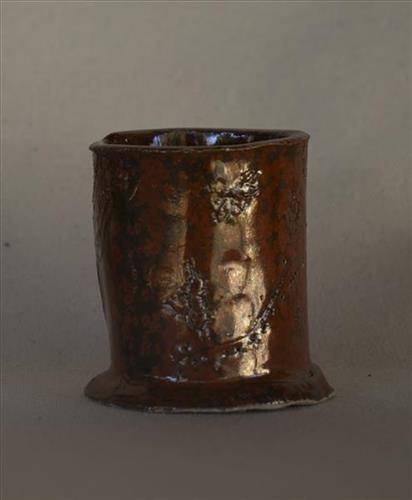
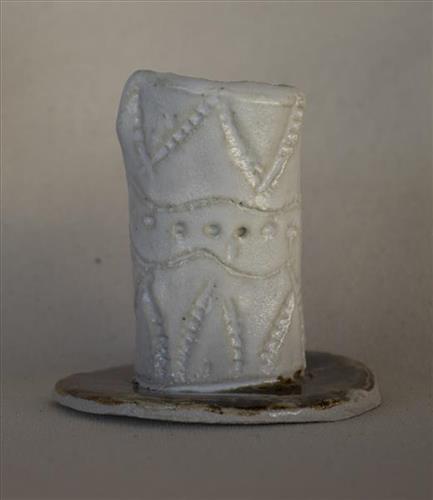
The Women’s Centre has been focusing on building social enterprise opportunities for the women through creating crafts and handmade items. These products give women social enterprise opportunities to continue to support their families and build new skills in a supportive and creative environment.

Thank you for supporting the Bidyadanga Women’s Centre through your recent purchase through the Arts Centre.

377815582369175


Women’s Centre Story

The Bidyadanga Women’s Centre is a space for all women of Bidyadanga.

The centre offers a space for women to have respite, engage in activities, access visiting services, form friendships and a place where women can support other women in the community.

The Women’s Centre has been focusing on building social enterprise opportunities for the women through creating crafts and handmade items. These products give women social enterprise opportunities to continue to support their families and build new skills in a supportive and creative environment.

Thank you for supporting the Bidyadanga Women’s Centre through your recent purchase through the Arts Centre.

377815582369173


Women’s Centre Story

The Bidyadanga Women’s Centre is a space for all women of Bidyadanga.

The centre offers a space for women to have respite, engage in activities, access visiting services, form friendships and a place where women can support other women in the community.

The Women’s Centre has been focusing on building social enterprise opportunities for the women through creating crafts and handmade items. These products give women social enterprise opportunities to continue to support their families and build new skills in a supportive and creative environment.

Thank you for supporting the Bidyadanga Women’s Centre through your recent purchase through the Arts Centre.

377815582369170


Women’s Centre Story

The Bidyadanga Women’s Centre is a space for all women of Bidyadanga.

The centre offers a space for women to have respite, engage in activities, access visiting services, form friendships and a place where women can support other women in the community.

The Women’s Centre has been focusing on building social enterprise opportunities for the women through creating crafts and handmade items. These products give women social enterprise opportunities to continue to support their families and build new skills in a supportive and creative environment.

Thank you for supporting the Bidyadanga Women’s Centre through your recent purchase through the Arts Centre.

377815582369169


Women’s Centre Story

The Bidyadanga Women’s Centre is a space for all women of Bidyadanga.

The centre offers a space for women to have respite, engage in activities, access visiting services, form friendships and a place where women can support other women in the community.

The Women’s Centre has been focusing on building social enterprise opportunities for the women through creating crafts and handmade items. These products give women social enterprise opportunities to continue to support their families and build new skills in a supportive and creative environment.

Thank you for supporting the Bidyadanga Women’s Centre through your recent purchase through the Arts Centre.

377815582369168


Women’s Centre Story

The Bidyadanga Women’s Centre is a space for all women of Bidyadanga.

The centre offers a space for women to have respite, engage in activities, access visiting services, form friendships and a place where women can support other women in the community.

The Women’s Centre has been focusing on building social enterprise opportunities for the women through creating crafts and handmade items. These products give women social enterprise opportunities to continue to support their families and build new skills in a supportive and creative environment.

Thank you for supporting the Bidyadanga Women’s Centre through your recent purchase through the Arts Centre.

377815582369167


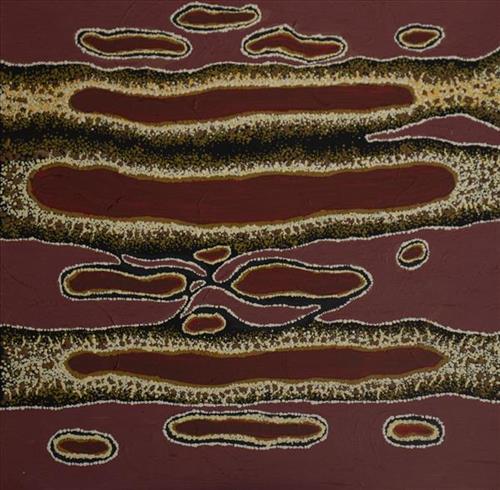
Claypans and Marshland

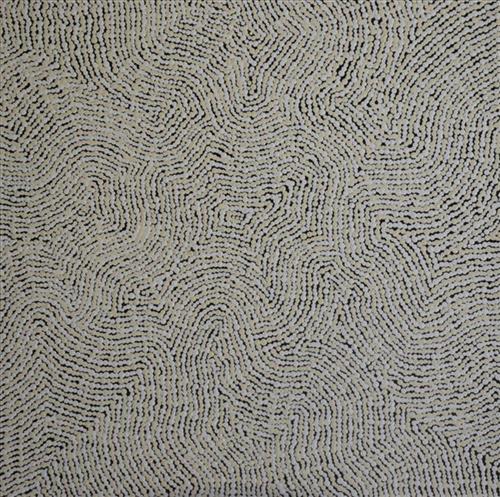
All about white claypan in dry season, lalga. I’m doing the dry claypan. We go out country from Bidgy (Bidyadanga abbr.) and go hunting for kangaroo and turkey, like that you know? Bush animals you know? Long time [ago] people used to go hunting by walking, but now we go with car. When we go dry time the jurnga (ground} all hard, [that’s when it’s] more easy to see the animal footprints. Not when it’s scrubby, not when it’s a marsh, that’s when the ground is too softened then, too boggy.


This is the one I’m painting now, I’m doing the colour of the dry season, I’m doing all the dots like the sand, claypan, marsh and the paru (spinifex), all the different Nyangumarta country. I’m doing all the station, I’m doing the white plain, the marsh and claypan area. That’s all in the pirla (desert, country). I’m doing different sort of area; Wallal, Mandoora, Anna Plains, Sandfire Marsh, Salt Creek. Bush name for Salt Creek is Wallyarra. We go hunting different places every day. That’s the hunting places.

377815582369165


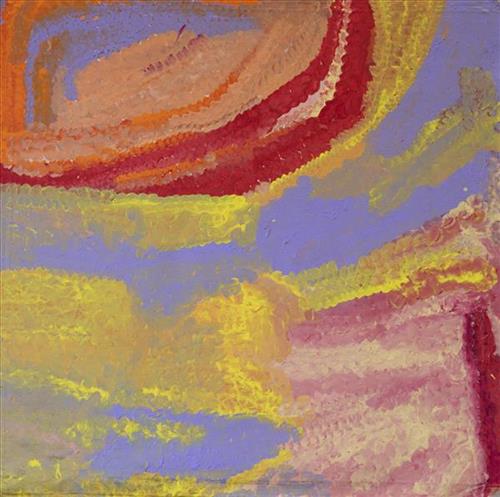
Ngangumarta Warran (Country)

“Nyangumarta Country home to the Nyangumarta people from the Desert to the sea side. Old people lived and walked on this land, we as Nyangumarta still look after the land today, we still go out on Country hunt and keep our way of life living of the traditional food from the land.

Nyangumarta people travelled and lived in the desert and the seaside. This painting is a story from the Nyangumarta dreaming where once a woman who walked with her child along this country collecting sea food “Mayi”. They were both on the reef and suddenly the tide came and drowned them, so now today there’s two rocks which remain out by the sea.

Because we carry the culture and most people tell stories with their painting, and that’s how it was from the beginning. Passing knowledge down. They might not see it now, but in the future, younger people might want to follow in their Elders’ footsteps. And carry on the skills and lifestyles. It can be anything—painting, hunting, becoming leaders.”

– Venetta Yanawana

111582369162


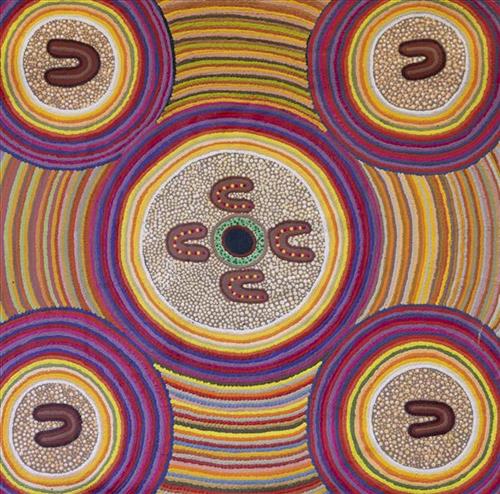
Kaalpa (Kalypa, Canning Stock Route Well 23)

“From Tiwa (Canning Stock Route Well 26) we used to travel to Kaalpa (Kalypa, Canning Stock Route Well 23), mummy and daddy used to take us around there, [my sister] Pinyirr and me. From Kaalpa we would go to Jilkupuka (Canning Stock Route Well 21), then to Wangkakalu.”

 – Bugai Whyoulter, as translated by Ngalangka Nola Taylor

Kaalpa is a permanent water source located northeast of Kumpupirntily (Kumpupintily, Lake Disappointment). This site lies within Bugai’s ngurra (home Country, camp), the area which she travelled extensively around with her family as a young woman. Kaalpa is also Bugai’s mother’s Country. In her account, Bugai describes the seasonal movement of Martu family groups from water source to water source during the pujiman (traditional, desert dwelling) era. At this time knowledge of water sources was critical for survival, and today Martu Country is still defined in terms of the location and type of water. Each of the hundreds of claypans, rockholes, waterholes, soaks and springs found in the Martu desert homelands is known by name, location, quality and seasonal availability through real life experience and the recounting of Jukurrpa (Dreaming) narratives.  

Kaalpa is a place of great cultural significance, and is also known for good hunting. Adjacent to the waterhole is a hill of the same name. The landscape around Kaalpa is parlkarra (flat country), bordered by tali (sandhills) stretching as far as Windy Corner, northeast and towards the border of Western Australia and the Northern Territory. The Jukurrpa mosquito and fly beings partially created the landforms in this area and continue to live underground. These beings are very large and dangerous; it is imperative that this area is not mined since the consequences may be severe.

Kaalpa also features in the Minyipuru (Jakulyukulyu, Seven Sisters) Jukurrpa, a central creation narrative for Martu, Ngaanyatjarra, Pitjantjatjara and Yankunytjatjara people that is associated with the seasonal Pleiades star constellation. At Kaalpa the Minyipuru met a group of men; it was the first time either group had seen members of the opposite sex. The men tried to grab the women, but the Minyipuru chased them, hitting them with their digging sticks and leaving them lying there as they continued travelling east.

Relayed in song, dance, stories and paintings, Minyipuru serves as a creation narrative, a source of information relating to the physical properties of the land, and an embodiment of Aboriginal cultural laws. Beginning in Roebourne on the west coast of Western Australia, the story morphs in its movement eastward across the land, following the women as they walk, dance, and even fly from waterhole to waterhole. As they travel the women camp, sing, wash, dance and gather food, leaving markers in the landscape and creating landforms that remain to this day, such as groupings of rocks and trees, grinding stones and seeds. During the entirety of their journey the women are pursued by a lustful old man, Yurla, although interactions with other animals, groups of men, and spirit beings are also chronicled in the narrative.

The intersection of the Canning Stock Route with Kaalpa also made this a site of early contact with Europeans for many Martu then living a pujiman life in the desert. Following the route’s construction, Martu encountered Europeans and other Martu working as cattle drovers as they would travel up and down the Stock Route from water source to water source. Increasingly, pujimanpa (desert dwellers) followed the route to newly established ration depots, mission and pastoral stations. They were drawn to the route in search of food, by a sense of curiosity, or by loneliness. By the late 1950s and early 1960s, most of the desert family groups had left the desert. Eventually, these factors combined with an extreme and prolonged drought in the 1960s to prompt the few remaining pujimanpa to move in from the desert.
111582369161


Karlamilyi

Karlamilyi (Rudall River region) and its surrounds are Warnman Country, located in the very heart of the Martu homelands. The region is situated southwest of the Great Sandy Desert and northeast of the Little Sandy Desert. Spanning through the region is the epic Karlamilyi River, which runs north into Nyayartakujarra (Ngayarta Kujarra, Lake Dora), a large salt lake. The Broadhurst and Fingoon Ranges extend diagonally across the river’s path. The landscape is striking for its abundance of gorges and valleys carved by ice age glaciers, rugged cliffs, red tali (sand dunes), grasslands, sandstone and quartz rocky outcrops, and salt lakes. 

Across the whole region are hundreds of water sources; including waterholes, creeks, soaks, lakes, pools and rockholes. Lining the rivers are coolabah, walyji (river gum), yulbah (bats wing coral tree), and several species of acacia and hakea. Jalkuran (paperbark), kurrulyu/ mijarrpa (bloodwood) and jawirli (quandong) are found in the region’s valleys, and wikirrpa (desert oaks) and grasses in the sandplains. The area is abundant with bird species, jila (snakes), maruntu (goannas), red kangaroos and warlpaju (rock wallabies). The region is also home to remote aboriginal communities Punmu and Parnngurr.

According to two of the central Martu Jukurrpa (Dreaming) narratives, the Karlamilyi River and its surrounds were created by the ancestral beings Jila Kujarra (Two Snakes) and the Wati Kujarra (Two Goanna Men) as they travelled across the lands.