111982363761


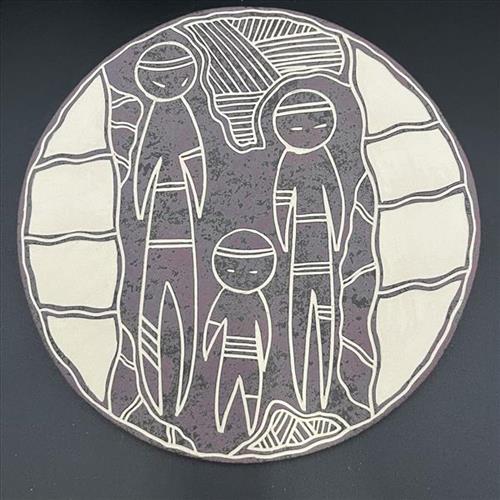
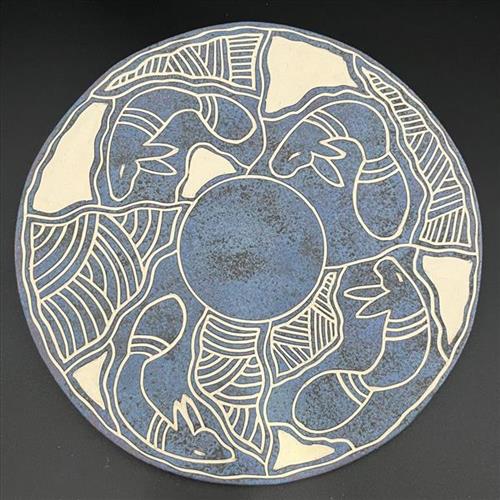
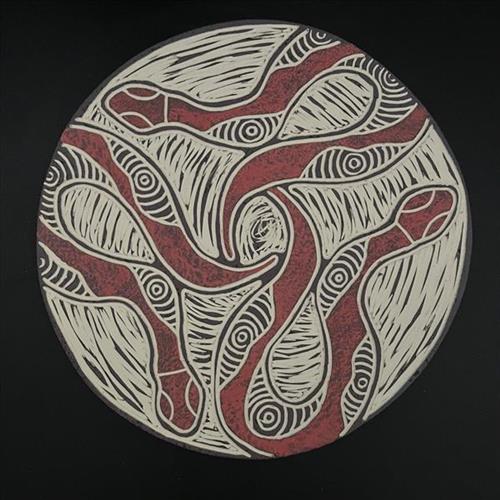
Ngalmudj (Rainbow Serpent)

The rainbow serpent is a powerful ancestral being for Aboriginal people throughout Australia. Characteristics of the rainbow serpent vary greatly from group to group and also depending on the site. Often viewed as a female generative figure, the rainbow serpent can sometimes also be male. She has both powers of creation and destruction and is most strongly associated with rain, monsoon seasons and of course the colour seen in rainbows which arc across the sky like a giant serpent. In Northern Australia, the rainbow serpent is said to be active during the wet season.

Known as Ngalmudj in the Kune language of western central Arnhem Land, the rainbow serpent is mostly associated with bodies of water such as billabongs, creeks, rivers and waterfalls where she resides. Therefore she is responsible for the production of most water plants such as water lilies, water vines, algae and palms, which grow near water. The roar of waterfalls in the escarpment country is said to be her voice. Large holes in stony banks of rivers and cliff faces are said to be her tracks. She is held in awe because of her apparent ability to renew her life by shedding her skin and emerging anew. Aboriginal creation stories about the rainbow serpent often describe her as a fearful creature that swallows humans only to regurgitate them, transformed by her blood. The white ochre used by artists to create the brilliant white paint for bark paintings, body decoration and in the past, rock art, is said to be the faeces of the rainbow serpent.

Aboriginal people today respect and care take sacred sites where the rainbow serpent is said to reside. Often certain activities are forbidden at these places for fear that the wrath of the great snake will cause sickness, accidents and even tempests. This is not always the case however and there are many rainbow serpent sites today where people may enter to hunt, fish or swim. Ngalmudj has been the subject of art and ceremony for possibly thousands of years.
225182364191


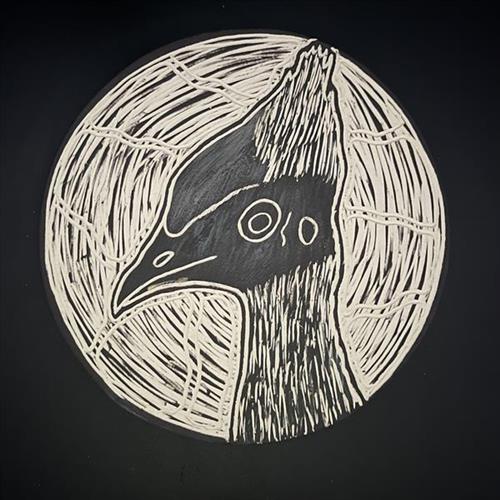
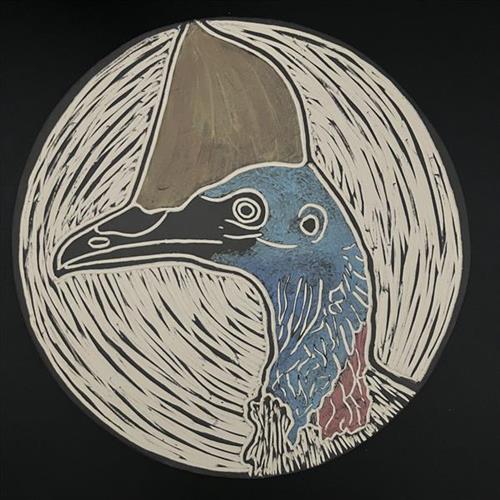
Kurranji (Cassowary)

The cassowary is one of the most important animals for our Kuku Yalanji people. The cassowary is the boss of the rainforest. He is dangerous but he also helps grow many of the plants we used to collect for food, medicine and tool making.

How does he do this? He eats many different fruits, digests them in his stomach, and then drops his dung mixed with the leftover seeds onto the ground. This way seeds grow into new plants wherever he walks. This helped us Kuku Yalanji in the past to survive.

The cassowary is a spirit bird and celebrated to this day in public ceremonies with song and dance. You must be very careful of them because they can attack. Never feed them. You must always be alert when walking in the rainforest.

225182364188


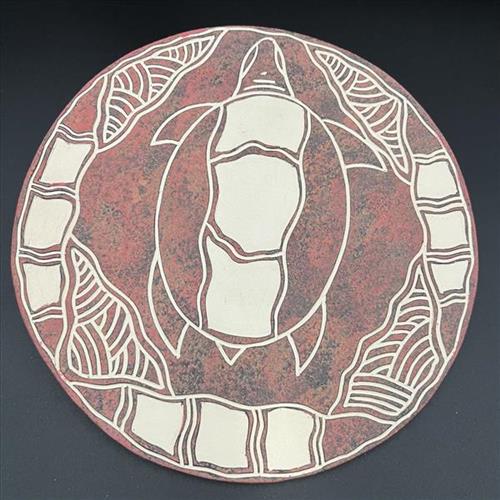
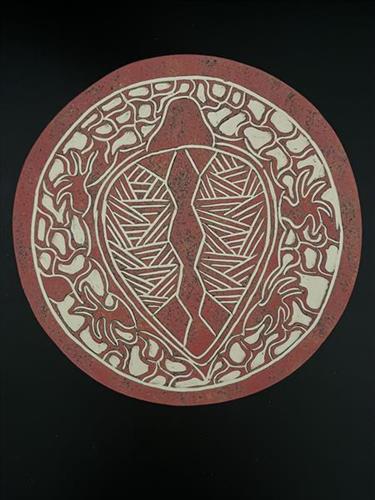
Ngawiya (Sea Turtle)

In the past, sea turtles were an important food source for Kuku Yalanji people. Only men were allowed to hunt them. The men were also responsible for cooking them in a ground oven and distributing the meat to all the families.

We ate turtle meat on special occasions such as the birth of a new born baby and during funeral ceremonies. Our ancestors used the shell of sea turtles carrying, storing and serving food as well as making damper.

225182364186


Kirbaji (Dugong)

Kirbaji (Dugong) is an Ancestral Spirit Being (Totem) that I inherited it from my mother’s side.  It is my Totem. The dugong was also an important food source for my ancestors. Only men were allowed to hunt them, and only men had the right to cook and distribute the meat to all the families. My uncles and cousins showed me how to hunt dugongs and they passed down to me the cultural knowledge about them.

My ancestors used to wrap the dugong meat in ginger leaves for flavour, close the wraps with a vine and cook them in the ground oven. Dugongs were only hunted on special occasions such as births, weddings and funerals to provide food for large family gatherings.Dugong fat was also melted to make oil which was used as a medicine for skin and hair ailments or as ointment to treat an upset stomach.

225182364177


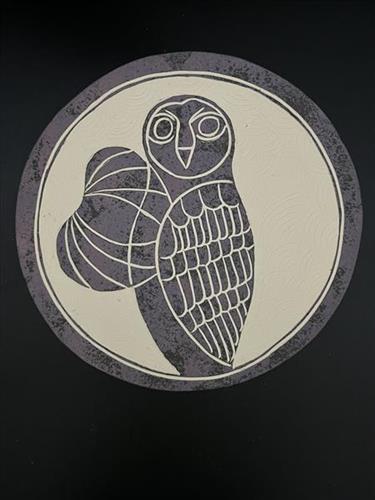
Diwan (Scrub Turkey)

The Diwan (Scrub Turkey) walks the rainforest floor looking for food.

225182364174


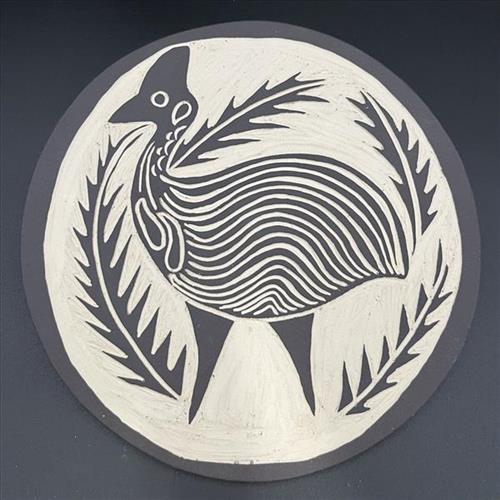
Kurranji (Cassowary)

Long time ago, the cassowary was a precious food source for our ancestors. They ate the meat and the eggs, used the feathers for ceremonies and weaving, and the skins for blankets.  The Cassowary is a powerful Totem for us because it helps growing many plants that were important for food, medicine and tool making. The Cassowary can walk wide distances and spread the seeds of the fruits he eats everywhere. Plants grow also out of his dung.

I show the cassowary in my art because it is also my partner’s totem. He performs the cassowary dance in public ceremonies. It was bestowed on him by his mother’s sister when he was a young boy. In 1997 he went with the Yalanji Dance Group to Hong Kong to perform the Cassowary dance there.”