225182364166
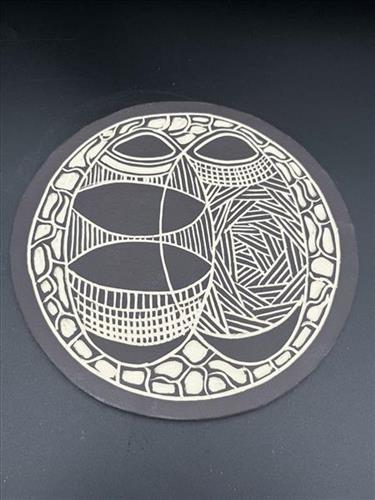
Makarr (Fish Trap)
Fish traps are called Makarr in our language. They were made by men only. Our fathers and uncles used to make them with the lawyer vine. They stripped the stems and then soaked them in the river to keep them soft and bendy. They also had a special way of weaving the fish traps. They used them in the river to catch eels, jungle perch, fresh water catfish and turtle. To attract fish our old people used to sprinkle rain forest berries as bait over the trap.
11154008094
Status: Stock
Jila Jila
Dianne Marney
220982358641
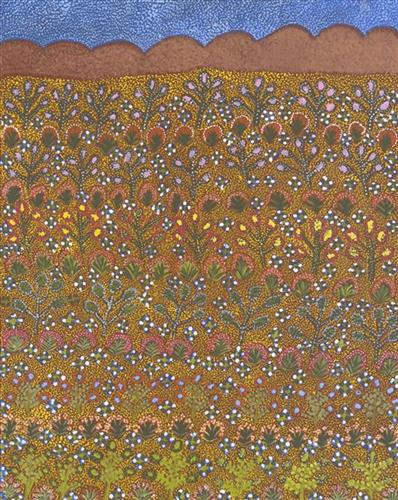
Rosie Kemarre Morton – My Father’s Country and Bush Medicine
Rosie has painted her Father’s country, where she can always find bush tucker and bush medicine. She is very happy when out bush hunting and gathering, as it brings back memories of her childhood when she used to live traditionally off of the land with her family.
Rosie uses these hunting trips as her inspiration for her artworks, each one reflecting the layered landscape and various colours as she has seen them. They are always changing, with the light of day and the seasons of the year.
Rosie enjoys and understands the importance of painting bush medicine plants. They help in the healing of her people and it keeps the tradition and knowledge strong. These particular plants are very plentiful after rain and can be used for numerous conditions, such as skin irritations, flu, coughs and infections.
Rosie’s dreaming is the Araluta or kangaroo plant. This bush is a rich source of food for the kangaroos and keeps them fat and healthy and good for hunting.
The community of Ampilatwatja made a conscious decision not to paint altyerr (dreaming stories). The artists paint their country where those stories sit.
222082363546
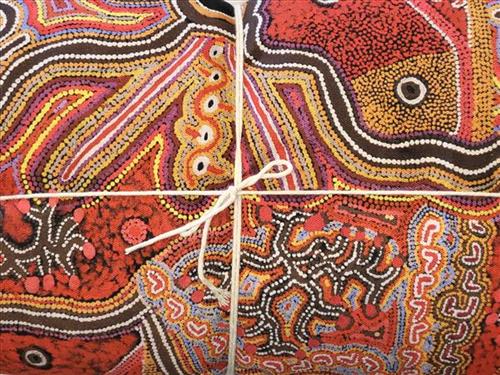
Large Baby Blanket
222082363543
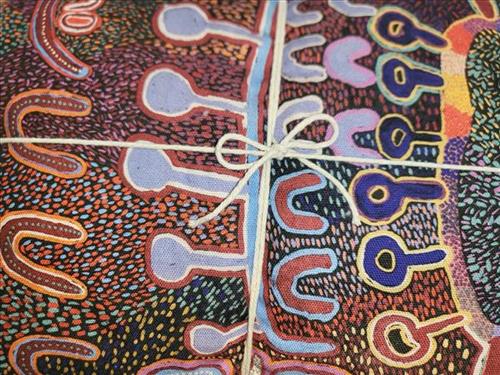
Large Baby Blanket
222082363542
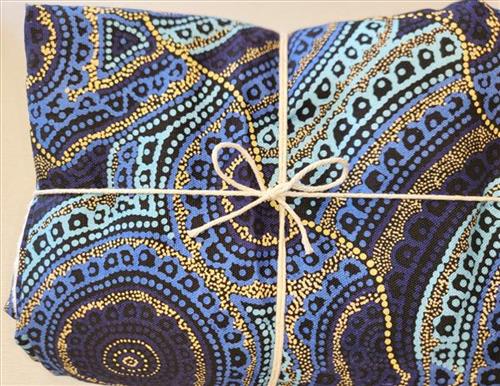
Small Baby Blanket
111582363536
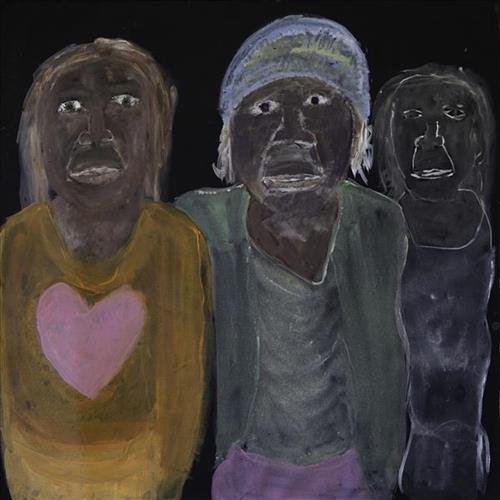
Untitled
How did you get to this style of painting?
“Do you mean, what have I done with my life? (chuckles to herself) To me these paintings are a sense of energy. So if I see someone and they’re happy, I paint a happy vibe. Cos their spirit is happy. And sometimes it’s hard because on the outside they’re real happy but on the inside they’re real sad. Sometimes you do stuff (like a painting) and it adds up later on. But I still don’t know what it means and don’t know where my style comes from because it’s both the path I walk on and the cracks in the dirt. It’s like looking at a landscape but I haven’t been there yet. Maybe I’ll get there one day. I believe things happen for a reason.”
– Sylvia Wilson
111582363535
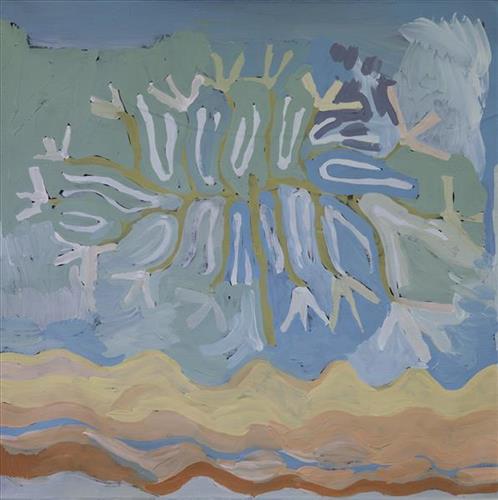
Untitled
Most often explored in Doreen’s works are the motifs of her everyday modern Aboriginal community life; the animals hunted and plants gathered for bush tucker, the cars and aeroplanes used to travel to the cities and remote communities she regularly moves between, and depictions of the Country itself.
Collectively this imagery, depicted with Doreen’s trademark wild palettes, painterly brushstrokes, and stark compositions, builds a layered representation of her Country. Doreen’s intimately known ngurra (home Country, camp) is viewed from multiple spatial perspectives, and in stylistic modes ranging from pure abstraction to images incorporating realist and traditional elements.
Doreen’s ngurra encompasses the Country between Western Desert communities and towns; Warralong, Strelley, Marble Bar, Port Hedland, and Jigalong, her birthplace. People identify with their ngurra in terms of specific rights and responsibilities, and the possession of intimate knowledge of the physical and cultural properties of one’s Country. Painting ngurra, and in so doing sharing the Jukurrpa (Dreaming) stories and physical characteristics of that place, has today become an important means of cultural maintenance.
111582363534
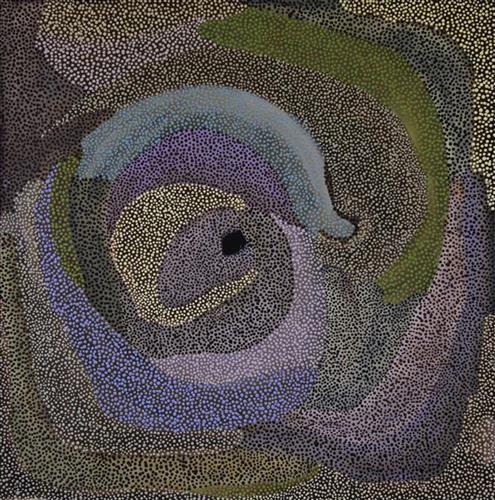
Yalta
“This is my grandmother’s and mother’s Country, Yalta. It’s very close to Kunawarritji side. I’ve never been there. That was where my mother was born during the pujiman (traditional, desert dwelling) times. All the tali (sandhills) around. I want to go there one day, to see that Country, I might go there one day”
– Marianne Burton
Yalta is a waterhole located between the Great Sandy Desert’s Percival Lakes region and Kunawarritji Aboriginal community. This site was visited by the Ngayurnangalku (cannibals) during the Jukurrpa (Dreaming). These fearsome ancestral cannibal beings are said to resemble people in their appearance, except for their fangs and long curved knife like fingernails they use to catch and hold their human victims. The Ngayurnangalku continue to live beneath the crust of Kumpupirntily (Kumpupintily, Lake Disappointment), south east of Yalta.
Yalta lies within Marianne’s ngurra (home Country, camp) through her grandmother and mother. As stated by Marianne here, the site is especially significant to her as it was here that her mother was born. The Western Desert term ‘ngurra’ is hugely versatile in application. Broadly denoting birthplace and belonging, ngurra can refer to a body of water, a camp site, a large area of Country, or even a modern house. People identify with their ngurra in terms of specific rights and responsibilities, and the possession of intimate knowledge of the physical and cultural properties of one’s Country. This knowledge is traditionally passed intergenerationally through family connections. Painting ngurra, and in so doing sharing the Jukurrpa stories and physical characteristics of that place, has today become an important means of cultural maintenance. Physical maintenance of one’s ngurra, like cultural maintenance, ensures a site’s wellbeing, and is a responsibility of the people belonging to that area.