220982349622


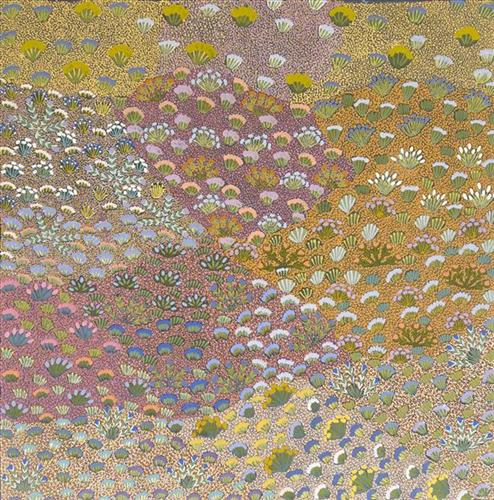
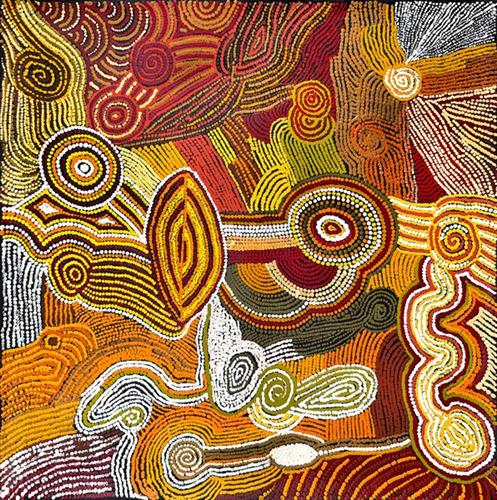
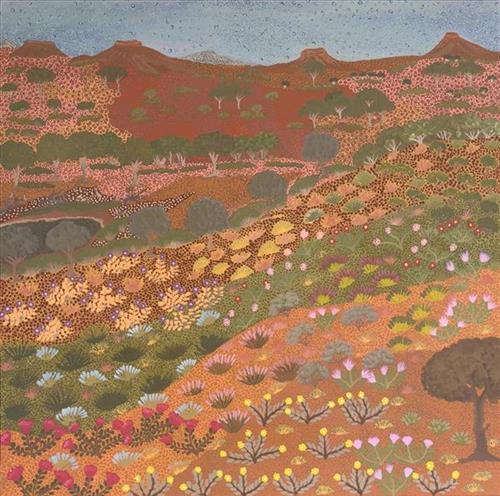
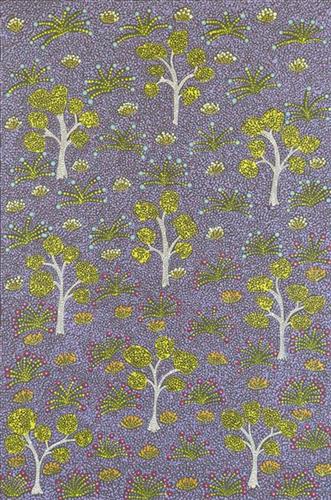
Denise Ngwarraye Bonney – My Grandmothers Country

The community of Ampilatwatja made a conscious decision not to paint ‘altyerr’ dreaming stories. The artists paint their country where those stories belong.

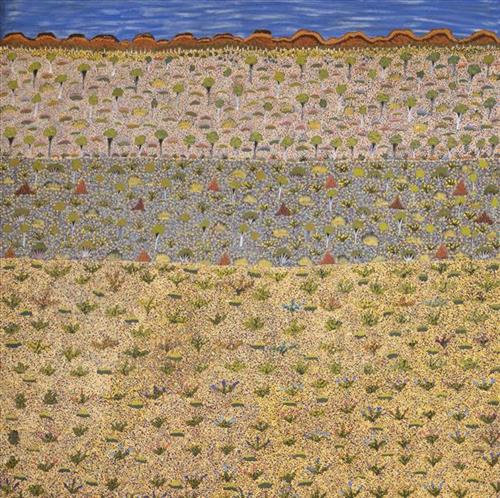
Denise paints ‘Tijamburra’, her Grandmothers country.

“This is my Mothers Mothers country, out near Canteen Creek, we go hunting  for wild onions, goannas, echidnas and sugar bag honey in the trees. I like to hunt in my country, there is water all year round even if it look dry, we follow the bird tracks to know where to dig and then we find water.


This painting is after rain, many grasses are out, but the riverbed is still sandy.”

220982350208


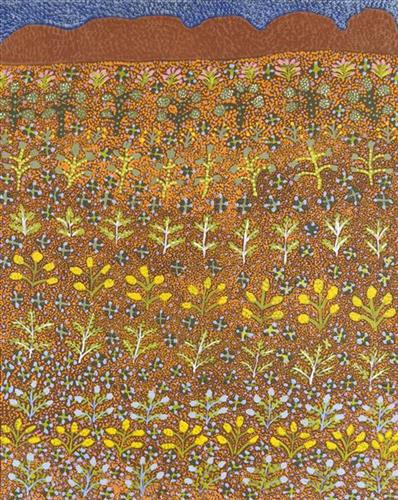
Jessie Ngwarraye Ross – My Country

The community of Ampilatwatja made a conscious decision not to paint ‘altyerr’ dreaming stories. The artists paint their country where those stories belong.
Jessie’s landscapes beautifully communicate the rich knowledge she possesses of medicinal plants and country, the heart of her culture.
Jessie’s has painted her country, Ampilatwatja. The brightly coloured flowers and small bushes are bush medicine and are still used within the community.
Jessie’s predominant theme in her paintings is ‘strong bush medicine’, demonstrating a deep connection to her country. Her work pays homage to the significance and use of traditional bush medicine, allowing an insight into her community. Yet underneath the iridescent surface, there is an underlying sense that there is more to this landscape than meets the eye. In keeping with the religious laws, Jessie reveals only a small amount of knowledge to the uninitiated.

115682350486


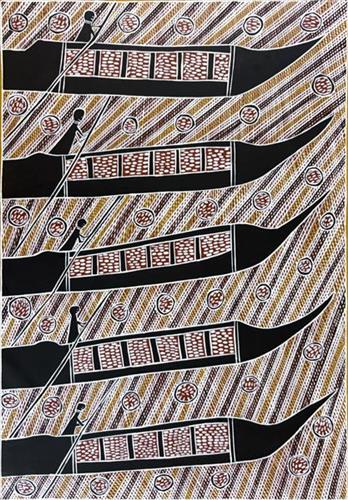
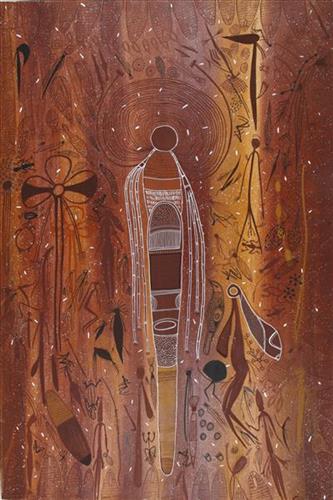
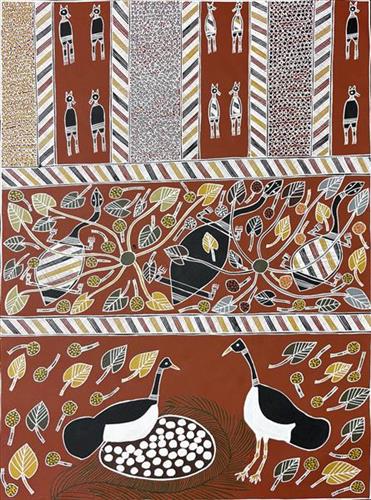
Naku (canoe)

This painting depicts naku (canoes) that were made traditionally from the bark of a particular tree and used for hunting. In this painting, the Yolngu men hunting for gumang (magpie geese) eggs. 

114182352752


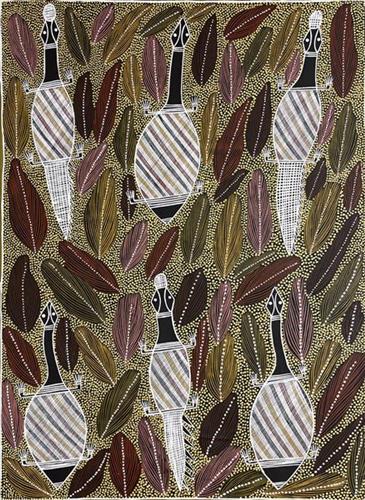
Wati Kutjarra

This is the story of two powerful magicians who came to the Ngaanyatjarra Lands from far away to the west;

‘These two men are always together, always camping together. They do all sorts of tricks when they travel across the lands as they stop from place to place. When they reached ‘Wirtapi Wara’ (Long Black or Blackstone Range) they argued about which way to go around. One went around the south side and the other the north side.

At a distance it seemed they didn’t recognise each other or perhaps they were just pretending not to recognise each other! It is also said that at Papulankutja they tricked each other by changing their appearance at the same time so they had no chance to recognise each other. The name Papulankutja comes from the Ngaanyatjarra word meaning, ‘to stare without recognising each other’.

‘They usually took the form of goanna but they could turn into other animals as well. Finally, when they got to Kaltukatjara (Docker River) they had become so arrogant that without realising they walked straight into some local men’s business even though they were warned by the local women. The goanna men led themselves blindly to their fate”.

220982354144


Kathleen Nanima Rambler – Mulangke Aherne (beautiful land)

My country. When I go hunting out bush, as we drive along the road towards the hill you can see the beautiful land and the flowers blooming on the side of the road, and near the hills, even the beautiful gum trees. It makes me proud

220982354489


Rosie Kemarre Morton – My Father’s Country and Bush Medicine

The community of Ampilatwatja made a conscious decision not to paint ‘altyerr’ dreaming stories. The artists paint their country where those stories sit.
Rosie has painted her Father’s country, where she can always find bush tucker and bush medicine. She is very happy when out bush hunting and gathering, as it brings back memories of her childhood when she used to live traditionally off of the land with her family.
Rosie uses these hunting trips as her inspiration for her artworks, each one reflecting the layered landscape and various colours as she has seen them. “They are always changing, with the light of day and the seasons of the year
Rosie enjoys and understands the importance of painting bush medicine plants. They help in the healing of her people and it keeps the tradition and knowledge strong. These particular plants are very plentiful after rain and can be used for numerous conditions, such as skin irritations, flu, coughs and infections.
Rosie’s dreaming is the “Araluta” or kangaroo plant. This bush is a rich source of food for the kangaroos and keeps them fat and healthy and good for hunting.

220982354819


Alana Ngwarraye Holmes – Wild Flowers

Out in the plain after the rain the wild flowers grow and bloom, I see these flowers on my mother’s country.

The plant has pretty flowers, we take them home and show them to the children.  They are a beautiful purple, yellow and pink colour.

115682354639


Raypiny Dhawu (Fresh Water Story)

All Aboriginal people originate from a spiritual source, fixed in a particular place in their land or the sea. These ‘spiritual reservoirs’ are often in the form of special waterholes made by Wangarr (creative spirits) that were created long ago close to the beginning of time. These creator beings moved across the countryside, shaping the land and implanting in each tract of country, the spiritual life force for the people who were to own it. These creative spirits took many forms and when they gave the land to each group, they also gave songs, dances, ceremony, the associated laws and language.


The creation story for Ganalbingu people took place near the middle section of the Glyde River where it becomes the Goyder River. Their land, Ngaliyindi, sits astride the Arafura Swamp in Central Arnhem Land. Many Ganalbingu artists paint totemic species significant to their clan. These can include baru (crocodile), banda (long necked turtle), buliya (catfish), yalman (waterlilies), gumang (magpie geese), dakawa (fresh water yabby), ratjuk (barramundi), warrnyu (flying fox) and more.


115682354884


Raypiny Dhawu (Fresh Water Story)

All Aboriginal people originate from a spiritual source, fixed in a particular place in their land or the sea. These ‘spiritual reservoirs’ are often in the form of special waterholes made by Wangarr (creative spirits) that were created long ago close to the beginning of time. These creator beings moved across the countryside, shaping the land and implanting in each tract of country, the spiritual life force for the people who were to own it. These creative spirits took many forms and when they gave the land to each group, they also gave songs, dances, ceremony, the associated laws and language. 

The creation story for Ganalbingu people took place near the middle section of the Glyde River where it becomes the Goyder River. Their land, Ngaliyindi, sits astride the Arafura Swamp in Central Arnhem Land. Many Ganalbingu artists paint totemic species significant to their clan. These can include baru (crocodile), banda (long necked turtle), buliya (catfish), yalman (waterlilies), gumang (magpie geese), dakawa (fresh water yabby), ratjuk (barramundi), warrnyu (flying fox) and more.