221282341472


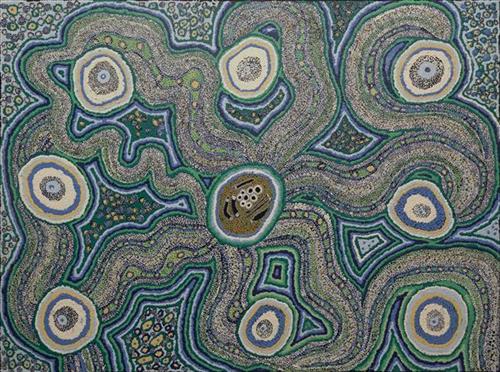
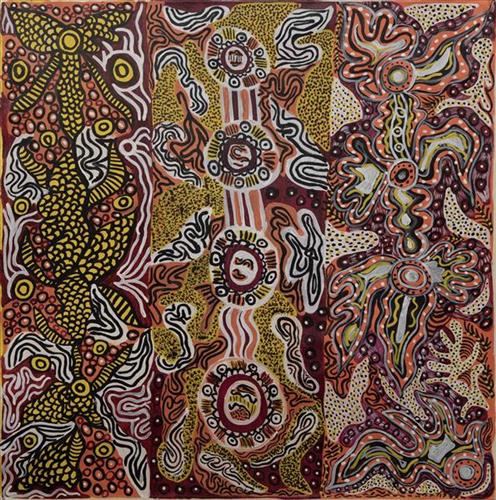
Kungkarangkalpa / Seven Sisters

Kungkarangkalpa means the Seven Sisters. This is an extensive creation story that relates to the Pleiades constellation in the southern hemisphere. The story traverses Australia taking on different forms, however local women are privy to the part of the story which takes place in the country near Ernabella. For this part of the story, the man called Nyiru is chasing the sisters as he wants to sleep with the oldest sister. All the younger sisters are deeply afraid of him. As Nyiru is chasing the sisters, he tries to catch them by using magic to turn himself into the most tempting bush tomatoes for the sisters to eat and the most beautiful ili (fig) tree for the sisters to camp under. However, the sisters are aware of his magic and go hungry and run through the night rather than be caught by Nyiru. Eventually, to escape Nyiru, the sisters fly into the sky where they turn into stars and form the constellation.
221282341430


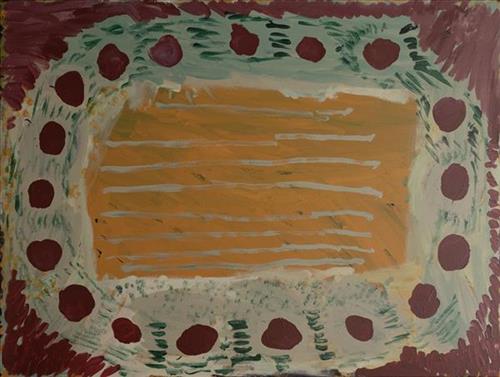
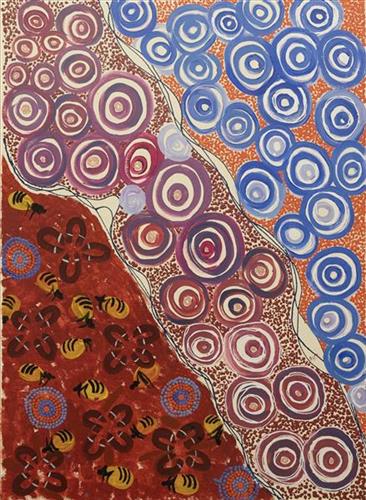
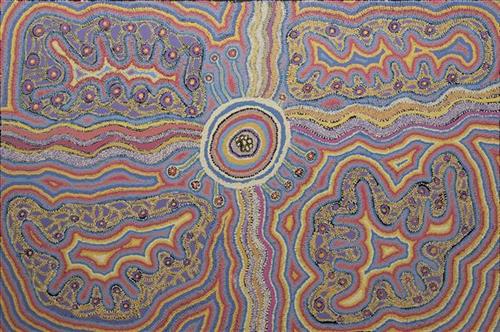
Kaliny-kaliny / Honey Grevillea

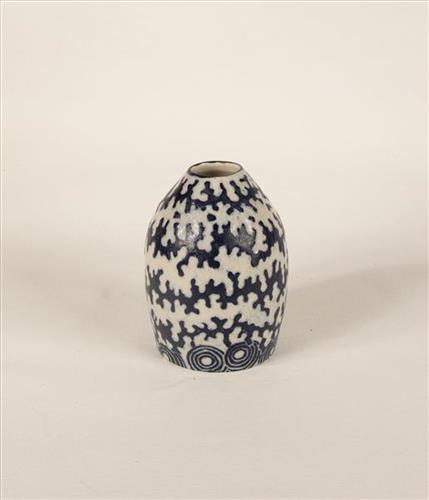
Stories are told of the Kaliny-kaliny or Honey Grevillea flower which is a favourite bush food of the Anangu Pitjantjatjara (people). Ultukunpa grows in the sandy soils on the plains. The flowers can be picked and placed in a billycan of water to create ‘honeywater’ (cordial) or they can be sucked for their sweet honey dew.

221282341756


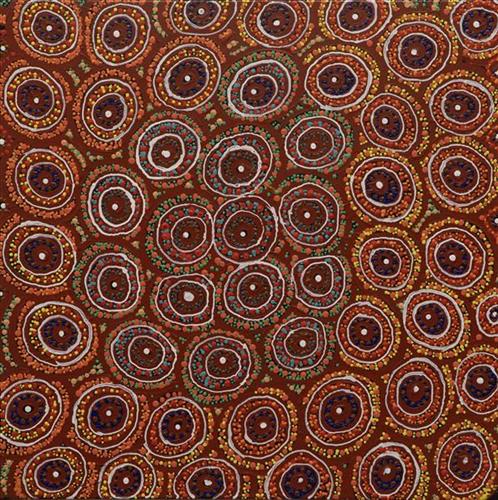
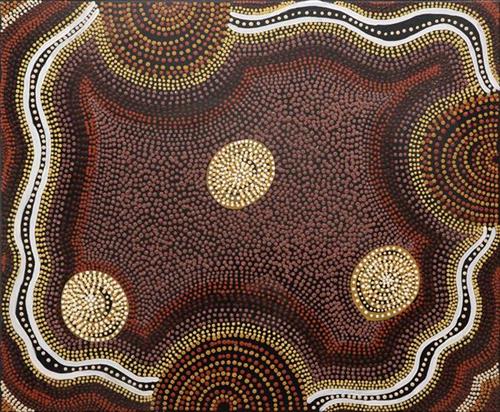
Ngayuku Walka / My Design

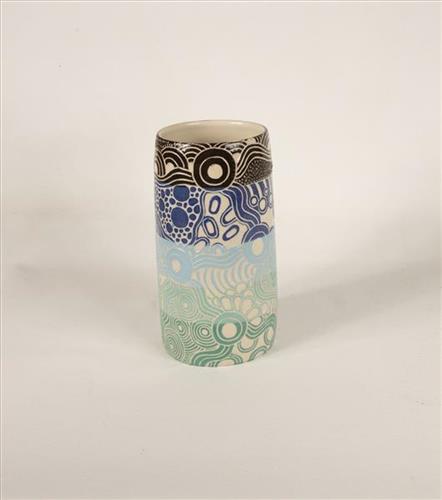
Walka means design or pattern. Artists use this title to describe artworks that are pattern based rather than descriptive or telling a story.

221282341684


Ngayuku Walka / My Design

Walka means design or pattern. Artists use this title to describe artworks that are pattern based rather than descriptive or telling a story.

221282341675


Nyalpi Punu Ilykuwara (Leaf of Witchetty Tree)

Favourite bush foods of Anangu Pitjantjatjara include maku (witchetty grub). Until recently, bush foods were the primary sustenance for Anangu Pitjantjatjara. Many bush foods are still gathered regularly almost exclusively by women, thus they feature strongly in women’s mark making. Women learn the art of gathering each of the foods from a young age and much inma (ceremony) relates to these practices and the maintenance of supply. Anangu say that eating maku is good for the brain and mental health.

Maku live in the ilykuwara tree, or witchetty bush, a tall shrub or a small tree. The maku live in the roots of the ilykuwara and this design is a depiction of its leaves.

221282343074


Ngayuku Ngura – My Country

Artists use this title when they are depicting their Country. It might be a representation of a particular place or of different aspects of that area. The artist uses a combination of colour and design to indicate variations in the landscape. Inspiration is drawn from all elements of Country and might include bush tucker, water holes, meeting places, rock formation, birds or animals.

221282343043


Kulata Tjuta – Many Spears

Freddy is painting his grandfather’s country in far west South Australia. He depicts kulata tjuta (many spears) travelling through the sky to catch wati wanampi (snake man). Those wati wanampi are moving fast through the sky. There was one woman waiting there with a baby and she said there was a wati who was nearby hiding in a bush, ready to duck down and go and then throw those spears.

221282343033


Tjitji Tjuta Walytjata

This Tjukurpa is from a place called Walytjata near Pipalyatjara. It’s a true story. You can see all the kids sitting there in the cave. The mother left and told the kids to stay there, but she never came back. It’s a sad story. The older brother, he was looking after everyone. He would go out hunting for malu (kangaroo), kalaya (emu) and bring back the kuka (meat) for all the kids.

221282343162


Tjala / Honey Ants

Tjala or honey ants live in nests about a metre underground beneath mulga trees, and they are a highly favoured food source. The tjala tunnels that lead down to the ants’ nests are called nyinantu, and the larvae are called ipilyka-ipilyka. After the rain when the ground is soft the women go digging for tjala by looking for the drill holes under the trees. They then use shovels and crowbars to dig down following the tunnels to find the tjala inside. Anangu suck the delicious rich honey-like liquid from the distended abdomen of the tjala. The story of the tjala is told across the Northern Territory into South Australia and is an important link between Anangu mythology and inter-dependence on the environment.

221282343160


Tjakura Tjukurpa – Lorabella’s Story

This Tjukurpa is from Lorabella’s grandfather’s homeland called Kunytjanu, located just south of Pipalyatjara near the SA border with WA. It’s a story about tjakura, the great desert skink, a small orange lizard found across the APY Lands. 

Tjakura has a lot of grandchildren looking after him. One day, a long time ago, he saw too many strangers, an army coming from Mutitjulu. They came and found the tjakura and they killed him. All the kids made a cemetery there for the tjakura. This is a really big story that goes from Kunytjanu to Aralya.