Shells
These shells represent food. The patterned on this image comes from cone bay
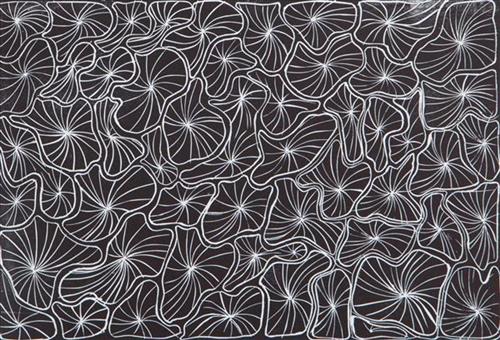
These shells represent food. The patterned on this image comes from cone bay

Djilpin Arts is an Aboriginal Corporation that promotes the maintenance, development and transmission of traditional cultural knowledge systems. Djilpin Arts specialises in live cultural performance, digital media, and produces the annual performance event – the Walking With Spirits Festival. Djilpin Arts also operates the Ghunmarn Culture Centre – home of the Blanasi Collection and fine art & craft for sale. Djilpin Arts also operates a cafe/gallery in Katherine where all works are sourced from the Ghunmarn Culture Centre. The Ghunmarn Culture Centre is in the Wugularr (Beswick) community of South East Arnhem Land. All artworks are made by local artists living in the community. Artwork reflects the traditional songs and stories that have been passed down through the generations for thousands of years.


Stanley Taylor is a Nykina man who was born and lives in the Derby region. He started working at the Mowanjum Aboriginal Art and Culture Centre as a Studio Technician in 2008 and now is the Exhibitions Coordinator
In all of his various roles, Stanley has played a key role in the day-to-day operations of the Art Centre and in the staging of the annual Mowanjum Festival. Stanley’s often paints the Ungud Snake.
In 2022, The Jimmy Pike Trust and Open Bite at Edith Cowan University conducted a three-day lino-cutting workshop with nine artists from the Mowanjum centre, Derby. A suite of 13 prints were created including Stanley’s Ungud.


Phillip “ Cracker” Duckhole
Phillip is a senior Ngarinyin man, a cultural leader and a skilled bushman. He was born at Glenroy Station in the Kimberley of Western Australia. He and his family have spent time living in both Derby and Mowanjum.
His art practice encompasses shaping, carving and decorating traditional objects, and he plays a vital role when returning to Country to harvest bark following the annual wet season. These skills he passes on to the younger members of his community.
In 2022, The Jimmy Pike Trust and Open Bite at Edith Cowan University conducted a three-day lino-cutting workshop with nine artists from the Mowanjum centre, Derby. A suite of 13 prints were created including Phillip’s work, Didgeridoo and Clapsticks.
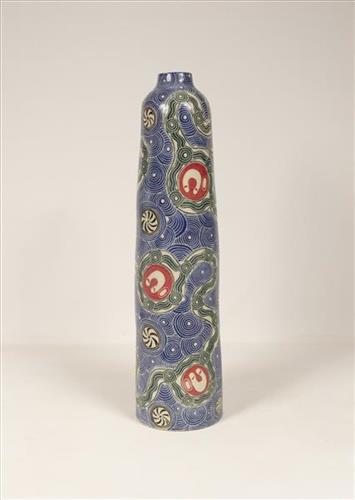
Kungkarangkalpa means the Seven Sisters. This is an extensive creation story that relates to the Pleiades constellation in the southern hemisphere. The story traverses Australia taking on different forms, however local women are privy to the part of the story which takes place in the country near Ernabella. For this part of the story, the man called Nyiru is chasing the sisters as he wants to sleep with the oldest sister. All the younger sisters are deeply afraid of him. As Nyiru is chasing the sisters, he tries to catch them by using magic to turn himself into the most tempting bush tomatoes for the sisters to eat and the most beautiful ili (fig) tree for the sisters to camp under. However, the sisters are aware of his magic and go hungry and run through the night rather than be caught by Nyiru. Eventually, to escape Nyiru, the sisters fly into the sky where they turn into stars and form the constellation.
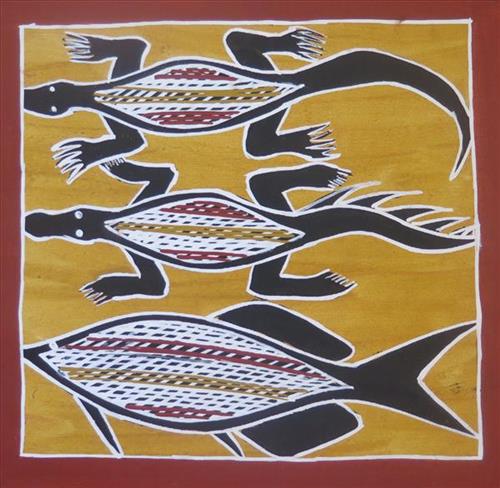
This painting depicts three animals found in billabongs around Beswick. At top is a water goanna, in the middle is a freshwater crocodile, and at the bottom is a fish.
Raark or fine-line work is completed using a handmade traditional Jarlk grass brush.
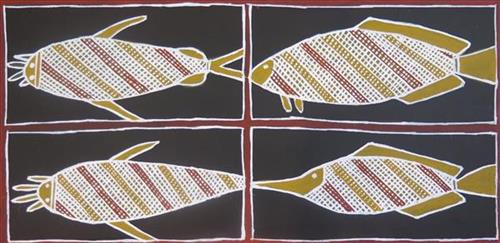
This piece by Frankie Lane depicts some common billabong fish in the local area. It is finished in traditional rarrk (fine cross-hatch painting style).
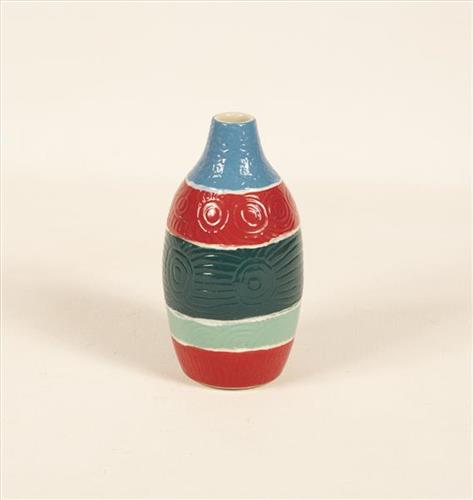
Walka means design or pattern. Artists use this title to describe artworks that are pattern based rather than descriptive or telling a story.
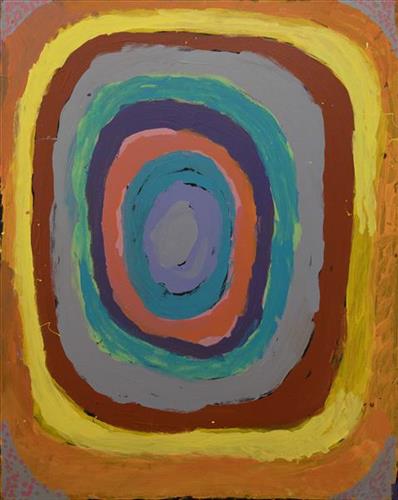
Two women were hunting carpet snakes for food. Two Rainbow Serpent (Wanampi) men are watching. Next morning the sisters again hunt for snakes and find two tails lurking from a hole in the ground. But they are the Wanampi tricking the women into following them. Each time the sisters grab for the tails, the snakes disappear underground, and they keep doing this all the way to a place called Piltardi, where the women finally see them in human form. The men make the sisters transform into Wanampi and take them as their wives. The two Wanampi couples live at Piltardi, and in the old days, people would go there in times of need and ask the spirit of the Wanampi to help them. The snake ancestors gave them cooked meat and made rain.
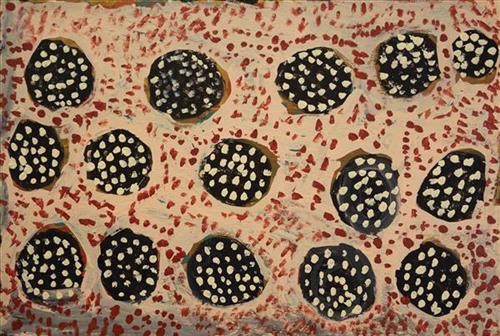
There were two brothers, young ones, about 19 years old, big boys. Their mother didn’t like them. She told them to follow their other brothers, said goodbye and sent them away.
One day these young fellas, when they were travelling, it was a really sun shining day, getting hot. Big rain coming and all the boys were sleeping in the daytime. There were some disabled young people there. The rain when the rain came, kulata (spears) came too and the disabled ones couldn’t walk, and too late, sorry, some kids passed away. This is a true story. Palya (ok).