Ngayuku Walka / My Design
Walka means design or pattern. Artists use this title to describe artworks that are pattern based rather than descriptive or telling a story.
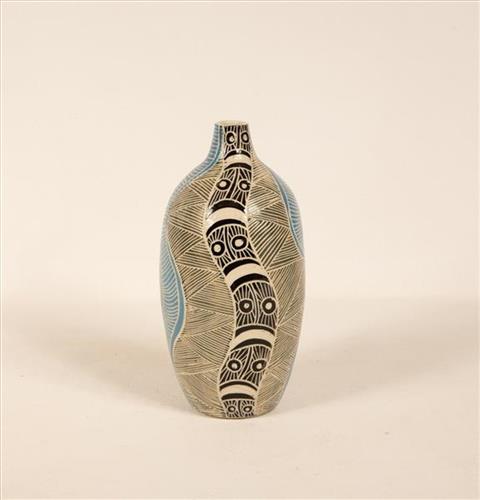
Walka means design or pattern. Artists use this title to describe artworks that are pattern based rather than descriptive or telling a story.
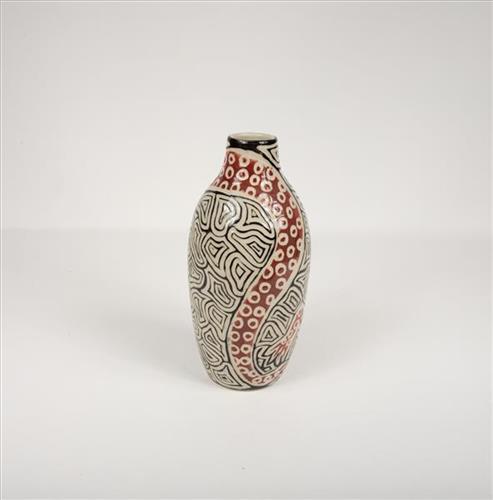
Two women were hunting carpet snakes for food. Two Rainbow Serpent (Wanampi) men are watching. Next morning the sisters again hunt for snakes and find two tails lurking from a hole in the ground. But they are the Wanampi tricking the women into following them. Each time the sisters grab for the tails, the snakes disappear underground, and they keep doing this all the way to a place called Piltardi, where the women finally see them in human form. The men make the sisters transform into Wanampi and take them as their wives. The two Wanampi couples live at Piltardi, and in the old days, people would go there in times of need and ask the spirit of the Wanampi to help them. The snake ancestors gave them cooked meat and made rain.
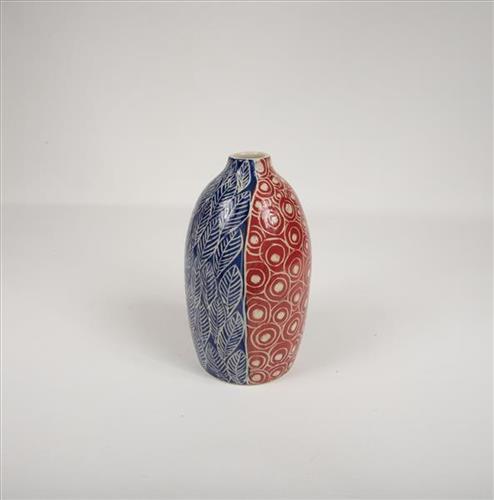
Artists use this title when they are depicting their Country. It might be a representation of a particular place or of different aspects of that area. The artist uses a combination of colour and design to indicate variations in the landscape. Inspiration is drawn from all elements of Country and might include bush tucker, water holes, meeting places, rock formation, birds or animals.
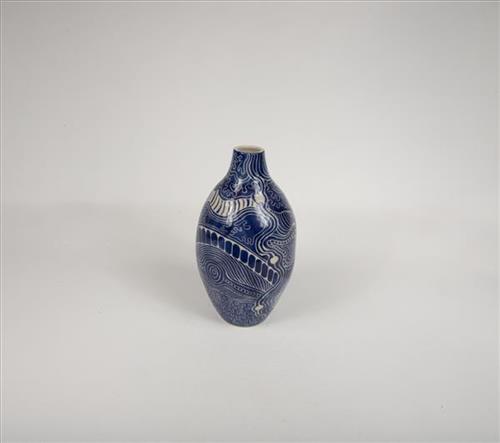
Walka means design or pattern. Artists use this title to describe artworks that are pattern based rather than descriptive or telling a story.
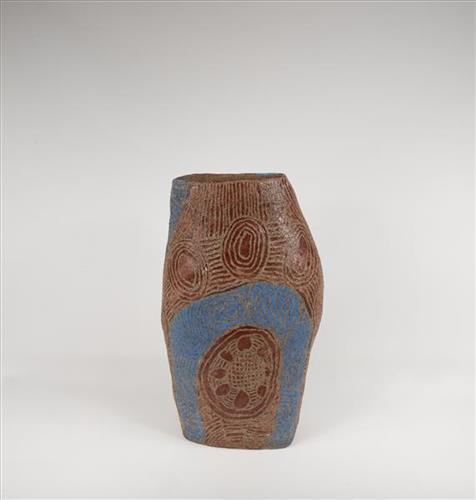
Kungkarangkalpa means the Seven Sisters. This is an extensive creation story that relates to the Pleiades constellation in the southern hemisphere. The story traverses Australia taking on different forms, however local women are privy to the part of the story which takes place in the country near Ernabella. For this part of the story, the man called Nyiru is chasing the sisters as he wants to sleep with the oldest sister. All the younger sisters are deeply afraid of him. As Nyiru is chasing the sisters, he tries to catch them by using magic to turn himself into the most tempting bush tomatoes for the sisters to eat and the most beautiful ili (fig) tree for the sisters to camp under. However, the sisters are aware of his magic and go hungry and run through the night rather than be caught by Nyiru. Eventually, to escape Nyiru, the sisters fly into the sky where they turn into stars and form the constellation.
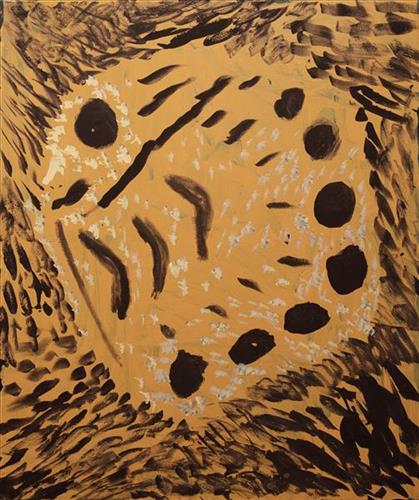
Kungkarangkalpa means the Seven Sisters. This is an extensive creation story that relates to the Pleiades constellation in the southern hemisphere. The story traverses Australia taking on different forms, however local women are privy to the part of the story which takes place in the country near Ernabella. For this part of the story, the man called Nyiru is chasing the sisters as he wants to sleep with the oldest sister. All the younger sisters are deeply afraid of him. As Nyiru is chasing the sisters, he tries to catch them by using magic to turn himself into the most tempting bush tomatoes for the sisters to eat and the most beautiful ili (fig) tree for the sisters to camp under. However, the sisters are aware of his magic and go hungry and run through the night rather than be caught by Nyiru. Eventually, to escape Nyiru, the sisters fly into the sky where they turn into stars and form the constellation.
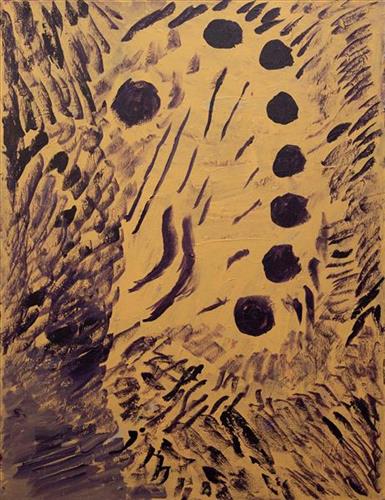
Kungkarangkalpa means the Seven Sisters. This is an extensive creation story that relates to the Pleiades constellation in the southern hemisphere. The story traverses Australia taking on different forms, however local women are privy to the part of the story which takes place in the country near Ernabella. For this part of the story, the man called Nyiru is chasing the sisters as he wants to sleep with the oldest sister. All the younger sisters are deeply afraid of him. As Nyiru is chasing the sisters, he tries to catch them by using magic to turn himself into the most tempting bush tomatoes for the sisters to eat and the most beautiful ili (fig) tree for the sisters to camp under. However, the sisters are aware of his magic and go hungry and run through the night rather than be caught by Nyiru. Eventually, to escape Nyiru, the sisters fly into the sky where they turn into stars and form the constellation.
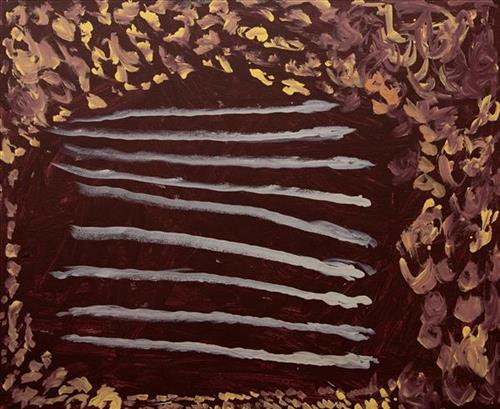
Freddy is painting his grandfather’s country in far west South Australia. He depicts kulata tjuta (many spears) travelling through the sky to catch wati wanampi (snake man). Those wati wanampi are moving fast through the sky. There was one woman waiting there with a baby and she said there was a wati who was nearby hiding in a bush, ready to duck down and go and then throw those spears.
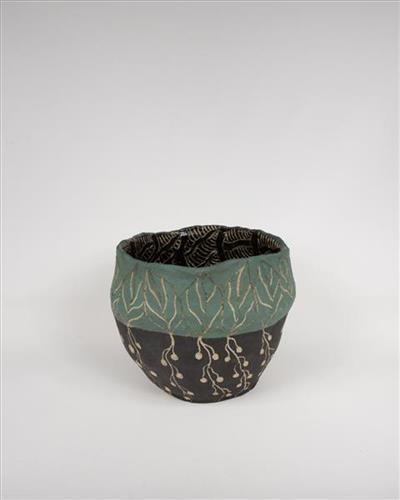
Tjanmata or bush onion is eaten by baking the small bulbs in hot coals and then removing the papery outer layer.
Until comparatively recently, bush foods were the primary source of sustenance for Anangu Pitjantjatjara. Many bush foods are still gathered regularly, almost exclusively by women, and they therefore feature strongly in women’s mark making. Women learn the art of gathering each of the foods from a young age and much inma (ceremony) relates to these practices and the maintenance of supply.
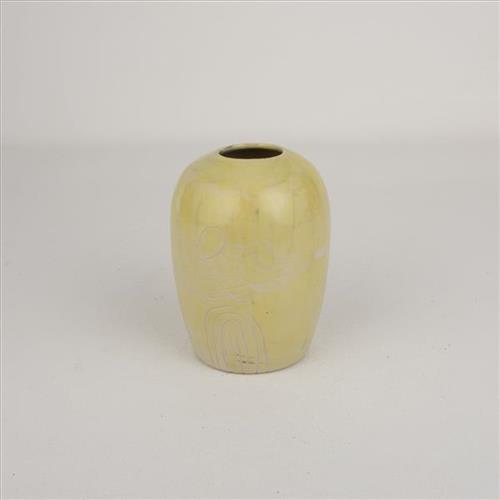
Walka means design or pattern. Artists use this title to describe artworks that are pattern based rather than descriptive or telling a story.