377810582305034


Marebu

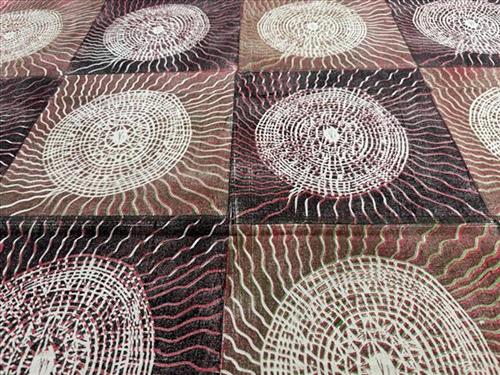
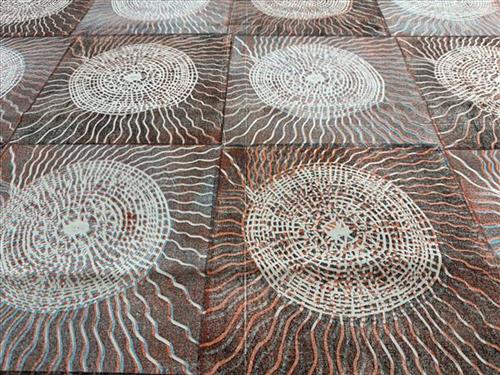
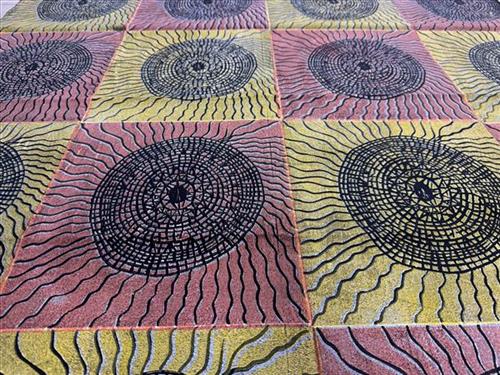
Deborah Wurrkidj is a Kuninjku artist from the Kurulk clan whose country lies around the outstation of Mumeka in central Arnhem Land. She is an accomplished artist working across mediums including painting, sculpture, weaving and textile design. For this design, Deborah Wurrkidj has depicted Marebu (woven pandanus mats).

Works in fibre from the Maningrida region are widely recognised as some of the finest in Australia. Artists confidently push the boundaries of fibre craft and cultural expression, adapting traditional techniques and forms to produce strikingly inventive and aesthetically exquisite artworks.

Artists weave many different kinds of mats. Conical mats were traditionally used to shield babies from mosquitoes. Long flat mats were used for blocking creeks so that fish would be diverted into fish traps. A small triangular mat made of pandanus fibre used to be worn by women during ceremonial gatherings, tied around their back and covering them at the front. Mats are also used for wrapping and rinsing food in water.

Artists usually use kundayarr, pandanus spiralis, to weave decorative round or oblong mats, as well as the less common triangular and conical shapes. Weaving is physically hard work, now done only by women. They colour the pandanus using natural dyes made from the roots, leaves or flowers of plants within the weaver’s clan estate.

The radial woven patterns of the finest round mats appear to vibrate with colour, sometimes regarded as an aesthetic manifestation of deep cultural meaning, as there is a significant spiritual dimension to pandanus mats.

377810582305031


Djomi (Fresh Water Spirit)

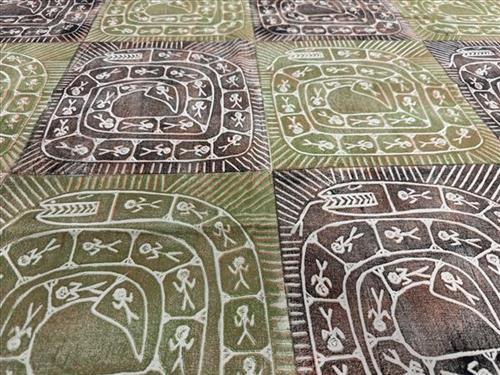
This design depicts the story of the artist’s ancestral dreaming, the Djomi fresh water spirit mermaid.

The Djomi figure is a mermaid like spirit with fish tail that lives in the fresh water stream that flows out to the sea cliff near Maningrida. Djomi is a known to be a very powerful fertility symbol.

‘If you go there you can get pregnant easily. Djomi has babies, and they can give others babies too. The Djomi spirit is so powerful, that women can end up with multiple babies at once, twins or sometimes even more. The Djomi spirits lay eggs near the sacred freshwater stream in Maningrida. Inside the eggs are human babies as well as young Djomi.

Men do not go near that swamp, because Djomi is so powerful that men might get pregnant there too. So men, they are too scared of that Djomi. When we visit the Djomi freshwater spring, we can hear young Djomi crying. They sound like normal babies crying, those Djomi spirits. They are looking for a mother.

This Djomi is my dreaming, I got permission from my djunguys to paint this Djomi design. For me I always ask my djunguy permission to paint, because that is our cultural way.

This design also depicts the fresh water lily leaves, and seaweed from the base of the sea floor.

377810582305030


Marebu

Deborah Wurrkidj is a Kuninjku artist from the Kurulk clan whose country lies around the outstation of Mumeka in central Arnhem Land. She is an accomplished artist working across mediums including painting, sculpture, weaving and textile design. For this design, Deborah Wurrkidj has depicted Marebu (woven pandanus mats).

Works in fibre from the Maningrida region are widely recognised as some of the finest in Australia. Artists confidently push the boundaries of fibre craft and cultural expression, adapting traditional techniques and forms to produce strikingly inventive and aesthetically exquisite artworks.

Artists weave many different kinds of mats. Conical mats were traditionally used to shield babies from mosquitoes. Long flat mats were used for blocking creeks so that fish would be diverted into fish traps. A small triangular mat made of pandanus fibre used to be worn by women during ceremonial gatherings, tied around their back and covering them at the front. Mats are also used for wrapping and rinsing food in water.

Artists usually use kundayarr, pandanus spiralis, to weave decorative round or oblong mats, as well as the less common triangular and conical shapes. Weaving is physically hard work, now done only by women. They colour the pandanus using natural dyes made from the roots, leaves or flowers of plants within the weaver’s clan estate.

The radial woven patterns of the finest round mats appear to vibrate with colour, sometimes regarded as an aesthetic manifestation of deep cultural meaning, as there is a significant spiritual dimension to pandanus mats.

377810582305029


Rainbow Serpent and Maladj Spirits

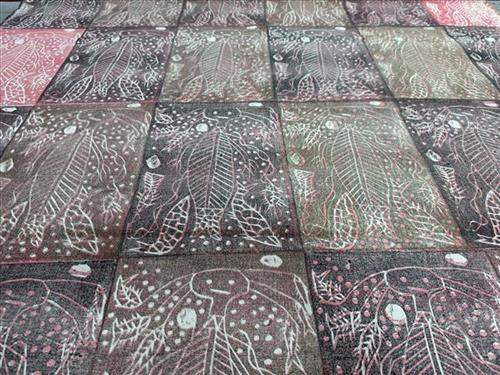
This fabric was created using the linocut printing technique. The lino tile has been carved by the artist in Maningrida, and has been printed by hand using a variety of colours and layers. The linocut technique ensures each textile piece is a one-off, limited edition piece. Bábbarra Women’s Centre supports the economic independence of Indigenous women in the Arnhem Land community of Maningrida, Northern Territory, Australia. Designs created by the women at Bábbarra reflect strong cultural knowledge, which is passed down to younger generations through their textile design practice.

377810582305028


Marebu

Deborah Wurrkidj is a Kuninjku artist from the Kurulk clan whose country lies around the outstation of Mumeka in central Arnhem Land. She is an accomplished artist working across mediums including painting, sculpture, weaving and textile design. For this design, Deborah Wurrkidj has depicted Marebu (woven pandanus mats).

Works in fibre from the Maningrida region are widely recognised as some of the finest in Australia. Artists confidently push the boundaries of fibre craft and cultural expression, adapting traditional techniques and forms to produce strikingly inventive and aesthetically exquisite artworks.

Artists weave many different kinds of mats. Conical mats were traditionally used to shield babies from mosquitoes. Long flat mats were used for blocking creeks so that fish would be diverted into fish traps. A small triangular mat made of pandanus fibre used to be worn by women during ceremonial gatherings, tied around their back and covering them at the front. Mats are also used for wrapping and rinsing food in water.

Artists usually use kundayarr, pandanus spiralis, to weave decorative round or oblong mats, as well as the less common triangular and conical shapes. Weaving is physically hard work, now done only by women. They colour the pandanus using natural dyes made from the roots, leaves or flowers of plants within the weaver’s clan estate.

The radial woven patterns of the finest round mats appear to vibrate with colour, sometimes regarded as an aesthetic manifestation of deep cultural meaning, as there is a significant spiritual dimension to pandanus mats.
22514004036


Status: Stock


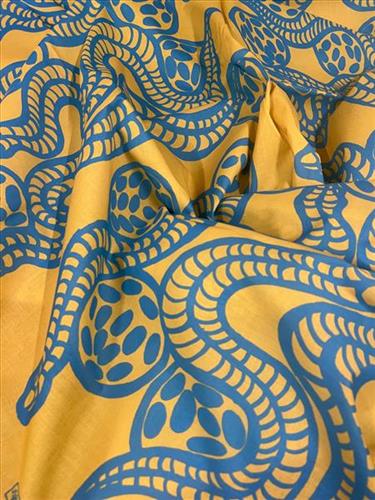
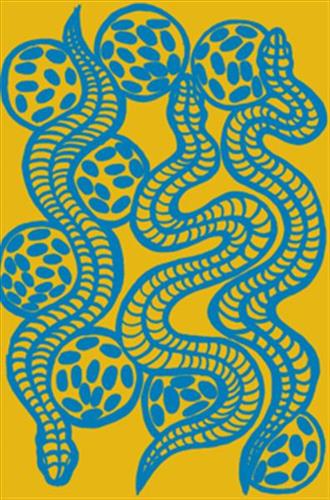
Sarong – Kurriyala (Carpet Snake)

The carpet snake is an important animal for us. We call it Kurriyala in our Kuku Yalanji language. Our ancestors wrapped the meat in native ginger leaves and cooked it on the hot coals of the ground oven. They also used the skin to make head bands or skilfully sown blankets that keep the families warm and dry at night.

Designed on Yalanji Country, custom printed and made in Sydney, Australia.

97% Cotton 3% Linen

180 cm x 110 cm

Care instructions: Gentle wash only in cool water. Do not soak, bleach, rub, wring or tumble dry. Line dry in shade. Warm iron on reverse. Do not dry clean.

22514003673


Status: Stock


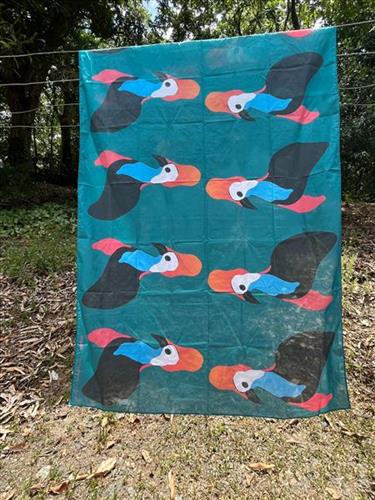
Sarong – Kurranji (Cassowary)

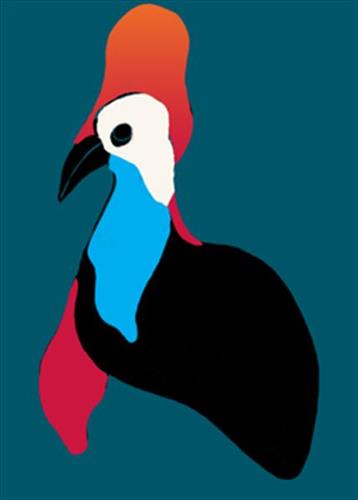
Kurranji (Cassowary) is an important totem of the Kuku-Yalanji people. We still dance it in public ceremonies.

The cassowary is a protected species within the tribal lands of the Kuku-Yalanji people. They live in the rainforest environment of this area, and camouflage themselves in the rainforest trees and leaves.

Designed on Yalanji Country, custom printed and made in Sydney, Australia.

97% Cotton 3% Linen

180 cm x 110 cm

Care instructions: Gentle wash only in cool water. Do not soak, bleach, rub, wring or tumble dry. Line dry in shade. Warm iron on reverse. Do not dry clean.

22514003674


Status: Stock


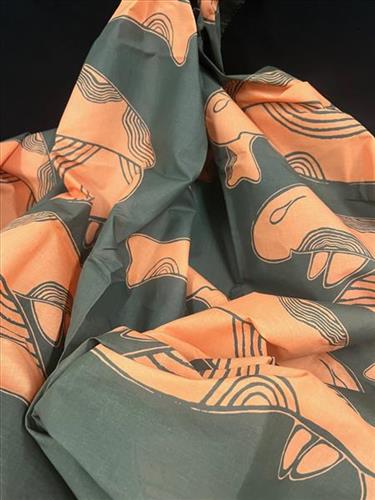
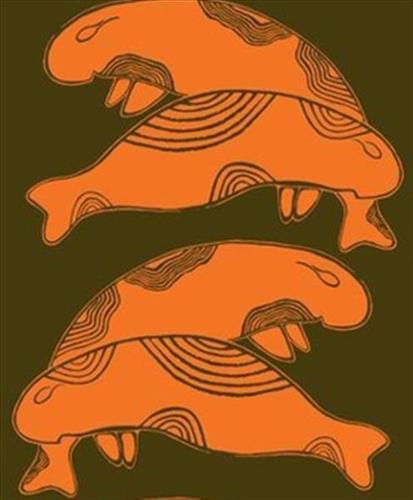
Sarong – Kirbaji (Dugong)

In the past, Kirbaji (dugong) was an important food source. It was men’s business to hunt dugongs and it was their responsibility to cook and provide the meat to all the families. The meat of the dugong was cooked in an earth oven. Our ancestors also made oil form the dugong fat. They used the oil for medicinal purposes. They used it for skin and hair treatments. When people had an upset stomach they used the oil as an ointment.

Designed on Yalanji Country, custom printed and made in Sydney, Australia.

97% Cotton 3% Linen

180 cm x 110 cm

Care instructions: Gentle wash only in cool water. Do not soak, bleach, rub, wring or tumble dry. Line dry in shade. Warm iron on reverse. Do not dry clean.

22134002726


Status: Stock


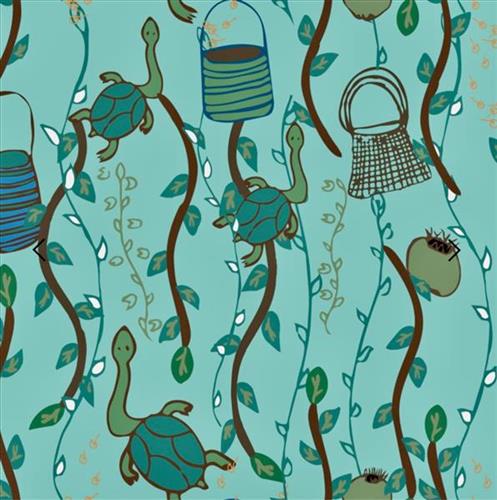
Turtles & Dilly Bags by Revonna Lane

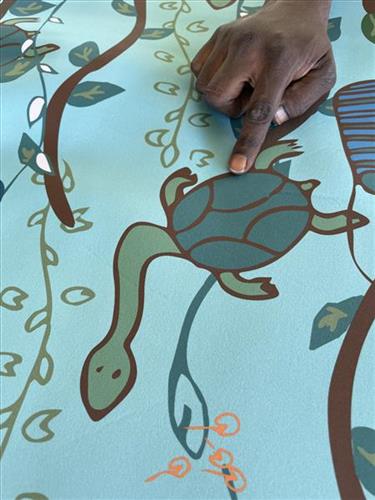
“My picnic blanket design shows the water lily fruits and stems, the long and short pods, you can eat it fresh or cook it on the fire to make damper. Back then, my mum would peel it off and let it dry out in sun on a paper bark bowl, pop out the seeds and grind it with a rock. The stems you can peel off the skin and eat like celery or use it like straw.

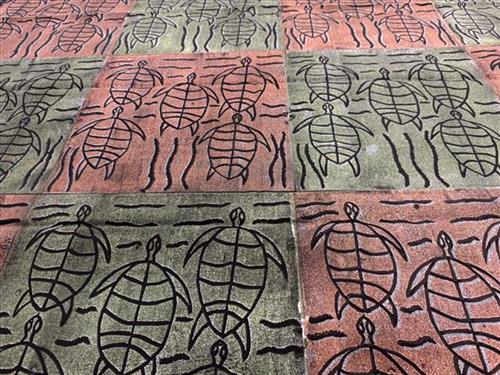
There are three types of bags which the women make, string bag to carry tools, dilly bags they carry around their head to collect bush food and tightly woven baskets to carry water. You can see the long and short neck turtle, we find them in the rivers and billabongs. Just back from the billabong, is where we collect their eggs to eat.”

Based on original artwork by Revonna and designed in Wugularr / Beswick, Arnhem Land, NT. 

Size 170 x 140cm. 

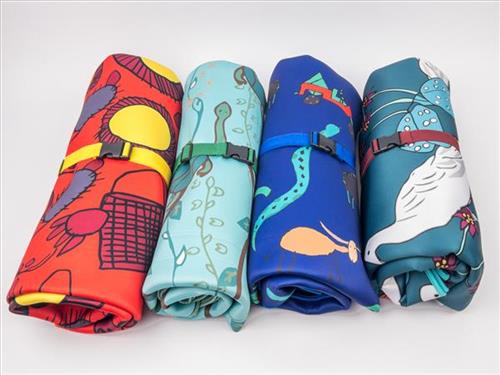
Made from neoprene wetsuit material that is quick dry, repels sand, sticks, and grasses whilst being insulating and waterproof. It can provide protection from the wet ground, and shelter you from wind and rain. You can even wrap up your wet gear in it. To clean, hose it down or rinse off after use, dry in shade.