Baby Kookaburra
Kookaburra watches other animals have fun with their babies while she waits for her babies.
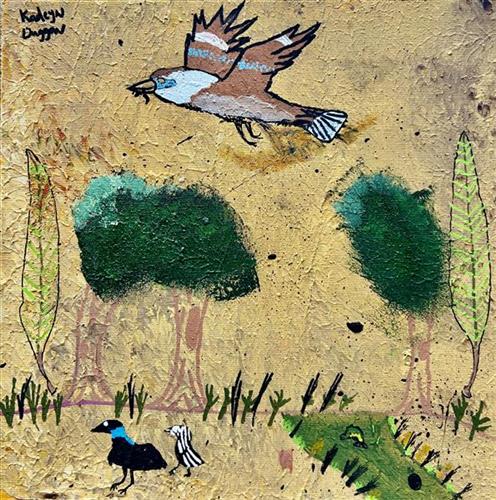
Kookaburra watches other animals have fun with their babies while she waits for her babies.
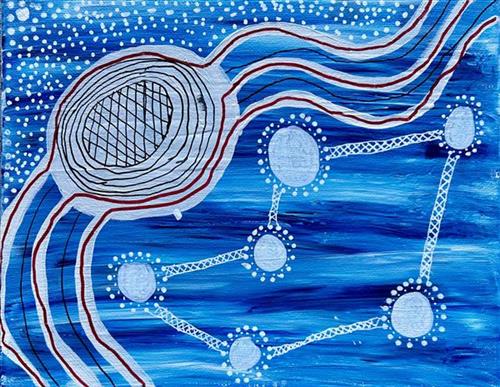
This is all the red belly browns favourite waterhole.
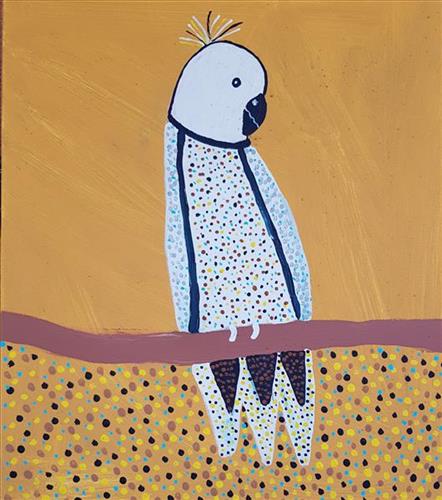
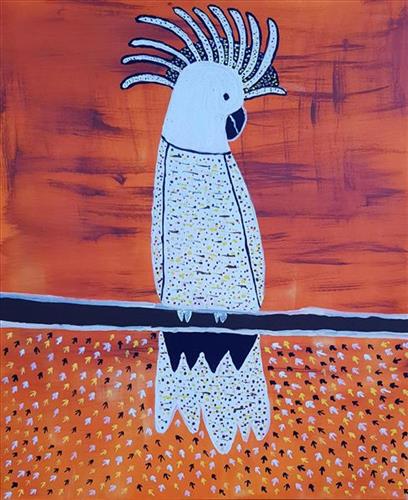
Birmba, the white cockatoo is a cheeky bird. Stealing fruit all the time.
In our culture some birds are messengers. In our lore Birmba brings us news.
My mothers Bubu is the Shipton Flat/Helenvale area.
I love taking family to our bubu, fishing and hunting for food and having a fire with damper.
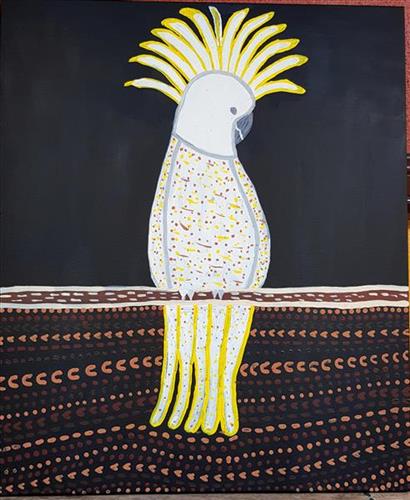
Birmba, the white cockatoo is a cheeky bird. Stealing fruit all the time.
In our culture some birds are messengers. In our lore Birmba brings us news.
My mothers Bubu is the Shipton Flat/Helenvale area.
I love taking family to our bubu, fishing and hunting for food and having a fire with damper.
Birmba, the white cockatoo is a cheeky bird. Stealing fruit all the time.
In our culture some birds are messengers. In our lore Birmba brings us news.
My mothers Bubu is the Shipton Flat/Helenvale area.
I love taking family to our bubu, fishing and hunting for food and having a fire with damper.
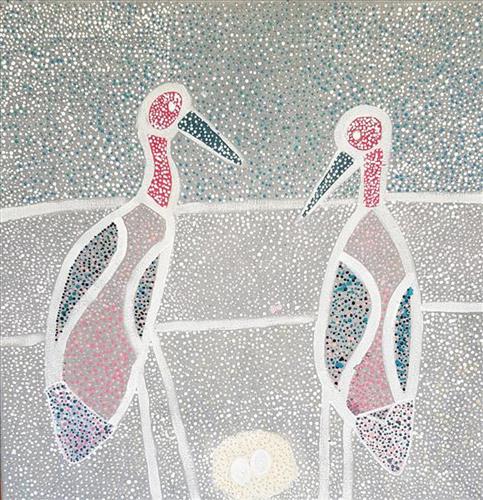
Anne Nunn is Nyungul woman. Her paintings depict cultural, historic and contemporary stories from her Country, the Helensvale and Shipton’s Flat area in Far North Queensland.
“My painting depicts the plants and animals that live and grow around my bubu (country). I love going out bush and am especially inspired by the wetland dikal (birds) like the kubal (brolga) that live in the walngka (swamp grasses) and kababina (water lilies)”.
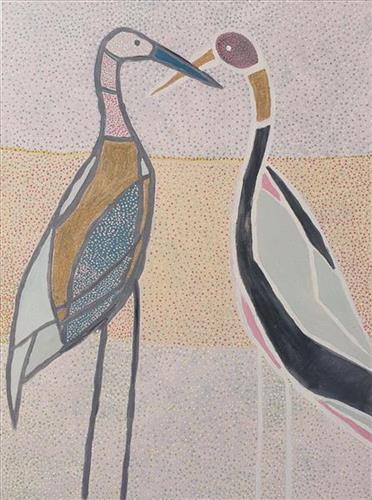
Anne Nunn is Nyungul woman. Her paintings depict cultural, historic and contemporary stories from her Country, the Helensvale and Shipton’s Flat area in Far North Queensland.
“My painting depicts the plants and animals that live and grow around my bubu (country). I love going out bush and am especially inspired by the wetland dikal (birds) like the kubal (brolga) that live in the walngka (swamp grasses) and kababina (water lilies)”.
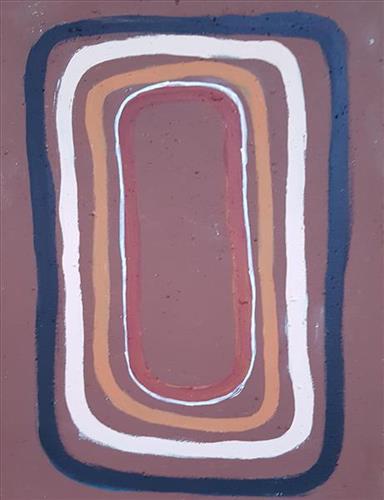
I am painting kunjuri (shield). Our ancestors used kunjuri and wakay (sword) for fighting to protect themselves from getting hurt.
I started watching my grandfather paint when I was 12 years old. He taught me a lot about my culture, and this is why I am interested in kunjuri. My kunjuri are abstracted. When the Missionaries came here to Wujal Wujal; they tried to stop my people from speaking language and practicing our traditions and because of this we lost some of the knowledge. However, the old people were very strong and even though it was very hard they carried our culture despite the Missionaries and kept it strong.
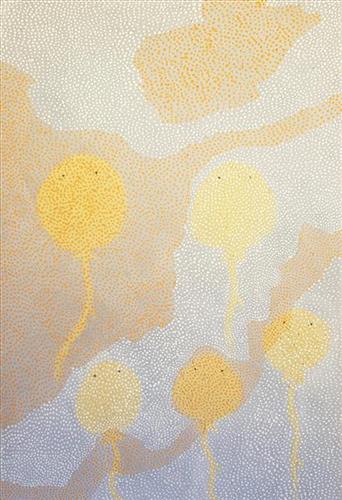
We always look at the plants to know when it’s a good time to hunt or harvest certain foods. We hunt yawu from December to May. We know it’s the right time to hunt the yawu (stingray) because that’s when the wattle is flowering. We look out for its yellow flowers.
Bama (people) love the yawu minya (stingray meat). We hunt the brown saltwater one. When you catch that yawu; you must kill and butcher it the correct traditional cultural way. If you do it the wrong way the big storms will come. You must be very careful.
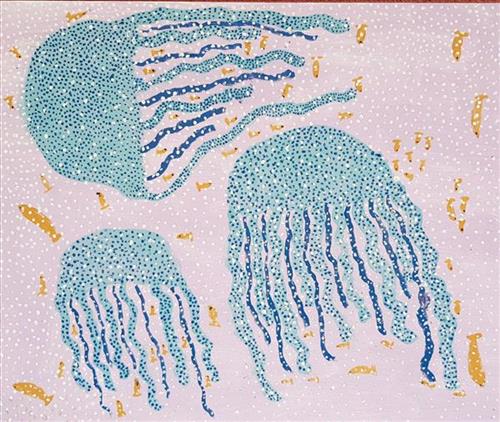
I am a Jalanji saltwater woman. Jalanji people have lots of stories about the reef. My painting’s story is about Mili (stinging jellyfish) stirring out on the reef.
We were taught at a young age to watch out because these mili sting and can be very dangerous. There are special plants that we can use on mili stings. Our elders passed on this knowledge to us.