377810582272620


man-kurdudjumuk and ashes

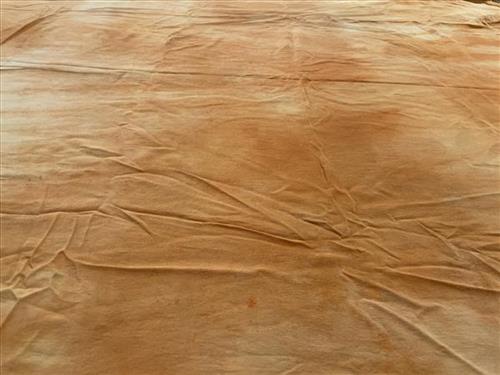
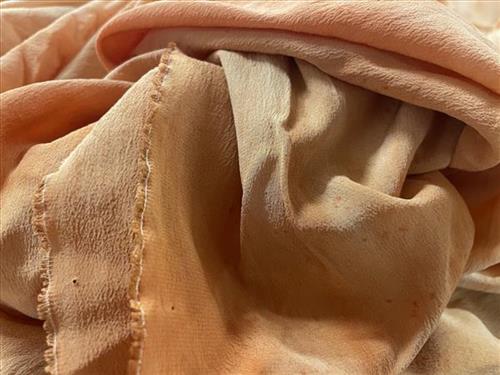
The striking yellow – gold hue comes from the root of the man-kurdudjumuk plant (coelospermum reticulatum) which has been harvested from the sandy country near the flood plains. This laborious and tiring process requires digging up the entire shrub. The root is shaven into a pot of water and the colour is released into water through the boiling process. Ashes sprinkled into the mix create beautiful orange tones. 

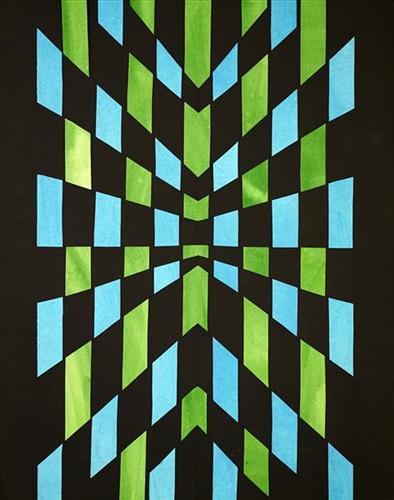
This silk has been dyed by Jocelyn at Bolkjam Outstation where she has been attending ceremony

377810582272607


Wirndilk

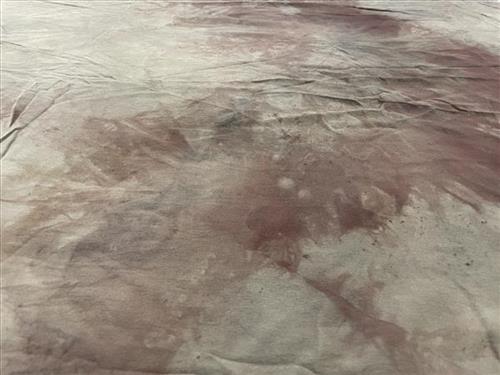
Wirndilk, haemodorum coccineum is a tropical grass growing in the well draining and sandy soil around the stony country. Commonly known as scarlet bloodroot, the bright red bulb can achieve shimmering red or rust dye tones.

The seeds of wirndilk can make a beautiful and bright purple-pink colour.

Wirndilk continues to be used women of Arnhem Land to dye pandanus for dilly bags and woven baskets. 

11151030972


Kunawarritji (Canning Stock Route Well 33)

“I learnt how to paint in Kunawarritji; I’ve been painting here. I go to Punmu, Jigalong and Parnngurr, but I always go home to Kunawarritji. I learnt how to paint in Kunawarritji.

[When I was young] I was walking around Kunawarritji and Kun Kun, looking for meat with Jakayu and her family.”

 – Bugai Whyoulter

Kunawarritji is an important site in the Great Sandy Desert where multiple stories and histories intersect. Originally a spring water and major Martu pujiman (traditional, desert dwelling) camping site, at the turn of the 20th century Kunawarritji was converted to a well along the Canning Stock Route. Each year throughout the 1930-50s, the well became a site of contact between the drovers, their cattle, and desert families such as Bugai’s. Bugai grew up, walked and hunted primarily around Punmu, Kunawarritji and Kun Kun (Kuny-Kuny), and as a young woman travelled up and down large tracts of the 1850km long Canning Stock Route, where she and her husband met and walked with cattle drovers. 

Long before colonial history entered this Country, however, other stories dominated this site. Primarily, Kunawarritji features in the Minyipuru (Jakulyukulyu, Seven Sisters) Jukurrpa (Dreaming). Minyipuru is a central Jukurrpa narrative for Martu, Ngaanyatjarra, Pitjantjatjara and Yankunytjatjara people that is associated with the seasonal Pleiades star constellation. Beginning in Roebourne on the west coast of Western Australia, the story morphs in its movement eastward across the land, following a group of women as they walk, dance, and even fly from waterhole to waterhole. As they travelled the women left markers in the landscape and create landforms that remain to this day. During the entirety of their journey the women are pursued by a lustful old man, Yurla, although interactions with other animals, groups of men, and spirit beings are also chronicled in the narrative.

The Minyipuru travelled to Kunawarritji from Nyipily (Nyipil, Nibil, Canning Stock Route Well 34), and transformed themselves into a distinctive group of trees that remain in the area between these two sites. From Kunawarritji Yurla followed the sisters to Pangkapirni, where he finally caught one of the women. 

Today, Kunawarritji is a site of return, a place where people came back to continue their life in the desert with the formation of Kunawarritji Aboriginal community in the early 1980s. The community’s cultural significance endures, with the population swelling up to 1000 during cultural business.

 Kunawarritji is Bugai’s home today, and the place where she first began painting her Country. As is clearly expressed in her account, for Bugai Kunawarritji is her ngurra (home Country, camp).

111576230124


Untitled

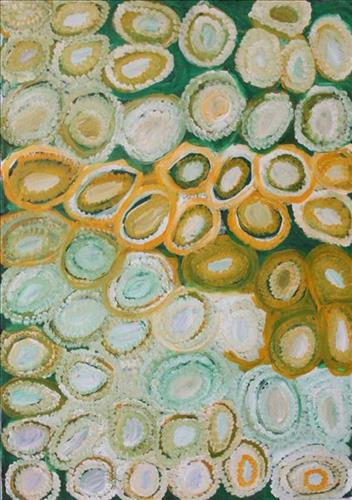
This is Mitutu’s Country- her ‘ngurra’ (home Country, camp). People identify with their ngurra in terms of specific rights and responsibilities, and the possession of intimate knowledge of the physical and cultural properties of one’s Country. Painting ngurra, and in so doing sharing the Jukurrpa (Dreaming) stories and physical characteristics of that place, has today become an important means of cultural maintenance. Mitutu’s ngurra encompasses her birthplace, Yirajarra soak, located close to Lake Auld and just north of Tiwa (Canning Stock Route Well 26), and the Country that her family walked in the pujiman (traditional, desert-dwelling) era, around the Karlamilyi (Rudall River) region.
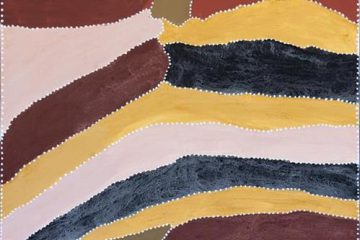
Portrayed in this work are features of Mitutu’s family’s ngurra, such as the gorges and rivers, dominant permanent red tali (sandhills), warta (trees, vegetation), and the individually named water sources they camped at. Rock holes, waterholes, soaks and springs were all extremely important sites for Martu people during the pujiman period, and are generally depicted with circular forms. 

The encyclopaedic knowledge of the location, quality and seasonal availability of the hundreds of water bodies found in one’s Country sustained Martu as they travelled across their Country, hunting and gathering, visiting family, and fulfilling ceremonial obligations. They would traverse very large distances annually, visiting specific areas in the dry and wet season depending on the availability of water and the corresponding cycles of plant and animal life on which hunting and gathering bush tucker was reliant. As they travelled and hunted they would also burn areas of Country, generating a greater diversity of plant and animal life.

110682259543


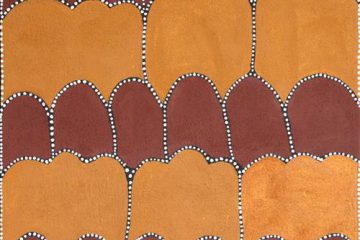
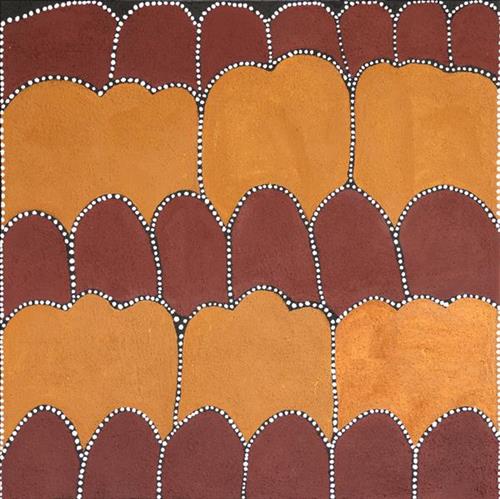
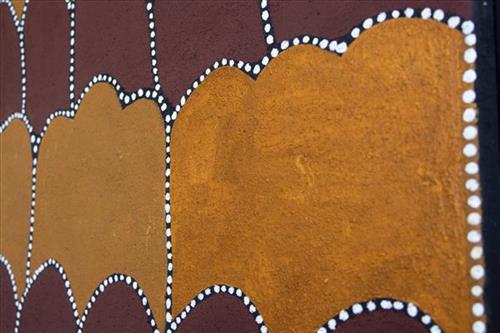
Purnululu – Bungle Bungles – Marietta Bray

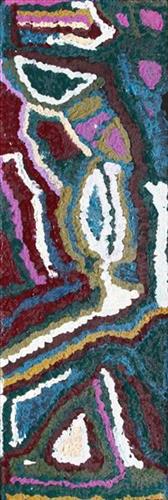
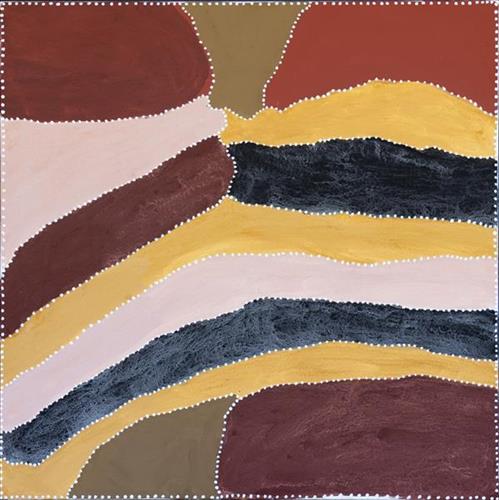
This painting shows the country that Marietta’s mother comes from, Purnululu. It is also the country of her uncle, renowned Warmun artist Jack Britten. Purnululu ( The Bungle Bungles) is located 55 kms south west of the Warmun Community. It is a significant point of reference for many Gija people and has many sacred places located within its striped domes. Marietta paints this country using a strong sense of design and pattern.

110682267141


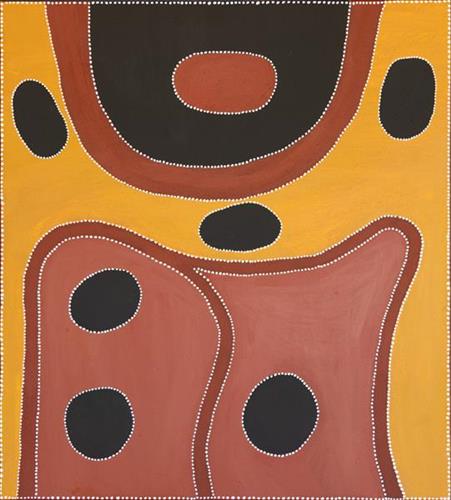
NUGUWARRDING (Snake Dreaming) – Tommy Carroll

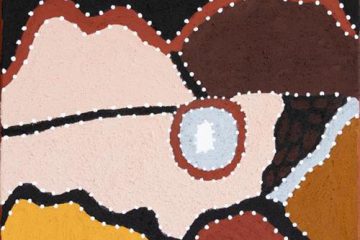
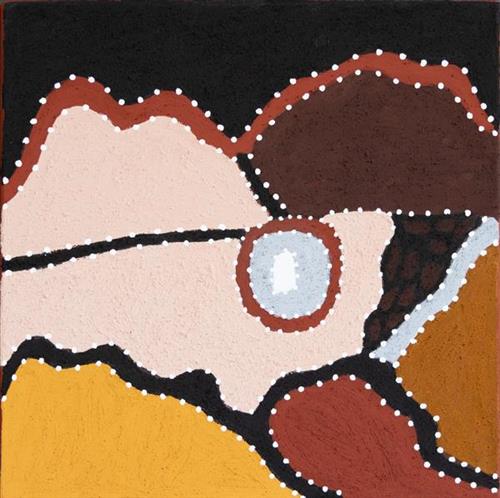
This painting tells a story about NUGUWARRDING, that rainbow serpent, who travelled and lived around this area now called Doon Doon. Tommy says, “He went up to my grandfather’s country at the back of Speewah where there are gorges and rock holes.”

The solid circles represent the water holes in this area and the fluid lines are the hills around Doon Doon.

Tommy continues, “the story of this place was told to me when I was a young fella by my grandfather and his father. This snake was a father for this country, he traveled all over, sometimes he would stay for a few days then he would leave and pass through the next water place and stayed a bit longer.”

110682267128


Jarlarloon – Patrick Mung

Patrick Mung Mung has been turning his brush to his grandmother and mother’s country Jarlaloon, as new memories of these days drift back evoking reconnection and reflection. Patrick says – ‘I’ve bin thinking clear lately. My mind is good and my memories are all coming back good and clear. My grandmother and my mother and their country, and life the way we used to live. All the stories they would tell me. All my old people and those times living old ways.”

The varied pink ochres found, collected and prepared by Gija artists and artsworkers, feature in this new body of work. His late wife B Carrington also loved to use these in her later work and he talks at times of finding her in those colours.

110682269332


Eagle and Crow Dreaming

This is the main story for Warrmun (meaning “a place to camp”). This story took place just behind the present day Warmun Community. In the Ngarrangkarni (Dreamtime) both the eagle and the crow were people. The Eaglehawk and his wife the crow were sitting either side of a patch of white rock (quartz). The Eaglehawk was busy making spearheads from the hard quartz and asked the crow to help. Eaglehawk was ready to hunt for kangaroo. First he built up a fire of hot rocks so that they would have somewhere to cook the kangaroo. Eaglehawk asked the crow again, but she refused. Eaglehawk went out hunting and came back with a small, fat, girl kangaroo. When he got back to the camp, Crow was asleep. In anger the Eaglehawk threw a piece of quartz rock at the crow, striking her in the eye, and took the hot rocks from the fire and burnt the crow all over for being so lazy. They both turned into birds, and that is why crows are black with a white circle around their eyes. In the hill behind Warmun you can still see the white quartz camp of the eagle and the crow.