377810582217420


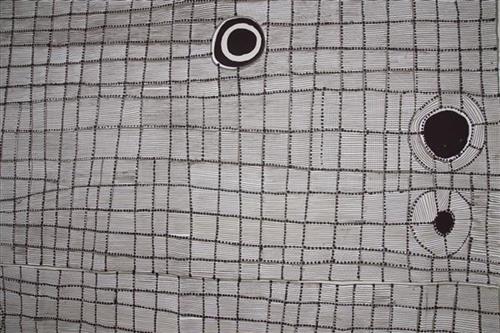
Lorrkkon – Susan Marawarr

The Lorrkkon or hollow-log coffin ceremony is the final ceremony in a sequence of mortuary rituals celebrated by the people of Arnhem Land. This ceremony might take place many years after the person has died, and involves the placing of the deceased’s bones into a hollow log that is decorated with painted clan designs and ceremonially placed into the ground where it slowly decays over many years.

The lorrkkon (hollow-log coffin) is made from the trunk of a termite-hollowed manbuluduk (stringybark tree, Eucalyptus tetradonta) and is decorated with totemic emblems. The western Arnhem Land version of the Lorrkkon ceremony involves the singing of sacred songs to the accompaniment of karlikarli, a pair of sacred boomerangs used as rhythm instruments. During the final evening of the ceremony, dancers decorate themselves with kapok down or, today, cotton wool, and conduct much of the final segments of the ceremony in the secrecy of a restricted men’s camp. The complete ceremony may stretch over a period of two weeks, but on the last night the bones of the deceased, which have been kept in a bark container, or today wrapped in cloth and kept in a suitcase, are taken out, and are painted with red ochre and placed inside the hollow-log coffin.

At first light on the final morning of the Lorrkkon ceremony, the men appear, coming out of their secret bush camp carrying the lorrkkon towards the women’s camp. The two groups call to each other using distinct ceremonial calls. The women have prepared a hole for the lorrkkon to be placed into, and when it is stood upright, women in particular kinship relationships to the deceased dance around the lorrkkon in a jumping/shuffling motion. It is then often covered with a tarpaulin and left to slowly decay.

377810582217419


Lorrkkon – Susan Marawarr

The Lorrkkon or hollow-log coffin ceremony is the final ceremony in a sequence of mortuary rituals celebrated by the people of Arnhem Land. This ceremony might take place many years after the person has died, and involves the placing of the deceased’s bones into a hollow log that is decorated with painted clan designs and ceremonially placed into the ground where it slowly decays over many years.

The lorrkkon (hollow-log coffin) is made from the trunk of a termite-hollowed manbuluduk (stringybark tree, Eucalyptus tetradonta) and is decorated with totemic emblems. The western Arnhem Land version of the Lorrkkon ceremony involves the singing of sacred songs to the accompaniment of karlikarli, a pair of sacred boomerangs used as rhythm instruments. During the final evening of the ceremony, dancers decorate themselves with kapok down or, today, cotton wool, and conduct much of the final segments of the ceremony in the secrecy of a restricted men’s camp. The complete ceremony may stretch over a period of two weeks, but on the last night the bones of the deceased, which have been kept in a bark container, or today wrapped in cloth and kept in a suitcase, are taken out, and are painted with red ochre and placed inside the hollow-log coffin.

At first light on the final morning of the Lorrkkon ceremony, the men appear, coming out of their secret bush camp carrying the lorrkkon towards the women’s camp. The two groups call to each other using distinct ceremonial calls. The women have prepared a hole for the lorrkkon to be placed into, and when it is stood upright, women in particular kinship relationships to the deceased dance around the lorrkkon in a jumping/shuffling motion. It is then often covered with a tarpaulin and left to slowly decay.
377810582217418


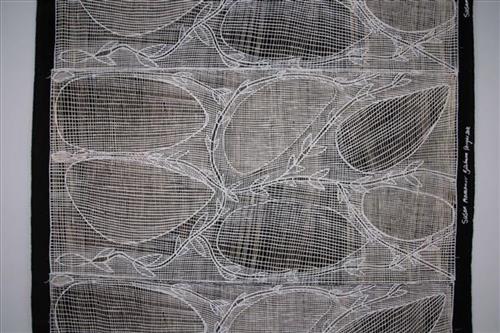
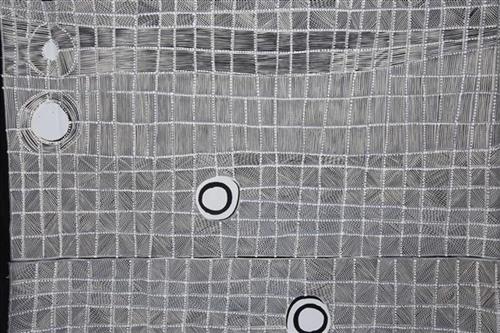
Kunwardde dja Karrbarda (Rocks and Yam Vine)

Susan Marawarr is a Kuninjku artist from the Kurulk clan whose country lies around the outstation of Mumeka in central Arnhem Land. In this design, she has depicted karrbarda (long yam) on her traditional country, the kunwardde (stone country).

The large stones represent the kunwardde rocky outcrops, which are elevated above the flat floodplains. The vines creeping around the large rocks are from the karrbarda. Women dig up karrbarda with kungarrndutj (digging sticks) and they are then cooked in the ashes of the fire to be eaten.

These yams are purple on the saltwater side of country and on inland freshwater country they are white. Karrbarda are an important manme (bush food) that are collected during the wet and dry seasons.

377810582217417


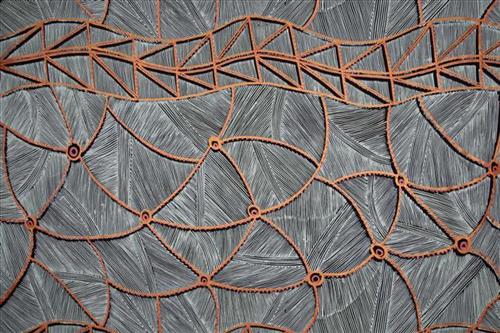
Kunkurra (Spiral Wind)

‘My designs, they are all alive living up in my head’- Janet Marawarr

Janet Marawarr has depicted kunkurra, the spiralling wind associated with several sites in the Kardbam clan. On one level, this design can be interpreted as a depiction of the kinds of mini-cyclones common during the wet season in Arnhem Land, where the artist lives. Kunkurra also relates specifically to a site called Bilwoyinj, near Mankorlod, on the artist’s clan estate.

At this site, two of the most important Kuninjku creation beings, a father and son known as na-korrkko, are believed to have hunted and eaten a goanna. They left some of the goanna fat behind at the site, which turned into the rock that still stands there today.

Bilwoyinj site is also a ceremonial ground for a ceremony called Yabbaduruwa, a major ceremony owned by the Yirridja patrimoiety. The Yabbaduruwa ceremony is primarily concerned with initiation, land ownership and promoting the cyclical regeneration of the human and natural worlds.

111982217398


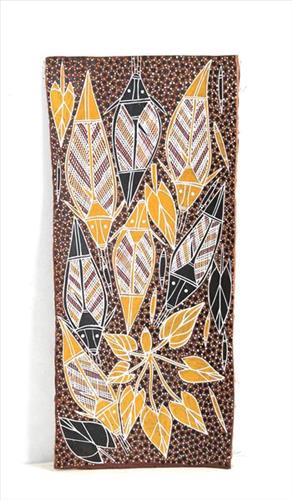
Yawkyawk (Ngalkunburriyaymi)

This is a depiction of Ngalkunburriyaymi or Yawkyawk, the fish-women spirit. Sometimes compared to the European notion of mermaids, they exist as spiritual beings living in freshwater streams, particularly those in the stone country. These water spirits are perhaps the most enigmatic, and are usually described and depicted with the tails of fish. Thus the Kuninjku people sometime call them ngalberddjenj which literally means ‘the woman who has a tail like a fish’. They have long hair which is associated with trailing blooms of green algae (man-bak in Kuninjku) found in freshwater streams and rock pools. At times they leave their aquatic homes to walk about on dry land, particularly at night.

Aboriginal people believe that at one time all animals were humans. During the time of the creation of landscapes and plants and animals, these ancestor heroes in human form changed into their animal forms via a series of various significant events now recorded as oral mythologies. Today the Kuninjku believe that ngalkunburriyaymi are alive and well and living in freshwater sites in a number of sacred locations. The Kuninjku also believe that ‘clever’ man (magicians with mystical powers called na-kordang) may take these spirits as wives. The father of Mandarrk, a well known artist who resided in the Central Arnhem area, is said to have had such a spirit as a wife. Unfortunately, it is said, she failed one day to return from being sent to fetch water from the river, and returned to her kin. The ngalkunburriyaymi also have husbands and children of their own kind. Their sites are usually shared with the rainbow serpent ngalyod. Some have ritual importance, for example in some depictions, the yawkyawk spirit holds ceremonial string, just like the lengths of string women hold between both hands today during certain public ceremonies. 

There are at least three major ngalkunburriyaymi sacred sites that are well known in the area south and south-west of Maningrida. One site Bolerrhlerr is on the Mann River at a place near Yikarrakkal Outstation where there are rugged rocky banks and clefts beneath stone overhangs in the water. Another very similar site further west in the Kumadderr River district is surrounded by a number of small but very old rock art sites and has become known in English as ‘Dreaming Lady’. A third site is a major yawkyawk dreaming place which is so significant that the traditional Dangkorlo clan custodians have set up an outstation near the site. The identity of this group is very much related to their yawkyawk dreaming for which they have spiritual and practical responsibility. 

184003003


Status: Stock


Ocean Dreaming

In the beginning, the Great Spirit of the Sea created the vast and endless ocean, a place of beauty and mystery. She painted the waters with her brush of foam and painted the sky with her brush of clouds. The waves became her canvas, and she used them to tell the stories of the Dreamtime.

The Dreamtime stories tell of the creation of the world and the adventures of the spirit beings. They are stories of magic and wonder, of love and loss, of joy and sorrow. And in my emotive abstract ocean painting, I have tried to capture the essence of these stories.

The swirling forms and vibrant colors are the spirits of the sea, dancing and singing on the waves. The brushstrokes are the trails they leave behind as they journey through the Dreamtime. And the emotions that the painting evokes are the feelings that the Great Spirit of the Sea wants to share with us, to remind us of the magic and mystery of the ocean, and of the Dreamtime stories that are told upon its waves. 

115682216969


Woven Mat

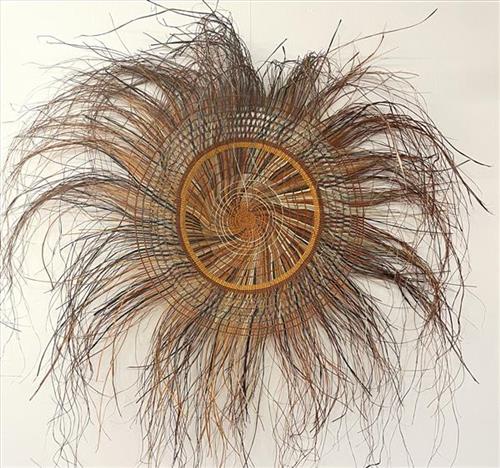
Traditionally, Nganiyal (conical mats) were used as an insect screen when erected, and as a sitting mat when folded. They are used in Ceremony as well as a functional item. 

Nowadays, artists weave many different shapes including flat, round and oblong. 

115682216865


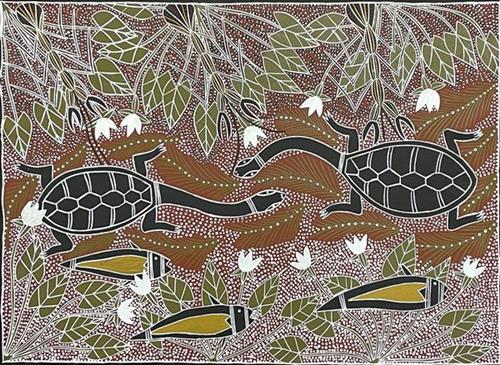
Ganalbingu – Banda (Long Necked Turtle)

The long necked turtle is a dreaming totem for the freshwater people, the Ganalbingu, whose country includes the World Heritage listed, Arafura Wetlands in Central Arnhem Land, Northern Territory

The Yolngu (people) of Arnhem Land originate from a spiritual source, fixed in a particular place in their land or the sea. These ‘Spiritual Reservoirs’ are often in the form of special waterholes made by Wangga (Creator Beings), long ago close to the beginning of time. These creator beings moved across the country side, shaping the land and implanting in each tract of country, the spiritual life force for the people who were to own it.

These creator spirits took many forms. When they gave the land to each group they also gave songs, dances, ceremony, the associated laws and language. The Creation story for Ganalbingu people took place near the middle section of the Glyde River where it becomes the Goyder River. Their land, Ngaliyindi, sits astride the Arafura Swamp in Central Arnhem Land. Some of their major Creative Beings include Banda (freshwater long neck turtle) and Yalman (water lilies).