111582102090


Kintyre

“Young and old gotta do ‘im togther- old people gotta learn the young fellas about that place. Country. Martumili (belonging to Martu).”

 – Wokka Taylor

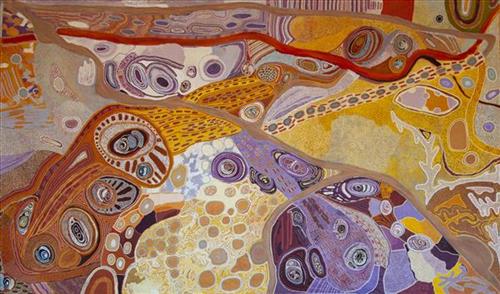
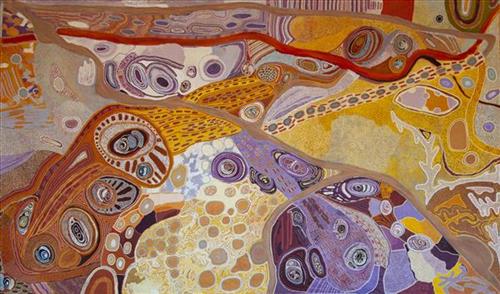
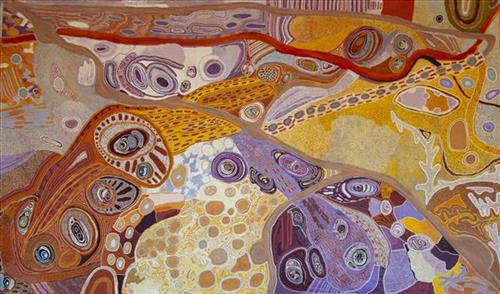
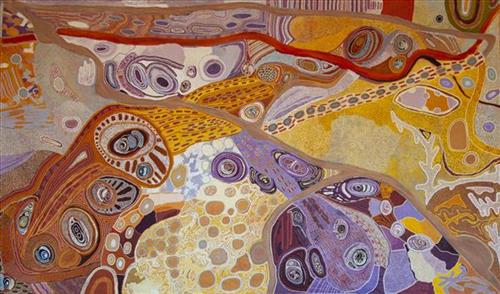
Produced to be a part of FORM’s Tracks We Share project, Martu artists embarked the creation of a large-scale collaborative painting depicting the Country and stories of Kintyre. Martu filmmaker and FORM project officer Curtis Taylor, FORM project officer Greg Taylor/Annie McLoughlin and Martumili staff and artists travelled to Parnngurr to attend an intense period of art making and conversation. Under the tutelage and direction from their elders, young artists laid the groundwork for the painting, with elders adding layers of details and knowledge to these foundations. Created by 23 artists over 18 months, the resulting artwork brings together stories of jukurrpa (dreaming), pre-colonial Martu life, personal histories, and contemporary mining interference with the important site of Kintyre, located within the heart of Martu Country- Karlamilyi national park.

Martu artists were part of the Western Desert Lands Aboriginal Corporation (WDLAC) 2021 AGM in Newman and unveiled the 5x3metre collaborative ‘Kintyre’ artwork to Martu Native Title holders and their families.  This was part of the Martu discussion about making a native title claim over Karlamilyi National park. Martu used the ‘Kintyre’ artwork to tell stories of great cultural importance and personal significance about this ngurra (Country, homeland), and to tell WDLAC to keep going with its work on getting this country back into Martu hands. The following day, Martu Elders and leaders showed and explained the ‘Kintyre’ work to WA Minister for Aboriginal Affairs, Hon Stephen Dawson.  Martu and WDLAC signed a shared statement of intent with the Minister, binding the Government and Martu to work together for Martu native title over Karlamilyi, as well as housing and community development reforms for Punmu, Kunawarritji and Parnngurr.

Kintyre is a claypan located just north of the Karlamilyi (Rudall River) region. During the pujiman (traditional, desert dwelling) era, the site was a popular camping ground in the wantajarra (wet season), when the claypan filled with kapi (water). Today Kintyre is best known for its substantial uranium deposits, and the area has been developed for mining. Protest from traditional land owners in combination with a declining uranium market have resulted in the project being put on hold for the time being.
 

111582102089


Kintyre

“Young and old gotta do ‘im togther- old people gotta learn the young fellas about that place. Country. Martumili (belonging to Martu).”

 – Wokka Taylor

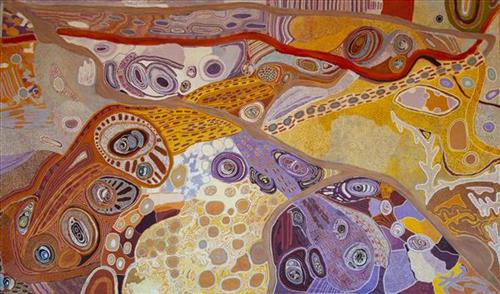
Produced to be a part of FORM’s Tracks We Share project, Martu artists embarked the creation of a large-scale collaborative painting depicting the Country and stories of Kintyre. Martu filmmaker and FORM project officer Curtis Taylor, FORM project officer Greg Taylor/Annie McLoughlin and Martumili staff and artists travelled to Parnngurr to attend an intense period of art making and conversation. Under the tutelage and direction from their elders, young artists laid the groundwork for the painting, with elders adding layers of details and knowledge to these foundations. Created by 23 artists over 18 months, the resulting artwork brings together stories of jukurrpa (dreaming), pre-colonial Martu life, personal histories, and contemporary mining interference with the important site of Kintyre, located within the heart of Martu Country- Karlamilyi national park.

Martu artists were part of the Western Desert Lands Aboriginal Corporation (WDLAC) 2021 AGM in Newman and unveiled the 5x3metre collaborative ‘Kintyre’ artwork to Martu Native Title holders and their families.  This was part of the Martu discussion about making a native title claim over Karlamilyi National park. Martu used the ‘Kintyre’ artwork to tell stories of great cultural importance and personal significance about this ngurra (Country, homeland), and to tell WDLAC to keep going with its work on getting this country back into Martu hands. The following day, Martu Elders and leaders showed and explained the ‘Kintyre’ work to WA Minister for Aboriginal Affairs, Hon Stephen Dawson.  Martu and WDLAC signed a shared statement of intent with the Minister, binding the Government and Martu to work together for Martu native title over Karlamilyi, as well as housing and community development reforms for Punmu, Kunawarritji and Parnngurr.

Kintyre is a claypan located just north of the Karlamilyi (Rudall River) region. During the pujiman (traditional, desert dwelling) era, the site was a popular camping ground in the wantajarra (wet season), when the claypan filled with kapi (water). Today Kintyre is best known for its substantial uranium deposits, and the area has been developed for mining. Protest from traditional land owners in combination with a declining uranium market have resulted in the project being put on hold for the time being.
 

111582102088


Kintyre

“Young and old gotta do ‘im togther- old people gotta learn the young fellas about that place. Country. Martumili (belonging to Martu).”

 – Wokka Taylor

Produced to be a part of FORM’s Tracks We Share project, Martu artists embarked the creation of a large-scale collaborative painting depicting the Country and stories of Kintyre. Martu filmmaker and FORM project officer Curtis Taylor, FORM project officer Greg Taylor/Annie McLoughlin and Martumili staff and artists travelled to Parnngurr to attend an intense period of art making and conversation. Under the tutelage and direction from their elders, young artists laid the groundwork for the painting, with elders adding layers of details and knowledge to these foundations. Created by 23 artists over 18 months, the resulting artwork brings together stories of jukurrpa (dreaming), pre-colonial Martu life, personal histories, and contemporary mining interference with the important site of Kintyre, located within the heart of Martu Country- Karlamilyi national park.

Martu artists were part of the Western Desert Lands Aboriginal Corporation (WDLAC) 2021 AGM in Newman and unveiled the 5x3metre collaborative ‘Kintyre’ artwork to Martu Native Title holders and their families.  This was part of the Martu discussion about making a native title claim over Karlamilyi National park. Martu used the ‘Kintyre’ artwork to tell stories of great cultural importance and personal significance about this ngurra (Country, homeland), and to tell WDLAC to keep going with its work on getting this country back into Martu hands. The following day, Martu Elders and leaders showed and explained the ‘Kintyre’ work to WA Minister for Aboriginal Affairs, Hon Stephen Dawson.  Martu and WDLAC signed a shared statement of intent with the Minister, binding the Government and Martu to work together for Martu native title over Karlamilyi, as well as housing and community development reforms for Punmu, Kunawarritji and Parnngurr.

Kintyre is a claypan located just north of the Karlamilyi (Rudall River) region. During the pujiman (traditional, desert dwelling) era, the site was a popular camping ground in the wantajarra (wet season), when the claypan filled with kapi (water). Today Kintyre is best known for its substantial uranium deposits, and the area has been developed for mining. Protest from traditional land owners in combination with a declining uranium market have resulted in the project being put on hold for the time being.
 

111582102087


Kintyre

“Young and old gotta do ‘im togther- old people gotta learn the young fellas about that place. Country. Martumili (belonging to Martu).”

 – Wokka Taylor

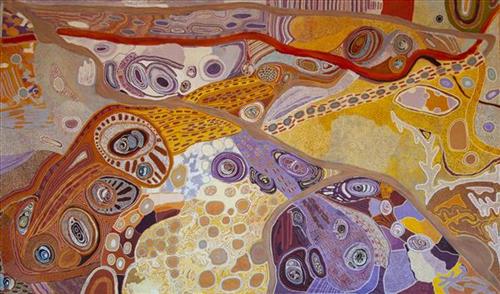
Produced to be a part of FORM’s Tracks We Share project, Martu artists embarked the creation of a large-scale collaborative painting depicting the Country and stories of Kintyre. Martu filmmaker and FORM project officer Curtis Taylor, FORM project officer Greg Taylor/Annie McLoughlin and Martumili staff and artists travelled to Parnngurr to attend an intense period of art making and conversation. Under the tutelage and direction from their elders, young artists laid the groundwork for the painting, with elders adding layers of details and knowledge to these foundations. Created by 23 artists over 18 months, the resulting artwork brings together stories of jukurrpa (dreaming), pre-colonial Martu life, personal histories, and contemporary mining interference with the important site of Kintyre, located within the heart of Martu Country- Karlamilyi national park.

Martu artists were part of the Western Desert Lands Aboriginal Corporation (WDLAC) 2021 AGM in Newman and unveiled the 5x3metre collaborative ‘Kintyre’ artwork to Martu Native Title holders and their families.  This was part of the Martu discussion about making a native title claim over Karlamilyi National park. Martu used the ‘Kintyre’ artwork to tell stories of great cultural importance and personal significance about this ngurra (Country, homeland), and to tell WDLAC to keep going with its work on getting this country back into Martu hands. The following day, Martu Elders and leaders showed and explained the ‘Kintyre’ work to WA Minister for Aboriginal Affairs, Hon Stephen Dawson.  Martu and WDLAC signed a shared statement of intent with the Minister, binding the Government and Martu to work together for Martu native title over Karlamilyi, as well as housing and community development reforms for Punmu, Kunawarritji and Parnngurr.

Kintyre is a claypan located just north of the Karlamilyi (Rudall River) region. During the pujiman (traditional, desert dwelling) era, the site was a popular camping ground in the wantajarra (wet season), when the claypan filled with kapi (water). Today Kintyre is best known for its substantial uranium deposits, and the area has been developed for mining. Protest from traditional land owners in combination with a declining uranium market have resulted in the project being put on hold for the time being.
 

111582102086


Kintyre

“Young and old gotta do ‘im togther- old people gotta learn the young fellas about that place. Country. Martumili (belonging to Martu).”

 – Wokka Taylor

Produced to be a part of FORM’s Tracks We Share project, Martu artists embarked the creation of a large-scale collaborative painting depicting the Country and stories of Kintyre. Martu filmmaker and FORM project officer Curtis Taylor, FORM project officer Greg Taylor/Annie McLoughlin and Martumili staff and artists travelled to Parnngurr to attend an intense period of art making and conversation. Under the tutelage and direction from their elders, young artists laid the groundwork for the painting, with elders adding layers of details and knowledge to these foundations. Created by 23 artists over 18 months, the resulting artwork brings together stories of jukurrpa (dreaming), pre-colonial Martu life, personal histories, and contemporary mining interference with the important site of Kintyre, located within the heart of Martu Country- Karlamilyi national park.

Martu artists were part of the Western Desert Lands Aboriginal Corporation (WDLAC) 2021 AGM in Newman and unveiled the 5x3metre collaborative ‘Kintyre’ artwork to Martu Native Title holders and their families.  This was part of the Martu discussion about making a native title claim over Karlamilyi National park. Martu used the ‘Kintyre’ artwork to tell stories of great cultural importance and personal significance about this ngurra (Country, homeland), and to tell WDLAC to keep going with its work on getting this country back into Martu hands. The following day, Martu Elders and leaders showed and explained the ‘Kintyre’ work to WA Minister for Aboriginal Affairs, Hon Stephen Dawson.  Martu and WDLAC signed a shared statement of intent with the Minister, binding the Government and Martu to work together for Martu native title over Karlamilyi, as well as housing and community development reforms for Punmu, Kunawarritji and Parnngurr.

Kintyre is a claypan located just north of the Karlamilyi (Rudall River) region. During the pujiman (traditional, desert dwelling) era, the site was a popular camping ground in the wantajarra (wet season), when the claypan filled with kapi (water). Today Kintyre is best known for its substantial uranium deposits, and the area has been developed for mining. Protest from traditional land owners in combination with a declining uranium market have resulted in the project being put on hold for the time being.
 

111582102085


Kintyre – 2021 collaborative

“Young and old gotta do ‘im togther- old people gotta learn the young fellas about that place. Country. Martumili (belonging to Martu).”

 – Wokka Taylor

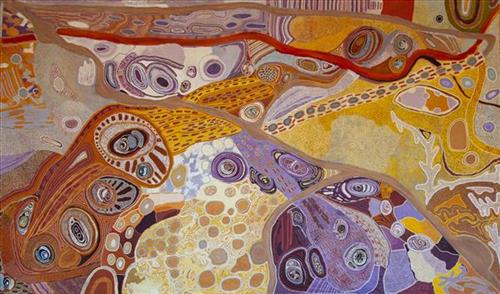
Produced to be a part of FORM’s Tracks We Share project, Martu artists embarked the creation of a large-scale collaborative painting depicting the Country and stories of Kintyre. Martu filmmaker and FORM project officer Curtis Taylor, FORM project officer Greg Taylor/Annie McLoughlin and Martumili staff and artists travelled to Parnngurr to attend an intense period of art making and conversation. Under the tutelage and direction from their elders, young artists laid the groundwork for the painting, with elders adding layers of details and knowledge to these foundations. Created by 23 artists over 18 months, the resulting artwork brings together stories of jukurrpa (dreaming), pre-colonial Martu life, personal histories, and contemporary mining interference with the important site of Kintyre, located within the heart of Martu Country- Karlamilyi national park.

Martu artists were part of the Western Desert Lands Aboriginal Corporation (WDLAC) 2021 AGM in Newman and unveiled the 5x3metre collaborative ‘Kintyre’ artwork to Martu Native Title holders and their families.  This was part of the Martu discussion about making a native title claim over Karlamilyi National park. Martu used the ‘Kintyre’ artwork to tell stories of great cultural importance and personal significance about this ngurra (Country, homeland), and to tell WDLAC to keep going with its work on getting this country back into Martu hands. The following day, Martu Elders and leaders showed and explained the ‘Kintyre’ work to WA Minister for Aboriginal Affairs, Hon Stephen Dawson.  Martu and WDLAC signed a shared statement of intent with the Minister, binding the Government and Martu to work together for Martu native title over Karlamilyi, as well as housing and community development reforms for Punmu, Kunawarritji and Parnngurr.

Kintyre is a claypan located just north of the Karlamilyi (Rudall River) region. During the pujiman (traditional, desert dwelling) era, the site was a popular camping ground in the wantajarra (wet season), when the claypan filled with kapi (water). Today Kintyre is best known for its substantial uranium deposits, and the area has been developed for mining. Protest from traditional land owners in combination with a declining uranium market have resulted in the project being put on hold for the time being.
 

111582102084


Kintyre

“Young and old gotta do ‘im togther- old people gotta learn the young fellas about that place. Country. Martumili (belonging to Martu).”

 – Wokka Taylor

Produced to be a part of FORM’s Tracks We Share project, Martu artists embarked the creation of a large-scale collaborative painting depicting the Country and stories of Kintyre. Martu filmmaker and FORM project officer Curtis Taylor, FORM project officer Greg Taylor/Annie McLoughlin and Martumili staff and artists travelled to Parnngurr to attend an intense period of art making and conversation. Under the tutelage and direction from their elders, young artists laid the groundwork for the painting, with elders adding layers of details and knowledge to these foundations. Created by 23 artists over 18 months, the resulting artwork brings together stories of jukurrpa (dreaming), pre-colonial Martu life, personal histories, and contemporary mining interference with the important site of Kintyre, located within the heart of Martu Country- Karlamilyi national park.

Martu artists were part of the Western Desert Lands Aboriginal Corporation (WDLAC) 2021 AGM in Newman and unveiled the 5x3metre collaborative ‘Kintyre’ artwork to Martu Native Title holders and their families.  This was part of the Martu discussion about making a native title claim over Karlamilyi National park. Martu used the ‘Kintyre’ artwork to tell stories of great cultural importance and personal significance about this ngurra (Country, homeland), and to tell WDLAC to keep going with its work on getting this country back into Martu hands. The following day, Martu Elders and leaders showed and explained the ‘Kintyre’ work to WA Minister for Aboriginal Affairs, Hon Stephen Dawson.  Martu and WDLAC signed a shared statement of intent with the Minister, binding the Government and Martu to work together for Martu native title over Karlamilyi, as well as housing and community development reforms for Punmu, Kunawarritji and Parnngurr.

Kintyre is a claypan located just north of the Karlamilyi (Rudall River) region. During the pujiman (traditional, desert dwelling) era, the site was a popular camping ground in the wantajarra (wet season), when the claypan filled with kapi (water). Today Kintyre is best known for its substantial uranium deposits, and the area has been developed for mining. Protest from traditional land owners in combination with a declining uranium market have resulted in the project being put on hold for the time being.
 

111582102083


Kintyre

“Young and old gotta do ‘im togther- old people gotta learn the young fellas about that place. Country. Martumili (belonging to Martu).”

 – Wokka Taylor

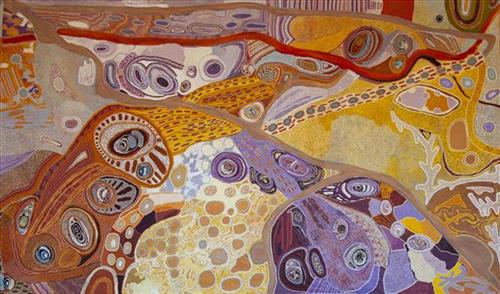
Produced to be a part of FORM’s Tracks We Share project, Martu artists embarked the creation of a large-scale collaborative painting depicting the Country and stories of Kintyre. Martu filmmaker and FORM project officer Curtis Taylor, FORM project officer Greg Taylor/Annie McLoughlin and Martumili staff and artists travelled to Parnngurr to attend an intense period of art making and conversation. Under the tutelage and direction from their elders, young artists laid the groundwork for the painting, with elders adding layers of details and knowledge to these foundations. Created by 23 artists over 18 months, the resulting artwork brings together stories of jukurrpa (dreaming), pre-colonial Martu life, personal histories, and contemporary mining interference with the important site of Kintyre, located within the heart of Martu Country- Karlamilyi national park.

Martu artists were part of the Western Desert Lands Aboriginal Corporation (WDLAC) 2021 AGM in Newman and unveiled the 5x3metre collaborative ‘Kintyre’ artwork to Martu Native Title holders and their families.  This was part of the Martu discussion about making a native title claim over Karlamilyi National park. Martu used the ‘Kintyre’ artwork to tell stories of great cultural importance and personal significance about this ngurra (Country, homeland), and to tell WDLAC to keep going with its work on getting this country back into Martu hands. The following day, Martu Elders and leaders showed and explained the ‘Kintyre’ work to WA Minister for Aboriginal Affairs, Hon Stephen Dawson.  Martu and WDLAC signed a shared statement of intent with the Minister, binding the Government and Martu to work together for Martu native title over Karlamilyi, as well as housing and community development reforms for Punmu, Kunawarritji and Parnngurr.

Kintyre is a claypan located just north of the Karlamilyi (Rudall River) region. During the pujiman (traditional, desert dwelling) era, the site was a popular camping ground in the wantajarra (wet season), when the claypan filled with kapi (water). Today Kintyre is best known for its substantial uranium deposits, and the area has been developed for mining. Protest from traditional land owners in combination with a declining uranium market have resulted in the project being put on hold for the time being.
 

111582102082


Kintyre

“Young and old gotta do ‘im togther- old people gotta learn the young fellas about that place. Country. Martumili (belonging to Martu).”

 – Wokka Taylor

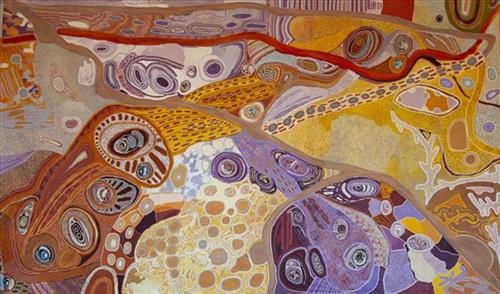
Produced to be a part of FORM’s Tracks We Share project, Martu artists embarked the creation of a large-scale collaborative painting depicting the Country and stories of Kintyre. Martu filmmaker and FORM project officer Curtis Taylor, FORM project officer Greg Taylor/Annie McLoughlin and Martumili staff and artists travelled to Parnngurr to attend an intense period of art making and conversation. Under the tutelage and direction from their elders, young artists laid the groundwork for the painting, with elders adding layers of details and knowledge to these foundations. Created by 23 artists over 18 months, the resulting artwork brings together stories of jukurrpa (dreaming), pre-colonial Martu life, personal histories, and contemporary mining interference with the important site of Kintyre, located within the heart of Martu Country- Karlamilyi national park.

Martu artists were part of the Western Desert Lands Aboriginal Corporation (WDLAC) 2021 AGM in Newman and unveiled the 5x3metre collaborative ‘Kintyre’ artwork to Martu Native Title holders and their families.  This was part of the Martu discussion about making a native title claim over Karlamilyi National park. Martu used the ‘Kintyre’ artwork to tell stories of great cultural importance and personal significance about this ngurra (Country, homeland), and to tell WDLAC to keep going with its work on getting this country back into Martu hands. The following day, Martu Elders and leaders showed and explained the ‘Kintyre’ work to WA Minister for Aboriginal Affairs, Hon Stephen Dawson.  Martu and WDLAC signed a shared statement of intent with the Minister, binding the Government and Martu to work together for Martu native title over Karlamilyi, as well as housing and community development reforms for Punmu, Kunawarritji and Parnngurr.

Kintyre is a claypan located just north of the Karlamilyi (Rudall River) region. During the pujiman (traditional, desert dwelling) era, the site was a popular camping ground in the wantajarra (wet season), when the claypan filled with kapi (water). Today Kintyre is best known for its substantial uranium deposits, and the area has been developed for mining. Protest from traditional land owners in combination with a declining uranium market have resulted in the project being put on hold for the time being.
 

111982128159


Wak Wak

This painting depicts a sacred site at ‘Kurrurldul’, an outstation south of Maningrida.

The ‘rarrk’, or abstract crosshatching, on this work represents the design for the crow totem ancestor called ‘Djimarr’. Today this being exists in the form of a rock, which is permanently submerged at the bottom of Kurrurldul Creek. The ‘Djimarr’ rock in the stream at Kurrurldul is said to move around and call out in a soft hooting tone at night. Both the stone itself and the area around it are considered sacred.

The imagery represents the rock mentioned above at the bottom of Kurrurldul creek, which is the final transmutation of the dreaming ancestor ‘Djimarr’. Finally, the pattern used here is also the crow design used in the sacred ‘Mardayin’ ceremony, which is a large regional patri-moiety ceremony now rarely conducted in central and eastern Arnhem Land.