116482390014
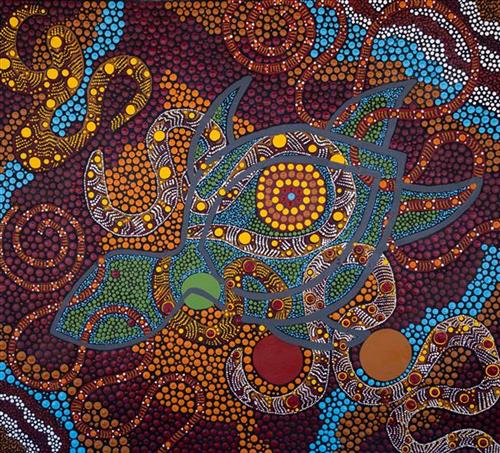
Sea Turtle
Turtles roam the sea as family every year even when the times to find land to hatch their young on the beach

11154008588
Status: Stock
Wanti Yuu (Women, Year)! earrings – Silvia Wilson
Hand painted earrings made with polymer and acrylic paint or posca pen. Note that earrings will vary in colour and design as this item is individually handmade.
“Wanti Yuu (Woman Yeah!) is a story of resilience and of women coming together. It is about the strength of the women in our community who put themselves last and take on a lot. She [Wanti Yuu] is someone who looks after her family, putting the grand kids and everyone around her first. The word Matriarch comes to mind. They are the matriarch of the family. The Boss Lady. Always helping everyone else out and leaving herself to the end. She paints, she teaches us her knowledge, like basket weaving and honey ant collecting. She is the top lore woman and her story of Pujiman (traditional, desert dwelling) is so important. She is a leader of the Martu women and a senior artist. That’s all I can say about these women. These women; you give her the bread if you know what I mean. It’s a true story. Anything in my pockets. Because when you look at her, her stance, her energy and her vibe, you can feel it. You don’t muck around with Wanti Yuu.”
-Silvia Wilson
Wanti Yuu celebrates women’s resilience, matriarchal relationships, and Sylvia’s place in this story.
As Sylvia explains, the work is both a depiction of, and attribute to, the women in her life. “I follow my great grandmother’s guidance and direction in life. These women in my life carry so much on their shoulders, as well as the responsibility and future of our culture.”

11154008539
Status: Stock
Hand made trinket jewellery
Trinket jewellery hand made by Martumili Artists using beads, wood and found bush nuts.

11154008470
Status: Stock
Hand made trinket jewellery
Trinket jewellery hand made by Martumili Artists using beads, wood and found bush nuts.

11154008468
Status: Stock
Hand made trinket jewellery
Trinket jewellery hand made by Martumili Artists using beads, wood and found bush nuts.

377816082389030
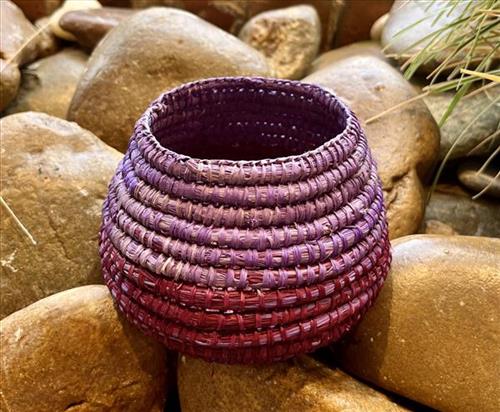
Lavender Haze
225182389029
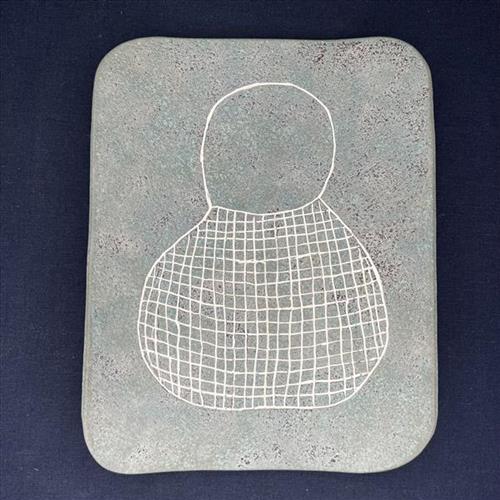
Kakan (Black Palm) Dillybag.
Our ancestors used Kakan (Black Palm) dilly bags to carry food when out hunting and gathering or soak bitter yams in creeks before cooking them. They were also used to hold personal items.
When I was a young girl my grandmother would teach me how to make Black Palm dillybags. We used to set up camp with other Kuku Yalanji women at a creek near Helenvale. It is very hard work. The men would help us cutting down the palm trees and separate the crownshaft from the trunk and the leaves. Then the women used to peel away the outer leaves until they felt strong threads they could pull out. They cleaned these threads from pulp with a mussel shell. When we moved away from Helenvale I forgot how to make them. Luckily years later I asked a relative of mine, Wilma Walker, who is great weaver, if she could refresh my memories. From then on I kept making dillybags as long as my health allowed it. I really enjoyed making them.