Desma Ngwarraye Turner – Atyenh Amper – (My Country)
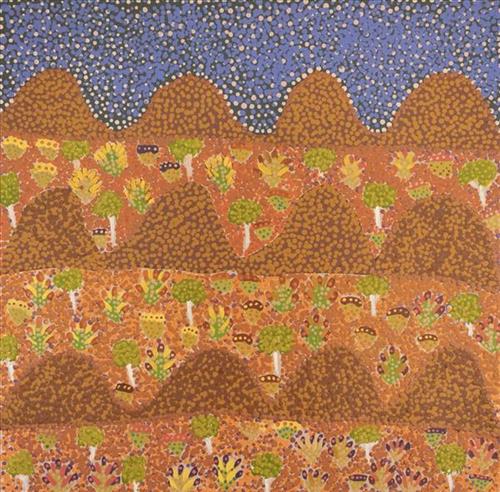
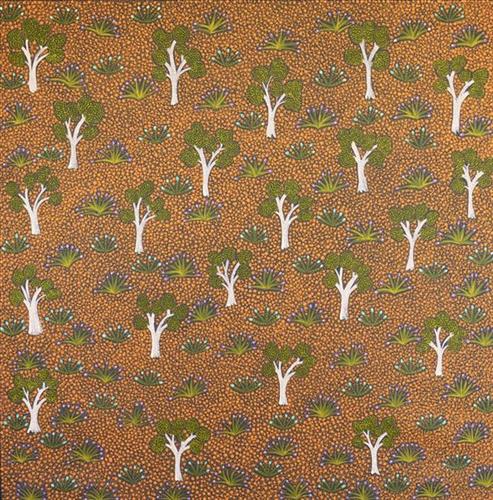
I paint the country that I come from, the beautiful landscapes and the many colours as they change during the seasons.
I paint the country that I come from, the beautiful landscapes and the many colours as they change during the seasons.
I was born in Ali Curung, my father was Cigarette George, he was a drover and my Mother is Edie Kemarre Holmes. My mother taught me to paint, I watched her when I was small, she is an important artist who was involved in the Utopia Batik movement and now paints at Ampilatwatja. I spent my childhood around Murray Downs.
My paintings are influenced by my Fathers country. I was taught to hunt bush tucker, sugar bags, Kangaroo and Goanna when I was little.
I travel to my Mothers country on Antarrengeny outstation and I teach my kids and grandchildren to go hunting.
I like to get busy on painting, it feels good.
The artists of Ampilatwatja made a conscious decision not to paint altyerr (dreaming stories). The artists paint their country where those stories sit.
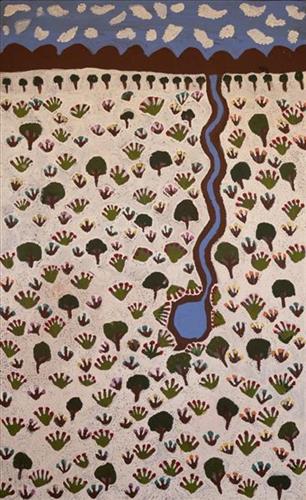
Kwetyaylp (donkeys) and nantew (horses) would come and drink from the water at Spring Creek on my father’s country. We would put a bucket in the sand we would filter the water so we could drink it.
When I was young girl we would go to Canteen Creek following the track along the hills, we would hunt turkey, emus and kangaroo and we would cut the bark and collect the sap from the sugar bag trees. `
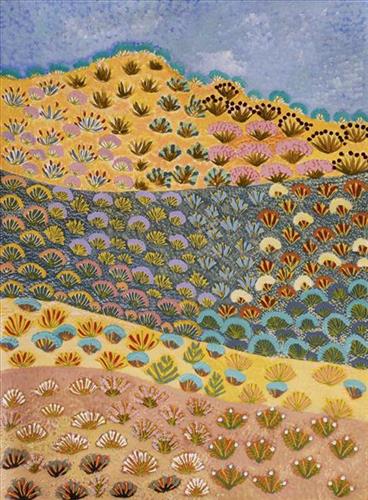
Walking across my land to look for bush flowers and goanna. I bring home to make medicine for my family and cook the goanna for dinner. Goanna is my favourite to eat.
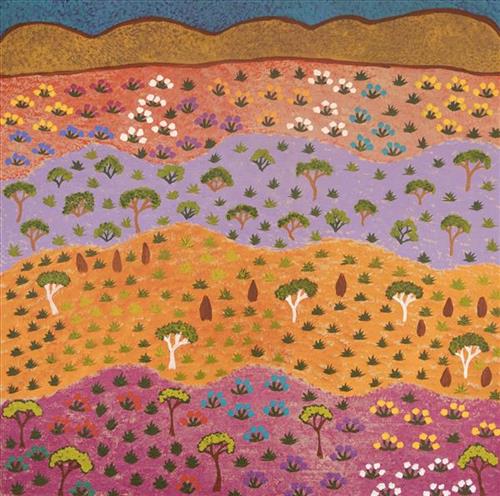
This shows the layered landscape of Alyawarr, Central Australia. Knowing your country is an important part of living in a remote community like Ampilatwatja.
Knowing when and where to go hunting and gathering, knowing where there is ‘soakage’ (where you can dig for water), travelling with family for ceremonies, and maintaining a connection with the land.
“This is my country, my view of country.”
The community of Ampilatwatja made a conscious decision not to paint altyerr (dreaming stories). The artists paint their country where those stories sit.
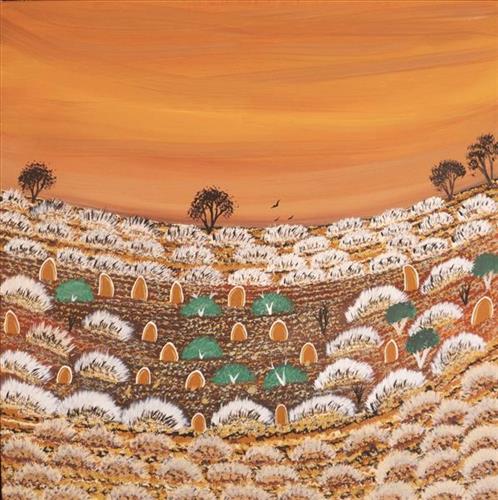
This painting shows the layered landscape of Alyawarr, Central Australia. Knowing your country is an important part of living in a remote community like Ampilatwatja. Knowing when and where to go hunting and gathering, knowing where there is ‘soakage’ (where you can dig for water), travelling with family for ceremonies, and maintaining a connection with the land.
“This is my country, my view of country.”
The community of Ampilatwatja made a conscious decision not to paint altyerr (dreaming stories). The artists paint their country where those stories sit.
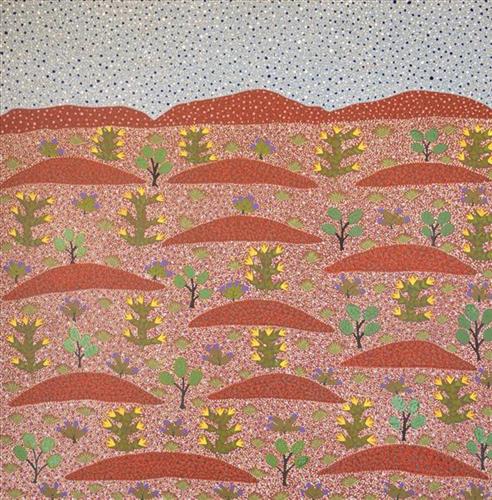
This is my country out in Utopia an outstation called Soapy Bore it’s my Father’s country, there’s big soakage, hills, bush medicine and bush tucker. All my family paint, my grandmother, my mother and aunties. I like to paint, I think about my country, the colours and my family who have gone.
The community of Ampilatwatja made a conscious decision not to paint altyerr (dreaming stories). The artists paint their country where those stories sit.
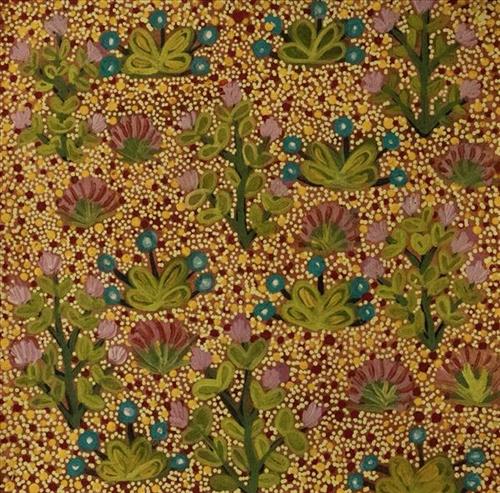
These bush flowers grow seasonally in Alyawarr country, some of which are also used in bush medicine remedies.
I have just started painting, my grandmother Elizabeth Ngwarraye Bonney has been teaching me, she tells me all about the bush flowers.
The community of Ampilatwatja made a conscious decision not to paint altyerr (dreaming stories). The artists paint their country where those stories sit.
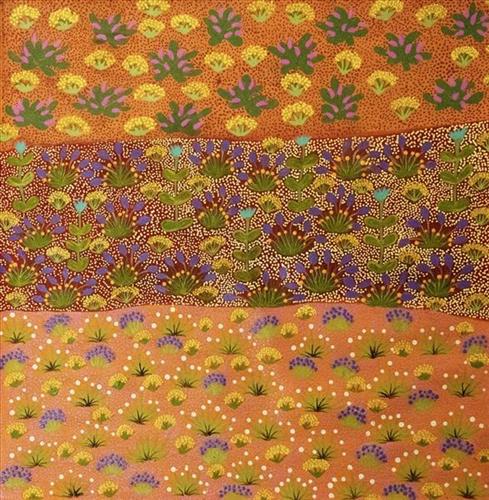
These bush flowers grow seasonly in Alyawarr country, some of which are also used in bush medicine remedies.
My twin sister Lotoya and I have just started painting, our grandmother Elizabeth Ngwarraye Bonney has been teaching us, she tells us all about the bush Flowers and bush medicine.
The artists of Ampilatwatja made a conscious decision not to paint altyerr (dreaming stories). The artists paint their country where those stories sit.
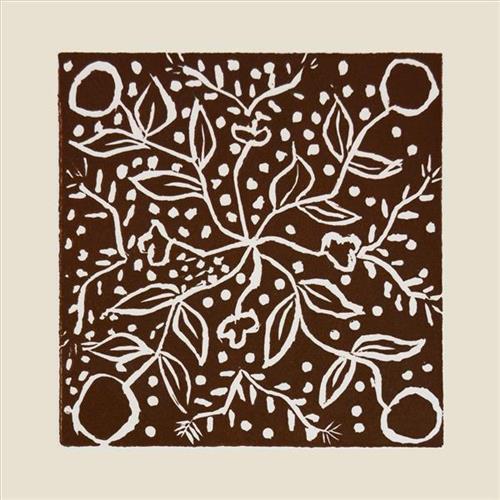
My twin sister Latoya and myself have just started painting bush flowers. Our grandmother Elizabeth Ngwarraye Bonney shows us the good way.
This is the first time I have ever printed using a lino carving. I did the mwanyen (bush tomato) plant because it is sweet tasting fruit that we find in creek beds after the rain.