Bamboo Shoot
‘I see bamboo everywhere where i go in Maningrida. I see it at every house – it’s a common house plant. When i see bamboo i get excited because i feel at home. Bamboo makes me feel good.’ Belinda Kernan
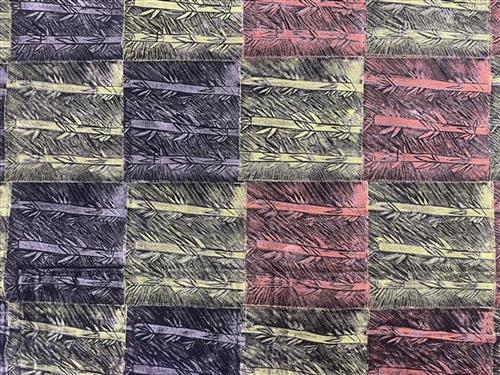
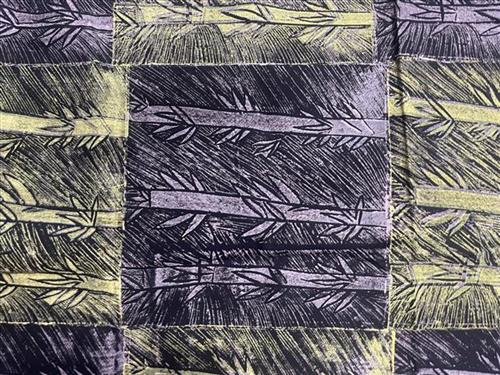
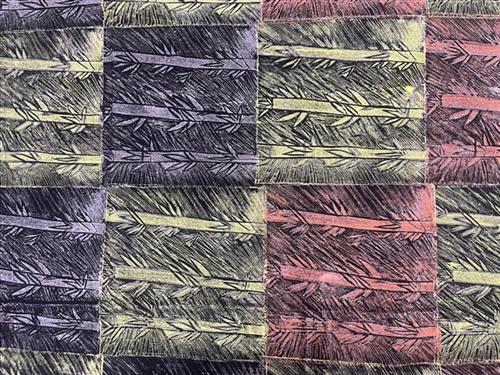
‘I see bamboo everywhere where i go in Maningrida. I see it at every house – it’s a common house plant. When i see bamboo i get excited because i feel at home. Bamboo makes me feel good.’ Belinda Kernan
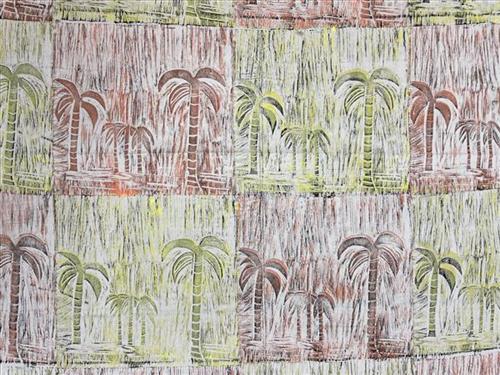
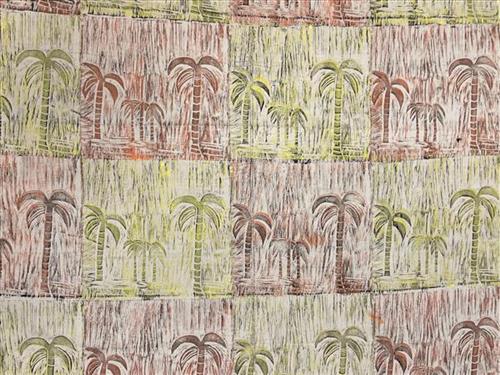
This fabric was created using the linocut printing technique. The lino tile has been carved by the artist in Maningrida, and has been printed by hand using a variety of colours and layers. The linocut technique ensures each textile piece is a one-off, limited edition piece.
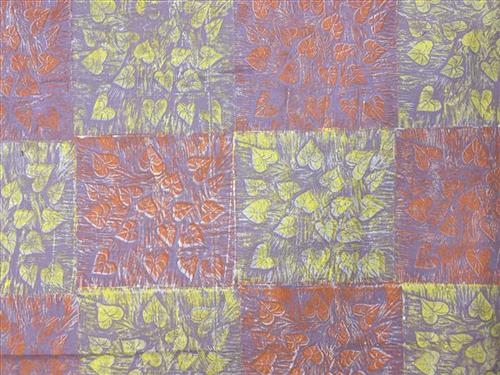
This fabric was created using the linocut printing technique. The lino tile was carved by the artist in Maningrida and printed by hand using a variety of colours and layers. The linocut technique ensures each textile piece is a one-off, limited edition piece.
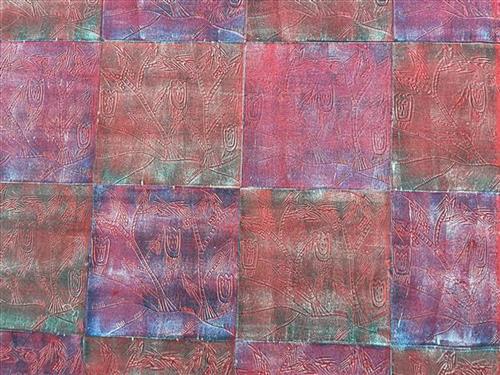
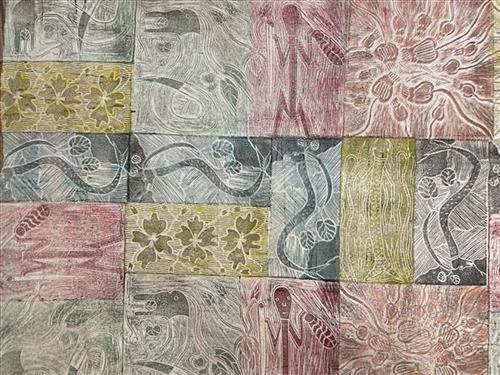
The first tile has different types of kunmadj (dillybag) and marebu (floormat) made with Kundayarr (Pandanus).
‘There are two djerr (dilly bags), one basket, two marebu (floormats) and one kunmadj in this tile. This is how we carry and collect our bush tucker. This basket in the middle with two handles is made with the coil technique. This is a strong basket for clothes, swag, manburrba (clothing, cloth). We use the floormat to sleep on the ground or carry baby. This is from our old peoples time.
The other tile is kundayarr – pandanus tree and small billabongs with mud and water and grasses. There are 5 billabongs in this tile. We use this kundayarr to make the all the dillybag, kunmadj, marebu and djerr in the other tile. Kunmadj we carry on the head when we are collecting manme (bush tucker). We strip the kundayarr and then we use colour (botanical dyes) to make the different colour. Then we tie up the pandanus.’
Deborah Wurrkidj 2022
Works in fibre from the Maningrida region are widely recognised as some of the finest in Australia. Artists confidently push the boundaries of fibre craft and cultural expression, adapting traditional techniques and forms to produce strikingly inventive and aesthetically exquisite artworks.
Artists usually use kundayarr, pandanus spiralis, to weave decorative round or oblong mats, as well as the less common triangular and conical shapes. Weaving is physically hard work, now done only by women. They colour the pandanus using natural dyes made from the roots, leaves or flowers of plants within the weaver’s clan estate.
Deborah has used the root of Man-Kurdudjumuk (coelospermun reticulatum) to dye the fabric a beautiful yellow. This fabric has been dyed on country in the outstation of Kakodbubuldi and later printed in our Maningrida studio. Feathers, basket weaves and pandanus plants are pictured.
Status: Stock
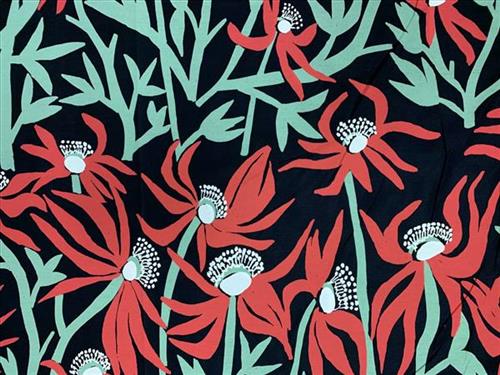
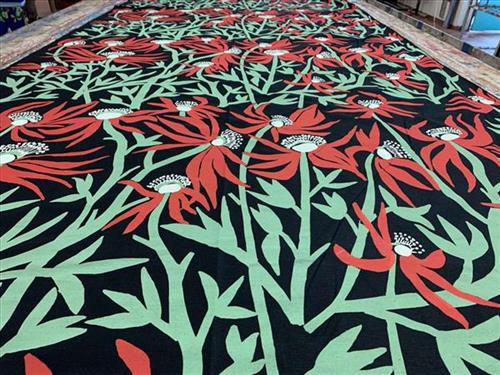
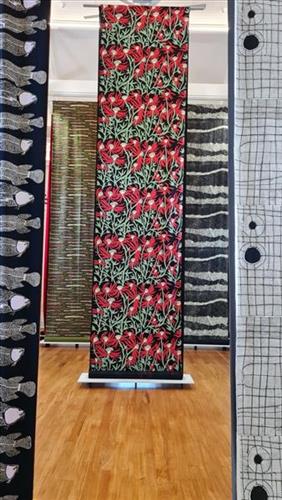
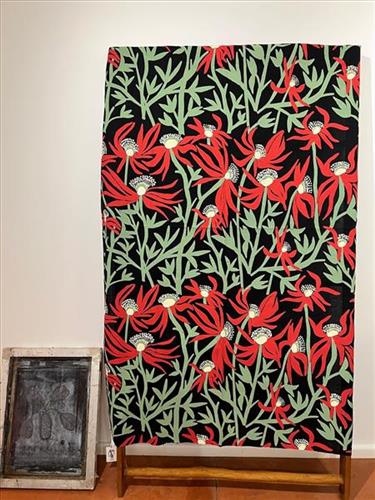
Manwak grows near Mumeka creek, on the artist’s homeland. This beautiful large flower blooms during the mandjelk (wet season). It has deep green petals with a central red kernel which swells to the size of a berry. It is known for its long, sweeping petals which seem to dance in the winds.
By dry season, the inside kernel resembles a strawberry in appearance and flavour, but is also very spicy so it burns our mouth. Kids and adults pick these berries enthusiastically when walking or going hunting on my country. The inside of the flowers are eaten fresh, a favourite manme (bush food) of our people.
“When I was painting this Manwak story, I was painting in Maningrida. In my head I was dreaming of being on my homeland, eating ripe Manwak berries”- Deborah Wurrkidj
Black linen with red, white and mint green ink.
Printed by Publisher textiles, Sydney
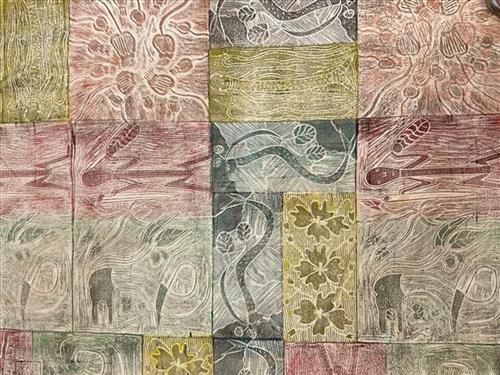
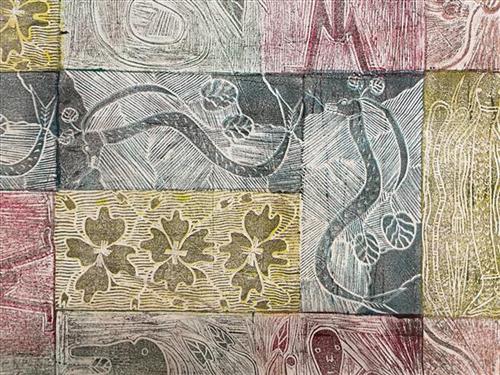
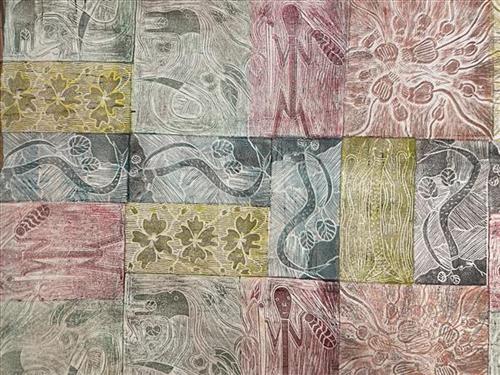
A collaboration between mother and daughter.
Bush Dye by Deborah Wurrkidj
Ngalyod (Rainbow serpent)
Rainbow spirit coming from billabong.
Rainbow serpent dreaming. Coming from billabong, that place we call billabong where that ngalyod (rainbow serpent) lives.
All that wayuk (waterlily), all them kundalk (grass) and pandanus, making skirt.
That’s the story now. – Jennifer Wurrkidj
.Rainbow serpent, daughter of the Mother One Rainbow Yingarna. The rainbow serpent is a central figure in traditional Bininj religion. She is the creator of places and is active during the wet season and is asssociated with rain and bodies of water. Rainbow serpents live in deep waterholes and rivers. Marrkidjbu are able to discern their presence and control them.’
Source – https://www.njamed.com/

A collaboration between mother and daughter.
Bush Dye by Deborah Wurrkidj
Ngalyod (Rainbow serpent)
Rainbow spirit coming from billabong.
Rainbow serpent dreaming. Coming from billabong, that place we call billabong where that ngalyod (rainbow serpent) lives.
All that wayuk (waterlily), all them kundalk (grass) and pandanus, making skirt.
That’s the story now. – Jennifer Wurrkidj
Rainbow serpent, daughter of the Mother One Rainbow Yingarna. The rainbow serpent is a central figure in traditional Bininj religion. She is the creator of places and is active during the wet season and is asssociated with rain and bodies of water. Rainbow serpents live in deep waterholes and rivers. Marrkidjbu are able to discern their presence and control them.’
Source – https://www.njamed.com/
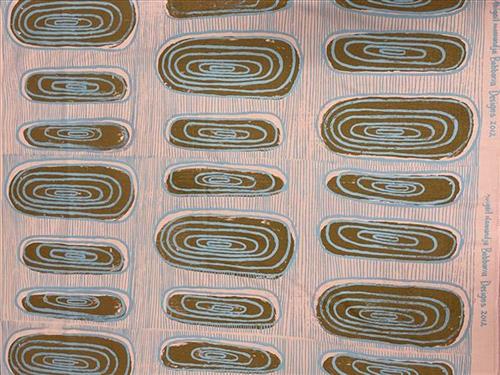
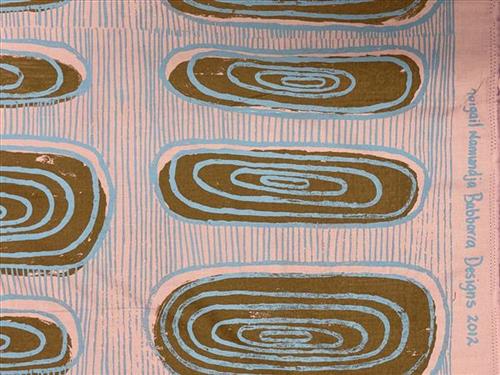
Abigail has depicted the waterholes or Kunwardde dja Kunronj (Sacred Rocks and Billabong) that lie on the plains near Mankorlod, the country for which she is a traditional owner.
The waterholes remain wet throughout the year, even during dry season. This site is connected to the artist’s djang (dreaming), the ngalng (freshwater yabbie) and stone country. Mankorlod homeland is a three-hour drive from Maningrida in the kunwardde (stone country).
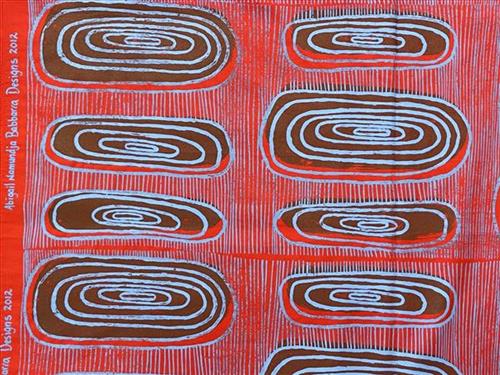
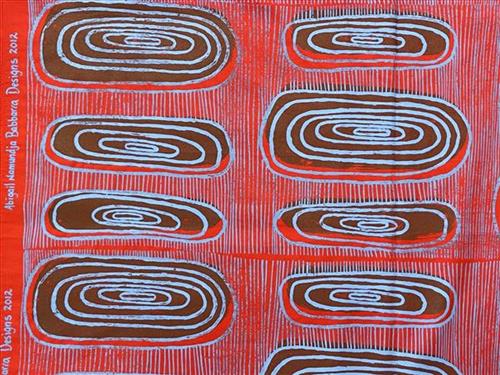
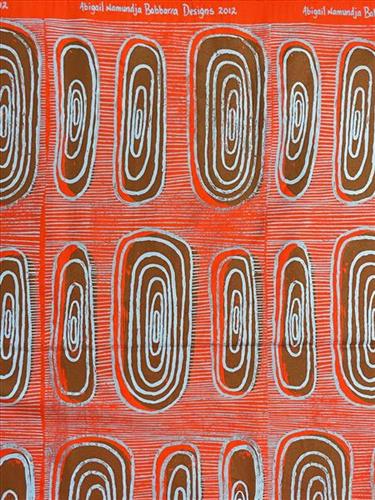
Abigail has depicted the waterholes or Kunwardde dja Kunronj (Sacred Rocks and Billabong) that lie on the plains near Mankorlod, the country for which she is a traditional owner.
The waterholes remain wet throughout the year, even during dry season. This site is connected to the artist’s djang (dreaming), the ngalng (freshwater yabbie) and stone country. Mankorlod homeland is a three-hour drive from Maningrida in the kunwardde (stone country).
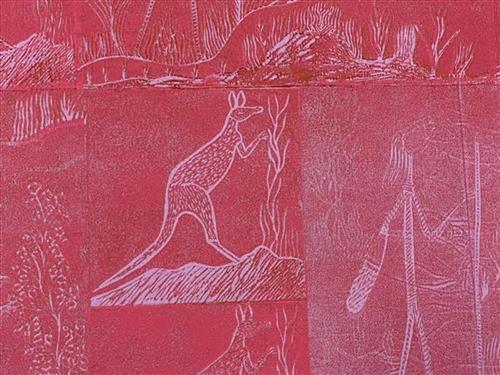
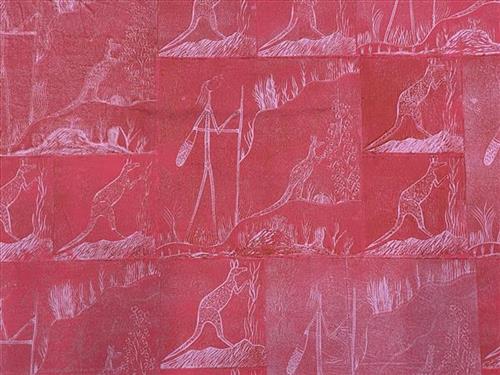
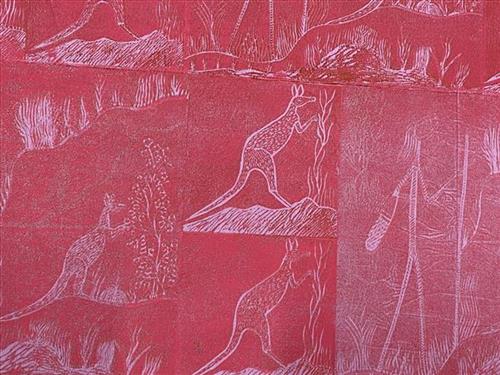
Jay Jurrupula depicts the story of ‘Kangaroo and Mimih Spirit’ with her hand carved, lino print design.