377810582171423


Ngaldjorlhbo (mother of Everything)

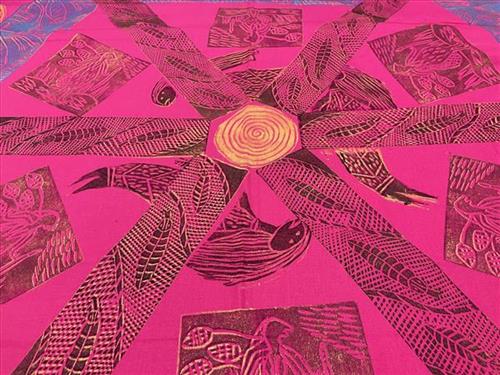
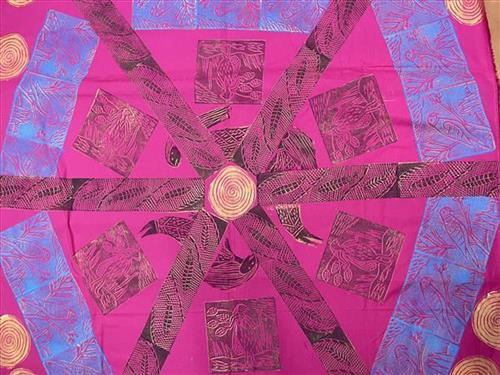
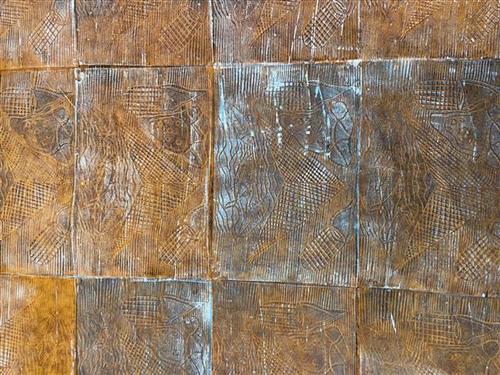
Ngaldjorlhbo is a powerful woman who created the spiritual and tangible world for the Aboriginal people in Western Arnhem Land. In creating the land and environment, she endowed Kuninjku people with the ability to create art, and with their culture, to share with future generations. Ngaldjorlhbo gives women the cultural knowledge and deep links to country, identity and ancestor spirits. 

‘Ngaldjorlhbo created daluk (women) When she started walking she started talking and telling stories. She create, came together as one. She was walking, thinking and writing with her hand creating all the animals and trees.  Creating mountains and rivers. Came together and made a beautiful flowing wind and river to the coming of the land. From fresh water to the salt water river, all the fish, all kinds of fish she created.

From little bird, big bird she created. She came all the way from east, west, north and south. 

She knows all the places from this land. She was speaking, she was telling, she was creating the country, this world. 

She was carrying kunmadj and digging stick and she created yawkyawk.

So that’s the story about Ngaldjorlhbo.’

Janet Marawarr 2022


377810582171333


Na-méwaya (small fish net)

*Ndjébbana 

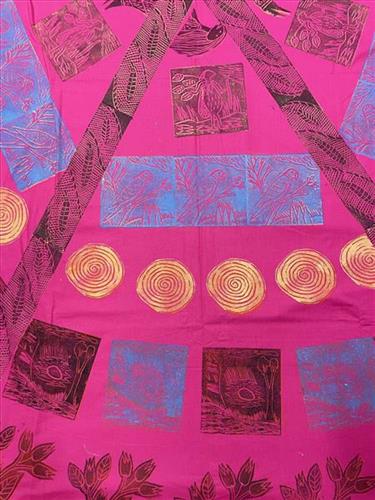
A small fishing net or butterfly net of a traditional triangular design. 


377810582171331


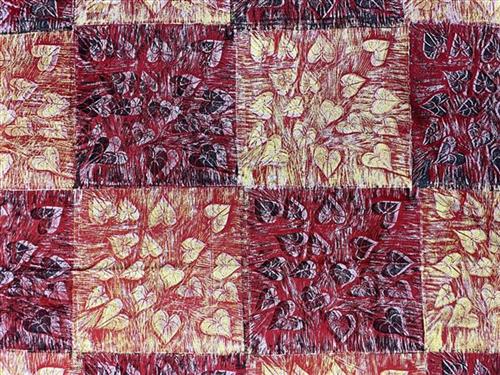
Yam Leaf – Belinda Kernan

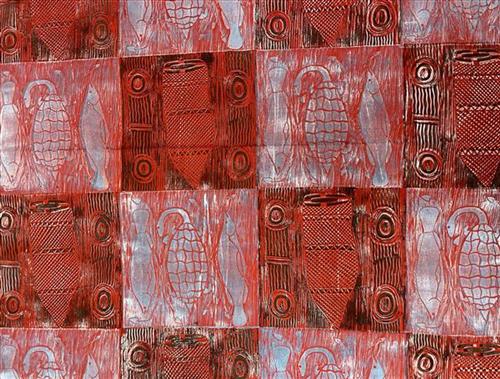
This fabric was created using the linocut printing technique. The lino tile was carved by the artist in Maningrida and printed by hand using a variety of colours and layers. The linocut technique ensures each textile piece is a one-off, limited edition piece.

377810582171325


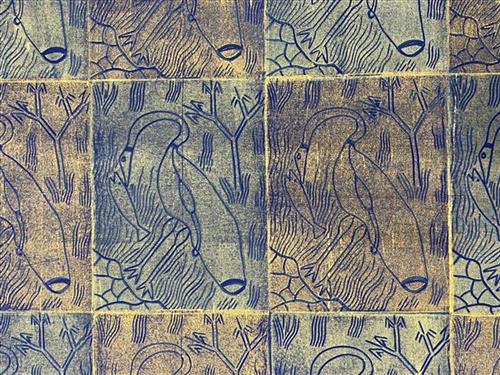
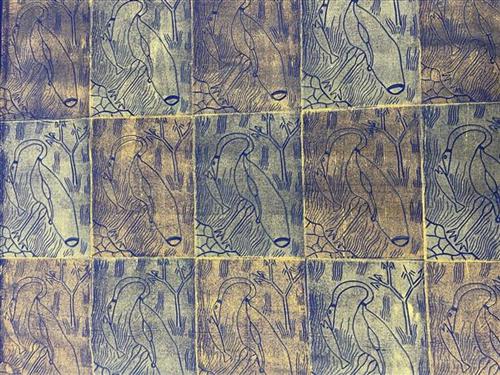
Mandjabu and Turtle

Kuninjku people traditionally make two sorts of conical fish traps. One is called mandjabu and is made from a strong, durable vine called milil, and a smaller one is called manylik mandjabu, and made from the grass manylik. The mandjabuconical fish trap is bigger and stronger and used in tidal reaches of creeks to catch large fish. The smaller, lighter manyliktrap is used in freshwater flowing creeks to catch smaller fish and freshwater prawns. In earlier times, only men were involved in the construction of the large fish traps, but children would often crawl inside and assist.

To make mandjabu, weavers firstly harvest milil (burney vine, Malaisia scandens) and put it in water overnight to make it soft. Then they start weaving it; they make rings for the inside to keep the fish trap’s shape. People also make string from the bark of burdaga (kurrajong) to attach the bardainy (hibiscus) rings and to tie the conical end of the fish trap. It’s hard work and it can take three or four weeks to make a fish trap. People also use fish-net fences called kunkarlewabe. They would put the kunkarlewabe  across rivers and creeks. In the middle they would place the mandjabu. They also used small things like sticks, rocks, mud and grass to block the fish from going through. This way we would catch fish such as saltwater barramundi rajarra, ngaldadmurrng (freshwater barramundi), small black freshwater catfish (buliya), bonefish (an-guwirrpiya), and sand bass (dalakan) in the mandjabu.

377810582171236


Bawaliba and Ngalyod (Rainbow Serpent)

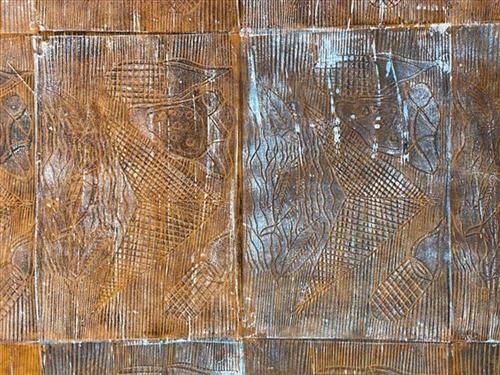
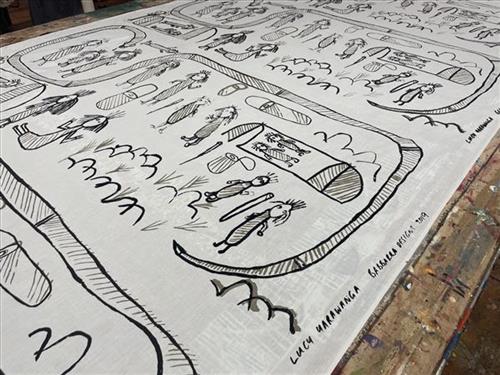
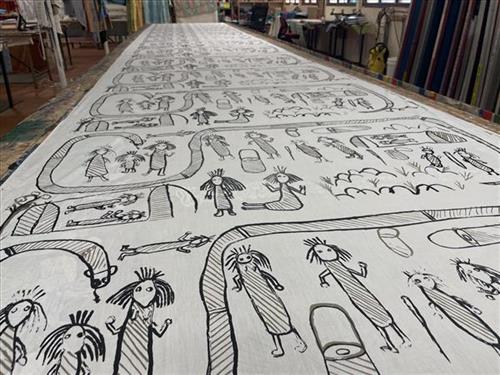
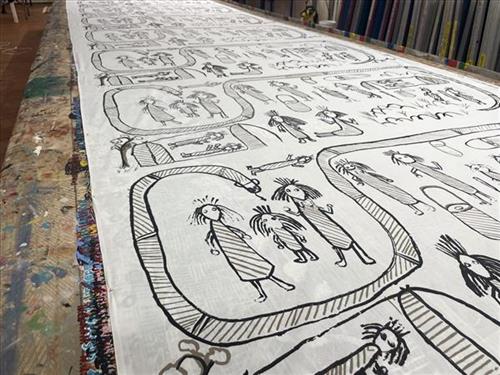
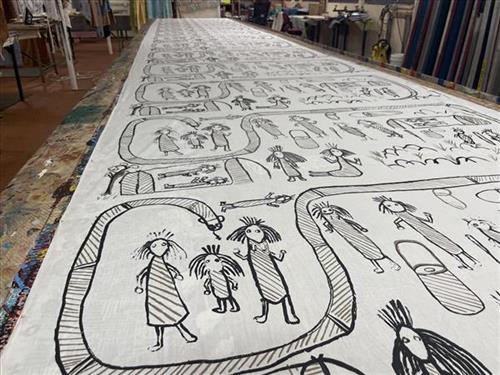
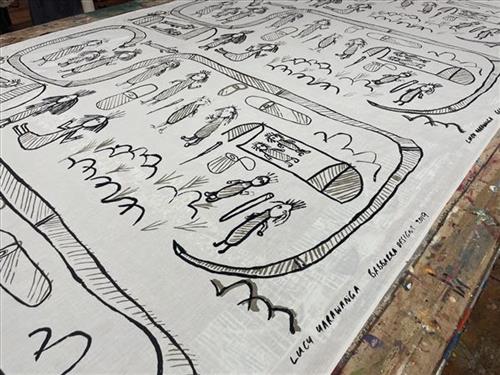
‘My Kikka (mother), when she was alive, she would tell me these stories. I was just a  little girl and she would tell us the stories in her language Gurrgoni.

In the camps there were boy and girl Bawaliba, and old Bawaliba too. They loved to  dance by the firelight, keeping rhythm with a stick. They had lots of hair, they were  really tall and skinny, with spots on their bodies. The Bawaliba lived a long time in  peace. They were the only spirits on their country and so they were never disturbed.

One day, a long time ago, the Bawaliba were out hunting and they saw a large  snake- they didn’t know then but she was the Rainbow Serpent. They were really  scared, they had never seen that. creature before. She was really beautiful- like a  normal king brown snake but with a rainbow from the sky on her back. The rainbow  serpent was really hungry, and she could smell the Bawaliba from a long way away.  She was out looking for food.  The Bawaliba tried to stop Ngalyod coming for them but she was just too quick. She  snuck up behind the Bawaliba and before they could get away she ate them up.  When she was really full and couldn’t eat anymore Bawaliba she changed the rest of  them into stone. Still til this day, the Bawaliba stay on that same country as stones.’ Lucy Yarawanga

377810582171235


Bawaliba and Ngalyod (Rainbow Serpent)

‘My Kikka (mother), when she was alive, she would tell me these stories. I was just a  little girl and she would tell us the stories in her language Gurrgoni.

In the camps there were boy and girl Bawaliba, and old Bawaliba too. They loved to  dance by the firelight, keeping rhythm with a stick. They had lots of hair, they were  really tall and skinny, with spots on their bodies. The Bawaliba lived a long time in  peace. They were the only spirits on their country and so they were never disturbed.

One day, a long time ago, the Bawaliba were out hunting and they saw a large  snake- they didn’t know then but she was the Rainbow Serpent. They were really  scared, they had never seen that. creature before. She was really beautiful- like a  normal king brown snake but with a rainbow from the sky on her back. The rainbow  serpent was really hungry, and she could smell the Bawaliba from a long way away.  She was out looking for food.  The Bawaliba tried to stop Ngalyod coming for them but she was just too quick. She  snuck up behind the Bawaliba and before they could get away she ate them up.  When she was really full and couldn’t eat anymore Bawaliba she changed the rest of  them into stone. Still til this day, the Bawaliba stay on that same country as stones.’ Lucy Yarawanga

377810582171246


Bawáliba (Stone Country Mimih)

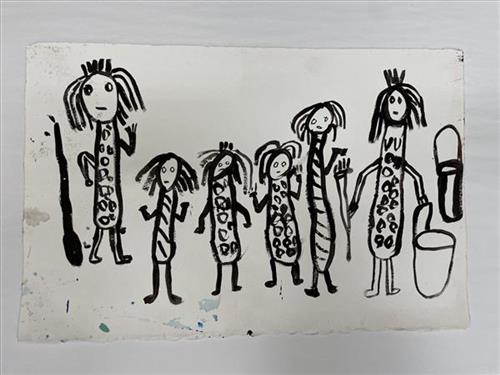
‘Bawáliba is the djang (Dreaming) of my mother and my uncles. They are good spirits, they protect us and they recognise families. They are really tall- just like human beings, like us. They dance late at night and have a lot of hair.

In olden times, long long long time ago Bawáliba were here, before people were on the land. Bawáliba used to go out hunting and care for country. They hunt carrying fish traps and digging sticks, near the homeland Djinkarr. They go out hunting on the floodplains with dilly bags and digging sticks. They collect a lot of bush foods, and sleep together with one bark shelter.
Sometimes now they still come alive when we sleep, they might come to our houses and peep through the window. At night, they cover themselves with white clay and red cloth tied around their waist. If we hear them, we jump out of bed and get up to look -but they have disappeared, they’re just too quick. Bawáliba might knock on the window to remind us they are there looking out for us.If you listen deeply you can hear them whisper, sometimes they talk about us and might say, ‘why are those people making camp here?’ then they realise ‘Oh they are family from here, it’s ok, they are just sleeping here for the night’.

During the day they always turn into stone and they sleep. We still know that green rock covered in moss near Djinkarr, that’s Bawáliba sleeping.
Some of my ancestors used to speak the same language as the Bawaliba, but all those old people are passed away now. It’s a little bit sad for us, because no one now can speak that Bawaliba language anymore.’ Lucy Yarawanga 2019

377810582171245


Bawáliba (Stone Country Mimih)

‘Bawáliba is the djang (Dreaming) of my mother and my uncles. They are good spirits, they protect us and they recognise families. They are really tall- just like human beings, like us. They dance late at night and have a lot of hair.

In olden times, long long long time ago Bawáliba were here, before people were on the land. Bawáliba used to go out hunting and care for country. They hunt carrying fish traps and digging sticks, near the homeland Djinkarr. They go out hunting on the floodplains with dilly bags and digging sticks. They collect a lot of bush foods, and sleep together with one bark shelter.
Sometimes now they still come alive when we sleep, they might come to our houses and peep through the window. At night, they cover themselves with white clay and red cloth tied around their waist. If we hear them, we jump out of bed and get up to look -but they have disappeared, they’re just too quick. Bawáliba might knock on the window to remind us they are there looking out for us.If you listen deeply you can hear them whisper, sometimes they talk about us and might say, ‘why are those people making camp here?’ then they realise ‘Oh they are family from here, it’s ok, they are just sleeping here for the night’.

During the day they always turn into stone and they sleep. We still know that green rock covered in moss near Djinkarr, that’s Bawáliba sleeping.
Some of my ancestors used to speak the same language as the Bawaliba, but all those old people are passed away now. It’s a little bit sad for us, because no one now can speak that Bawaliba language anymore.’ Lucy Yarawanga 2019

377810582171237


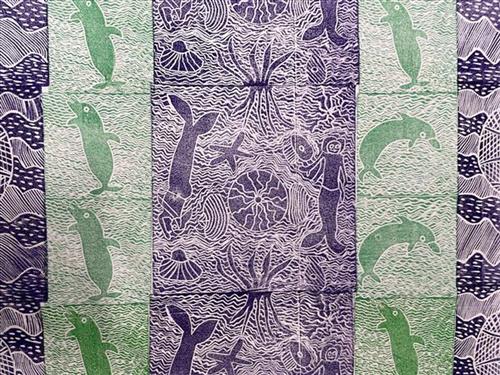
Jin-merduwa and Dolphin

A beautiful, one-off, linocut, hand printed design by Elizabeth Wullunmingu depicting the story of Jin-merduwa.  Sometimes she also includes her Garriwa turtle print. 

My niece, Stephanie James, is singing a song called Diyama, and it is about Jin-merduwa. She is in the Ripple Effect Band. They are now famous in Maningrida and everywhere. Her great grandmother told her about the Jin-merduwa living at Gupanga.  I heard the story before Stephanie.  Now I hear her singing the story about that place.  I am very proud of her. We have the same country.  Our stories match.  She is singing the story, and I am making artwork about the story. 

My lino print shows the Jin-merduwa who live at Gupanga. Gupanga is located at the mouth of the Blyth River.  It is a saltwater place.  There must be more than one Jin-merduwa living there?  They eat fish, shellfish and seaweed.  Sometimes they travel to the end of the river to find food in the ocean, but they don’t go far and always swim back to their home.

Gupanga is a beautiful place.  The sand is golden, there are mangroves, and the water is cloudy.  It is good hunting in that area.  When we lived there, we got lots of barramundi, mud crabs, shellfish, everything!

This is a bit of a dangerous story.  I can’t say too much about this sacred place. The Rangers help to look after this place, but they also know they must be careful.   

Kuninjku people call mermaids yawkyawk.  Yawkyawk are freshwater.  In my language, Burarra, we call mermaids Jin-merduwa.  Jin-merduwa are a bit different to yawkyawk but are also a type of mermaid.

I love to make lino print fabric showing Jin-merduwa. I like using bright colours, but sometimes I print using black and white.

Ripple Effect Band – Diyama Song

 https://rippleeffectband.bandcamp.com/track/diyama

This song was written by Stephanie James in her language of Burarra. It is about the mermaids that live in the river in her country of Kupanga.


Her father sings the Kun-borrk traditional music from the Diyama song cycle to link his daughter’s music to the past.

Credits

from Wárrwarra, released July 5, 2018
Written by Stephanie James, D. Maxwell (father for Stephanie)
Produced by Paul Mac, Jodie Kell, Clint Bracknell
Audio Engineer: Campbell Barnes
Guitar: Jodie Kell, Jolene Lawrence
Bass guitar: Tara Rostron
Drums: Jolene Lawrence
Keys: Patricia Gibson
Lead Vocals: Stephanie James
Back up Vocals: Jodie Kell
Diyama vocals: D. Maxwell

A beautiful, one-off, linocut, hand printed design by Elizabeth Wullunmingu depicting the story of Jin-merduwa.  Sometimes she also includes her turtle print.