22514004304


Status: Stock


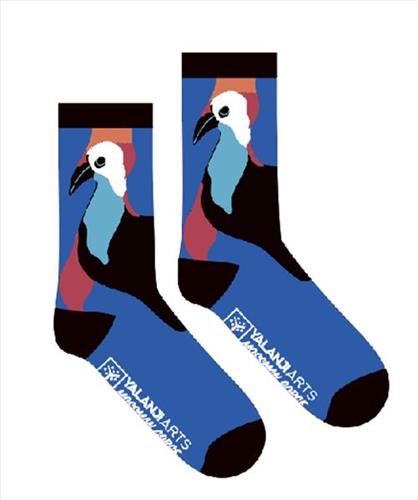
Socks – (Kurranji) Cassowary

The cassowary is one of the major totems (Ancestral Spirit Beings) for our Kuku Yalanji people. He is a big, dangerous bird that rules the rainforest. The cassowary can attack people but at the same time he helps growing many of the plants we used to collect for food, medicine and tool making. 

I inherited the Cassowary Totem and all the cultural stories relating to it from my mother’s side. When I was four years old, my mum taught me how to dance the story of the female cassowary, who is protecting the chicks and the eggs from the carpet snake and goanna.

As a young woman, I took on the role of my mum and began teaching our cultural dances to the younger generation at the Mossman Gorge community as well as children that live in Mossman town. I still do this today.


Fabrication: Bamboo, Nylon, Elastane
22514004302


Status: Stock


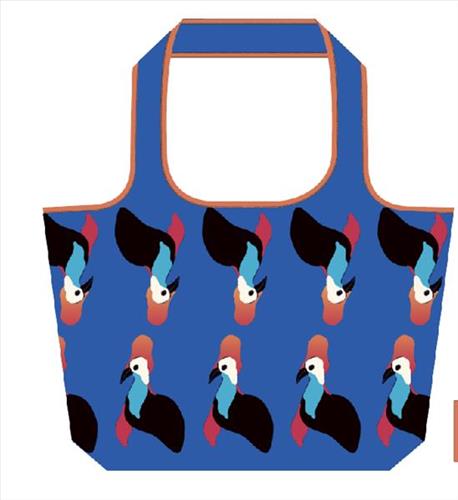
Wonderboat – (Kurranji) Cassowary

The cassowary is one of the major totems (Ancestral Spirit Beings) for our Kuku Yalanji people. He is a big, dangerous bird that rules the rainforest. The cassowary can attack people, but at the same time he helps growing many of the plants we used to collect for food, medicine and tool making.

I inherited the Cassowary Totem and all the cultural stories relating to it from my mother’s side. When I was four years old, my mum taught me how to dance the story of the female cassowary, who is protecting the chicks and the eggs from the carpet snake and goanna.

As a young woman, I took on the role of my mum and began teaching our cultural dances to the younger generation at the Mossman Gorge community as well as children that live in Mossman town. I still do this today.


Fabrication: Recycled PET Ripstop 85gsm

Care Instructions: Wash with cold water & line dry. Use eco-friendly soaps

22514004300


Status: Stock


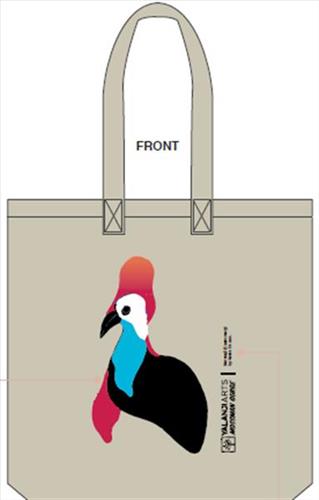
Tote Bag – (Kurranji) Cassowary

The cassowary is one of the major totems (Ancestral Spirit Beings) for our Kuku Yalanji people. He is a big, dangerous bird that rules the rainforest. The cassowary can attack people, but at the same time he helps growing many of the plants we used to collect for food, medicine and tool making.

I inherited the Cassowary Totem and all the cultural stories relating to it from my mother’s side. When I was four years old, my mum taught me how to dance the story of the female cassowary, who is protecting the chicks and the eggs from the carpet snake and goanna.

As a young woman, I took on the role of my mum and began teaching our cultural dances to the younger generation at the Mossman Gorge community as well as children that live in Mossman town. I still do this today.


Fabrication: 12oz Cotton Canvas

22514004298


Status: Stock


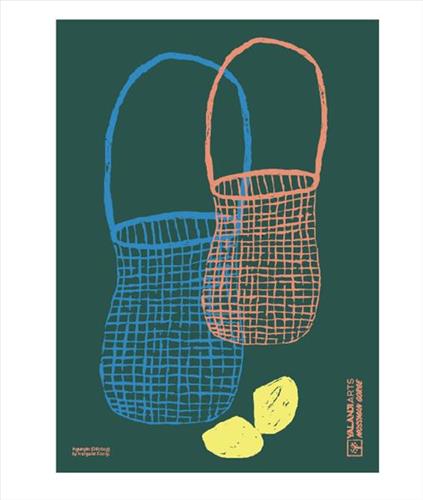
Tea Towel – (Ngunyin) Dillybag

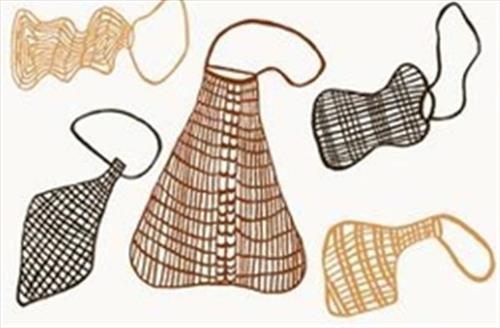
Our ancestors used Kakan (Black Palm) dilly bags to carry food when out hunting and gathering or soak bitter yams in creeks before cooking them. They were also used to hold personal items.

When I was a young girl my grandmother would teach me how to make Black Palm dillybags. We used to set up camp with other Kuku Yalanji women at a creek near Helenvale. It is very hard work. The men would help us cutting down the palm trees and separate the crownshaft from the trunk and the leaves. Then the women used to peel away the outer leaves until they felt strong threads they could pull out. They cleaned these threads from pulp with a mussel shell. When we moved away from Helenvale I forgot how to make them. Luckily years later I asked a relative of mine, Wilma Walker, who is great weaver, if she could refresh my memories. From then on I kept making dillybags as long as my health allowed it. I really enjoyed making them.


Fabrication: Linen (75%), Cotton (25%) 

22514004296


Status: Stock


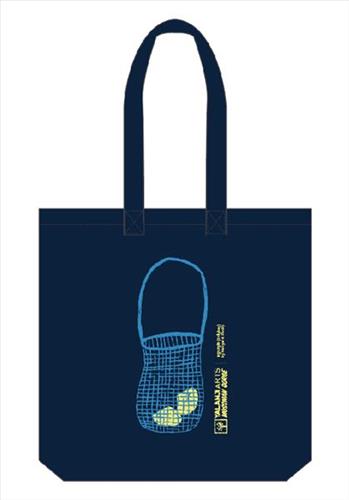
Tote Bag – (Ngunyin) Dillybag

Our ancestors used Kakan (Black Palm) dilly bags to carry food when out hunting and gathering or soak bitter yams in creeks before cooking them. They were also used to hold personal items.

When I was a young girl my grandmother would teach me how to make Black Palm dillybags. We used to set up camp with other Kuku Yalanji women at a creek near Helenvale. It is very hard work. The men would help us cutting down the palm trees and separate the crownshaft from the trunk and the leaves. Then the women used to peel away the outer leaves until they felt strong threads they could pull out. They cleaned these threads from pulp with a mussel shell. When we moved away from Helenvale I forgot how to make them. Luckily years later I asked a relative of mine, Wilma Walker, who is great weaver, if she could refresh my memories. From then on I kept making dillybags as long as my health allowed it. I really enjoyed making them.


Fabrication: 12oz Cotton Canvas

22514004292


Status: Stock


Tote Bag – Family

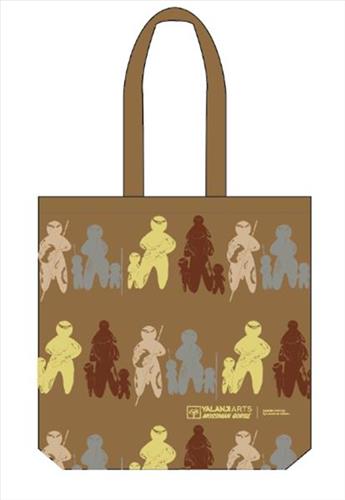
Family is very important to me. Whenever I draw my family design in clay, on fabric or on paper, it makes me think about the many good experiences I had when growing up. I enjoyed being out on country, going hunting and fishing, collecting plant foods and camping. I also have fond memories of listening to traditional music and learning our cultural dances. My family design keeps all these personal memories alive like a flame, and like my ancestors before me, I try to create similar happy times with my children and grandchildren.


Fabrication: 12oz Cotton Canvas

22514004288


Status: Stock


Tote Bag – (Kakan) Black Palm Basket Weaving

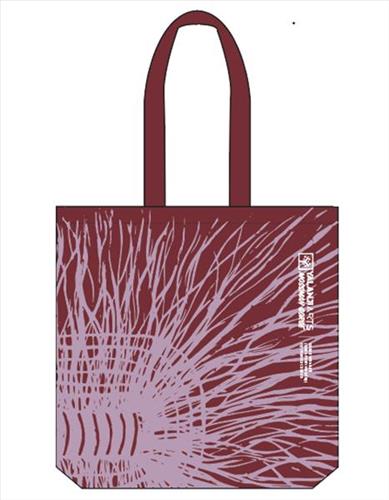
This design shows how the bottom part of a black palm basket is woven. My grandmothers and aunties used to make them. They cut off the young palm leaves in the centre, stripped and scrapped them. Then they would put the strips in freshwater to make them soft and keep them straight for weaving.


Fabrication: 12ox Cotton Canvas

22514004283


Status: Stock


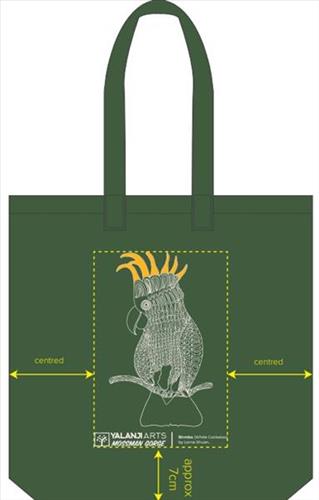
Tote Bag – (Birmba) White Cockatoo

Birmba (White Cockatoo) is my family totem. It has been passed down from generation to generation. 

White Cockatoos always remind me of my grandfather, my sisters and other family who have passed on. They are like protective spirits for me, my family, and my loved ones that have passed. They will give you signs: good signs and signs of danger. They let you know when to move on.


When I’m out with my grandchildren, I say “Look, do you see that white cockatoo there? That’s your grandmother there, overlooking us”. I let them know that it is family watching over them, keeping them connected to each other and our country. When I’m alone, I know they’re around. I speak to their spirit and they give me strength.


 Fabrication: 12oz Cotton Canvas

22514004271


Status: Stock


Sarong – Ngunyin (Dillybag)

Our ancestors used Kakan (Black Palm) dillybags to carry food when out hunting and gathering, or soak bitter yams in creeks before cooking them. They were also used to hold personal items.

When I was a young girl my grandmother would teach me how to make Black Palm dillybags. We used to set up camp with other Kuku Yalanji women at a creek near Helenvale. It is very hard work. The men would help us cutting down the palm trees and separate the crownshaft from the trunk and the leaves. Then the women used to peel away the outer leaves until they felt strong threads they could pull out. They cleaned these threads from pulp with a mussel shell. When we moved away from Helenvale I forgot how to make them. Luckily years later I asked a relative of mine, Wilma Walker, who is great weaver, if she could refresh my memories. From then on I kept making dillybags as long as my health allowed it. I really enjoyed making them.

Designed on Yalanji Country, custom printed and made in Sydney, Australia

97% Cotton 3% Linen

180 cm x 110 cm

Care instructions: Gentle wash only in cool water. Do not soak, bleach, rub, wring or tumble dry. Line dry in shade. Warm iron on reverse. Do not dry clean.

22514003672


Status: Stock


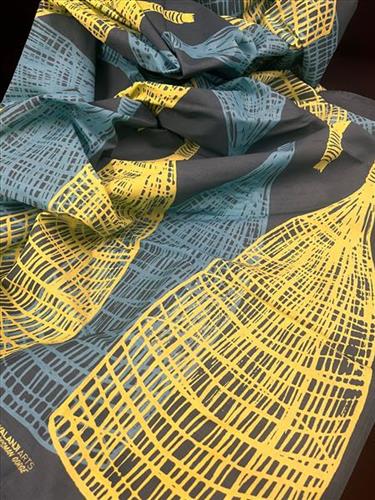
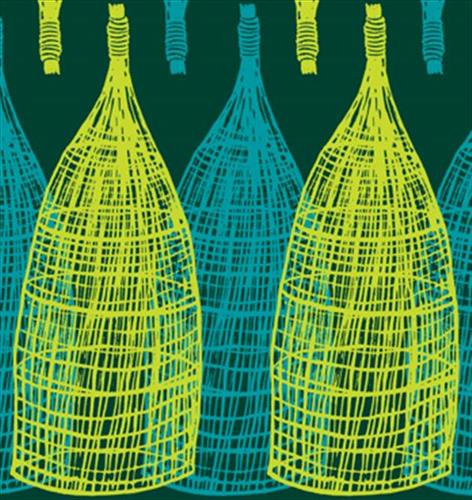
Sarong – Makarr (Fish Trap)

Fish traps are called Makarr in our language. They were made by men only. Our fathers and uncles used to make them with the lawyer vine. They stripped the stems and then soaked them in the river to keep them soft and bendy. They also had a special way of weaving the fish traps. They used them in the river to catch eels, jungle perch, fresh water catfish, and turtle. To attract fish our old people used to sprinkle rainforest berries as bait over the trap.

Designed on Yalanji Country, custom printed and made in Sydney, Australia

97% Cotton 3% Linen

180 cm x 110 cm

Care instructions: Gentle wash only in cool water. Do not soak, bleach, rub, wring or tumble dry. Line dry in shade. Warm iron on reverse. Do not dry clean.