

377810582286189
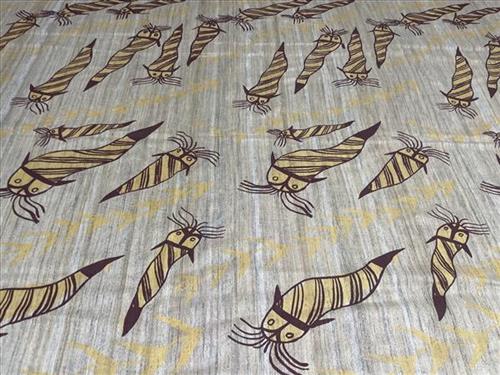
Marrngunj (Catfish)
Marrngunj is the Kuninjku name for catfish. Catfish get their name from sensory barbels around the mouth which resemble a cat’s whiskers. Marrngunj specifically refers to the ‘eel-tailed’ catfish, a reference to its long tapering tail.
This screen print artwork was painted in the style of her father, George Kurrawurr, George was a bark painter. George was a Djinang speaker from Murwangi Outstation. sp?

377810582286182
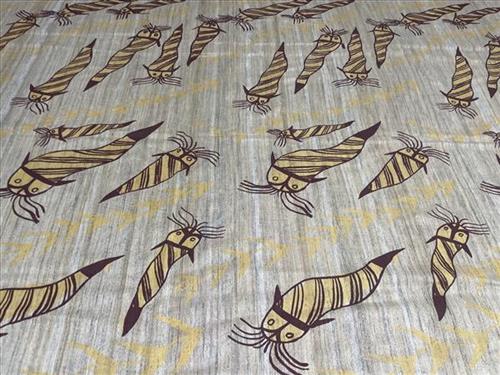
Marrngunj (Catfish)
Marrngunj is the Kuninjku name for catfish. Catfish get their name from sensory barbels around the mouth which resemble a cat’s whiskers. Marrngunj specifically refers to the ‘eel-tailed’ catfish, a reference to its long tapering tail.
This screen print artwork was painted in the style of her father, George Kurrawurr, George was a bark painter. George was a Djinang speaker from Murwangi Outstation. sp?

377810582286175
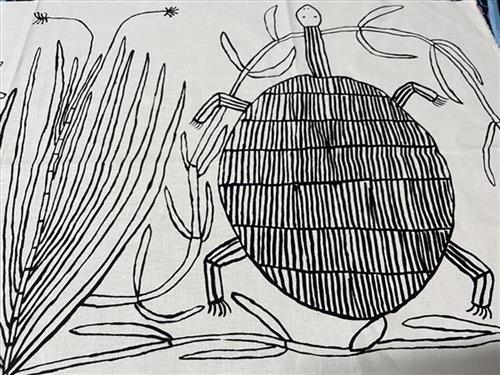
Djenj dja Komrdawh (Swordfish and Turtle)
“My country is called Mankorlod. It is near the rock country. My dreaming is komrdawh (long neck turtle), the one I painted in my design. I like to eat komrdaw, it tastes really nice. We catch them in dry and wet season near Mankorlod. This is my first ever design, and I only have one design. I painted it with brush at Babbarra Women’s Centre and I feel proud when people print my design.” Margot Gurawiliwili
The vines depicted in this artwork are used by women to weave and create fibre sculpture. They grow naturally on the floodplains in Arnhem Land. The long-necked turtle and freshwater sword fish depicted are popular bush food.

377810582286162
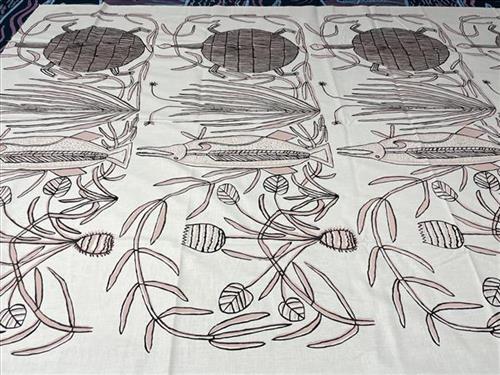
Djenj dja Komrdawh (Swordfish and Turtle)
“My country is called Mankorlod. It is near the rock country. My dreaming is komrdawh (long neck turtle), the one I painted in my design. I like to eat komrdaw, it tastes really nice. We catch them in dry and wet season near Mankorlod. This is my first ever design, and I only have one design. I painted it with brush at Babbarra Women’s Centre and I feel proud when people print my design.” Margot Gurawiliwili
The vines depicted in this artwork are used by women to weave and create fibre sculpture. They grow naturally on the floodplains in Arnhem Land. The long-necked turtle and freshwater sword fish depicted are popular bush food.

377810582286161
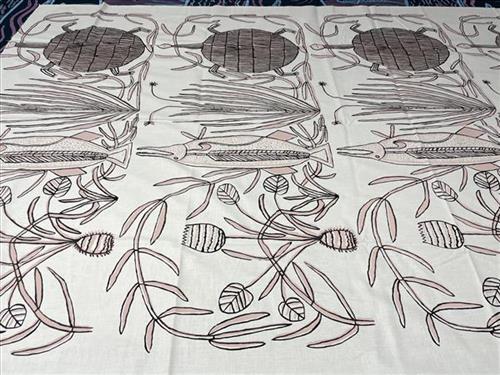
Djenj dja Wayuk
Djenj dja Wayuk (Fish and Waterlilies)
Designed in 2008 by respected Kunibidji artist, Doreen Williams.

377810582286160
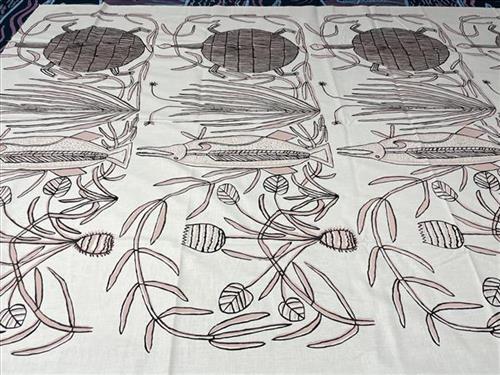
Djenj dja Komrdawh (Swordfish and Turtle)
“My country is called Mankorlod. It is near the rock country. My dreaming is komrdawh (long neck turtle), the one I painted in my design. I like to eat komrdaw, it tastes really nice. We catch them in dry and wet season near Mankorlod. This is my first ever design, and I only have one design. I painted it with brush at Babbarra Women’s Centre and I feel proud when people print my design.” Margot Gurawiliwili
The vines depicted in this artwork are used by women to weave and create fibre sculpture. They grow naturally on the floodplains in Arnhem Land. The long-necked turtle and freshwater sword fish depicted are popular bush food.

377810582285864
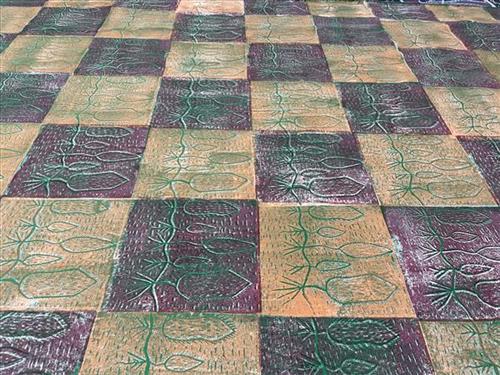
Warakkála (Long Yam)
Warakkála is the name of a place on Entrance Island meaning ‘ there are many long yams’.
Warakkála is a kind of long yam, bush tucker for the Kunibidji people. These yams are roasted in ashes or hot water. They have méameya (hair) which is depicted in Marilyn’s Lino tile.
Marilyn James’ homeland is Entrance Island.
Resource: Ndjébbana Dictionary 2007

377810582285644
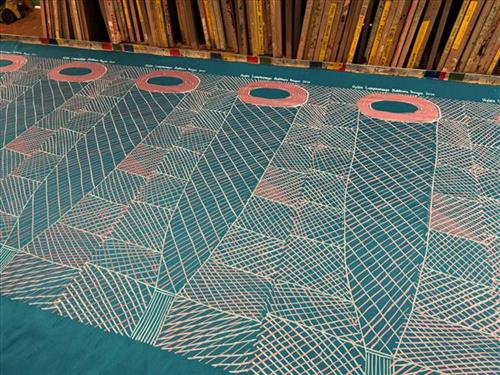
Mandjabu (Fish Trap)
In old times people would make these mandjabu (fish traps) to go fishing. They are made with vine we find in the jungle. That old man, Anchor [Gulunba], he showed me how to make these fish traps. I would sit there and watch him making them. We catch barramundi, catfish, all kinds of fish.
Helen Lanyinwanga
Kuninjku people traditionally make two sorts of conical fish traps. One is called mandjabu and is made from a strong, durable vine called milil, and a smaller one is called manylik mandjabu, and made from the grass manylik. The mandjabuconical fish trap is bigger and stronger and used in tidal reaches of creeks to catch large fish. The smaller, lighter manyliktrap is used in freshwater flowing creeks to catch smaller fish and freshwater prawns. In earlier times, only men were involved in the construction of the large fish traps, but children would often crawl inside and assist.
To make mandjabu, weavers firstly harvest milil (burney vine, Malaisia scandens) and put it in water overnight to make it soft. Then they start weaving it; they make rings for the inside to keep the fish trap’s shape. People also make string from the bark of burdaga (kurrajong) to attach the bardainy (hibiscus) rings and to tie the conical end of the fish trap. It’s hard work and it can take three or four weeks to make a fish trap. People also use fish-net fences called kunkarlewabe. They would put the kunkarlewabe across rivers and creeks. In the middle they would place the mandjabu. They also used small things like sticks, rocks, mud and grass to block the fish from going through. This way we would catch fish such as saltwater barramundi rajarra, ngaldadmurrng (freshwater barramundi), small black freshwater catfish (buliya), bonefish (an-guwirrpiya), and sand bass (dalakan) in the mandjabu.

377810582285643
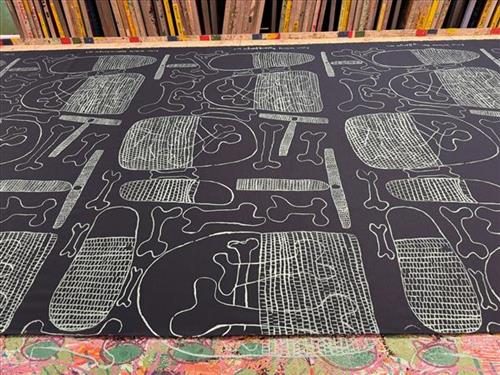
Mardarda and Njarlarla (Bones and Fire Sticks)
Designed 2019
In Esther’s first screen design, she depicts the story of Mardarda (bones) and Njarlarla (fire sticks) carried in a dilly bag, reminiscent of traditional ways of the Ndjebenna people.
‘Back in the old days, our people would use a ‘bush lighter’ for lighting fires, which was two pieces of special wood which would make fire easily. The old people carried a dilly bag containing the fire stick all times, when they moved camps.
Old people would always carry dilly bags, sometimes with water, honey, food or bones of our deceased people.
When someone passed away their body would be put on a high platform built from eucalyptus and paperbark. They would use a firestick to light a fire under the platform, and people would sing and dance around that platform to send the deceased’s spirit back to his or her country.
The body would then be left here for many months. When ready, the clan would return to collect the bones to take them back to the deceased’s homeland for burial.
To travel to the homeland, people would paint the bones with brown ochre and place them in a dillybag. When they reached the deceased’s homeland, people would sing together, place the bones in the lorrkkon and to leave them rest forever.”