377810582266855


Hand Printed Tea Towel – Single

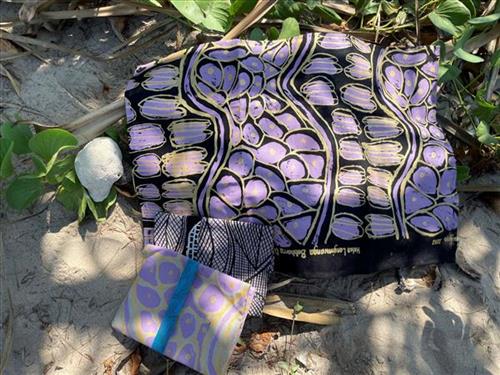
A Bábbarra Designs Xmas special! 100% Linen hand printed tea towels. 

The team at Bábbarra Women’s Centre have printed a range of archived screen-print designs onto 100% linen tea towels in time for Xmas! 

Being handmade there may be some print variations, making each item unique.

Bábbarra Women’s Centre supports the economic independence of Indigenous women in the Arnhem Land community of Maningrida, Northern Territory, Australia. Designs created by the women at Bábbarra reflect strong cultural knowledge, which is passed down to younger generations through their textile design practice.

377810582266361


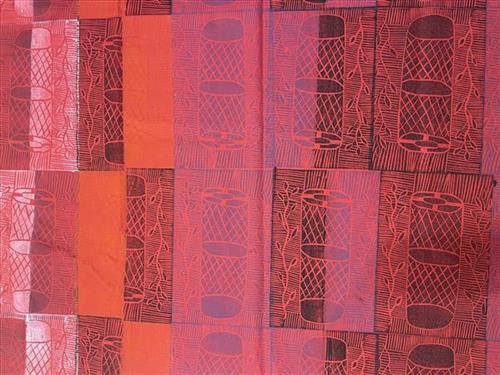
Mandjabu (Fish Trap)

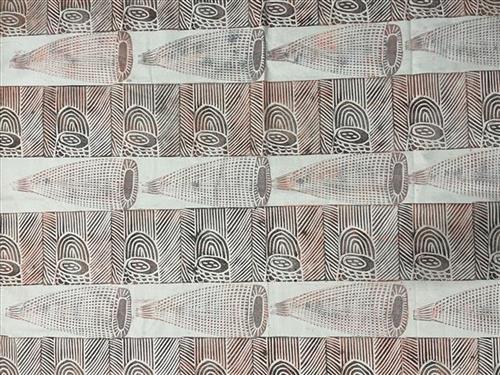
Kuninjku people traditionally make two sorts of conical fish traps. One is called mandjabu and is made from a strong, durable vine called milil, and a smaller one is called manylik mandjabu, and made from the grass manylik. The mandjabuconical fish trap is bigger and stronger and used in tidal reaches of creeks to catch large fish. The smaller, lighter manyliktrap is used in freshwater flowing creeks to catch smaller fish and freshwater prawns. In earlier times, only men were involved in the construction of the large fish traps, but children would often crawl inside and assist.

To make mandjabu, weavers firstly harvest milil (burney vine, Malaisia scandens) and put it in water overnight to make it soft. Then they start weaving it; they make rings for the inside to keep the fish trap’s shape. People also make string from the bark of burdaga (kurrajong) to attach the bardainy (hibiscus) rings and to tie the conical end of the fish trap. It’s hard work and it can take three or four weeks to make a fish trap. People also use fish-net fences called kunkarlewabe. They would put the kunkarlewabe  across rivers and creeks. In the middle they would place the mandjabu. They also used small things like sticks, rocks, mud and grass to block the fish from going through. This way we would catch fish such as saltwater barramundi rajarra, ngaldadmurrng (freshwater barramundi), small black freshwater catfish (buliya), bonefish (an-guwirrpiya), and sand bass (dalakan) in the mandjabu.

377810582266368


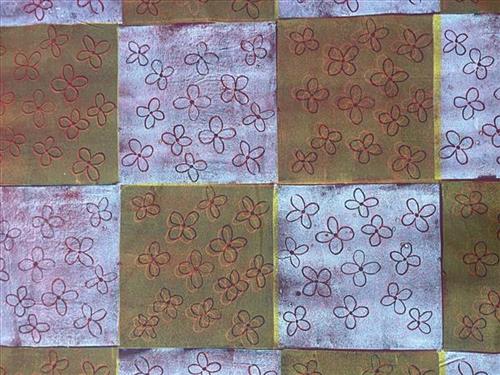
Kakárra (bush flowers)


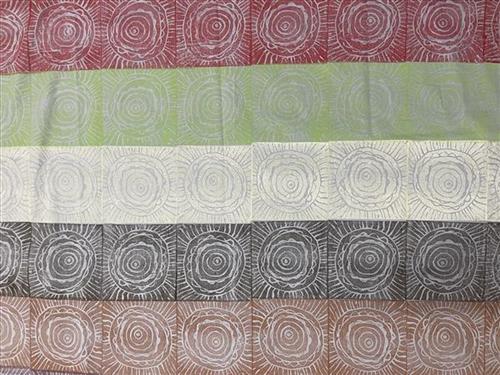
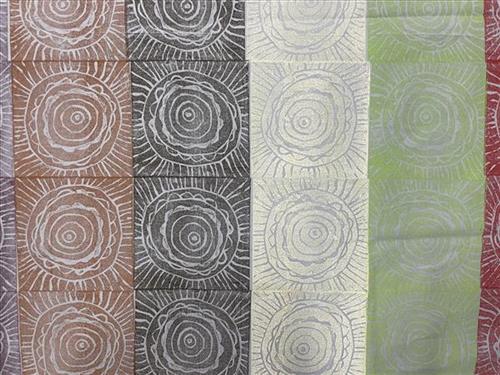
This design features lost of flowers and bush food from around the coastal areas of Entrance Island and Maningrida.

‘There are the leaves of the black plum – we call that karranganjónganja vita glabrata. There are also jungle flowers that we find when we are looking for yam, I don’t know what they call them but that’s the curly one. The small one in the middle is the flowers of the warakkála (flowers of the long yam). These flowers grow all over this region, you can find them when you walk around the bush. Marilyn James

377810582266367


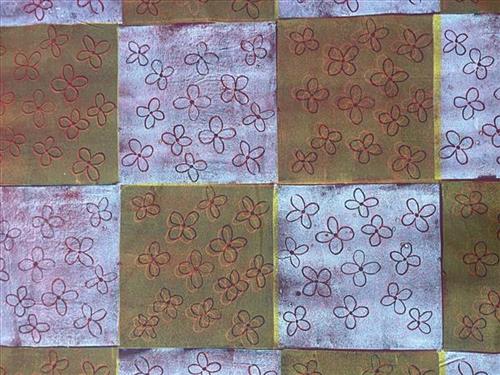
Kakárra (bush flowers)


This design features lost of flowers and bush food from around the coastal areas of Entrance Island and Maningrida.

‘There are the leaves of the black plum – we call that karranganjónganja vita glabrata. There are also jungle flowers that we find when we are looking for yam, I don’t know what they call them but that’s the curly one. The small one in the middle is the flowers of the warakkála (flowers of the long yam). These flowers grow all over this region, you can find them when you walk around the bush. Marilyn James

377810582266366


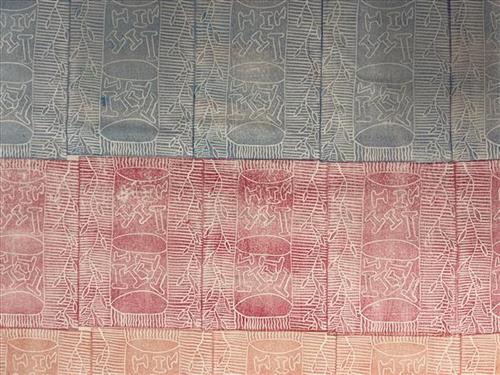
Lorrkon

‘This is my new lino design, a long time ago when people passed away they used to put bones inside the lorrkon (hollow funeral log). This is an old history story. There is string and feathers on the side, that’s kunyarl. They put parrot feathers on the djerrh (dilly bag).

When I design lino, I think back to stories from when I was a little girl when I was staying at Barrihdjowkkeng next to Mumeka, with my mother and my father when he was still alive. I remember my dad used to make mimih, carrying all the wood. I used to help him when I was a little girl.’

Raylene Bonson

377810582266362


Lorrkon

‘This is my new lino design, a long time ago when people passed away they used to put bones inside the lorrkon (hollow funeral log). This is an old history story. There is string and feathers on the side, that’s kunyarl. They put parrot feathers on the djerrh (dilly bag).

When I design lino, I think back to stories from when I was a little girl when I was staying at Barrihdjowkkeng next to Mumeka, with my mother and my father when he was still alive. I remember my dad used to make mimih, carrying all the wood. I used to help him when I was a little girl.’

Raylene Bonson

377810582265483


man-kurdudjumuk – yellow colour x ashes

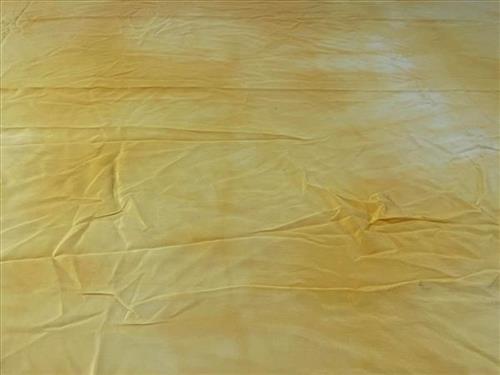
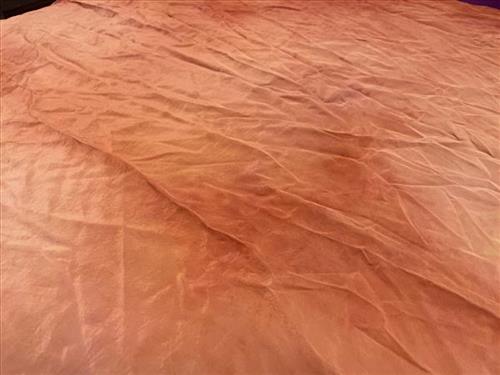
The striking yellow – gold hue comes from the root of the man-kurdudjumuk plant (coelospermum reticulatum) which has been harvested from the sandy country near the flood plains. This laborious and tiring process requires digging up the entire shrub. The root is shaven into a pot of water and the colour is released into water through the boiling process. 

377810582265480


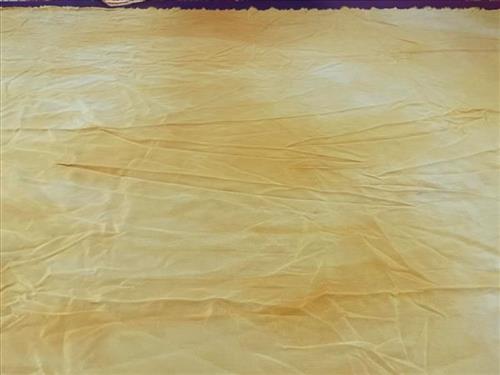
man-kurdudjumuk – yellow colour

The striking yellow – gold hue comes from the root of the man-kurdudjumuk plant (coelospermum reticulatum) which has been harvested from the sandy country near the flood plains. This laborious and tiring process requires digging up the entire shrub. The root is shaven into a pot of water and the colour is released into water through the boiling process. 

377810582265471


man-kurdudjumuk – yellow colour and ashes

The striking yellow – gold hue comes from the root of the man-kurdudjumuk plant (coelospermum reticulatum) which has been harvested from the sandy country near the flood plains. This laborious and tiring process requires digging up the entire shrub. The root is shaven into a pot of water and the colour is released into water through the boiling process.