377810582264728


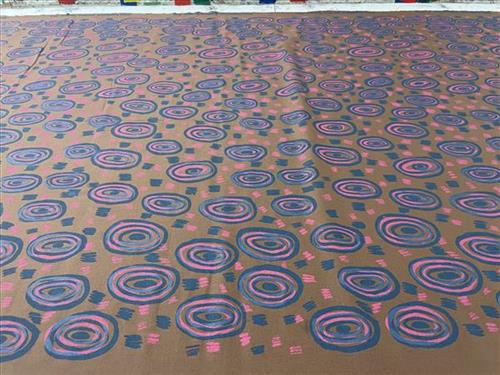
Man-ngarre (Native Grasses)

Designed 2007

Elizabeth had a distinctive artistic style, depicting the natural world with loose, organic strokes. Her style was evident in her key designs Kun-ngol (clouds), showing the cloud formations over her floodplain country after the wet season, and the fine detail of Kun-kirh (mud ripples) depicting cracked mud in the sun during dry season. Elizabeth was close family with Janet Marawarr, Lucy Yarawanga and Raylene Bonson, leading artists at Bábbarra.

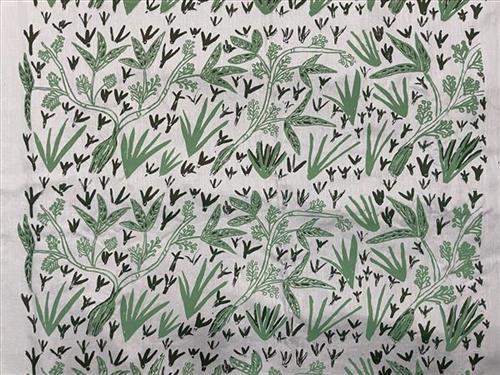
This design celebrates the grasses of Arnhem land, the spear grass, Sorghum intransthat grows in the wet season and dies off or is burnt during the dry season.
377810582264622


Dabuno (Brolga Eggs)

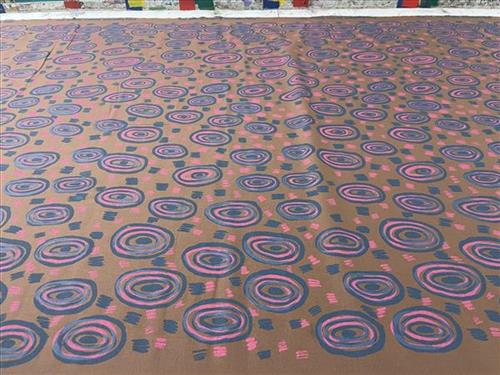
Emily’s first design depicting Dabuno (Brolga Eggs). Emily is the younger sister of renowned Maningrida artists, Jennifer Wurrkidj and Deborah Wurrkidj.

This fun design is an all over repeat or spot design that can be used for fashion or soft furnishing projects.

377810582264616


Djomi Swamp (unframed)

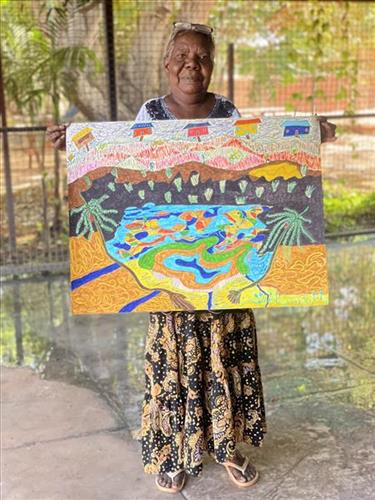
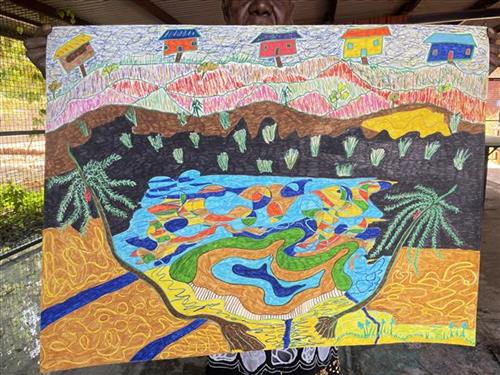
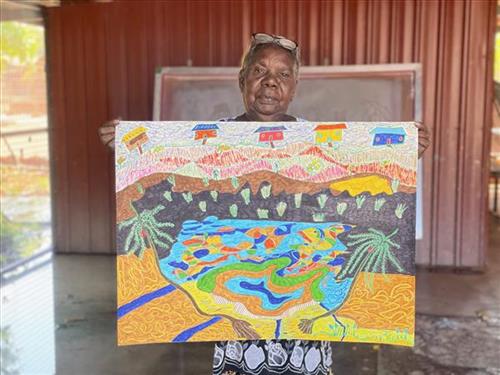
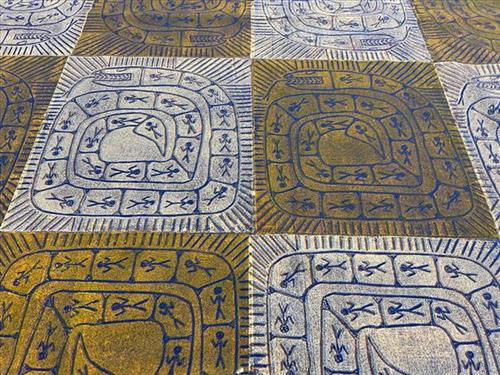
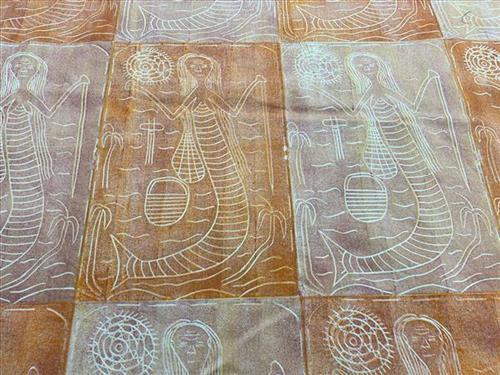
This design depicts the story of the artist’s ancestral dreaming, the Djomi fresh water spirit mermaid. 

‘i’ve made a djomi swamp. It’s down the beach on the sea side. There are djomi creeks going down into the fish bowl. There is shallow sand  – white and yellow.  there are two ngarndúma  (palm trees) and lots of bush flowers and grass. We have 5 houses next to djomi on  the cliff  above the beach. The houses are the new houses – the blue house has Esther, the yellow one has Millie, the red one has Steven and my cousin Selina is in the brown one.  We are the Kunibidji people staying there down the creek next to Djomi.’

The Djomi figure is a mermaid like spirit with fish tail that lives in the fresh water stream that flows out to the sea cliff near Maningrida. Djomi is a known to be a very powerful fertility symbol.

This Djomi is my dreaming, I got permission from my djunguys to paint this Djomi design. For me I always ask my djunguy permission to paint, because that is our cultural way.

377810582264665


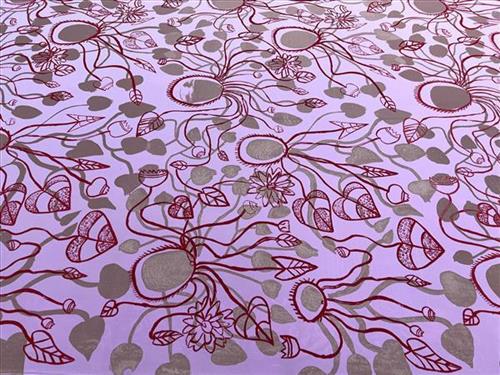
Djenj dja Wayuk

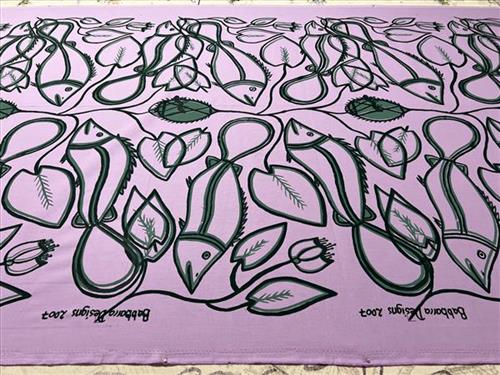
Djenj dja Wayuk (Fish and Waterlilies)

Designed in 2008 by respected Kunibidji artist, Doreen Williams. 

377810582264621


Dabuno (Brolga Eggs)

Emily’s first design depicting Dabuno (Brolga Eggs). Emily is the younger sister of renowned Maningrida artists, Jennifer Wurrkidj and Deborah Wurrkidj.

This fun design is an all over repeat or spot design that can be used for fashion or soft furnishing projects.

377810582264614


Wayuk –

‘I always follow the footpath of my grandmother. I have too many stories of my grandmother. We went to the bush and ate bushtucker like yam, yabbie, barra, catfish and magpie goose. We didn’t come into town often, we were staying at Barrihdjowkkeng outstation. I learned how the old people used to live. I always think about my family out there and I keep going. My grandmother asked me to work with her for many years. I watched her making lino and screen printing. That’s why I stay in this job and I’m for the women’s centre’.  Roseanna Bonson 2021

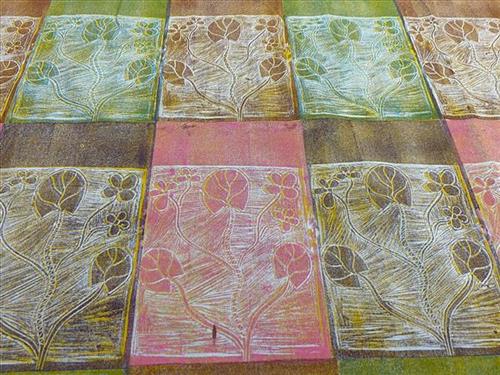
Roseanna’s first design is a 2 colour waterlily design. Wayuk (waterlily) *kuninjki grow in the swamps around Barrihdjowkkeng.

‘The flowers of the waterlily are white and yellow and I like that kind of colour.’ Roseanna Bonson 2021

377810582263956


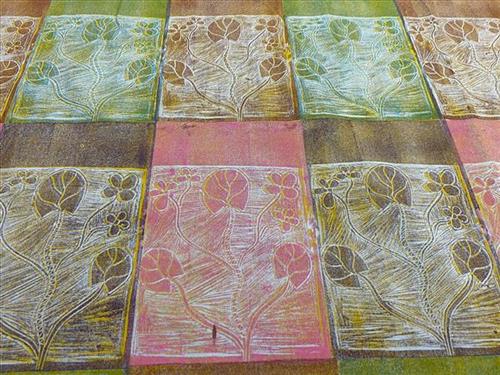
Wayuk

Wayuk (Waterlily) Nymphaea violacea. 

The stem of wayuk is a popular bushfood and the beautiful flower is enjoyed across Arnhem Land. 

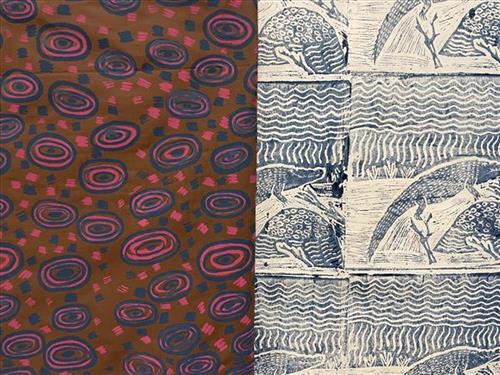
This fabric was created using the linocut printing technique. The lino tile has been carved by the artist in Maningrida, and has been printed by hand using a variety of colours and layers. The linocut technique ensures each textile piece is a one-off, limited edition piece. Bábbarra Women’s Centre supports the economic independence of Indigenous women in the Arnhem Land community of Maningrida, Northern Territory, Australia. Designs created by the women at Bábbarra reflect strong cultural knowledge, which is passed down to younger generations through their textile design practice.

377810582263955


Wayuk

Wayuk (Waterlily) Nymphaea violacea. 

The stem of wayuk is a popular bushfood and the beautiful flower is enjoyed across Arnhem Land. 

This fabric was created using the linocut printing technique. The lino tile has been carved by the artist in Maningrida, and has been printed by hand using a variety of colours and layers. The linocut technique ensures each textile piece is a one-off, limited edition piece. Bábbarra Women’s Centre supports the economic independence of Indigenous women in the Arnhem Land community of Maningrida, Northern Territory, Australia. Designs created by the women at Bábbarra reflect strong cultural knowledge, which is passed down to younger generations through their textile design practice.