377810582258712
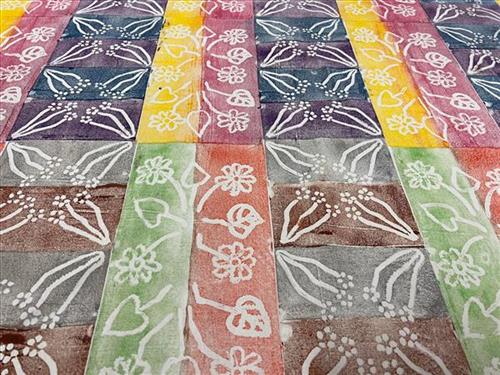
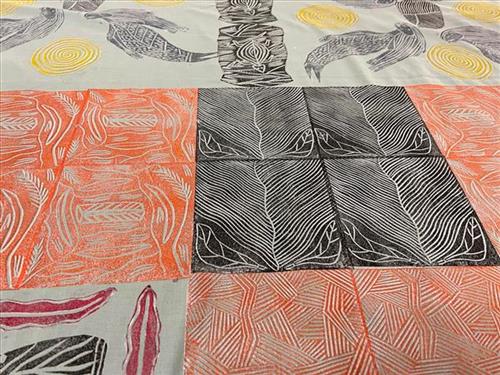
Kakárra (bush flowers)
This design features lost of flowers and bush food from around the coastal areas of Entrance Island and Maningrida.
‘There are the leaves of the black plum – we call that karranganjónganja vita glabrata. There are also jungle flowers that we find when we are looking for yam, I don’t know what they call them but that’s the curly one. The small one in the middle is the flowers of the warakkála (flowers of the long yam). These flowers grow all over this region, you can find them when you walk around the bush. Marilyn James
377810582258711
Yawkyawk – Major Work
‘Yawkyawk swim underneath the rock. They always stay there. When the sun comes out they come out from underneath the river, make themselves warm. They sit and they look around. When they sit, they cry to themselves. Ngaldjorlhbo (mother of everything) she created them – yawkyawk and the other one [Ngalng].
The Mimih one is a long way from the stone country. He is from my uncles country Bardijokhang. My uncle is the famous artist Crusoe Kurddal and he carves and paints Mimih.
Sometimes yawkyawk sit inside the rock. Sometimes they go out to find the food manme and the mankung (sugarbag). Also they can sing inside the rock cave. Sometimes yawkyawk will see the big rain. When the big rain comes they start looking and when the rain comes they go inside and hide themselves.
Some yawkyawk stay on the dry land in a special place inland from Bardijolhwang.
Some of the stones get stuck on the breasts of the yawkyawk.
There are two yawkyawk in this artwork. One, the wet season yawkyawk has a round face and long hair. The dry season yawkyawk has short hair. There are lots of different yawkyawk in the water.
In my fabric they are all coming together with the grass trees and leaves and the blowing wind. Some of the leaves will fall onto the water. All the round shapes are kunred (rocky country) with dry grass.
This country is called Gamadery (sp), which is located near Mankorlod and Korlobididah, Arnhem Land.’
Janet Marawarr 2022
377810582258709
Team Seagull
377810582258421
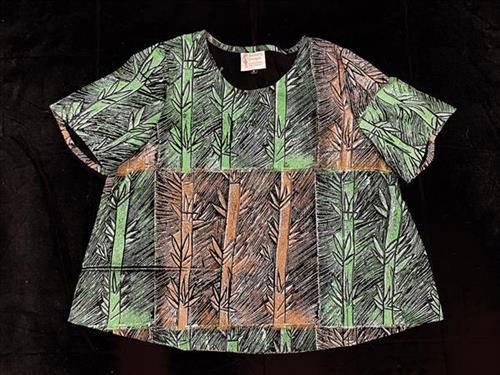
Bamboo Shoot Top by The Social Studio
‘I see bamboo everywhere where i go in Maningrida. I see it at every house – it’s a common house plant. When i see bamboo i get excited because i feel at home. Bamboo makes me feel good.’ Belinda Kernan
This fabric was created using the linocut printing technique. The lino tile has been carved by the artist in Maningrida, and has been printed by hand using a variety of colours and layers. The linocut technique ensures each textile piece is a one-off, limited edition piece. Bábbarra Women’s Centre supports the economic independence of Indigenous women in the Arnhem Land community of Maningrida, Northern Territory, Australia. Designs created by the women at Bábbarra reflect strong cultural knowledge, which is passed down to younger generations through their textile design practice.
377810582258405
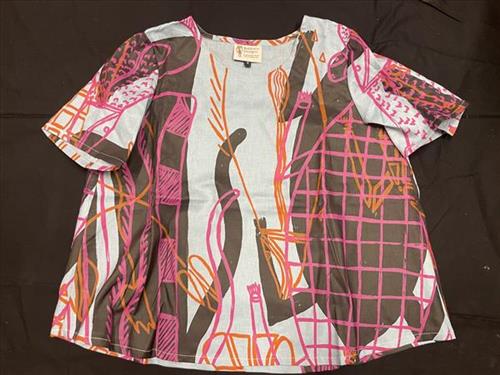
Kunronj (Freshwater Story) – Top by The Social Studio
Jennifer is a Kuninjku artist from the Kurulk clan whose country lies around the outstation of Mumeka in central Arnhem Land. Jennifer works at Bábbarra Women’s Centre alongside other members of her family who are also accomplished artists too: her mother, Helen Lanyinwanga (now deceased), sister Deborah Wurrkidj and daughter Abigail Namundja. She is a niece of Australia’s most highly acclaimed bark painter, John Mawurndjul, and she is renowned, in her own right, for her bark paintings, hollow logs and carved sculptures.
This design depicts important manme (food) sources from freshwater environments on Jennifer’s country and the implements used to gather these items. The kunkaninjor digging stick featured in the design is used to dig for wayuk (waterlily) roots in billabongs, which are eaten fresh from the water or cooked on an open fire. The kunkaninj is also used to find and dig freshwater komrdawh (northern snake-necked turtle) that hibernate on the floodplains during the dry season.
Various fish species including the birlmu (barramundi), as shown here, are hunted with a spear or trapped inside a woven fish trap. This manme is carried within kunmadj (woven bags), which are made with fibres from the pandanus tree or sedge grasses, then enjoyed together by the family back at camp.
377810582258179
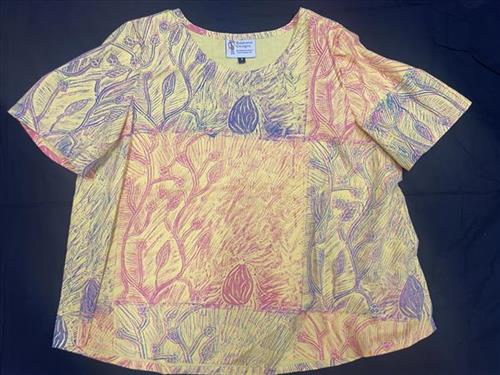
Yam Vine Top by The Social Studio
This fabric was created using the linocut printing technique. The lino tile was carved by the artist in Maningrida and printed by hand using a variety of colours and layers. The linocut technique ensures each textile piece is a one-off, limited edition piece.
377810582258178
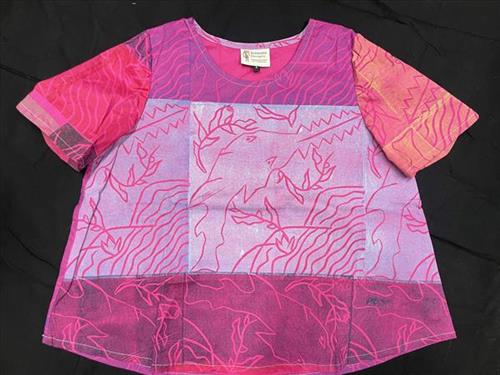
Djabayéna (conefish) Top By The Social Studio
A sawfish or ‘conefish’ in Ndjébbana.
The saw shaped snout of the fish is traditionally used as a rasp in working wood.
377810582258177
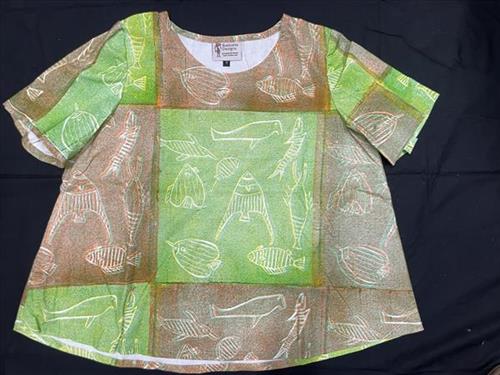
Rocky Point Sea Life – Top by The Social Studio
This design is a salt water story, depicting sea life from Rocky Point and Nardilmuk homelands, in Central Arnhem Land. The etching features the diverse water creatures including dugong, shark, prawn, fish, sea-snake, and lobster.
“We always go fishing and get these fish and animals and cook them on the fire for eating together. We can only see the dugongs at night time, that’s when we hunt them.
We get that line and go fishing down at the rocks and get shark and stingray. Some fish we can catch with a net or spear and some we catch out in the really deep blue sea with a boat.
In this design the animals are alive underwater, that’s why I made it blue all over.”
377810582258176
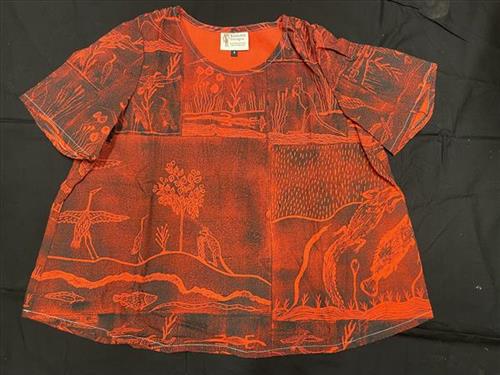
Mimih and Modjarrkki Top by The Social Studio
‘This is a true story. My great great grandfather and my father told this story and I tell it to my children. It’s about a freshwater crocodile called Modjarrkki. One day an unmarried man who was camping with his brother and his brothers wife went walking by himself. He came to a creek where he found a crocodile. He went back to camp and said to his brother ‘hey I found a croc, lets go kill it!’. He tried to kill the crocodile but the crocodile bit his brother. He bit his guts, his hand, his legs and he died. Modjarrkki was an angry crocodile but today Modjarkki doesn’t bite people, he’s only a little crocodile and he eats barramundi. He is still alive and he lives in rock country, Karrabarda, which is in Gorlobidahdah.’ Jay Rostron Jurrupula