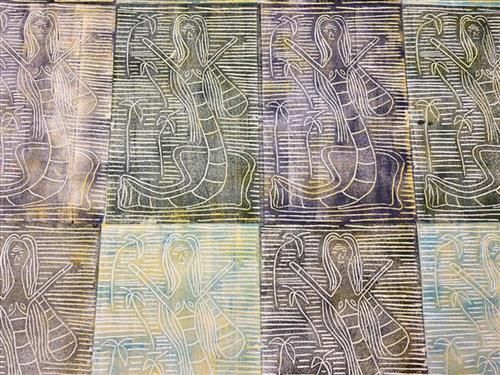
Murnun (Dugong)
Dugong can be found in the waters around Maningrida They are a protected species but do form part of a traditional manme (bushfood) diet for some saltwater communities.

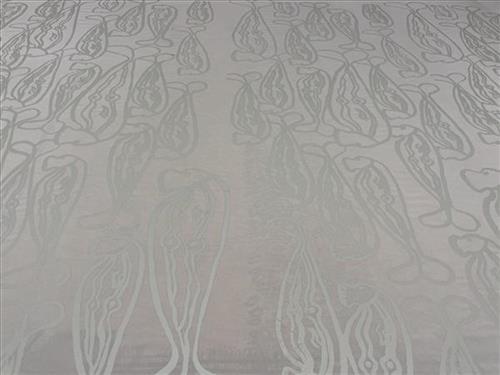
Dugong can be found in the waters around Maningrida They are a protected species but do form part of a traditional manme (bushfood) diet for some saltwater communities.

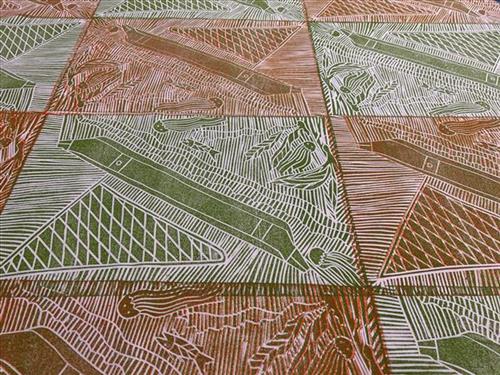
‘This is from before when Aboriginal people were using canoe. When the Makassan came my ancestors paddled to the Makassan boats in their canoe and gave the Makassan’s food from our country.
Before white man the Makassan travelled around and traded tobacco, rice, flour, sugar, square teabag made of leaves. My old man used to tall me these stories.’
Joy Garlbin 2022

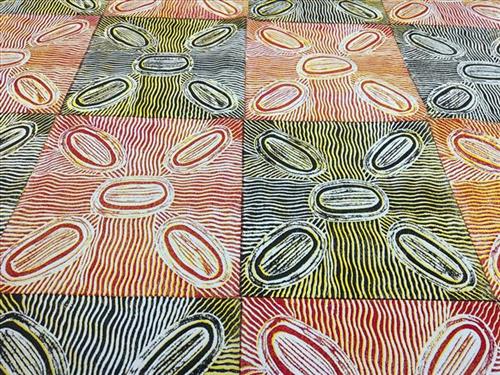
Baby floor mat

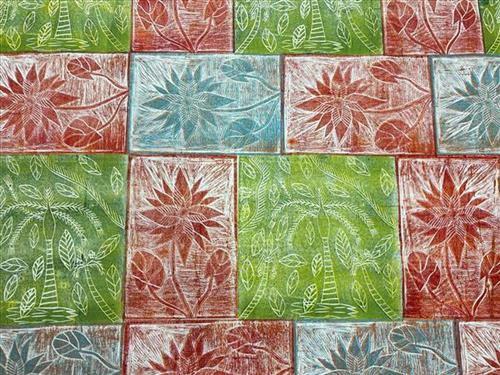
Manbirrbbirr dja Kunwardde
In Kuninjku the name manbirrbbirr is used for a number of densely flowering shrubs and small trees including Verticordia cunninghamii, yellow flowering Austromyrtus species and also Acacia platycarpa which also has dense white.
Kunwardde means stone, rock or money in Kuninjku.
This design combines imagery of the country around Mumeka with common dry season bush flowers.


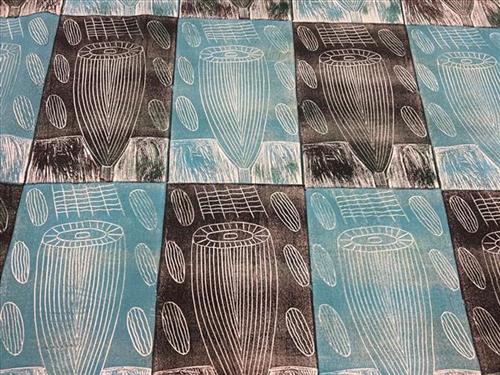
Kunmadj is the Kuninjku term for large woven collecting baskets, known as dillybags.
They are often made from the burney vine (Malaisia scandens), a strong, pliable plant that grows along the ground and into the canopy of monsoon vine thickets. The baskets are used to collect a variety of heavy foods, such as fish caught in conical fish traps or a good harvest of yams. As well as being of practical use, dillybags are of cultural significance to Arnhem Land people. Dillybags are totemic objects and they are associated with particular sites in the landscape.

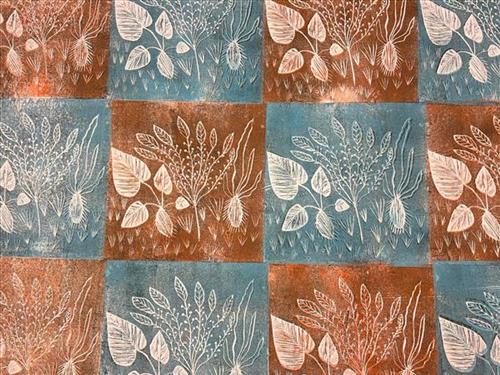
In Kuninjku the name manbirrbbirr is used for a number of densely flowering shrubs and small trees including Verticordia cunninghamii, yellow flowering Austromyrtus species and also Acacia platycarpa which also has dense white.

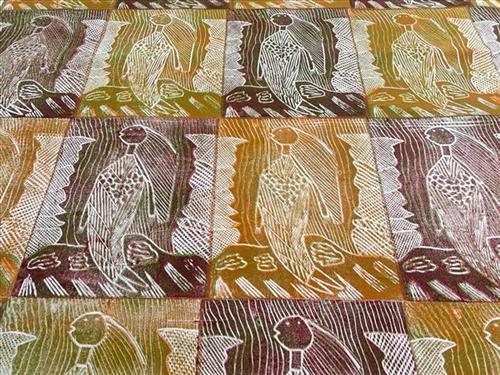
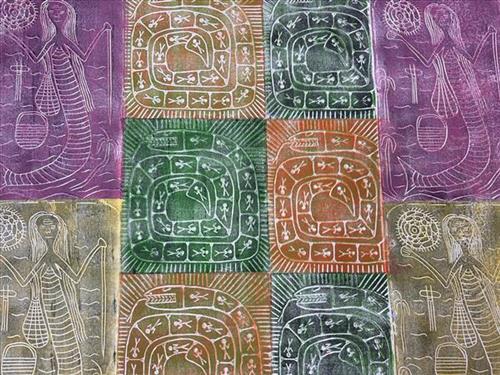
Yawkyawk is a word from the Aboriginal Kunwinjku language, meaning ‘young woman’ and ‘young woman spirit being’.
Sometimes compared to the European notion of mermaids, yawkyawks are usually depicted with the tails of fish. They have long hair, associated with trailing blooms of algae, typically found in Arnhem Land streams and rock pools.

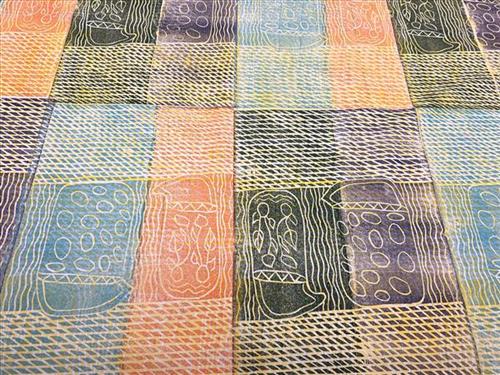
Joy Garlbin depicts the story of Dillybag and Lorrkon with her hand cut, lino print design.