

377810582237408
Kunred Kunkurra (Helen Kaminski)
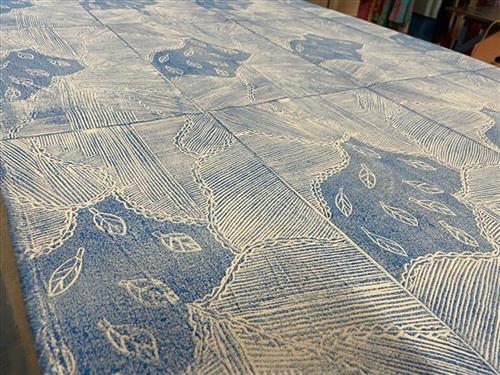
The artist, Janet Marawarr calls this design Kunred Kunkurra in her language, Kuninjku. Kunred means country, kunkurra refers the spiralling wind associated with the mini cyclones that occur around several sites in the Kardbam clan during the build up to the wet season. Marawarr often shares different versions of Kunkurra in her Lino print and Screen Print designs, the story or djang (dreaming) can be heard across the Kardbam clan groups Eastern Kunwinjku and Kuninjku people of the Yirridja moiety. This particular artwork describes the underground lightening that occurs during Kunkurra, in the build up to a storm in Mankorlod, Marawarr’s clan estate in West Arnhem Land.
‘The round shapes in the design mean flashing lightening. The lines beside those shapes are foot tracks, human foot tracks. When the rain falls it makes mud and underground lightening. When the sky is really red and black, we see the build up to a storm and we call that Kakodjngolbalabalahmen. That means that the clouds are forming. So that’s the one you see in this artwork. You can also see the leaves on top of the mud when the rain stops.’ Janet Marawarr 2023

377810582238400
Kunred Kunkurra (Helen Kaminski)
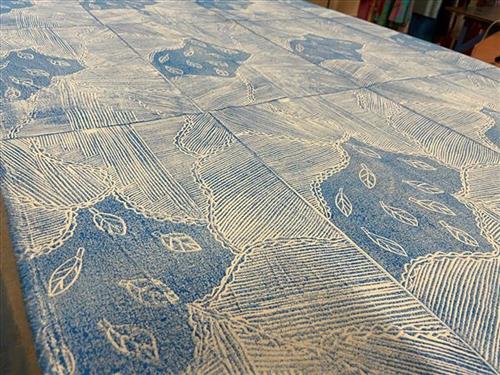
The artist, Janet Marawarr calls this design Kunred Kunkurra in her language, Kuninjku. Kunred means country, kunkurra refers the spiralling wind associated with the mini cyclones that occur around several sites in the Kardbam clan during the build up to the wet season. Marawarr often shares different versions of Kunkurra in her Lino print and Screen Print designs, the story or djang (dreaming) can be heard across the Kardbam clan groups Eastern Kunwinjku and Kuninjku people of the Yirridja moiety. This particular artwork describes the underground lightening that occurs during Kunkurra, in the build up to a storm in Mankorlod, Marawarr’s clan estate in West Arnhem Land.
‘The round shapes in the design mean flashing lightening. The lines beside those shapes are foot tracks, human foot tracks. When the rain falls it makes mud and underground lightening. When the sky is really red and black, we see the build up to a storm and we call that Kakodjngolbalabalahmen. That means that the clouds are forming. So that’s the one you see in this artwork. You can also see the leaves on top of the mud when the rain stops.’ Janet Marawarr 2023

377810582238355
Turtle Design
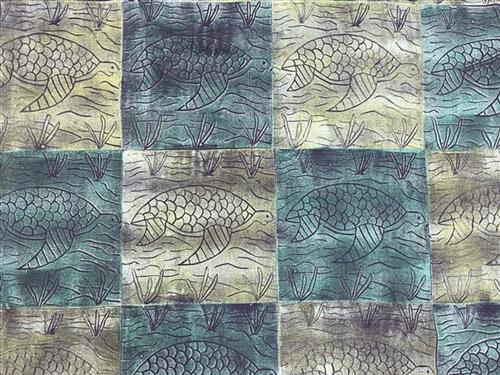
A new design by Lucielle Ikara, the daughter and protege of Lucy Yarawanga.

377810582238668
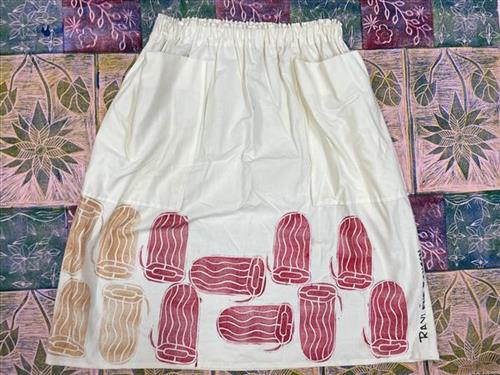
Kunmadj Skirt
Kunmadj is the Kuninjku term for large woven collecting baskets, known as dillybags.
They are often made from the burney vine (Malaisia scandens), a strong, pliable plant that grows along the ground and into the canopy of monsoon vine thickets. The baskets are used to collect a variety of heavy foods, such as fish caught in conical fish traps or a good harvest of yams. As well as being of practical use, dillybags are of cultural significance to Arnhem Land people. Dillybags are totemic objects and they are associated with particular sites in the landscape.

377810582238667
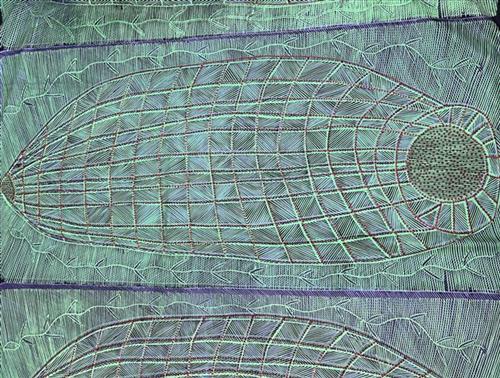
Mandjabu (Fish Trap) – Susan Marawarr
“In old times people would make these mandjabu (fish traps) to go fishing. They are made with vine we find in the jungle. That old man, Anchor Gulunba, he showed me how to make these fish traps. I would sit there and watch him making them. We catch barramundi, catfish, all kinds of fish.” – Helen Lanyinwanga
Kuninjku people traditionally make two sorts of conical fish traps. One called mandjabu made from a vine called milil, and another smaller one called manylik mandjabu, made from the grass manylik. The mandjabu conical fish trap is bigger and stronger and used in tidal reaches of creeks to catch large fish. The smaller, lighter manylik trap is used in freshwater flowing creeks to catch smaller fish and freshwater prawns. Traditionally, only men were involved in the construction of the large fish traps, but children would often crawl inside and assist.
To make fish traps and fish net fences artists firstly get vine (milil) from the jungle and they put it in water for one night to make it soft. Next they start weaving it; they make rings for the inside to keep the fish trap’s shape. Artists work for three or four weeks on the fish trap. They also make string from kurrajong (burdaga) to attach the hibiscus (bardainy) rings and to tie the conical end of the fish trap. This fish trap is used in saltwater and freshwater. People also use fish net fences called mun-dirra. A long time ago they would put the mun-dirra across rivers and creeks. In the middle they would place the an-gujechiya. They also used small things like sticks, rocks, mud and grass to block the fish from going through. People would then catch fish like saltwater barramundi rajarra, freshwater barramundi (janambal), small black freshwater catfish (buliya), bonefish (an-guwirrpiya), and sand bass (dalakan) in these fish traps.

377810582238655
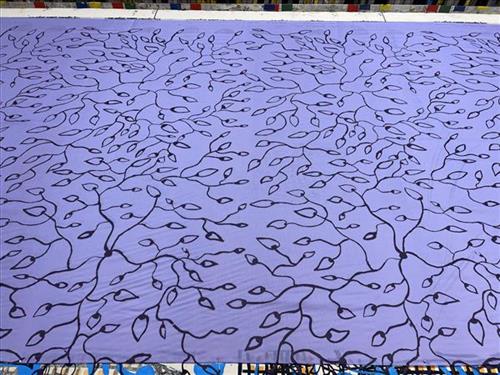
Mankotbe (Bush Onion)
Mankotbe (bush onion) grows under the ground, we follow the vine to dig it up. It is brown on the outside and white inside and we cook it on the fire, just like a potato. All the old people used to eat Mankotbe on my homeland. My grandmother showed me how to find that plant and the first time I ate so much my mouth got sore! You can’t be too greedy.
This design brings back good memories for me. I used to eat Mankotbe when I was young and living at my homeland Buluhkaduru. In those old times, my house was made of paper bark and sticks. If we wanted to come into town we had to walk, and it’s a long walk, so we would fill our dilly bags with sugar bag honey, Mankotbe and long yams to eat on the way. They were good times for me.
You can find Mankotbe any time of the year- the plant has big black leaves. When you find one onion, you know there is big mob around- they are always connected by a big long vine underground

377810582238654
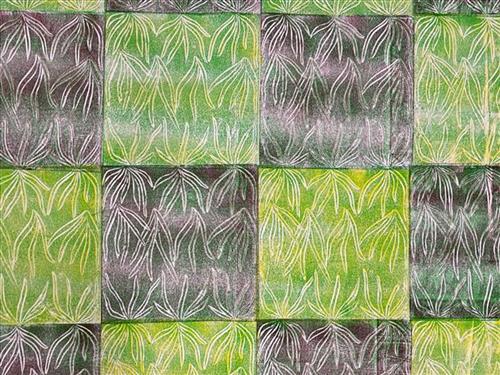
Grasses at Bottom Camp

377810582238536
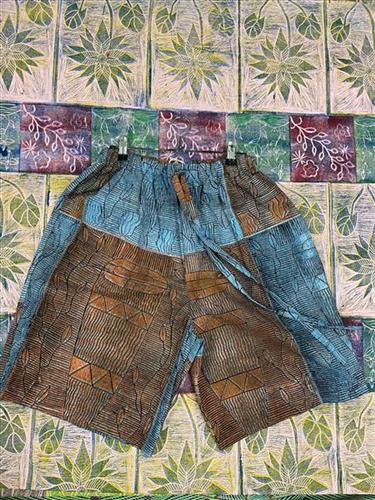
Mandjabu Short
Kuninjku people traditionally make two sorts of conical fish traps. One is called mandjabu and is made from a strong, durable vine called milil, and a smaller one is called manylik mandjabu, and made from the grass manylik. The mandjabuconical fish trap is bigger and stronger and used in tidal reaches of creeks to catch large fish. The smaller, lighter manyliktrap is used in freshwater flowing creeks to catch smaller fish and freshwater prawns. In earlier times, only men were involved in the construction of the large fish traps, but children would often crawl inside and assist.
To make mandjabu, weavers firstly harvest milil (burney vine, Malaisia scandens) and put it in water overnight to make it soft. Then they start weaving it; they make rings for the inside to keep the fish trap’s shape. People also make string from the bark of burdaga (kurrajong) to attach the bardainy (hibiscus) rings and to tie the conical end of the fish trap. It’s hard work and it can take three or four weeks to make a fish trap. People also use fish-net fences called kunkarlewabe. They would put the kunkarlewabe across rivers and creeks. In the middle they would place the mandjabu. They also used small things like sticks, rocks, mud and grass to block the fish from going through. This way we would catch fish such as saltwater barramundi rajarra, ngaldadmurrng (freshwater barramundi), small black freshwater catfish (buliya), bonefish (an-guwirrpiya), and sand bass (dalakan) in the mandjabu.

377810582238531
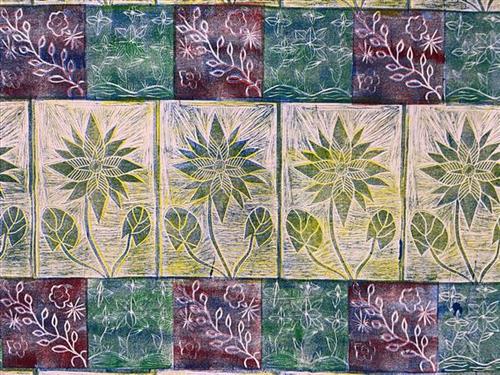
Manbirrbbirr (small bush flowers)
In Kuninjku the name manbirrbbirr is used for a number of densely flowering shrubs and small trees including Verticordia cunninghamii, yellow flowering Austromyrtus species and also Acacia platycarpa which also has dense white.