377810582224245


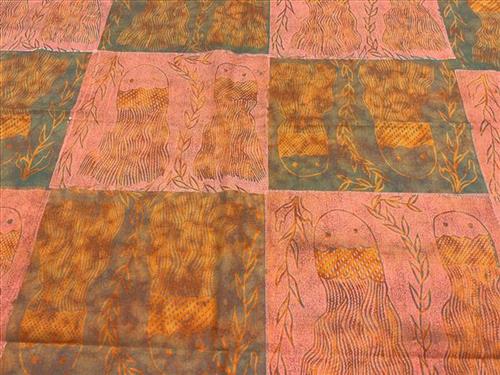
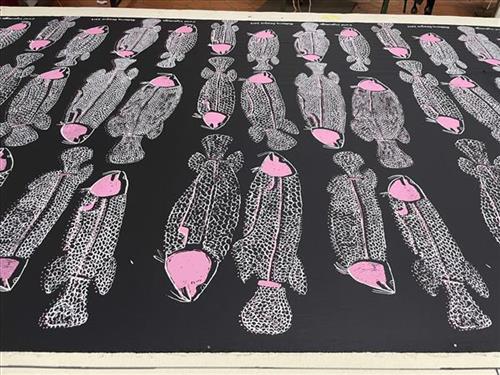
Ngaldadmurrng (Saratoga)

This design tells the story of Saratoga dreaming,  a freshwater fish that swims on the edge of creeks and rivers. This design is the Saratoga dreaming from the Mularra songline. Where the Saratoga we call Murdulngu, Danguny travelled from Malmyangarnak billabong to Mirrigatja.

This Billabong was owned by Murdulngu (Saratoga) before the water was taken over by shark Barlangu he came all the way from east to north then to west. He was travelling when that water level was high he went up the stream but he couldn’t make it. This Barlangu came from Murruggun clan but really this shark came from long way all the way south. This story is connected through Mularra songline it represents many clans.

With permission from clan elders, Carol is able to pass on this family knowledge through her passion in textile and art.


‘I am proud of my first design, I want to keep this design for future, for my children and grandchildren so they remember this story, this story is a big part of the mularra songline’ Carol Liyawanga Campion

377810582224175


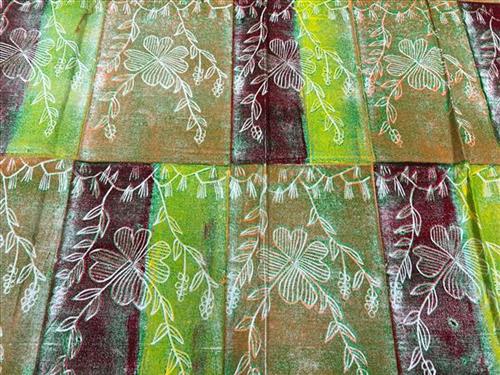
Bush potato flower

‘When we go out hunting we find bush potatoes, the long ones. They are called bulwud sp?. (Kuninjku)  The flower is long and we follow the stem to the potato root. We peel it eat the white part. When we cook them they taste like potato.’ Lucy Yarawanga 

377810582224172


Mábbarla (Jelly Fish)

Mábbarla means Jelly Fish in Ndjébbana.

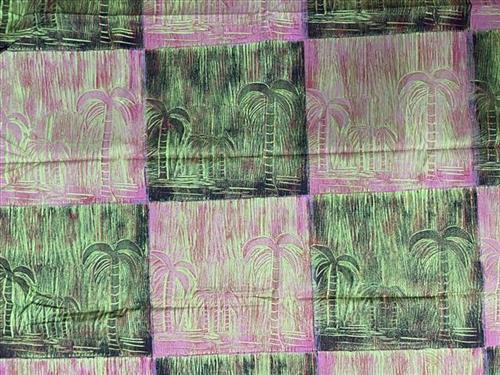
‘My homeland is Entrance island, Haulround island and Juda point. I really like Haulround island and that’s where we collect barruar (seagull egg). Entrance island is my favourite camping area, I go across with boat. Balanda (non-Aboriginal or European people) can’t go into those islands or Juda point without permission from me. We have a sacred totem ngaduma (palm tree) at those places and if people destroy it, we will have a strong wind and maybe a cyclone.’ Marilyn James 2021

377810582224153


Ngarndúma (palm tree)

ngarndúma   1) a kind of tall palm tree with one straight trunk; Kentia palm. Gronophyllum ramsayi; Carpentaria acuminata. Gender: djíya; Moiety: Yírriddjanga. N A. Karlakkalóddjarra márdba ka-rénjdjeya. The new shoot is sweet. The growing tip of young palms eaten raw; large palms are not eaten. The fruits are toxic to people but eaten by fruit pigeons. 

377810582224150


Kundayarr (lino tile)

The first tile has different types of kunmadj (dillybag) and marebu (floormat) made with Kundayarr (Pandanus).

‘There are two djerr (dilly bags), one basket, two marebu (floormats) and one kunmadj in this tile. This is how we carry and collect our bush tucker. This basket in the middle with two handles is made with the coil technique. This is a strong basket for clothes, swag, manburrba (clothing, cloth). We use the floormat to sleep on the ground or carry baby. This is from our old peoples time.

The other tile is kundayarr – pandanus tree and small billabongs with mud and water and grasses. There are 5 billabongs in this tile. We use this kundayarr to make the all the dillybag, kunmadj, marebu and djerr in the other tile. Kunmadj we carry on the head when we are collecting manme (bush tucker). We strip the kundayarr and then we use colour (botanical dyes) to make the different colour. Then we tie up the pandanus.’

Deborah Wurrkidj 2022

Works in fibre from the Maningrida region are widely recognised as some of the finest in Australia. Artists confidently push the boundaries of fibre craft and cultural expression, adapting traditional techniques and forms to produce strikingly inventive and aesthetically exquisite artworks.

Artists usually use kundayarr, pandanus spiralis, to weave decorative round or oblong mats, as well as the less common triangular and conical shapes. Weaving is physically hard work, now done only by women. They colour the pandanus using natural dyes made from the roots, leaves or flowers of plants within the weaver’s clan estate.

Deborah has used the root of Man-Kurdudjumuk (coelospermun reticulatum) to dye the fabric a beautiful yellow. This fabric has been dyed on country in the outstation of Kakodbubuldi and later printed in our Maningrida studio. Feathers, basket weaves and pandanus plants are pictured.

377810582224143


Kundayarr (lino tile)

The first tile has different types of kunmadj (dillybag) and marebu (floormat) made with Kundayarr (Pandanus).

‘There are two djerr (dilly bags), one basket, two marebu (floormats) and one kunmadj in this tile. This is how we carry and collect our bush tucker. This basket in the middle with two handles is made with the coil technique. This is a strong basket for clothes, swag, manburrba (clothing, cloth). We use the floormat to sleep on the ground or carry baby. This is from our old peoples time.

The other tile is kundayarr – pandanus tree and small billabongs with mud and water and grasses. There are 5 billabongs in this tile. We use this kundayarr to make the all the dillybag, kunmadj, marebu and djerr in the other tile. Kunmadj we carry on the head when we are collecting manme (bush tucker). We strip the kundayarr and then we use colour (botanical dyes) to make the different colour. Then we tie up the pandanus.’

Deborah Wurrkidj 2022

Works in fibre from the Maningrida region are widely recognised as some of the finest in Australia. Artists confidently push the boundaries of fibre craft and cultural expression, adapting traditional techniques and forms to produce strikingly inventive and aesthetically exquisite artworks.

Artists usually use kundayarr, pandanus spiralis, to weave decorative round or oblong mats, as well as the less common triangular and conical shapes. Weaving is physically hard work, now done only by women. They colour the pandanus using natural dyes made from the roots, leaves or flowers of plants within the weaver’s clan estate.

Deborah has used the root of Man-Kurdudjumuk (coelospermun reticulatum) to dye the fabric a beautiful yellow. This fabric has been dyed on country in the outstation of Kakodbubuldi and later printed in our Maningrida studio. Feathers, basket weaves and pandanus plants are pictured.

377810582224469


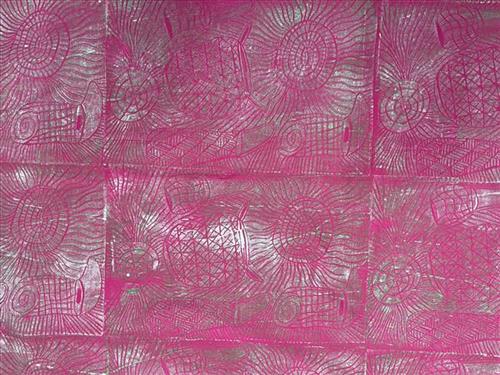
Mandjabu

Kuninjku people traditionally make two sorts of conical fish traps. One is called mandjabu and is made from a strong, durable vine called milil, and a smaller one is called manylik mandjabu, and made from the grass manylik. The mandjabuconical fish trap is bigger and stronger and used in tidal reaches of creeks to catch large fish. The smaller, lighter manyliktrap is used in freshwater flowing creeks to catch smaller fish and freshwater prawns. In earlier times, only men were involved in the construction of the large fish traps, but children would often crawl inside and assist.

To make mandjabu, weavers firstly harvest milil (burney vine, Malaisia scandens) and put it in water overnight to make it soft. Then they start weaving it; they make rings for the inside to keep the fish trap’s shape. People also make string from the bark of burdaga (kurrajong) to attach the bardainy (hibiscus) rings and to tie the conical end of the fish trap. It’s hard work and it can take three or four weeks to make a fish trap. People also use fish-net fences called kunkarlewabe. They would put the kunkarlewabe  across rivers and creeks. In the middle they would place the mandjabu. They also used small things like sticks, rocks, mud and grass to block the fish from going through. This way we would catch fish such as saltwater barramundi rajarra, ngaldadmurrng (freshwater barramundi), small black freshwater catfish (buliya), bonefish (an-guwirrpiya), and sand bass (dalakan) in the mandjabu.

377810582224472


Djomi and Ngalyod

This design depicts the story of the artist’s ancestral dreaming, the Djomi fresh water spirit mermaid.

The Djomi figure is a mermaid like spirit with fish tail that lives in the fresh water stream that flows out to the sea cliff near Maningrida. Djomi is a known to be a very powerful fertility symbol.

‘If you go there you can get pregnant easily. Djomi has babies, and they can give others babies too. The Djomi spirit is so powerful, that women can end up with multiple babies at once, twins or sometimes even more. The Djomi spirits lay eggs near the sacred freshwater stream in Maningrida. Inside the eggs are human babies as well as young Djomi.

Men do not go near that swamp, because Djomi is so powerful that men might get pregnant there too. So men, they are too scared of that Djomi. When we visit the Djomi freshwater spring, we can hear young Djomi crying. They sound like normal babies crying, those Djomi spirits. They are looking for a mother.

This Djomi is my dreaming, I got permission from my djunguys to paint this Djomi design. For me I always ask my djunguy permission to paint, because that is our cultural way.

This design also depicts the fresh water lily leaves, and seaweed from the base of the sea floor.

377810582224871


Djomi

This design depicts the story of the artist’s ancestral dreaming, the Djomi fresh water spirit mermaid.

The Djomi figure is a mermaid like spirit with fish tail that lives in the fresh water stream that flows out to the sea cliff near Maningrida. Djomi is a known to be a very powerful fertility symbol.

‘If you go there you can get pregnant easily. Djomi has babies, and they can give others babies too. The Djomi spirit is so powerful, that women can end up with multiple babies at once, twins or sometimes even more. The Djomi spirits lay eggs near the sacred freshwater stream in Maningrida. Inside the eggs are human babies as well as young Djomi.

Men do not go near that swamp, because Djomi is so powerful that men might get pregnant there too. So men, they are too scared of that Djomi. When we visit the Djomi freshwater spring, we can hear young Djomi crying. They sound like normal babies crying, those Djomi spirits. They are looking for a mother.

This Djomi is my dreaming, I got permission from my djunguys to paint this Djomi design. For me I always ask my djunguy permission to paint, because that is our cultural way.

This design also depicts the fresh water lily leaves, and seaweed from the base of the sea floor.

377810582224868


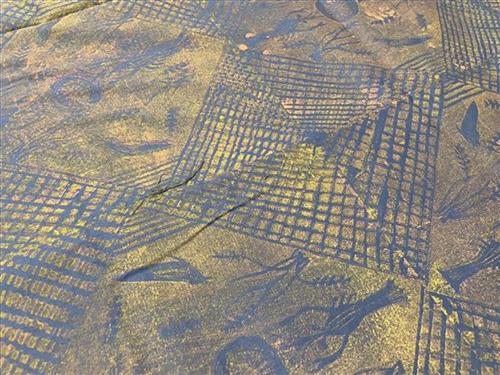
Ngalng – Janet Marawarr

Ngalng (fresh water yabby)

‘This is a story from Mankorlod. This is a djang story. This is the creation story about the fresh water yabby. Starting with the stone, that’s the raw one and the cooked one. The stone rock suddenly turned to ngalng, in a flash. Ngalng started growing and turned into a body. It’s a magic one and it can change from rock to ngalng to human and back to ngalng. Now it’s a ngalng. 

The country is near Mankorlod and Korlobididah. The ngalng is stuck there forever on the rock at Korlobididah,’ 

‘There is also duruk (camp dog) called ‘Djanbokkon’. This is a duruk that comes from water and no one has seen it. This is a true duruk, he goes everywhere in the country. His body is striped. He is a secret dog and he has a secret story.’ 

Janet Marawarr 2022