377810582213941


Lorrkkon

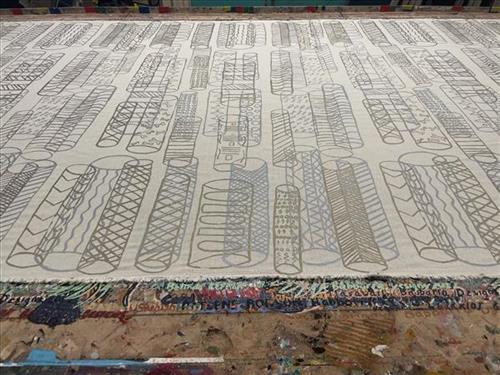
Marilyn’s first screen print design depicts the story of lorrkkon (hollow funeral logs). This the story of her great, great grandfather and grandmother who were bark painters, as well as also sacred lorrkkon painters.

When designing this screen print, Marilyn was remembering her childhood living in a small house on Liverpool river Ngar-wunja (Thompson hole) with other families.

Through the painting process, Marilyn remembered and relived the times when people still lived permanently on remote homelands, living off the land before balanda (non-indigenous people) arrived.

Marilyn recalls “it makes me think back, we did lots of things, some people was hunting, some was weaving, some was painting barks and lorrkkon. As my great, great grandfather and grandmother was painters, I painted this my story for them.”

377810582213938


Lorrkkon – Marilyn James

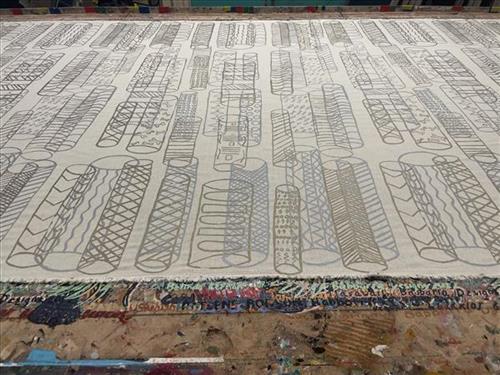
Marilyn’s first screen print design depicts the story of lorrkkon (hollow funeral logs). This the story of her great, great grandfather and grandmother who were bark painters, as well as also sacred lorrkkon painters.

When designing this screen print, Marilyn was remembering her childhood living in a small house on Liverpool river Ngar-wunja (Thompson hole) with other families.

Through the painting process, Marilyn remembered and relived the times when people still lived permanently on remote homelands, living off the land before balanda (non-indigenous people) arrived.

Marilyn recalls “it makes me think back, we did lots of things, some people was hunting, some was weaving, some was painting barks and lorrkkon. As my great, great grandfather and grandmother was painters, I painted this my story for them.”

377810582213937


Lorrkkon – Marilyn James

Marilyn’s first screen print design depicts the story of lorrkkon (hollow funeral logs). This the story of her great, great grandfather and grandmother who were bark painters, as well as also sacred lorrkkon painters.

When designing this screen print, Marilyn was remembering her childhood living in a small house on Liverpool river Ngar-wunja (Thompson hole) with other families.

Through the painting process, Marilyn remembered and relived the times when people still lived permanently on remote homelands, living off the land before balanda (non-indigenous people) arrived.

Marilyn recalls “it makes me think back, we did lots of things, some people was hunting, some was weaving, some was painting barks and lorrkkon. As my great, great grandfather and grandmother was painters, I painted this my story for them.”

377810582213933


Kunkurra (Spiral Wind)

‘My designs, they are all alive living up in my head’- Janet Marawarr

Janet Marawarr has depicted kunkurra, the spiralling wind associated with several sites in the Kardbam clan. On one level, this design can be interpreted as a depiction of the kinds of mini-cyclones common during the wet season in Arnhem Land, where the artist lives. Kunkurra also relates specifically to a site called Bilwoyinj, near Mankorlod, on the artist’s clan estate.

At this site, two of the most important Kuninjku creation beings, a father and son known as na-korrkko, are believed to have hunted and eaten a goanna. They left some of the goanna fat behind at the site, which turned into the rock that still stands there today.

Bilwoyinj site is also a ceremonial ground for a ceremony called Yabbaduruwa, a major ceremony owned by the Yirridja patrimoiety. The Yabbaduruwa ceremony is primarily concerned with initiation, land ownership and promoting the cyclical regeneration of the human and natural worlds.

377810582213929


Kunkurra (Spiral Wind)

‘My designs, they are all alive living up in my head’- Janet Marawarr

Janet Marawarr has depicted kunkurra, the spiralling wind associated with several sites in the Kardbam clan. On one level, this design can be interpreted as a depiction of the kinds of mini-cyclones common during the wet season in Arnhem Land, where the artist lives. Kunkurra also relates specifically to a site called Bilwoyinj, near Mankorlod, on the artist’s clan estate.

At this site, two of the most important Kuninjku creation beings, a father and son known as na-korrkko, are believed to have hunted and eaten a goanna. They left some of the goanna fat behind at the site, which turned into the rock that still stands there today.

Bilwoyinj site is also a ceremonial ground for a ceremony called Yabbaduruwa, a major ceremony owned by the Yirridja patrimoiety. The Yabbaduruwa ceremony is primarily concerned with initiation, land ownership and promoting the cyclical regeneration of the human and natural worlds.

377810582213927


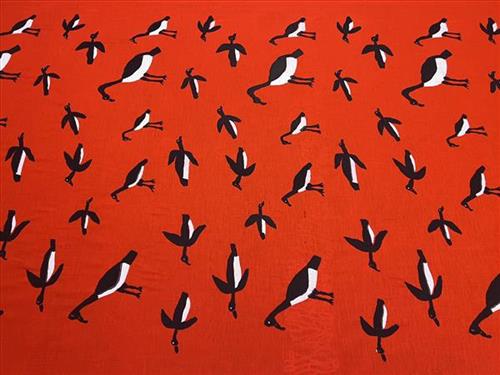
Murnubbarr Karrolkan (Flying Magpie Geese)

Murnubbarr (magpie geese) are a waterbird found in abundance in the wetland areas of Kakadu and western Arnhem Land. Murnubbarr are a sustainably hunted and enjoyed manme (bush food). They are known to fly long distances, particularly in the wet season.

377810582213925


Murnubbarr Karrolkan (Flying Magpie Geese)

Murnubbarr (magpie geese) are a waterbird found in abundance in the wetland areas of Kakadu and western Arnhem Land. Murnubbarr are a sustainably hunted and enjoyed manme (bush food). They are known to fly long distances, particularly in the wet season.

377810582213916


Mimih Dancing

This is an artwork about a dancing Mimih. It’s based on a song line from Korlobididah. My fathers eldest brother used to sing this song line and Unkle Dennis he was a dancer. My real father, Jacky was a dancer as well and he was from Korlobididah.


377810582213855


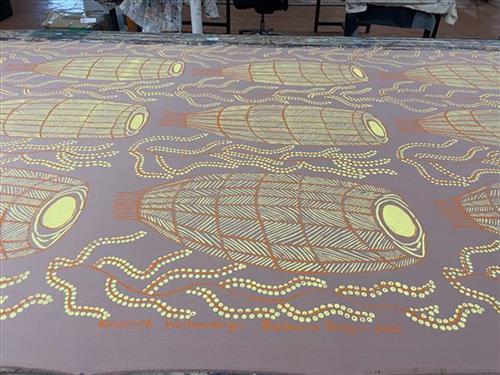
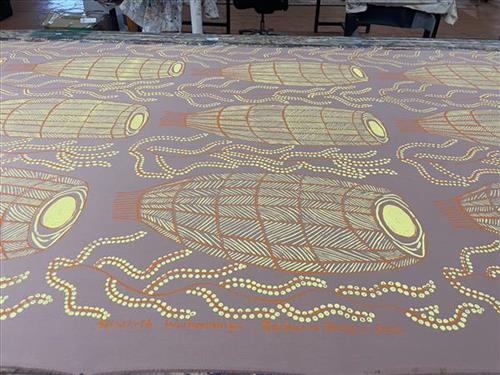
Au-gujechiya (fishtrap)

Au-gujechiya (fishtrap) sometimes portrayed with an-maka (cowtail stingray), rajarra (barramundi) and other fish inside. 

Elizabeth has permission from her djunkay to draw this historic and important object traditionally used to trap fish in rivers, creeks and estuaries. In the early wet season they swim upstream for breeding in creeks and billabongs, then downstream to spend the dry season in larger rivers. The traps would be set to face the oncoming fish, with woven fencing either side. Within the mouth of the trap is a woven funnel that guides the fish in and prevents their escape. The clever design ensures that only adult fish are caught as smaller fish can escape through the weaving or even through the funnel. The fish that are caught can survive in the trap for up to two months. Once the trap is removed, the end is untied to remove the fish. This sustainable design means the trap can be used again and again.


Elizabeth is from the Burrarra language group and her homeland is Gupanga, Arnhem Land.  

377810582213853


Au-gujechiya (fishtrap)

Au-gujechiya (fishtrap) sometimes portrayed with an-maka (cowtail stingray), rajarra (barramundi) and other fish inside. 

Elizabeth has permission from her djunkay to draw this historic and important object traditionally used to trap fish in rivers, creeks and estuaries. In the early wet season they swim upstream for breeding in creeks and billabongs, then downstream to spend the dry season in larger rivers. The traps would be set to face the oncoming fish, with woven fencing either side. Within the mouth of the trap is a woven funnel that guides the fish in and prevents their escape. The clever design ensures that only adult fish are caught as smaller fish can escape through the weaving or even through the funnel. The fish that are caught can survive in the trap for up to two months. Once the trap is removed, the end is untied to remove the fish. This sustainable design means the trap can be used again and again.


Elizabeth is from the Burrarra language group and her homeland is Gupanga, Arnhem Land.