377810582213386


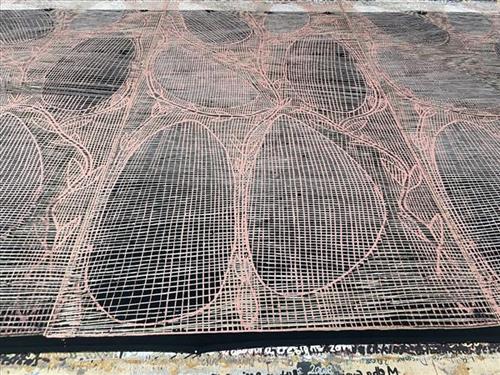
Kunwardde dja Karrbarda (Rocks and Yam Vine)

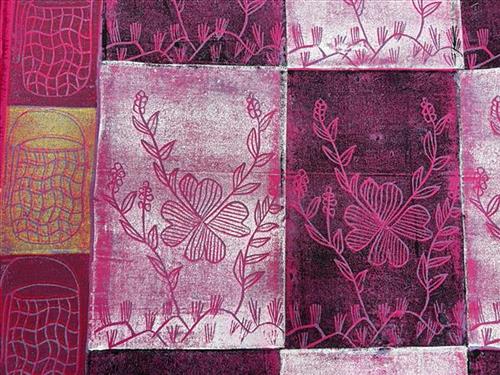
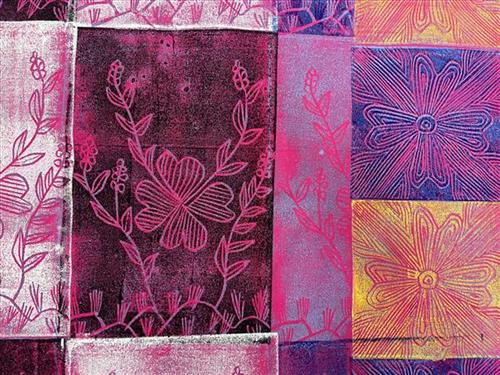
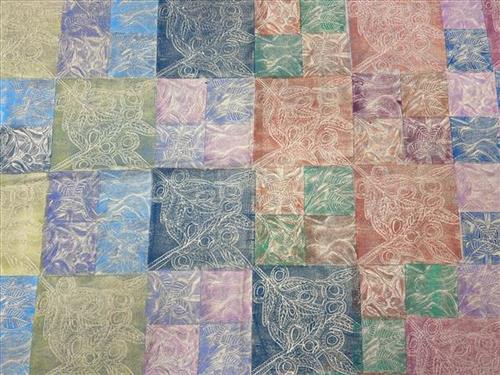
Susan Marawarr is a Kuninjku artist from the Kurulk clan whose country lies around the outstation of Mumeka in central Arnhem Land. In this design, she has depicted karrbarda (long yam) on her traditional country, the kunwardde (stone country).

The large stones represent the kunwardde rocky outcrops, which are elevated above the flat floodplains. The vines creeping around the large rocks are from the karrbarda. Women dig up karrbarda with kungarrndutj (digging sticks) and they are then cooked in the ashes of the fire to be eaten.

These yams are purple on the saltwater side of country and on inland freshwater country they are white. Karrbarda are an important manme (bush food) that are collected during the wet and dry seasons.

377810582211619


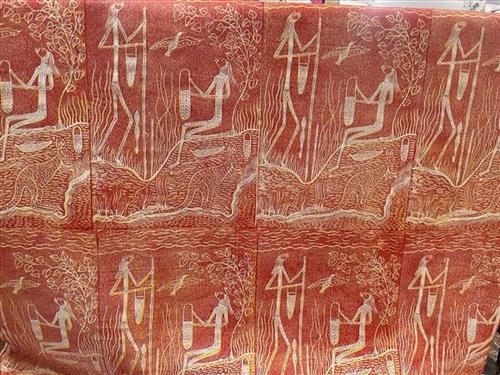
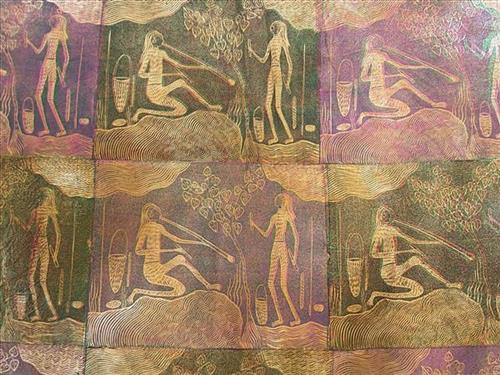
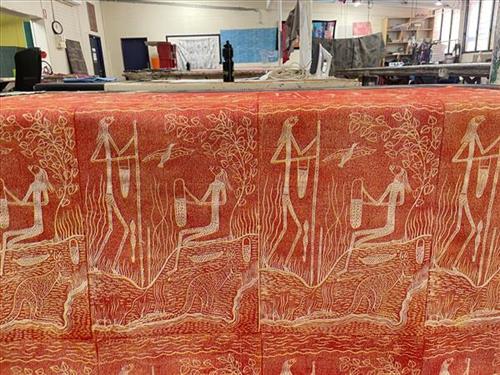
Mimih Dancing

This is an artwork about a dancing Mimih. It’s based on a song line from Korlobididah. My fathers eldest brother used to sing this song line and Unkle Dennis he was a dancer. My real father, Jacky was a dancer as well and he was from Korlobididah.


377810582211785


Dakarra (cockle)

Dakarra is the Burrara Gun-nartpa word for a type of cockle shell with prominant scaled ribs and an orange colour. This is part of a diet of shellfish which has been enjoyed by people whose country lies on the saltwater estuaries at the opening of  rivers throughout Arnhem Land.

Elizabeth Wullunmingu’s mother country is Djunawunya, near Gupunga on the Bligh river. This is saltwater country. Her design Dakarra represents a songline for this particular type of edible shellfish and the fishing lifestyle that is enjoyed by her people. 

Elizabeth’s grandfather Frank Gurrmanamana was seen in the documentary ‘Waiting For harry’  1978  by Ronin films which is filmed on Elizabeth’s mother country, Djunawunya. In this documentary, the late Frank Gurrmanamana is preparing the final mortuary ceremonies for his brother who died six years before. Central to the ceremonies is Harry Diama, the senior blood-relative of the deceased man, but Harry lives in Maningrida and is pre-occupied with a pending court-case there involving his son.

https://www.sbs.com.au/topics/video/1068702275809/Waiting-For-Harry


377810582212194


Mimih Dancing – Babbarra Archive

This is an artwork about a dancing Mimih. It’s based on a song line from Korlobididah. My fathers eldest brother used to sing this song line and Unkle Dennis he was a dancer. My real father, Jacky was a dancer as well and he was from Korlobididah.

Purchased for Archive in 2022 

377810582211343


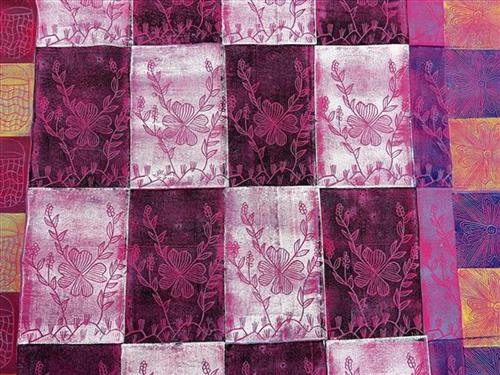
Bush potato flower

‘When we go out hunting we find bush potatoes, the long ones. They are called bulwud sp?. (Kuninjku)  The flower is long and we follow the stem to the potato root. We peel it eat the white part. When we cook them they taste like potato.’ Lucy Yarawanga 

377810582211328


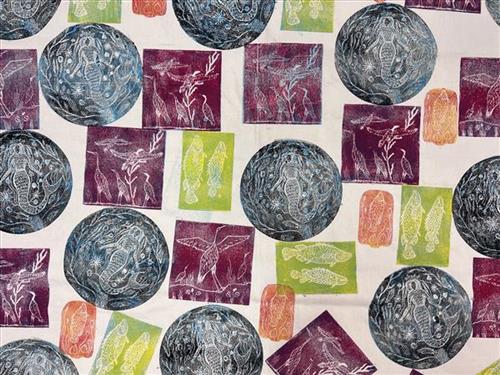
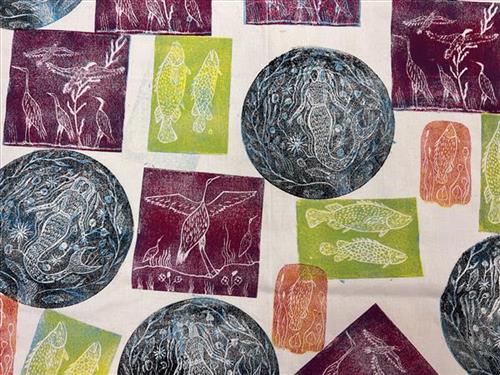
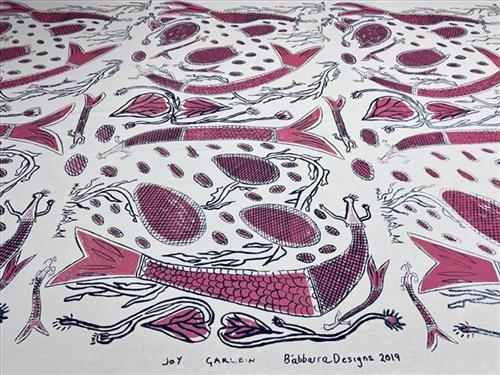
Ngalkunburriyaymi (Mermaid) – Jay Rostron

Ngalkunburriyaymi 

Kuninjku people call mermaids yawkyawk, but in my language, Kune, we call them Ngalkunburriyaymi (pronounced Ngaal gun borro yay mee).

The Ngalkunburriyaymi depicted in my artworks is from a place called Marra-yii (sp?).  There are too many Ngalkunburriyaymi living at this place.  They are always there and have been there forever. We can go camping and fishing at this place.  Marar-yii is a place in the river. They are freshwater. They are Duwa moiety. Same as the freshwater crocodile. 

My mum told me her story.  Ngalkunburriyaymi gave her a baby.  Ngalkunburriyaymi came to her in a dream.  They gave her my brother. In my mother’s dream, she went fishing Marra-yii and Ngalkunburriyaymi came to her to tell her she was having a baby.  She said to her I will give you a baby.  In a couple of months, you will be pregnant.

Ngalkunburriyaymi eats fish and waterlilies.

Owen Yalandja is my cousin from my father’s side and Lulu is my grandmother also from my father’s side. They are from different outstations, but we are family.  My Ngalkunburriyaymi story is connected to them but different.

I love my mother’s story and it is why I made a lino plate. I print it on different colour fabrics – silk, linen and cotton. I like using lots of different colours.  I come from a family who have made artwork on bark and hollow logs using ochre—black, yellow, red and white. But at Babbarra Designs, we can use bright colours in our fabric designs.

377810582211298


Man-djarduk (Red Bush Apples)

Deborah Wurrkidj is a Kuninjku artist from the Kurulk clan whose country lies around the outstation of Mumeka in central Arnhem Land.

In this design she has depicted man-djarduk (red bush apples) – a sweet, crisp bush food that is a favourite to collect.

Man-djarduk fruits in kurrung and kunumeleng seasons, the build-up and first rains seasons.

377810582210502


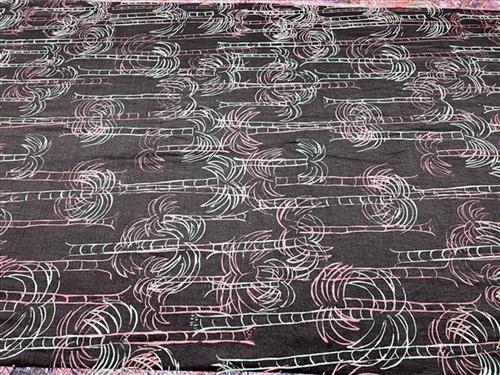
Ngarndúma (palm tree)

ngarndúma   1) a kind of tall palm tree with one straight trunk; Kentia palm. Gronophyllum ramsayi; Carpentaria acuminata. Gender: djíya; Moiety: Yírriddjanga. N A. Karlakkalóddjarra márdba ka-rénjdjeya. The new shoot is sweet. The growing tip of young palms eaten raw; large palms are not eaten. The fruits are toxic to people but eaten by fruit pigeons. 

377810582210617


Djomi

This design depicts the story of the artist’s ancestral dreaming, the Djomi fresh water spirit mermaid.

The Djomi figure is a mermaid like spirit with fish tail that lives in the fresh water stream that flows out to the sea cliff near Maningrida. Djomi is a known to be a very powerful fertility symbol.

‘If you go there you can get pregnant easily. Djomi has babies, and they can give others babies too. The Djomi spirit is so powerful, that women can end up with multiple babies at once, twins or sometimes even more. The Djomi spirits lay eggs near the sacred freshwater stream in Maningrida. Inside the eggs are human babies as well as young Djomi.

Men do not go near that swamp, because Djomi is so powerful that men might get pregnant there too. So men, they are too scared of that Djomi. When we visit the Djomi freshwater spring, we can hear young Djomi crying. They sound like normal babies crying, those Djomi spirits. They are looking for a mother.

This Djomi is my dreaming, I got permission from my djunguys to paint this Djomi design. For me I always ask my djunguy permission to paint, because that is our cultural way.

This design also depicts the fresh water lily leaves, and seaweed from the base of the sea floor.