377810582392109


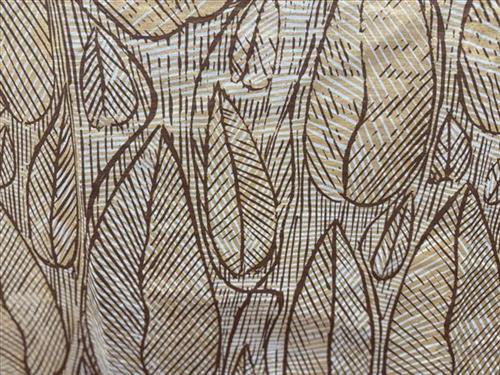
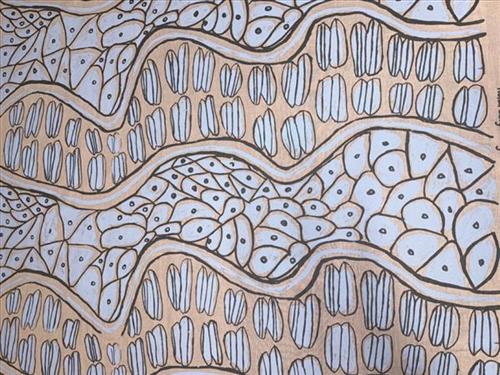
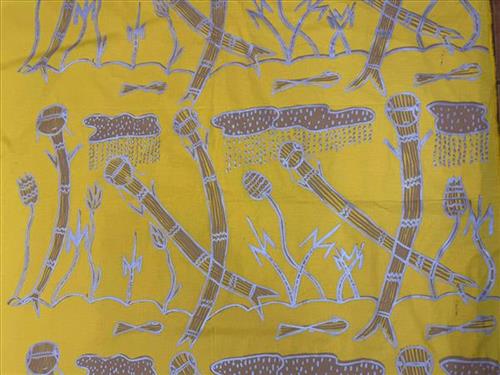
Yawkyawk la Kunronj (freshwater mermaid) 2005

This screen print was created by the young Jennifer Wurrkidj, one of the most prolific artists at Bábbarra Women’s Centre. This design was re exposed onto screen after Kamanj passed away. Her sister Deborah Wurrkidj talks about this design.


At that time the children were all going to homelands school. The design shows too many yawkyawk in the billabong at Barridjowkeng a very sacred Yirridjidja site for Kuninjku people.

The design shows  kundayarr (pandanus) and wayuk (waterlily) around the billabong.

Our grandfather on our mothers side used to live at this site and they used to drink the water from this billabong. There is now an Outstation located at this site. 

This scene shows wet season as we can see by the mandjewk – (heavy rainclouds). The yawkyawk love the sound of the rain. 

Yawkyawk are young girls but they are spirits from kunred (country) that have fish tails. 

377810582392103


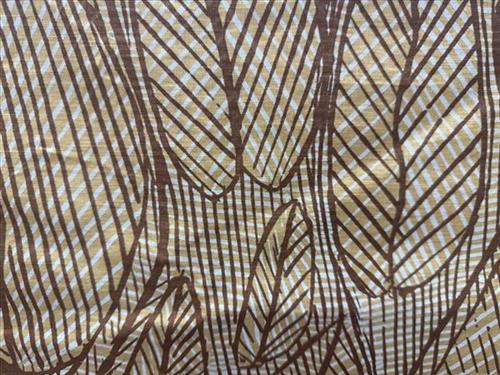
Yawkyawk la Kunronj (freshwater mermaid) 2005

This screen print was created by the young Jennifer Wurrkidj, one of the most prolific artists at Bábbarra Women’s Centre. This design was re exposed onto screen after Kamanj passed away. Her sister Deborah Wurrkidj talks about this design.


At that time the children were all going to homelands school. The design shows too many yawkyawk in the billabong at Barridjowkeng a very sacred Yirridjidja site for Kuninjku people.

The design shows  kundayarr (pandanus) and wayuk (waterlily) around the billabong.

Our grandfather on our mothers side used to live at this site and they used to drink the water from this billabong. There is now an Outstation located at this site. 

This scene shows wet season as we can see by the mandjewk – (heavy rainclouds). The yawkyawk love the sound of the rain. 

Yawkyawk are young girls but they are spirits from kunred (country) that have fish tails. 
377810582392102


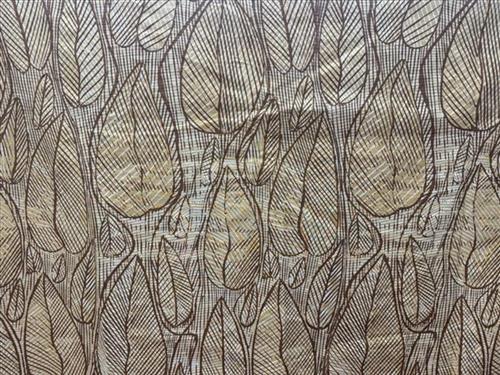
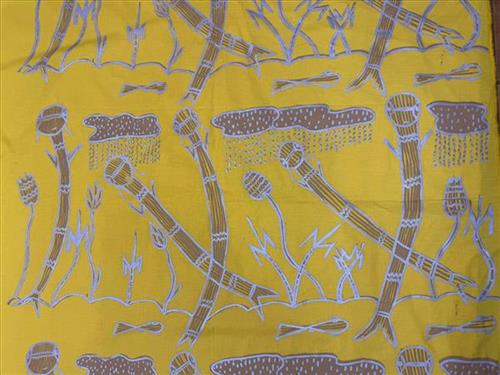
Yawkyawk la Kunronj (freshwater mermaid) 2005

This screen print was created by the young Jennifer Wurrkidj, one of the most prolific artists at Bábbarra Women’s Centre. This design was re exposed onto screen after Kamanj passed away. Her sister Deborah Wurrkidj talks about this design.


At that time the children were all going to homelands school. The design shows too many yawkyawk in the billabong at Barridjowkeng a very sacred Yirridjidja site for Kuninjku people.

The design shows  kundayarr (pandanus) and wayuk (waterlily) around the billabong.

Our grandfather on our mothers side used to live at this site and they used to drink the water from this billabong. There is now an Outstation located at this site. 

This scene shows wet season as we can see by the mandjewk – (heavy rainclouds). The yawkyawk love the sound of the rain. 

Yawkyawk are young girls but they are spirits from kunred (country) that have fish tails. 

377810582391960


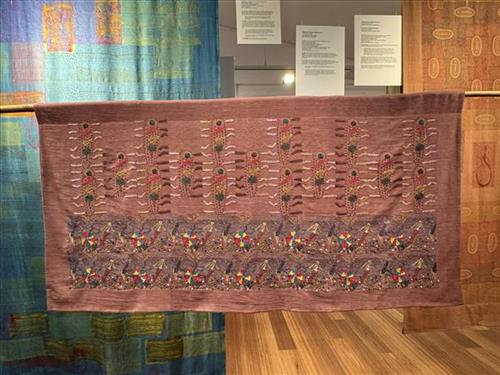
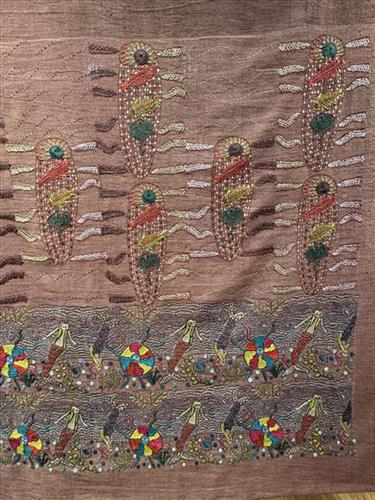
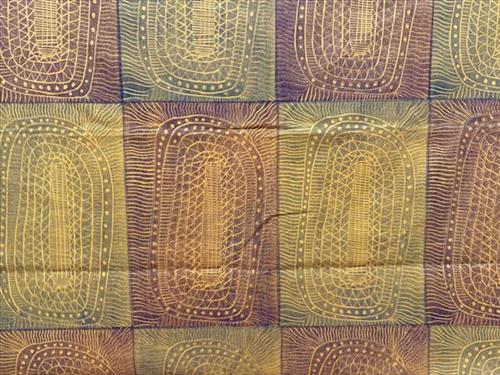
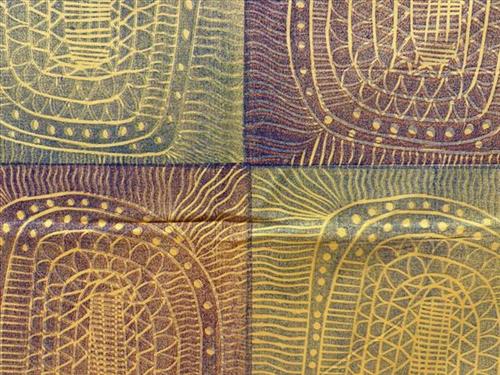
AN-Gujechiya and Jin-Merdawa Embroidery

Woodblock print and Lambadi embroidery on handwoven kala cotton
Pigment print with organic dyes
Design brief and all original design by Elizabeth Wullunmingu
Print composition by Anshu Arora and Prithi Pais
Printed by artisans at Tharangini Studio
Embroidery by M.Vasanthi & Sangeetha at Porgai Artisans Association
Woodblock carving by Shri C.H. Sreeram and Shri S.K. Rajak
Fabric by Green Tailor

Embroidered area; 57cm x 142cm 


Elizabeth Wullunmingu is an An-barra Burarra woman who grew up speaking Burarra language on her mother country at the entrance of the Blyth River in Arnhem Land,


Australia. Her adopted mother, P. Galijan Dungudja, was a sewer in the Bábbarra Women’s Centre sewing room and a strong advocate for women in the community.
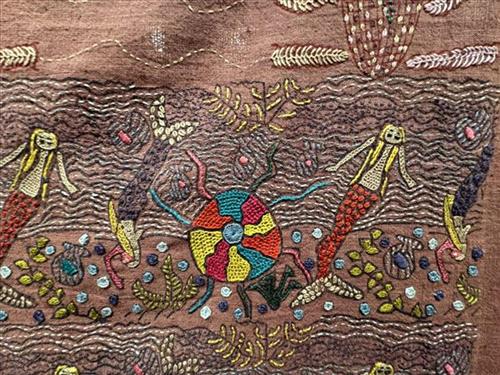
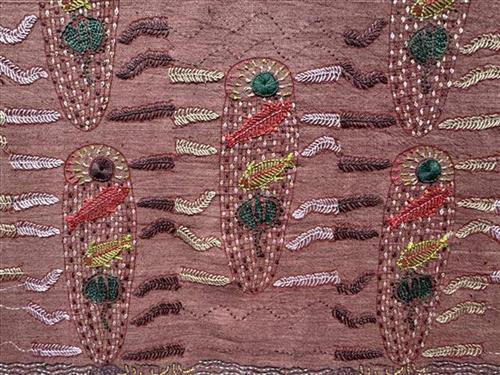
Wullunmingu’s style is intricate, with delicate (shells) and dakarra (cockles)representative of the balaji (bush food) found on the beaches and saltwater estuaries east of Maningrida. The detailed hand embroidery is glorious, respectfully aligned to Wullunmingu’s own passion for sewing.

Wullunmingu exclaims:
I love to make Lino print fabric showing Jin-Merdawa (mermaid) . I like using bright colours. Jin-Merdawa live at Gupanga. Gupanga is located at the mouth of the Blyth River, Arnhem Land. It is a saltwater place. There must be more than one Jin-Merdawa living there? They eat fish, shellfish and seaweed. Sometimes they travel to the end of the river to find food.

377810582392077


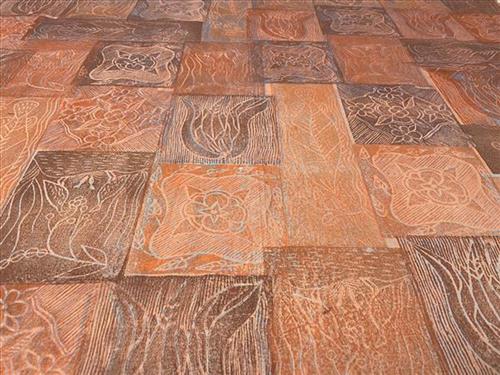
Manbirrbbirr (small bush flowers)

In Kuninjku the name manbirrbbirr is used for a number of densely flowering shrubs and small trees including Verticordia cunninghamii, yellow-flowering Austromyrtus species and also Acacia platycarpa which also has dense white flowers.

A multicoloured cloth with interlocking designs in a patchwork repeat. This cloth was printed by hand using the linocut technique. 


377810582392032


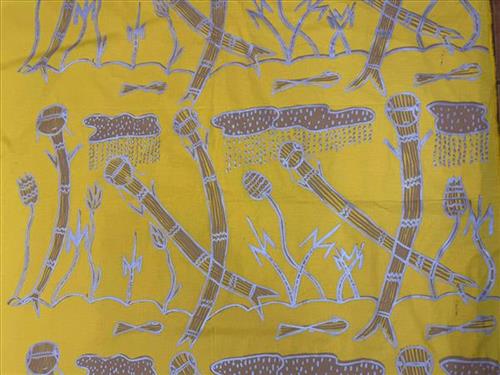
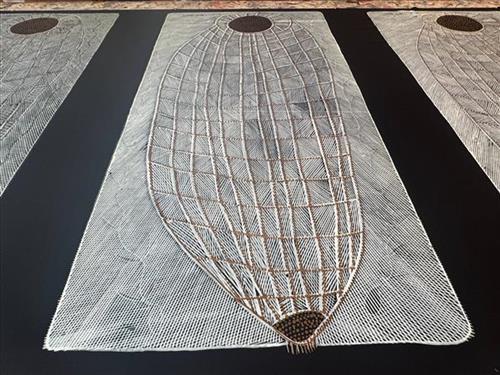
Mandjabu

Kuninjku people traditionally make two sorts of conical fish traps. One is called mandjabu and is made from a strong, durable vine called milil, and a smaller one is called manylik mandjabu, and made from the grass manylik. The mandjabuconical fish trap is bigger and stronger and used in tidal reaches of creeks to catch large fish. The smaller, lighter manyliktrap is used in freshwater flowing creeks to catch smaller fish and freshwater prawns. In earlier times, only men were involved in the construction of the large fish traps, but children would often crawl inside and assist.

To make mandjabu, weavers firstly harvest milil (burney vine, Malaisia scandens) and put it in water overnight to make it soft. Then they start weaving it; they make rings for the inside to keep the fish trap’s shape. People also make string from the bark of burdaga (kurrajong) to attach the bardainy (hibiscus) rings and to tie the conical end of the fish trap. It’s hard work and it can take three or four weeks to make a fish trap. People also use fish-net fences called kunkarlewabe. They would put the kunkarlewabe  across rivers and creeks. In the middle they would place the mandjabu. They also used small things like sticks, rocks, mud and grass to block the fish from going through. This way we would catch fish such as saltwater barramundi rajarra, ngaldadmurrng (freshwater barramundi), small black freshwater catfish (buliya), bonefish (an-guwirrpiya), and sand bass (dalakan) in the mandjabu.

377810582388072


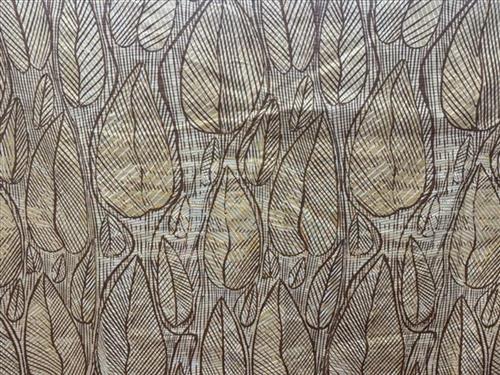
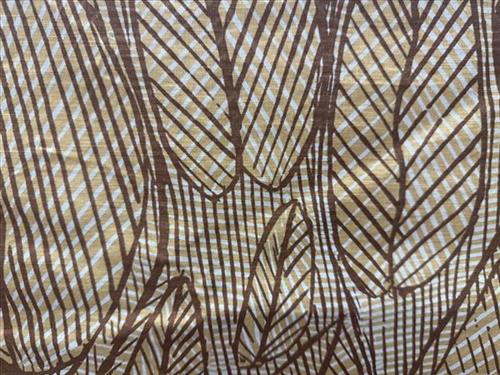
Man-mobban (Billy Goat Plum Leaves)

Man-mobban are the leaves of the man-morlak tree (billy goat plum).

The small, green plums can be found in abundance on Susan’s homeland, Mumeka.

377810582388071


Man-mobban (Billy Goat Plum Leaves)

Man-mobban are the leaves of the man-morlak tree (billy goat plum).

The small, green plums can be found in abundance on Susan’s homeland, Mumeka.

377810582388063


River and Rocks

“This river we call Mangabo. It is near Gudjarrngarrl homeland of my daughters, Deborah and Jennifer Wurrkidj. We cross that river when travelling to Munmoy outstation. In the wet season, that water comes up and covers over those rocks, and when you look down there are rocks all under the water.” 

– Helen Lanyinwanga

377810582388026


Kayawa (baby floor mat)

A round design depicting a small pandanus floor mat used to nurse a baby. 

This fabric was created using the linocut printing technique. The lino tile has been carved by the artist in Maningrida, and has been printed by hand using a variety of colours and layers. The linocut technique ensures each textile piece is a one-off, limited edition piece. Bábbarra Women’s Centre supports the economic independence of Indigenous women in the Arnhem Land community of Maningrida, Northern Territory, Australia. Designs created by the women at Bábbarra reflect strong cultural knowledge, which is passed down to younger generations through their textile design practice.